
In stead of sending a link to old threads on social media every time someone posts nonsense about medieval hygiene, I’ve decided to just collect a whole bunch of links here on this page.
Yes, a lot of people still believe that Medieval Europeans rarely or never bathed, didn’t have soap, were scared of water, lived up to their necks in faeces that they had thrown into the streets from their windows, shared their bedrooms with cattle, etc.
The truth is very different.
Medieval people washed daily, bathed weekly or more and loved visiting bathhouses.
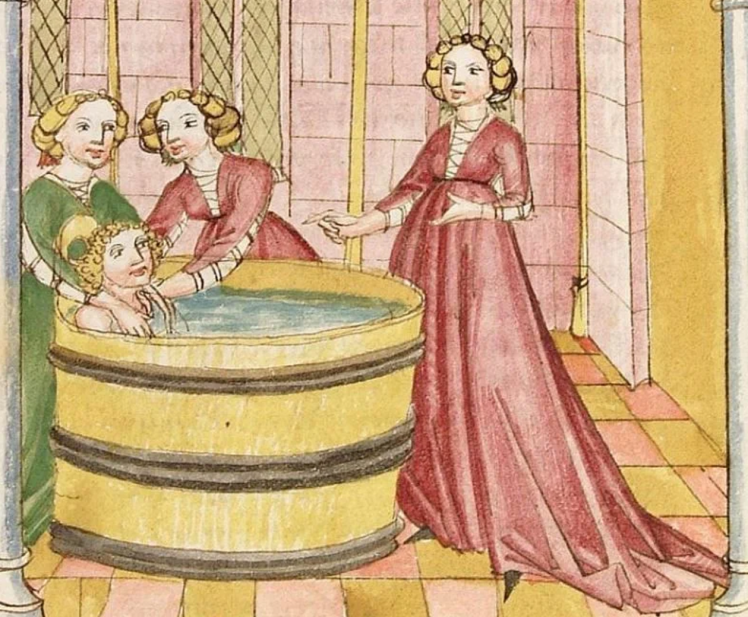
When I bump into someone who still believes those things I share the following links with them, I thought it might be handy to have them all in one place.
It will almost all be about hygiene or hygiene related subjects in Medieval Europe, but here & there I may share something from a bit earlier or later.
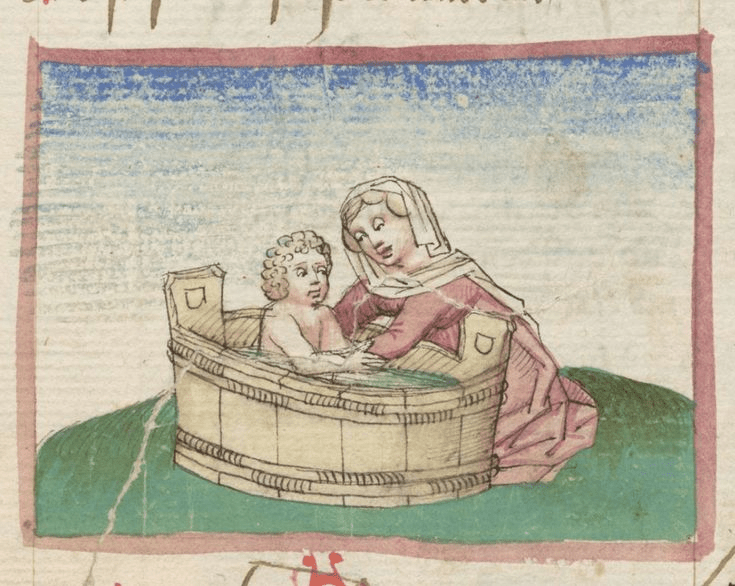
It’s fascinating how many medieval texts tell mothers to bathe babies & toddlers daily, even though these tiny humans were the most fragile…
Feel free to suggest new links/articles/videos, etc. to add or inform me about ones that are broken, no longer accurate, etc.
Articles written by me:
- Medieval Myths Bingo
- The history of soap
- Drinking water in the Middle Ages (debunking the drinking ale/beer in stead of dirty water)
- Did medieval people share their homes with cattle?
- Analysing the ‘Praxis rerum criminalium’ by Joos de Damhouder, 1554
- The curious claims about Elizabeth I’s bathing habits
- Analysing the Narrenschiff window scene (1494)
- List of medieval towns/villages/cities with water supply systems
- List of medieval towns, villages & cities with bathhouses
- List of medieval towns/villages/cities with sewer systems
- About Viking hygiene:
Viking hygiene according to Ahmad ibn Fadlan
Viking hygiene according to Chronica Joannis Wallingford
Articles written by others:
- Anti-pollution Measures & the Common Good in Medieval Paris.
- Did people in the Middle Ages take baths? Article by Medievalists.net
- The (not so) stinky Middle Ages: why medieval people were cleaner than we think, by historyextra.com
- Did People in Medieval Times Really Not Bathe? By Daven Hiskey
- I assure you, medieval people bathed, by Eleanor Janega
- The Great Sanitary Awakening Questioned. Is There a Solid Argument in Favour of the ‘Filthy Medieval City’ Hypothesis? By Roos van Oosten
- Mythe van de vuilnisbelt by Henk ‘t Jong.
- From house to church : the introduction of incense, by Beatrice Caseau (about that myth that incense was used because medieval churchgoers stank)
- The king of dirt: public health and sanitation in late medieval Ghent, by Janna Coomans (2019)
- The Medieval sense of smell, stench and sanitation, by Dolly Jørgensen
Books about medieval Hygiene:
- Book review: ‘Von der Badstube zum Badekabinett’ by Daniela Rösing (2014)
- Book review: ‘Water technology in the Middle Ages’, by Roberta J. Magnusson (2003)
- Book review: ‘Community, Urban Health and Environment in the Late Medieval Low Countries’ by Janna Coomans (2021)
- Book review: ‘Het middeleeuwse openbare badhuis’ by Fabiola van Dam (2020)
- Book review: ‘Urban Bodies: Communal Health in Late Medieval English Towns and Cities’ by Carole Rawcliffe (2013)
- Book review: ‘The medieval pig’ by Dolly Jørgensen
Books mentioning medieval Hygiene:
- Book review: ‘The ties that bound, peasant families in medieval England’, by Barbara A. Hanawalt (1986)
- Book review: Land of thieves, by Janna Coomans (2025)
- Book review: ‘Life in Medieval Europe, fact and fiction’ by Danièle Cybulskie (2021)
- Book review: ‘Clean, a history of personal hygiene and purity’ by Virginia Smith (2008)
- Book review: ‘Urban Women: Life, Love, and Work in the Medieval Low Countries’ by Andrea Bardyn, Chanelle Delameillieure, Jelle Haemers (2019)
- The Past is a foreign country revisited, by David Lowenthal (1985/2015)
Medieval art depicting hygiene:
- My modest image collection on Pinterest
- Art review: Bathing scene from the Hausbuch von Schloss Wolfegg (c. 1480)
- Art review: Dutch bathhouse scene, unknown artist (1500s)
Social Media threads:
- Did Christian theologians discourage everyone from washing or bathing and cause medieval Christians to avoid hygiene? By Tim O’Neill.
- Medieval hypocaust system in Marienburg castle
Old sources & references:
- Early English Meals and Manners by Frederick James Furnivall, 1864
- Regimen sanitatis Salernitanum, 11-13th Century AD.
Podcasts:
Videos:
Baths of Bliss in the Middle Ages: Fact and Fiction’. Professor Elizabeth Archibald delivers her inaugural lecture about bathing & hygiene in medieval Europe:
A day in a late medieval bathhouse:
Carole Rawcliffe, FSA, ‘Less Mudslinging and More Facts: A New Approach to Public Health in Late Medieval English Towns’:
KLS Retreat 2023: Keynote Lecture Johannes Krause about the black death:
Soap and washing: Did they have soap in medieval times? Video by Modern History TV:
And because I know lots of people are confused about European hygiene in general, here a few extra links you may find interesting on this subject:
History of personal hygiene in Europe
The curious claims about Elizabeth I’s bathing habits
The curious claims about James VI & I’s bathing habits
John Gabriël Stedman and his misunderstood distaste for bathing
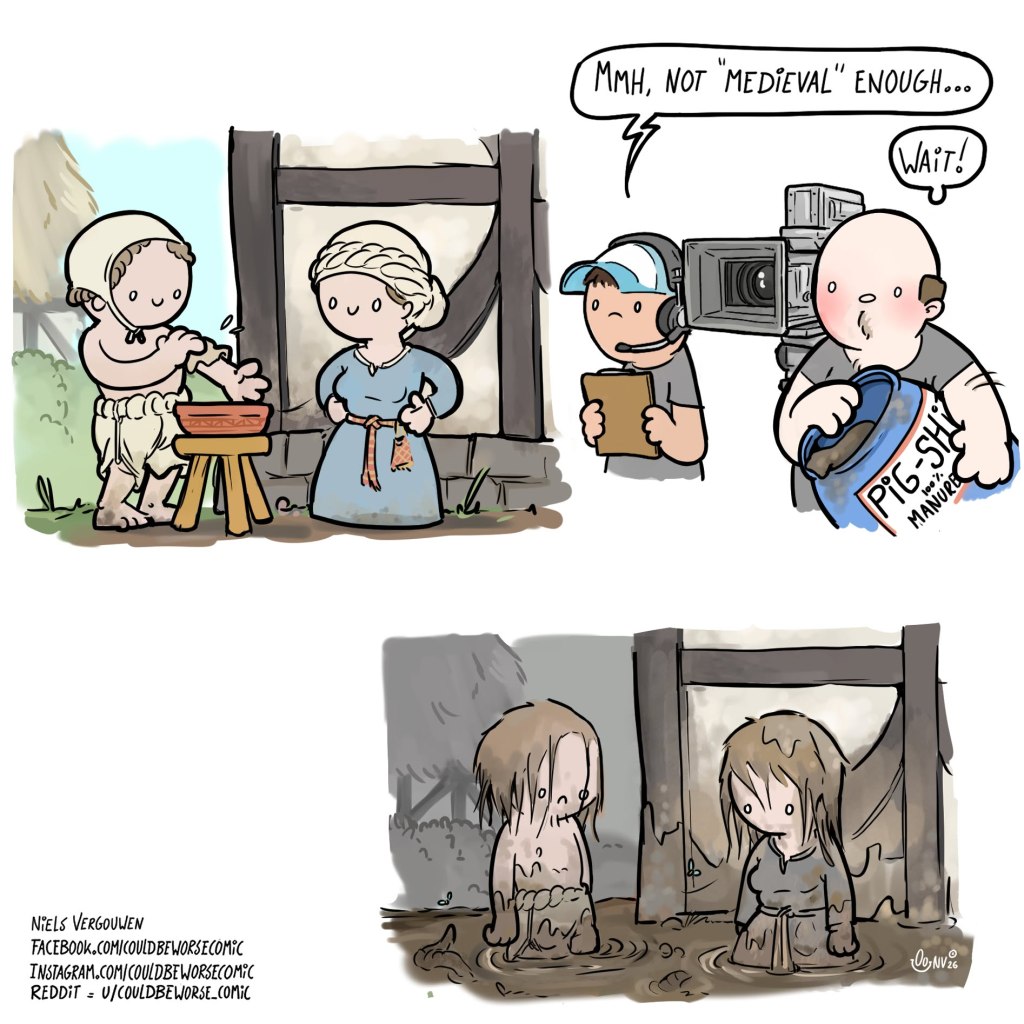
Finally just a bunch of fun and interesting images:
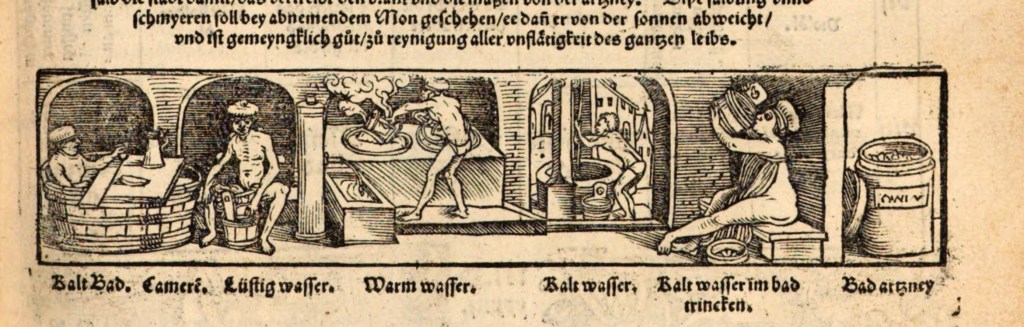
In this bathhouse setting we see all the different kinds of washing, & bathing, it includes health advice.
The book explains that cold & warm water both have different risks but also advantages.
Cold water closes the pores, warm water eases pain, etc.
It’s clear that physicians didn’t shout “water bad, it will make you sick, never bathe!” but simply had often quite sophisticated ideas about how water should be used, not that it should be avoided.
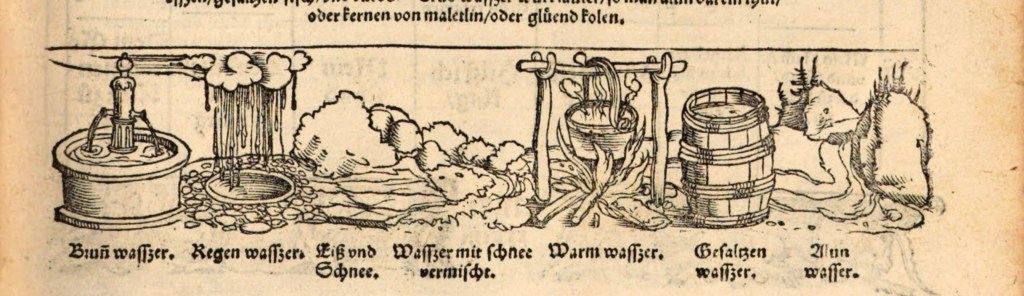
From left to right: fountain water, rain water, ice & snow, water mixed with snow, warm water, salted water & alum water.
In ‘Schat der gesontheyt’ (1660) by physician Johan van Beverwijck we see that these humoral ideas are still going around Europe, he writes:
“De gene die heet van complexie zijn, dewijlse al den loop van haer leven tot den ouderdom toe, meerder en scherper hitte hebben, insonderheyt in de jeught ende middel-jaren; vergaderen oock. veel scherpe overtolligheyt, ende werden na haer jonge jaren alle daeg drooger. Daerom dient wel gewacht, dat door het gebruyck van heete en drooge dingen, die ongematigheyt niet toe en neemt. Soodanige sullen dan schouwen heete lucht, heete scherpe Spijze, die ghekruyt is, ende alderhande, die gal-achtige vochtigheyt in ‘t Lichaem doet groeyen: gelijk daer zijn look, ajuyn, mostaert, ende diergelijke. Sy mogen wel tamelijck veel, maer geen stercken dranck drincken. Den genen, seyt Galenns in sijn uytlegginge, op de leste Kortbondige Spreuk van Hippocrates, in ‘t vierde Boek, die droog van buyck ofte inghewant zijn, machmen wel veel dranck geven, maer die daer vochtigh zijn, weynigh. Voor soodanige Lichamen is sulck Bier bequaemst, het welck men siet dat de Lichamen vet maeckt, gelijck op vele plaetsen van Tarwe gebrouwen wert, het welck vervochtigt, en redelijck verwarmt. De Oeffeninghe moet matelijck, en niet te sterck wesen, ofte te langh dueren. Hier is oock dienstig, het Lichaem dickwils in soet water te baden. Dese moeten voor-al den toorn en gramschap mijden: haer hooft ook niet breken met diepe gedachten. De lange slaep is haer goet: maer het waken quaet. Waerom sy juyst niet op den gesetten tijdt en behoeven te letten: maer slapen als sy best slapen konnen.”
Translation:
“Those who are hot in complexion, because throughout their lives up to old age they have greater and sharper heat, especially in youth and middle age, also collect much sharp waste matter, and after their young years grow drier every day. Care must therefore be taken that the use of hot and dry things does not increase that imbalance. Such people should avoid hot air, hot, sharp food that is spiced, and everything that makes bilious moisture grow in the body, such as garlic, onion, mustard and the like. They may drink a fair amount, but not strong drink. Galen says, in his commentary on the last Aphorism of Hippocrates, in the fourth book, that those who are dry in the belly or bowels may be given plenty to drink, but those who are moist, little. For such bodies the most suitable beer is the kind that is seen to make bodies fat, as is brewed in many places from wheat, which moistens and warms moderately. Exercise must be moderate, not too strong or too long. Here it is also beneficial to bathe the body often in fresh water. These people must above all avoid anger and wrath, and not wear out their heads with deep thoughts. Long sleep is good for them, but waking is bad. So they need not keep to fixed times, but sleep when they can sleep best.”
This shows that regular bathing was still prescribed for health reasons as late as the 17th century.
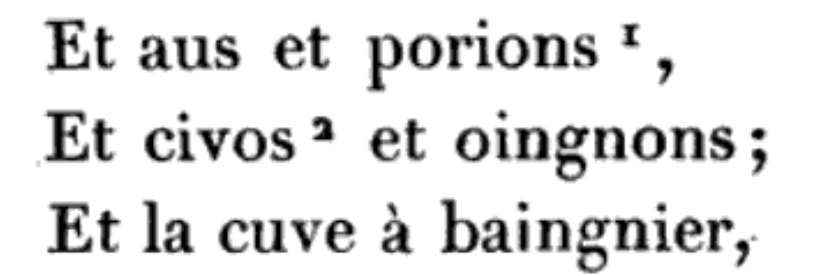
And garlic and leeks,
And chives and onions;
And the tub for bathing!!!


2 thoughts on “Articles, links & videos about Medieval hygiene”