
The annoying thing about studying the Black Death (besides having to read about lots of horrific things of course) is that new discoveries are being made all the time.
Thanks to new scientific possibilities and archaeological finds much of what we thought we knew about the most impactful disasters in human history has been turned upside down in the last decade or so.
Books & articles published just a year ago are already outdated because just a few months ago the Yersinia Pestis bacterium was traced to Siberia and only 4 years ago it was discovered that the Black Death pandemic started by a lake in Central Asia.
So when a new book comes out, you have to read it asap.
I was very happy to get my hands on ‘The Black Death’, by Thomas Asbridge shortly after it came out and that it is (for now) up to date.
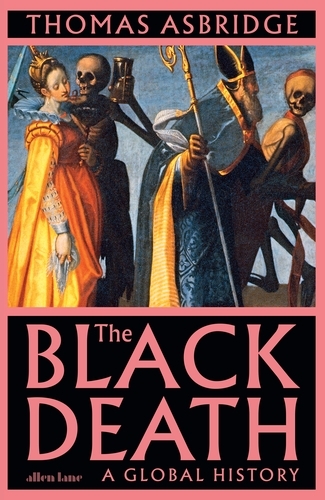
Because what we know seems to change to often and so fast, I wrote an article that hopefully helps to keep track of what we currently know about the Black Death, I will try and keep it updated:
Anyway, as usual I’ll just go through the book and share a few bits and pieces that I found interesting.
Generally speaking I really enjoyed the book, its easy to read (apart from the awful details of course) and if you want to know what the current opinions are about the Black Death, I recommend it.
Early on the author confirms what I just said:
“In fact, it is only in recent years that a combination of archaeological discovery and DNA sequencing has allowed for the definitive identification of the disease at work during the Black Death, and scientists are still struggling to explain how and why it spread with such speed and ferocity.”
One of the things I like a lot about the book is that it spends a lot of time on the Black Death outside of Europe.
For too long the perspective has been too Eurocentric, which made some people believe that it was mostly or even only a problem in Europe.
That it also killed millions in Asia, the middle east & Africa before it even reached W-Europe is still news to many.
Some even use this idea to feed their supremacist fantasies about Europeans being somehow extra dirty and filthy and getting the plague more than anyone else because of that reason.
The author doesn’t just think that the pandemic also struck outside of Europe, he thinks it was worse there:
“I will argue that the Black Death’s devastating repercussions were felt most severely in parts of the] Muslim world, rather than in Catholic Europe. Western regions like France, Germany, and Scandinavia certainly sustained appalling loss of life, such that, in demographic terms, population sizes often took centuries to recover, but in many areas of Europe, society proved capable of remolding itself to meet the ongoing challenges of this new reality. In contrast, over this same period, the seemingly invincible Mamluk Empire—the Islamic force that had turned back the Mongol horde and crushed the crusaders—was brought to its knees and eventually overrun by the Ottomans. On this basis, I will consider the Black Death’s role in setting medieval Europe on a path to the Renaissance and in propelling the West towards what the American historian Kenneth Pomeranz termed “the Great Divergence,” the process by which Europe came to eclipse other world powers.”
Asbridge does a good job at explaining how well connected the medieval world was, how goods and people were transported & travelled long distances, which of course is how the plague spread so fast & far:
“At the same time, population growth, urbanization, and economic prosperity expanded the demand for goods. Low-bulk, high-value commodities like spices and silks might come from the Orient, while in return, western products, such as cloth and wool, were exported to the Muslim world and Asia. And a highly developed trade network emerged to deal in human slaves, the majority of whom came not from sub-Saharan Africa, as they would centuries later, but rather from the environs of the Black Sea and the Russian Steppes. Often of Caucasian Turkic ethnicity, these slaves were destined for markets across the Mediterranean and beyond but were especially prized in Egypt and the Near East.”
The author has included many personal accounts, some are truly heart breaking.
Reading about millions of people dying is impossible to comprehend, but when it’s a father writing about burying his children it strikes you, like with the story of poor Agnolo:
“Not surprisingly, this sudden mass mortality had a dreadful psychological impact. Agnolo conceded that he did “not know where to begin to tell of the…pitiless ways” in which this “cruel and horrible” plague afflicted Siena’s inhabitants. Many were apparently left numb by the horrors they witnessed. “It seemed to almost everyone,” he wrote, “that one became stupefied by seeing the pain…And those that survived were like persons distraught and almost without feeling.” As a result, “there was no one who wept for any death, for all awaited death. And so many died that all believed that it was the end of the world.” Agnolo added a heartrending coda to this catalogue of loss, writing that: “I, Agnolo di Tura, called the Fat, buried my five children with my own hands.” In the end, the task of recording such suffering proved too much. Agnolo concluded that “it is impossible for the human tongue to recount the awful thing. Indeed, one who did not see such horribleness can be called blessed [and] it was all so horrendous that I, the writer, cannot think of it and so will not continue.”
If you’ve known true mourning, the loss of a close loved one, you can almost imagine him writing these words, you feel the pain.
It’s odd to feel like you want to hug and comfort someone who has been dead for centuries.
Later the author brings up the damage the pandemic did in the near East & Egypt, regions often barely mentioned when the Black Death is discussed, but it should always be brought up, he writes:
“If anything, the pandemic was even more destructive on the other side of the Mediterranean, across Egypt and the Near East. Even some chroniclers in Christian Europe were aware of the differing rates of mortality. In Florence, Matteo Villani thought, on the basis of “information [gathered] from many foreign lands,” that in most of the world three out of every five people perished from the Black Death—the equivalent of a 60 percent mortality rate—but added that “there were in fact provinces of the Levant where even more died.”
He also explains why mortality rates were perhaps so high in Islamic regions:
“According to orthodox Islamic dogma, the pestilence was not actually contagious, because those afflicted were selected by Allah and, in spite of the fact that he had observed the scourge spreading within households, Ibn al-Wardi held to this view. The same doctrine banned Muslims from fleeing outbreaks of plague (or from traveling into areas affected by pestilence)”
“The orthodox Islamic tenets regarding plague—most notably the strictly held belief that the disease was not infectious, and the official prohibition on flight—stood in stark contrast to attitudes demonstrated in much of medieval Europe and beyond, where many fled outbreaks, and would have profound consequences for the Black Death’s progress throughout the Muslim world.”
Isolation and trying to avoid places with the plague was pretty much the only option that could work, so staying put in a city when the plague arrived was not a good idea.
And the pestilence was extremely contagious.
The book also mentions that Muslims panicked, gathered in mosques, prayed entire nights and and went on processions.
This made things of course worse, the fleas that spread the plague love crowds.
In Damascus perhaps as many as 2000 people died every day, in Cairo as many as 20.000 a day!
In all, probably well in excess of 250,000 lives were lost, though the exact figure cannot be determined. As one Muslim observer conceded, “This epidemic crossed the bounds of understanding and it is impossible to draw up a statistic.” Another simply remarked that “the plague destroyed mankind in Cairo.”Though the paucity of our surviving sources precludes any definitive judgment, it may well be that Cairo suffered the most devastating mass mortality of any population center during the Black Death.
Some of the sources the author uses are wills, these give us an incredibly valuable insight into what was going on as all but the very poorest wanted to make sure everything was in order before they died.
We can see from an increase of how many wills were written that not only more people were dying but they knew death was coming to where they lived.
These sources are incredibly valuable, they give us an insight into the lives of common medieval people through records that many historians up to recently rarely even looked at.
The details are heartbreaking, like the story of the two sisters Johanna and Christina Chandler, the one leaving part of her possessions to the other, dying only one day after having the will written.
The sister who was left behind also had her will written but she died a few days later.
The lawyer who wrote both their wills followed a month after them.
Of course every time a will was written and then read out loud to those mentioned in it, a group of people would travel and meet in person, the perfect situation for the plague to make more victims.
How many people really died is impossible to say but:
“documentary evidence suggests an average death rate of around 50 percent across the medieval world as a whole, with a scale usually ranging from 30 percent to 70 percent. In all, the total number of those who died between 1347 and 1353 must have been in excess of 100 million.”
The effect the Black Death had on the world was quickly noticeable:
The great mortality had suddenly caused an unprecedented rise in the cost of labor, services, and commodities, for as one English chronicler observed, “such a shortage of workers ensued that the humble turned up their noses at employment and could scarcely be persuaded to serve the eminent unless for triple wages.” As a result, “the poor and servile [were] enriched and the rich impoverished,” while “churchmen, knights and other worthies” were apparently “forced to thresh their corn, plough the land and perform every other unskilled task.”
One of my favourite subjects, medieval hygiene, is also brought up.
Unsurprisingly society collapsed in several ways when the Black Death struck and this had an effect on the sanitation of cities:
“Indeed, in this same period, the crown made a rare intervention in municipal
affairs, instructing Mayor Lovekin to improve the state of public sanitation as a matter of urgency, writing on April 8 that London had been made “foul” and “poisoned” so that “the air is infected,” perhaps because the muck-rakers who traditionally cleaned the streets were busy moving dead bodies. The mayor was duly ordered “to cause the human faeces and other filth lying in the streets and lanes of [London] and its suburbs to be removed with all speed to places far distant,” so that the city could be “cleansed from all odour [and] kept clean…in order that no greater mortality may arise” at a time when “the contagious sickness…increases daily.””
You can imagine that some Victorian (it’s always them) historians perhaps read this and forgot to explain to their readers that this was an extreme situation, that everything was falling apart and in stead of everyone being fine with the mess, people were so disturbed by it that the King himself stepped in.
“those attending Paris’s Hôtel-Dieu, situated close to Notre Dame Cathedral, were placed in carefully organized wards and nursed by a host of attentive sisters. Here, the sick were given a rich diet, including meat four times a week, and regularly bathed, though they might be housed four to a bed. Fifteen laundresses labored to clean sheets and clothing, and wards were routinely swept (indeed, in one year alone the hospital went through 1,300 brooms)”
Not quite how medieval medical care is usually depicted, is it.
Moorish physician and poet, based in Almeria:
“Having catalogued the Black Death’s horrifying effects, Ibn Khatima went on to outline a series of preventative measures and active treatments designed to combat this merciless scourge. He variously urged those hoping to stave off the threat posed by the disease to seek fresh air; live in a north-facing house, surrounded by the cooling fragrances of flowers like myrtle and eastern aspen; sprinkle their homes with a mixture of rosewater and vinegar; rub their faces and hands with lemon juice; and burn sandalwood. Rapid movements that might speed up breathing were to be avoided, as was the consumption of fine breads and corn, mushrooms and cheese (though eating pears and pomegranates was encouraged). Khatima also promoted the importance of maintaining a positive mental and emotional outlook, helpfully suggesting that sensations of hope and relaxation might be cultivated by quietly reading the Quran, or other texts including comical works and love stories.”
He was also enthusiastic about bloodletting.
But he knew it was spread from person to person even though Islamic doctrine stated that this wasn’t the case, that those who got the plague got it through god’s will.
“He also observed that merchants working in Almeria’s second-hand clothes market, the Souk el-Haik, “who sell the clothes and bedding of the dead,” were prone to perish in particularly large numbers. And he described how some communities managed to impose an effective cordon sanitaire during the crisis, writing that in these “areas…the inhabitants kept watch in order to protect themselves [from the disease], so that no one entered who came from a region where the plague raged,” and “in this way [they] were able to remain safe for a time.””
This is a very interesting and astute observation, ibn Khatima, without realising it, gave us clues about how the Black Death spread, the clothes sold on the market were teeming with fleas and isolation, avoiding people from infected areas was one of the few things that could keep safe, sometimes.
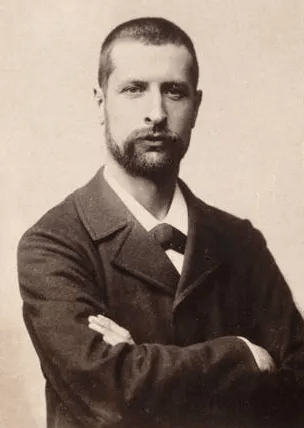
The bacteria was named in his honour: Yersinia pestis.
The book also tells the story of the amazing Alexandre Yersin, who the plague bacillus was named after.
How he travelled to Japan with only his microscope, setting up a laboratory in a hospital corridor and even bribing his way into the morgue.
A fascinating story about an extraordinary man, there should be a film about him.
“At present, the best evidence for this latter pandemic suggests that it originated in Asia—as many medieval contemporaries claimed—where it was endemic in wild rodents. It is theorized that the disease made the jump into humans after a range of forces, including natural climate change and the disruption caused by the expansive Mongol conquests of the twelfth and thirteenth centuries, brought plague-bearing animals into closer contact with human communities.”
This is why it is so important to read up to date books because what we know changes so quickly.
I rather enjoyed the book and I think it is currently one of the best books on this topic, especially because it has managed to include some of the most recent discoveries.
Something new can be unveiled tomorrow and what we know about the Black Death can change dramatically.
The author put a lot of little stories about individual people in, this brings their suffering and despair closer to the reader.
It helps you imagine what it must have been like, even though we will, hopefully, never really know how terrifying it was.


Thank you for this. Another thoughtful and informative summary of a complex and, as you point out, evolving subject. Well done!
LikeLiked by 1 person