
The idea that medieval people drank ale or beer in stead of water because the water sources in Medieval Europe were usually polluted is a stubborn myth.
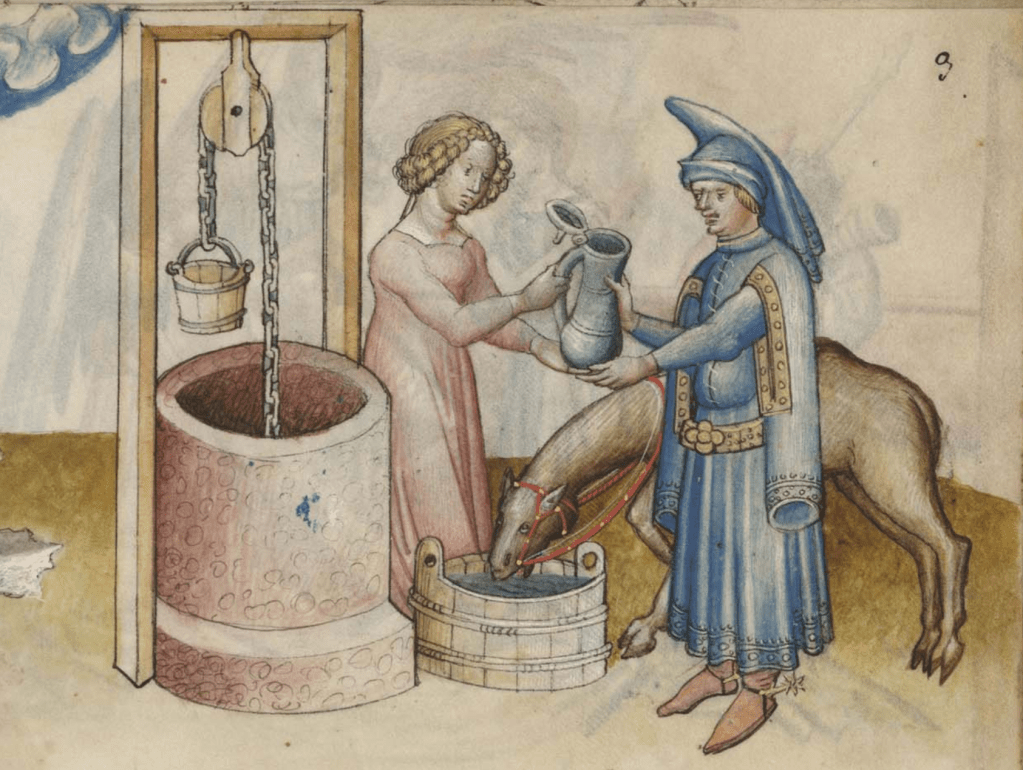
In reality Medieval people had relatively easy access to clean water and drank lots of it.
Ale was a cheap and tasty way to consume grain and provide drinkers with nutrients, carbs and proteins.
But they didn’t just drink it as a replacement for dangerous water.
On this page I will simply share what historians have written on the topic in their books & papers but also a bunch of links and videos on the topic.
So you don’t have to take my word for it, just check out what I’ve gathered for you:
Books:
‘Water and society in early medieval Italy, AD 400-1000’ by Paolo Squatriti:
The discernment of purity in water for domestic consumption during the early Middle Ages must be understood in these terms. Before ingesting water, early medieval people satisfied themselves, if it was at all possible, that it was clear and did not smell.
Examples from different times and places prove that throughout the postclassical peninsula water purity was an urgent concern. Discussing the contents of Ravenna’s aqueduct around AD 500, Cassiodorus distinguished between sweet-tasting water and tainted water which robbed the drinker of all appetite. He believed that clear water was pure and likely to make bodies limber, while opaque water was of lesser quality and was likely to congest the body and make its consumers sluggish.
A decade or two later, Procopius relates that, at the siege of Urbino during the Gothic wars, when springs grew muddy from overuse, the population despaired.
Their surrender was a reaction not to absolute dearth but to intolerable water quality.
Dank and verminous water from wells horrified Tuscans at the turn of the tenth century, and “brackish” water appalled tenth century diplomats during their travels as much as it does modern tourists.
Clearly water quality was important to early medieval writers and, presumably, drinkers in Italy.Early medieval people evaluated their water by appearance, feeling,taste, and smell. Once they had ascertained that it was pure (clear, without odor, and cold), people in postclassical Italy did, in the end, drink water.
Willingness to drink water, particularly cool water, was expressed in late antiquity by writers as dissimilar as Paulinus of Nola, Sidonius Apollinaris, and Peter Chrysologus, who all extolled the cup of water.
For Paulinus to drink cold water when he was thirsty was the perfect image of satisfaction, and for Sidonius the water of his special spring, so cold that on warm days it clouded with condensation the glass that held it, was unsurpassed delight, while for the sainted bishop of Ravenna the thirsty ought always to be refreshed with this precious liquid.Plain water was the drink of commoners, of boors, and of poor folk, and to drink it implied too little separation from them. Improved, altered water, water which had been boiled, or chilled, or came from an extraordinary place, was far better.
‘Life in Medieval Europe, fact and fiction’ by Danièle Cybulskie (2021) (read my review here):
The common idea that no one actually drank water, however, is a myth. Everywhere in medieval Europe, people sank wells to provide themselves with the water they needed for drinking, cooking, washing, and watering gardens. Cities provided central fountains and wells for their
citizens, sometimes drawing water from sources outside of the city limits via lead pipes. In castles, especially, establishing a well was one of the first orders of business, as in times of siege the people trapped inside the castle’s protective walls would die within days without a water source. Beyond wells and cisterns, people from the smallest homes to the largest castles channelled rainwater from their roofs into barrels.
‘Water technology in the Middle Ages’, by Roberta J. Magnusson (2003) has a lot of information about how cities, towns & villages made sure they had access to clean water (read my review here):
The provision of water for drinking and domestic use was a primary function of most medieval fountains. Medieval attitudes toward water as a beverage were not entirely negative, but in general other drinks (especially ale, beer, or wine mixed with water) were preferred. The response of the boy-monk in Aelfric’s dialogue, when asked what he drank, could probably represent the great majority of northern Europeans: ‘‘Beer if I have it, or water, if I don’t have beer.’’ The Rule of St. Benedict had conceded that monks could not be expected to drink water alone; and by the High Middle Ages, the monastic allocation of beer and wine seems to have been exceedingly generous. To the extent that they could afford it, the laity did not lag far behind. Thanks to the strong demand for beer and ale, brewing came to be one of the more popular occupations for women, in both villages and cities.
‘Community, Urban Health and Environment in the Late Medieval Low Countries’ by Janna Coomans (2021) also mentions a lot about how medieval people made sure they had access to clean water (read my review here):
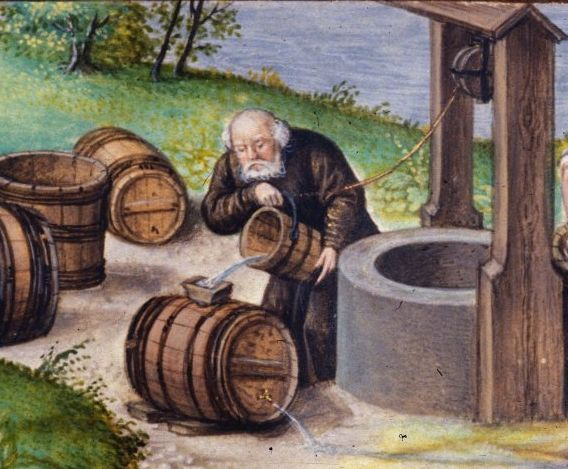
Netherlandish cities all had some form of infrastructure for freshwater supplies.
In Bruges and Ypres networks of lead pipes tapped ponds outside the city and transported
fresh water to fountains and to the city moat. Some of these fountains were publicly accessible, while institutions and urban elites often arranged private access. Urban officials policed, maintained and sanitised these infrastructures.In towns that did not have a network of water pipes, local governments sometimes appropriated the supervision and management of wells.
Brussels had many public wells, since the early fourteenth century already more than thirty, as well as reservoirs named poelen.Likewise, Antwerp’s mid sixteenth-century map contains depictions of over thirty wells
‘Urban Bodies: Communal Health in Late Medieval English Towns and Cities’ by Carole Rawcliffe (2013) debunks lots of myths about hygiene & health in the middle ages (read my review here):
A representative example of the vernacular texts on preventative medicine that circulated widely among the English reading public – and which were, indeed, produced especially for its benefit – may be found in Thomas Forestier’s manual of 1485 on the causes and avoidance of pestilence. It begins with a solemn warning against the evils of water pollution, most notably:
“stynken caryn cast in the water nye to the cytees or townes … and the corrupcion of privys, of this the water is corrupt; and when as mete is boyled, and drynke made of this water, many sikenes is gendered in mannes body; and also of the castyng of stynkyng waters and many other foule thinges in the streates the ayre is corrupte; and of kepyng of stynkyng waters in houses or in kechyns long tyme; and then, in nyght, of those thinges vapours ar lyft up in to the ayre, the whiche doth infecte the substance of the ayer, by the whiche sustans of the ayre, corrupte & infecte, men to dy [die] sodenly goyng by the stretes or by the way; of the whiche thinges let every man that loveth god and his neighbour amende.”
I myself wrote a whole chapter on the subject in my book ‘Fake History: 101 things that never happened’:
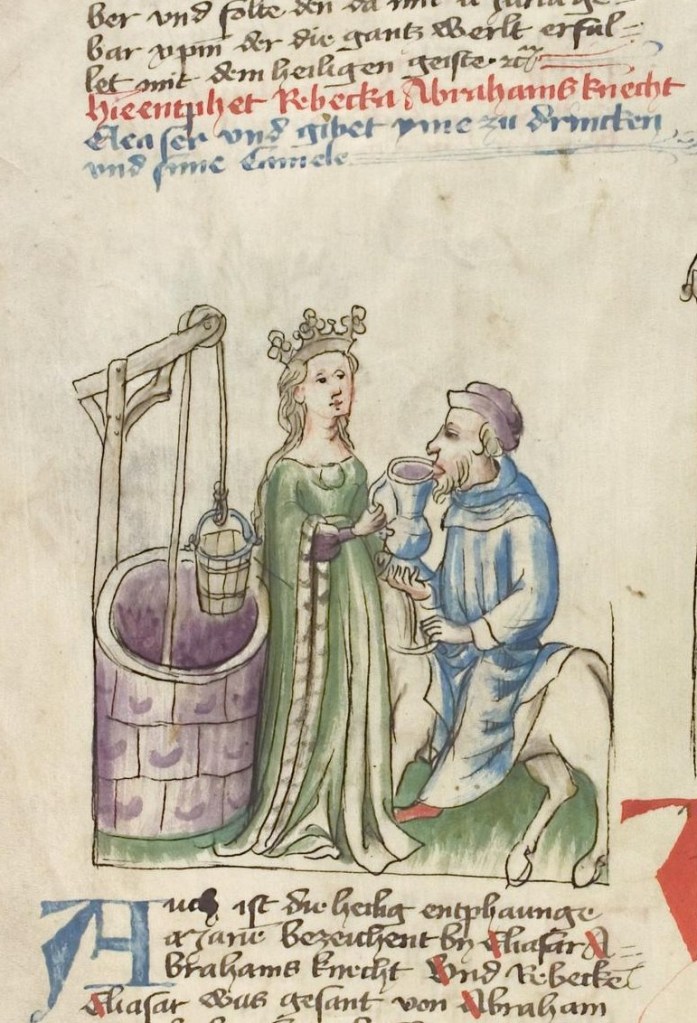
‘Spiegel menschlicher gesuntheit’ — Mittelrhein, 1420-1430
The idea that medieval Europe was disgusting and people were just emptying all their waste into streets and rivers is also not quite true.
You can read more about that here:
Articles, links & videos about Medieval hygiene
Some of my other related articles:
- List of medieval towns/villages/cities with water supply systems
- List of medieval towns, villages & cities with bathhouses
- Book review: ‘Water technology in the Middle Ages’, by Roberta J. Magnusson (2003)
- Book review: ‘Community, Urban Health and Environment in the Late Medieval Low Countries’ by Janna Coomans (2021)
- Book review: ‘Het middeleeuwse openbare badhuis’ by Fabiola van Dam (2020)
- Book review: ‘Urban Bodies: Communal Health in Late Medieval English Towns and Cities’ by Carole Rawcliffe (2013)
Other related Books:
- Evolution of Sanitation and Wastewater Technologies through the Centuries by Andreas N. Angelakis; Joan B. Rose
- Ale, Beer, and Brewsters in England by Judith M. Bennett
- Water and Society in Early Medieval Italy, AD 400–1000, by Paolo Squatriti
Links:
- Medievalists.net: Did people drink water in the Middle Ages?
- James Sumner: Small beer to you, perhaps
- Ian Mansfield: The myth of Medieval Small Beer
- Martyn Cornell: Was water really regarded as dangerous to drink in the Middle Ages?
- Martyn Cornell: So how much ale did a medieval peasant actually drink? Much, much less than you think
- Martyn Cornell: Was water really regarded as dangerous to drink in the Middle Ages?
- Tim O’Neill: What Was the Drink of Choice in Medieval Europe?
- Jim Chevallier: The great Medieval water myth
- Laurie L. Dove: Did Medieval People Drink Beer Instead of Water?
- Reddit.com/r/AskHistorians: How did people (esp. European townsmen) get fresh water in the Middle Ages?
- Tastes of History: Dispelling Some Myths: Dirty water? Drink beer!
- Susan Verberg: Mythbusting medieval brewing preconceptions
- Tofí Kerþjalfadsson: Recreating Medieval English Ales
- Jo Hedwig Teeuwisse: Medieval myths, nobody drank water
- The Technology of Medieval Water Management at the Charterhouse of Bourgfontaine
- Medieval and Post-Medieval Urban Water Supply and Sanitation
Youtube videos:


It’s like, why did Egyptians drink dry bread soaked in water and let stand for a while?
They called it lunch ( or part of lunch anyway )
LikeLike