
A lot of people say that the Vikings had very good hygiene and that this was rare and unusual in medieval Europe.
A lot of other people say that the Vikings were vile and disgusting and that this was common and normal in medieval Europe.
Both these contradicting perspectives are based on two single sources, one Christian and one Muslim.
In this article I will look at the medieval Christian source and explain what is reliable and what is unreliable about it and what it actually proves about hygiene among Viking-age Scandinavians.
I have analysed the Christian account in another article.
You can read it here:
https://fakehistoryhunter.net/2026/07/23/viking-hygiene-according-to-ahmad-ibn-fadlan/
Important: Like all my articles, this is a work in progress. That means that I will change what I wrote when I learn new things, people find mistakes, etc.
Chronica Joannis Wallingford
Between AD 1220 and 1258 an unknown Benedictine monk at the Abbey of St Albans, wrote about the St. Brice’s Day massacre of the Danes in 1002.
People often assume Joannis/John wrote it but it just belonged to him.
We don’t know who really wrote it, we don’t know if this text was a copy of an older one or if it’s even an accurate copy.
But it’s the one we’ve got.
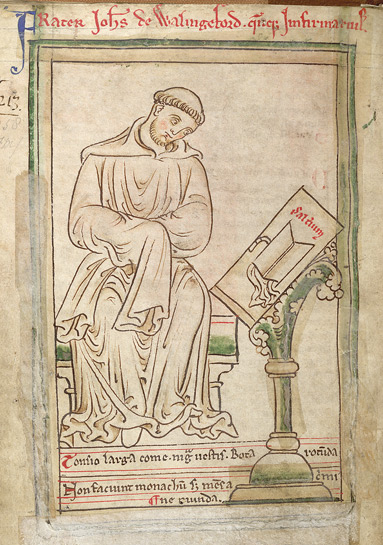
In Joannis’s papers the following passage was written:
“Habeba[n]t etiam ex consuetudine patrie unoquoque die comam pectere et sabbatis balneare, sepe etiam uestituram mutare et formam corporis multis talibus friuolis adiuuare; unde et matronarum castitati insidiabantur, et filias etiam nobilium concubinarum nomine detinebant.“
There are several different translations going around, you can find them on Wikipedia, in encyclopaedia, online, but also in history books, documentaries, even museums.
Here are a couple I found:
“the Danes, thanks to their habit of combing their hair every day, of bathing every Saturday and regularly changing their clothes, were able to undermine the virtue of married women and even seduce the daughters of nobles to be their mistresses“.
(from Wikipedia)
“The Danes made themselves too acceptable to English women by their elegant manners and their care of their person. They combed their hair every day, bathed every Saturday, and even changed their garments often. They set off their persons by many such frivolous devices. In this manner, they laid siege to the virtue of the married women, and persuaded the daughters, even of the nobles to be their concubines“
“for they were wont, after the fashion of their country, to comb their hair every day, to bathe every Saturday, to change their garments often, and set off their persons by many such frivolous devices. In this manner they laid siege to the virtue of the married women, and persuaded the daughters even of the nobles to be their concubines.“
(from ‘The Church Historians of England’, by Joseph Stevenson (1854))
As you can see they’re all different and the choice for which words to use sometimes changes the entire context.
Talking about “undermining virtue” and “seducing daughters into becoming mistresses” suggests that the Anglo-Saxon women were falling for the clean Vikings and almost jumped into their arms and beds because their own men were smelly.
But “laying siege” to married women sounds a lot more aggressive and less voluntary.
Several of the translations were written in the 19th century and although the Victorians were nowhere near as prudish and proper as commonly believed, it does seem that some of these authors and interpreters may have specifically chosen to use words that perhaps were a little less troublesome for sensitive readers.
The version that makes it seem like Anglo-Saxon women were falling for the Vikings and volunteering to become their bed-partners because they bathed once a week and combed their hair is the most popular one.
It fits the old nonsense idea of medieval people being dirty & rarely bathing, it makes English men look bad, it makes the Scandinavians look good, etc.
People find this perspective attractive and it’s the one you’ll see in TikTok AI-slop videos and mentioned on Twitter all the time.
But what the true source actually meant depends on which translation you think is the most reliable but also on the context.
To try and figure out what the monk really wanted to say I decided to go and look at the original writings and the context.
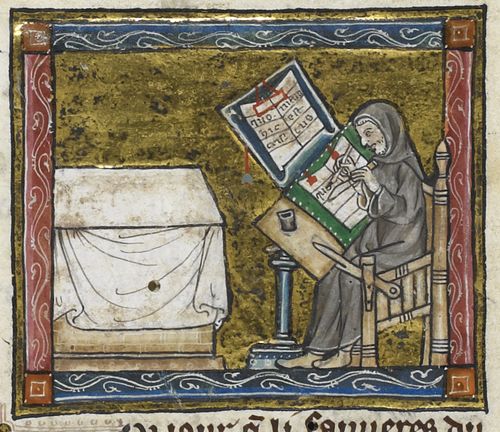
But before we start to analyse the text, one more important thing:
We are reading propaganda, a Christian monk wrote about the massacre of Danes by his fellow countrymen over 200 years prior.
Assuming we’re reading the original text, we know this is not an eyewitness account, this was not even written by someone who had known someone who was alive at the time, the author was either writing down hearsay or making it up as he went along.
No matter how you look at it, we shouldn’t assume that this source is reliable or even trying to be neutral, keep that in mind.
So, back to the text:
“Habeba[n]t etiam ex consuetudine patrie unoquoque die comam pectere et sabbatis balneare, sepe etiam uestituram mutare et formam corporis multis talibus friuolis adiuuare; unde et matronarum castitati insidiabantur, et filias etiam nobilium concubinarum nomine detinebant.“
I got this from The Chronicle Attributed to John of Wallingford, by Richard Vaughan (1958), unfortunately the original medieval text is not online as far as I know, but Mr. Vaughan’s book quoted it.
The translation I’m going with is:
“They also had, by custom of their homeland, (the habit) on each day to comb the hair and on Saturdays to bathe, often also to change clothing and to assist the form of the body with many such frivolous things whence also they lay in wait for the chastity of matrons, and detained the daughters even of nobles under the name of concubines.“
Let’s first look at the first part, the hygiene bit.
There are a few ways to interpret some of the words, but most versions roughly say the same thing.
The experts have come up with several different translations, some of the words can be interpreted in different ways, but these don’t change the text dramatically, it is quite clear that the monk is telling us that the Vikings had the custom to regularly comb their hair, change their clothes, bathed every week and did that to make themselves look pretty.
This is often interpreted as the author being confused/impressed/disgusted by the Danes caring too much about their hygiene and appearance.
People sometimes assume that this is because the Anglo-Saxons themselves were not into bathing and washing and thought that bathing weekly was weird.
This is nonsense.
Regular washing & bathing was a common part of life in Europe since before Roman times and it didn’t stop after the Roman era ended.
The Roman bathhouse culture left with the Romans, which makes sense as some of their bathhouses were very big, very fancy, very expensive and were built for being used by large groups of people.
They were only possible because they were usually sponsored by very wealthy Romans, had access to aqueducts, tons of fuel and lots of slaves.
When some of this fell away, these big bathhouses became too expensive to keep using.
But just because these buildings were abandoned or repurposed, doesn’t mean people stopped bathing.
Smaller bathhouses popped up and were just as popular.
They needed less fuel, no slaves, used small tubs instead of big pools (being thus more hygienic) and used water from canals, rivers, conduits, wells, pipes or indeed, aqueducts, yes they were still a thing in Medieval Europe.
More about the general (later) medieval hygiene here:
List of medieval towns/villages/cities with water supply systems
List of medieval towns, villages & cities with bathhouses
The irony here is that Anglo-Saxons in the UK were probably bathing/washing/combing their hair just as much or at least not a lot less, than the Danes were.
One of the things people mention when they are mention Viking hygiene is the many combs archaeologists find at Viking era sites.
Interestingly combs are also a very common find at Anglo-Saxon sites and medieval sites all over Europe (like here).
Manicure sets are also often brought up as evidence for the Vikings caring very much about hygiene & appearance but… you’ve guessed it, these are also found at Anglo-Saxon sites.
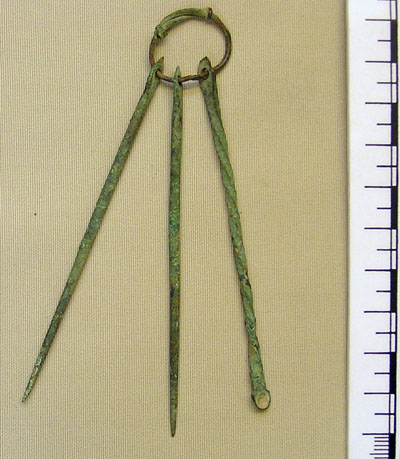
They were excavated from an Anglo-Saxon woman’s grave, Ashmolean museum, Oxford.
A very interesting paper on this subject is ‘Transforming Body and Soul: Toilet Implements in Early Anglo-Saxon Graves’ by Professor of Archaeology Howard Williams (2007) (PDF link), it has a lot of information on items related to personal hygiene that have been found by archaeologists.
In his publication ‘Death and Memory in Early Medieval Britain’ (2006), Professor Williams wrote: “A range of other items was placed within cinerary urns. The most common artefacts had associations with hair, including ‘toilet implements’ consisting of bronze or iron tweezers, razors and blades, shears and earscoops, some of them full-sized functional objects, others miniatures possibly serving as amulets among the living or specially made for the funerary ritual.”.
I find it very telling that not only a lot of toilet implements are found in these graves but that they are included as grave-goods, gifts, objects added after cremation, so that the dead can look after their hygiene in the afterlife.
But also that they had miniature symbolical ones, which suggests that they didn’t want to put usable ones in the urns because they were too valuable and those left behind wanted to continue using them, or that they were so important to them that they also owned or even wore them as sort of jewellery or decoration.
Nennius’s ‘History of the Britons’, written in the 9th century says:
“The third wonder is the Hot Lake, where the Baths of Badon are, in the country of the Hwicce. It is surrounded by a wall made of brick and stone, and men may go there to bathe at any time; every man can have the kind of bath he likes. If he wants a cold bath, it will be cold; and if he wants a hot bath, it will be hot.”
Although there are many questions surrounding the authenticity of the Nennius text, this suggests that what was left of the famous Roman baths at the city of Bath was still being used by the Anglo-Saxons.
We also know that people in Europe were bathing, washing & using soap since pre-Roman times, more about this general topic here:
https://fakehistoryhunter.net/2025/11/26/articles-links-videos-about-medieval-hygiene/
Although there aren’t that many written sources that tell us about hygiene in that era, interestingly it seems that we have a lot more contemporary records describing bathing, washing, shaving, combing and such activities of the Anglo-Saxons than we do of the Vikings!
We have several mentions of their habits while what we know from the Vikings is mostly just the texts this article is analysing, a couple of mentions of bathing in sagas (Eyrbyggja & Laxdæla) and the fact that their name for Saturday is laugardagr (wash or bath day).
But I think their hygiene habits were not that different.
Having said that, there is a reason the monk decided to mention these habits as part of his story of the massacre.
Interestingly enough no other account of the event brings this up, only our monk thinks it is important to mention.
To us modern people it seems like he is listing positive attributes, but what he seems to actually be doing is telling us that these men are vain, using the word ‘friuolis‘ (frivolous) shows us what the monk thinks of the Danes spending so much attention to their looks.
He’s not surprised or shocked about how often they combed their hair or bathe, but it’s a general judging of exaggeration, self-indulgence.
His issue is not that they did the things the Anglo-Saxons themselves also did, but by listing it all together he shows a picture of men overly obsessed with not very manly-things, their hygiene habits aren’t essential and normal, they’re trivial.
He is framing the Danes in a way that is common in propaganda throughout the ages, a resentment based on foreigners doing things differently, coming over here, stealing our jobs, stealing our women and being weird.
In a way you could compare it with how Europeans responded to the American soldiers coming over to Europe during the Second World War.
They had money, were different, had different grooming habits, got attention from the local girls, etc.
Our monk is not describing the Danes as handsome, clean young men, but as girly-boys, men acting like princesses.
Perhaps the way your old uncle Dave responds when he sees a man wearing nail polish.
In short: the author is being negative about the Danes being vain, but this does not mean Anglo-Saxon men had worse hygiene.
Another reason he possibly brought it up was because elsewhere in the text he mentions that the massacre took place on a Saturday and that the Danes were overrun and defeated because that was their bath-day.
The Danes their vanity may have explained how they were caught unprepared, with their trousers down, literally.
This is just a theory though.
Mind you, it is interesting that we have similar situations mentioned in sagas where going to the bathhouse and bathing, sometimes specifically on Saturday, is used by someone to deal with an enemy, such as the Sverrir saga where a surprise attack is launched on laugardagr, because that’s when the enemy will be defenceless.
The similarity to our story is poignant.
Elsewhere in the text our monk explains it in more detail:
“unumque diem statuerunt in quo in eos insurgerent, sabbatum uidelicet, in quo ut predictum est solent balneare… Deletique sunt in die condictionis nimis crudeliter a minimo usque ad maximum, nam nulli etati uel sexui pepercerunt; ipsas mulieres suas que luxurie eorum consenserant et pueros que ex feditate adulterii nati erant una delentes. Mammas quarumdam absciderunt; alias uiuas terre infoderunt; pueros postibus et lapidibus alliserunt.”
“This day was the Saturday, on which the Danes are in the habit of bathing; and accordingly, at the set time they were destroyed most ruthlessly, from the least even to the greatest. They spared neither age nor sex, destroying together with them those women of their own nation who had consented to intermix with the Danes, and the children who had sprung from that foul adultery. Some women had their breasts cut off; others were buried alive in the ground; while the children were dashed to pieces against posts and stones.”
(Translation by Magnús Magnússon)
The fact that this repeats that the Danes had the habit of bathing on Saturdays shows that this wasn’t something a monk just made up, it proves it was a genuine tactic the Danes even used on each other.
But it also brings up something else that is very interesting.
In the same text the author is talking about how bad it was that the Danes were mistreating Anglo-Saxon wives and nobles’ daughters, riling up the reader’s feelings of hate towards the Danes, defending the massacre.
But elsewhere in the text he is suddenly speaking with disgust about the women who voluntarily mixed with the Danes and had babies with them.
He seems to switch from women are helpless prey, the Danes were beasts, to the women were vile traitors who deserved to be punished.
I think it confirms the author’s bias and that the text is propaganda.
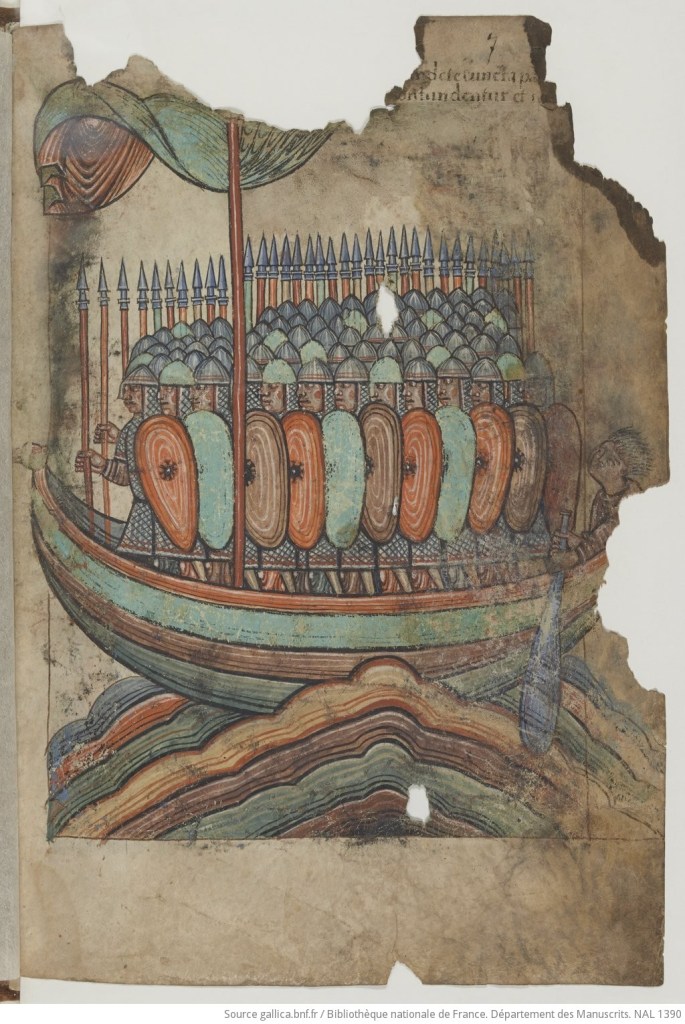
Now we move on to the next part:
“unde et matronarum castitati insidiabantur, et filias etiam nobilium concubinarum nomine detinebant.“
“whence also they lay in wait for the chastity of matrons, and detained the daughters even of nobles under the name of concubines.”
Here too it matters a lot how we translate and interpret some of these words.
The words that can completely change the context in this part are insidiabantur and detinebant.
Detinebant comes from the verb detineo which can mean something as mild as insisting on someone to stay to forcing someone to stay, possibly with violence, even held prisoner.
It’s the origin of the word detain.
This already sounds very different than persuaded and seduced, it’s more forceful than voluntary although it could sometimes be used as that as well, retain as well as detain.
But if the word here meant something consensual or against someone’s will, we have to look at the context.
To find out if the author meant indeed something sort of innocent, almost romantic, or something darker and involuntary, Kees Nieuwenhuijsen, an expert on Medieval History who stepped forward when I asked for help online, had the great idea to look at other medieval Latin texts our monk likely would/could have had access to.
One of those books is of course the Bible.
In Lucas 4:42 it says:
“Facta autem die egressus ibat in desertum locum, et turbae requirebant eum, et venerunt usque ad ipsum: et detinebant illum ne discederet ab eis.”
Kees’s translation:
“At daybreak, Jesus went out to a solitary place. The people were looking for Him and when they came to where He was, they tried to keep Him from leaving them.”
In ‘Gesta Normannorum Ducum’, by Robert de Torigny we find the following text:
“Anno trigesimo quinto rex Henricus continue moratus est in Normannia; et saepe, non rediturus in Angliam redire proponebat; sed detinebat eum filia ejus discordiis variis, quæ oriebantur pluribus causis inter regem et consulem Andegavensem, artibus scilicet filiæ suæ.“
Kees’s translation:
“In the thirty-fifth year, King Henry [I Beauclerc, 1100-1035] remained continually in Normandy; and often, not intending to return to England, he proposed to do so; but his daughter detained him with various discords, which arose for many reasons between the king and the consul of Anjou, especially through the tricks of his daughter [Matilda of Scotland].”
Our monk referenced the chronicle of William of Jumièges who himself used Historia Normannorum by Dudo of Saint Quentin.
In this 11th-century book the verb detineo is used 9 times, 5 of these involve keeping someone prisoner, the other times stopping someone legally, keeping someone’s honour, or being unable to leave because of gout.
But perhaps the most valuable find was that our anonymous monk used the verb elsewhere in the same text!
He wrote:
“Ipsa uero infelix post paululum interiit; quam ferunt nee in ecclesia nee in atrio nee in campo posse sepultam detineri, sed quemdam infantem lucidissimum apparentem cuidam iussisse in quodam profundo semoto proici.”
Kees’s translation:
“That unfortunate woman died a short time later; they say that she could stay buried neither in the church, nor at the courtyard, nor in the field, but that a certain very bright child appeared, and ordered her to be thrown into a remote depth.“
A very different context, but here our anonymous monk again uses the verb in a way that describes a situation where someone is being put somewhere, held, although in this case the person is dead.
All these examples involve someone being either pressured into staying or actually being forced to stay. None of these medieval uses of the word suggest anything like ladies being seduced or tempted. Of the 19 examples Kees found most suggest being kept involuntarily; only a few relate to voluntary retention. None suggest being tempted or seduced.
Mark Thakkar, postdoctoral researcher, pointed out that the use of the word ‘nomine’ is also an interesting choice and could suggest some reservations about their status as genuine concubines, that concubine wasn’t the right word to genuinely describe the situation.
It reeks of scepticism.
He also pointed out that the Danes were targeting married women but also the daughters of nobles, which makes it all even more scandalous.
Kees suggested that nomine could perhaps also refer to nobilium, meaning ‘women of noble name/reputation’, instead of concubinarum, but this wouldn’t fit in the context.
The use of the word concubines is pretty clear: the women had sex with the Danes.
So, when we look at the text again, its context and how these words were likely used and understood by the anonymous author, it seems pretty clear that he meant that the Danes were vain, distracted by their regular bathing, that they bothered and harassed married women, behaved in a predatory manner, took the daughters of nobles, kept them from leaving and had sex with them.
Quite the opposite of what the popular translations usually suggest.
The original text describes involuntary holding, keeping or detaining of women and sexual exploitation of them, which by most modern definitions would be called rape, even if the author himself perhaps wouldn’t have realised it and didn’t use that word.
And all this as part of a story describing the Anglo-Saxons murdering Danes.
The translations that suggest seduction & persuasion really don’t fit as far as I’m concerned.
‘Insidiabantur‘ is a predatory word, very difficult to interpret as anything consensual, an alternative translation for the word could be ambush, I think ‘lay in wait’ fits better here, but ambush does describe how it could perhaps be interpreted.
‘nomine‘ suggests scepticism about calling the women concubines.
It is important that I repeat here that we are reading biased propaganda written centuries after all of this happened; there’s no way of knowing how true the text is.
The only claim in the text we can say is true is that the Danes bathed regularly.
What is also important to mention is that several experts have come with different translations and they don’t all agree on how the text is best translated or interpreted.
But most agree that the original meaning is darker than the traditional one.
Special thanks to the following people for helping me out with the Latin translations and sharing their ideas and perspective on the topic:
- Kees Nieuwenhuijsen (www.keesn.nl)
- Mark Thakkar
- Daniel Motley
- James Coverley
- Armand D’Angour (https://armanddangour.substack.com/)
- Flavia Hodges
- K. James McMullen
- sagathain
- Ludohistory
Sources:
- ‘The Chronicle Attributed to John of Wallingford’, by Richard Vaughan (1958).
- ‘The Church Historians of England’, by Joseph Stevenson (1854)
- ‘Vikings!’ by Magnús Magnússon (1980)
- Anglo-Saxon comb at the Cotswold Archaeology Virtual Museum
- ‘Nennius, British History and the Welsh Annals’, edited and translated by John Morris, 1980
- ‘Grooming the Face in the Early Middle Ages’, by Steven P. Ashby
- ‘Gesta Normannorum Ducum’, Vol. I & II (Oxford Medieval Texts, 1992/1995), by Elisabeth van Houts
- ‘Saga Sverris konungs’. by Karl Jónsson (1834)
- ‘Transforming Body and Soul: Toilet Implements in Early Anglo-Saxon Graves’ by Howard Williams (2007) (PDF link)


“In the thirty-fifth year, King Henry [I Beauclerc, 1100-1035] remained continually in Normandy; and often, not intending to return to England, he proposed to do so; but his daughter detained him with various discords, which arose for many reasons between the king and the consul of Anjou, especially through the tricks of his daughter [Matilda of Scotland].”
The daughter of King Henry is Empress Mathilda. Mathilda of Scotland is her mother and the wife of Henry.
LikeLike