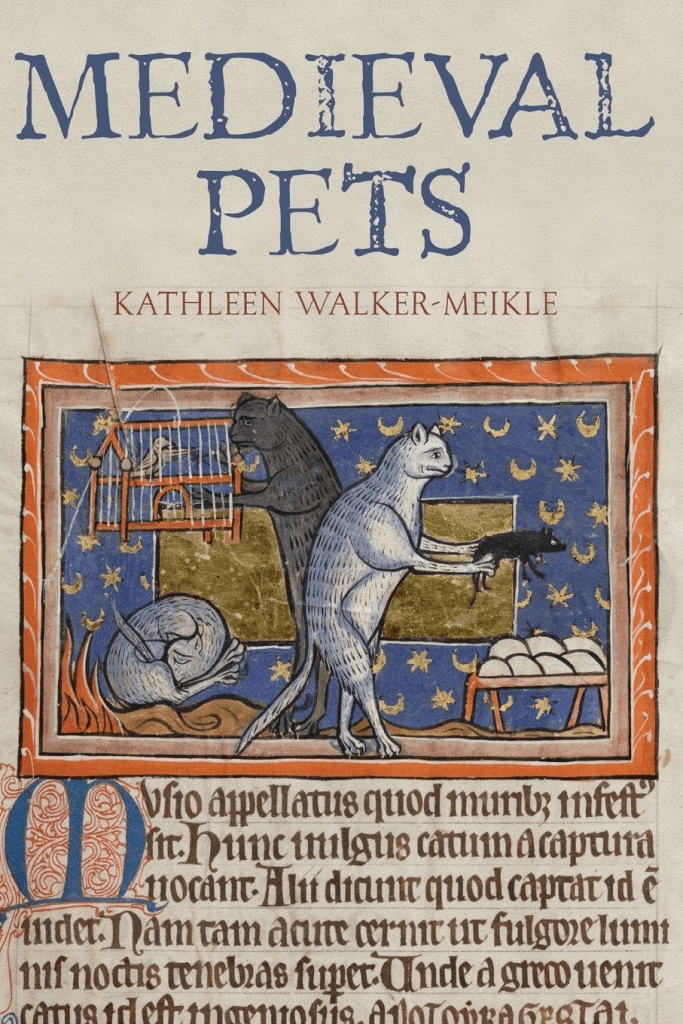
I love pets, I love the Middle Ages, so how could I resist this book!
As with most of my book reviews I’ll just share some bits I found interesting and talk a bit about what I think here and there, if needed.
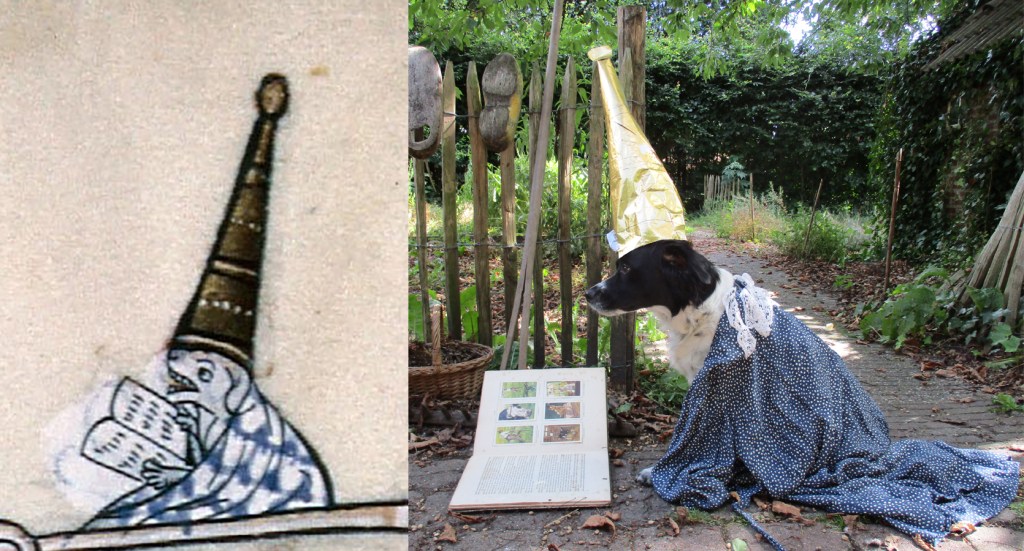
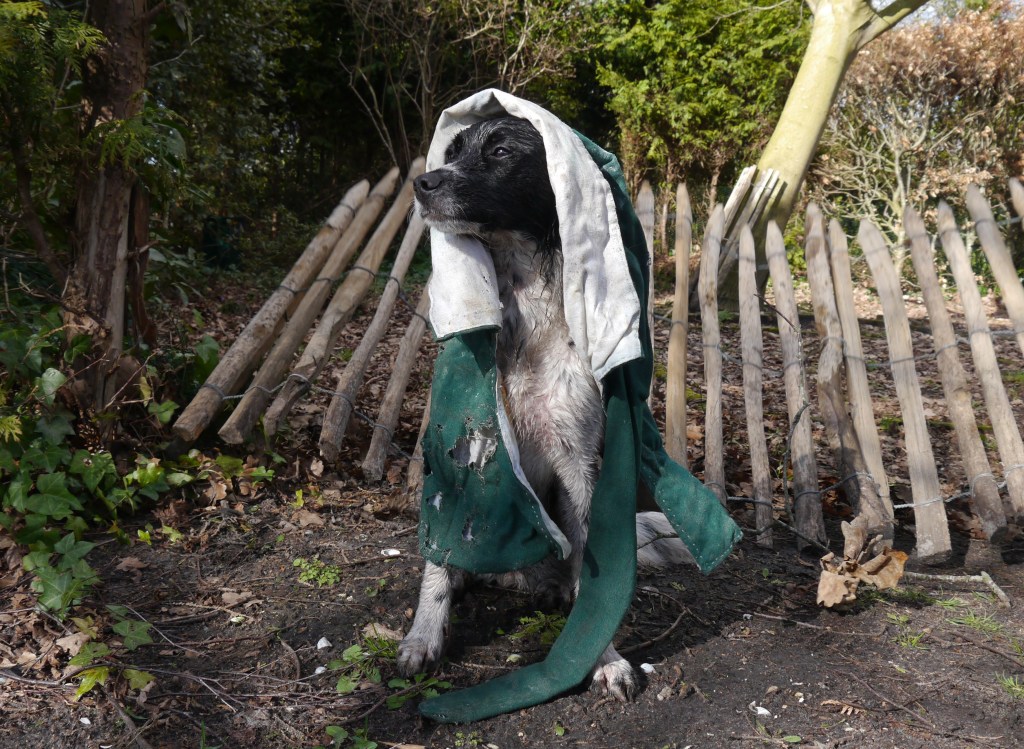
I will also share a few photos of my pets being a bit medieval, like Beike here:
Beike re-enacting a medieval illumination, hat was stuck to the gate, she only had to sit still for a few seconds and was well rewarded for the effort.
First quote from the book, some of the types of dogs medieval people classified:
“Among the remaining English dogs, Caius discusses working dogs, which include the ‘mastiue or Bandogge’, the ‘Dogge keeper’ (a guard dog), the ‘Butchers Dogge’, the ‘Molossus’, the ‘Dogge messinger’ who ‘carrieth letters from place to place, wrapped up cunningly in his lether collar’, the ‘Mooner’ (a dog who barks at the moon), the ‘water drawer’ (turns well wheels), the ‘Tynckers Curre’ (which carries the tinker’s buckets on its back), and ‘defending dogges’. Caius finishes with the lowliest sort of dogs, of ‘mungrell and rascall sort’: the ‘Warner’ (which just barks), the ‘Turnespete’ (which turns the spit in kitchens) and the ‘Daunser’ (a performing dog that dances to music).”
My dogs are mostly warners.
“Dogs in the medieval bestiary ‘know their name and love their master’ and ‘cannot live without human company’. The bestiary tells of one King Garamentes who was rescued by his dogs when captured by enemies, how Jason’s dog’s refused food on the death of his master, and how a dog in Ancient Rome tried to rescue the corpse of his dead master from the Tiber.”
Throughout history we’ve loved our dogs for their companionship but its their loyalty that impresses us much, it’s fascinating to read how far back these stories go but also how recent this is still what we talk about the most. Who among us hasn’t cried when we heard about the dogs refusing to leave their master’s grave? Or who run for miles to go home?
“After the murder in 1371 of Aubry de Montdidier, his dog showed particular hatred for a man called Macaire. Charles V of France (r. 1364–80) ordered a trial by combat between Macaire and the dog. The dog won the duel; Macaire confessed to the crime and was hanged.”
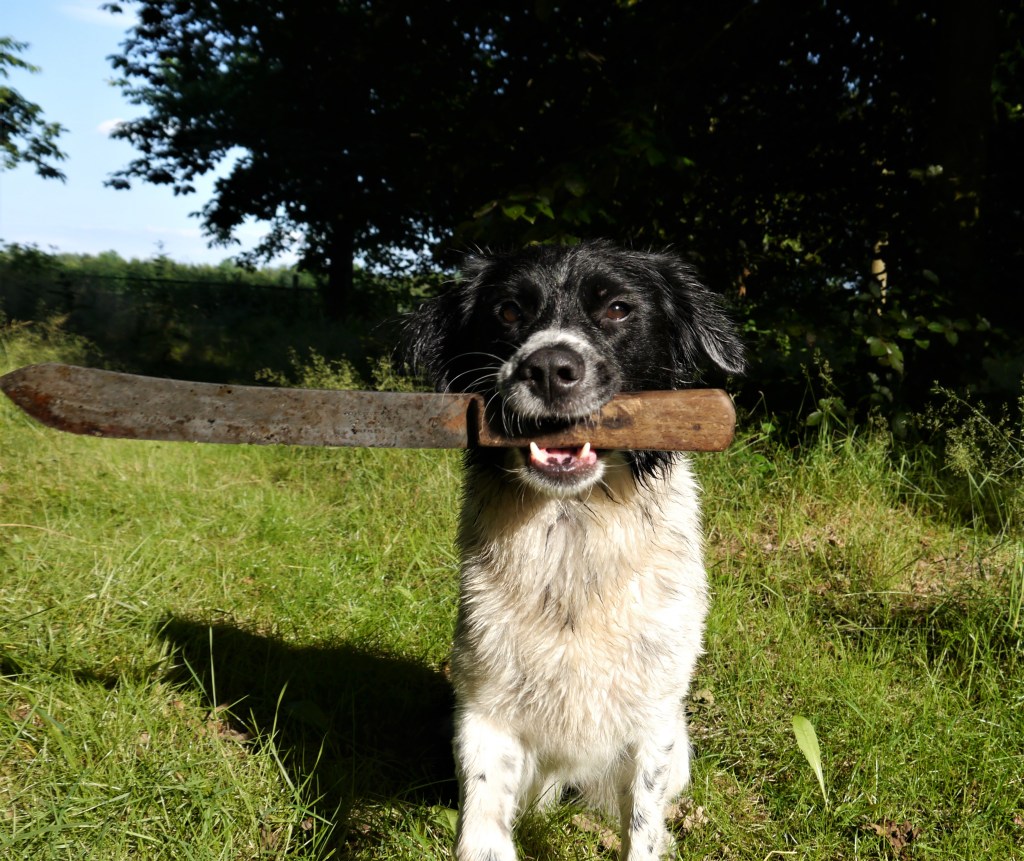
Now that’s my kind of justice. If something bad happens to me I’m sure my dog Beike will fight whoever is responsible. Before you laugh… here she is:
She will mess you up.
“When the French took the town of Niort after the battle of Chiset in AD 1373, he saw there an old dog lying day and night on a grave where its master, slain by the English, had been buried. The Duke of Berry, on witnessing the dog’s refusal to leave the grave was greatly moved and arranged for the animal to receive a pension of ten francs for life, which was delivered to a neighbour to feed it until it died.”
Its this kind of story that cracks the soul, beautiful, beautifully tragic.
The Goodman of Paris wrote the following in his 14th century guidebook:
“Of domestic animals you shall see how that a greyhound or mastif or little dog, whether it be on the road, or at table, or in bed, ever keepeth him close to the person from whom he taketh his food and leaveth all the others and is distant and shy with them; and if the dog is afar off, he always has his heart and his eye upon his master; even if his master whip him and throw stones at him, the dog followeth, wagging his tail and lying down before his master to appease him,and through rivers, through woods, through thieves and through battles followeth him.”
Dog showing loyalty, attacking an enemy and mourning his master.
And then there were cats…
“Cats were popular medieval pets. Their role, though, was more ambiguous than that of dogs, as in many households they were kept as mousers as well as pets. Since they would forage for their own food or eat leftovers, they are hard to trace in accounts. In the twelfth-century accounts of a lease of a manor of St Paul’s, there are mentions of one ‘cattus senex’ and of two ‘juvenes catti’. For the manor of Cuxham in AD 1293–4 there is an entry for cheese bought for a cat (‘I caseum comm’ per catum’); although this cat may have been a mouser as well, the fact that it was being fed special food and not left to fend for itself may point to its being a companion animal”
My cats would wipe out every mouse on earth for a piece of cheese.
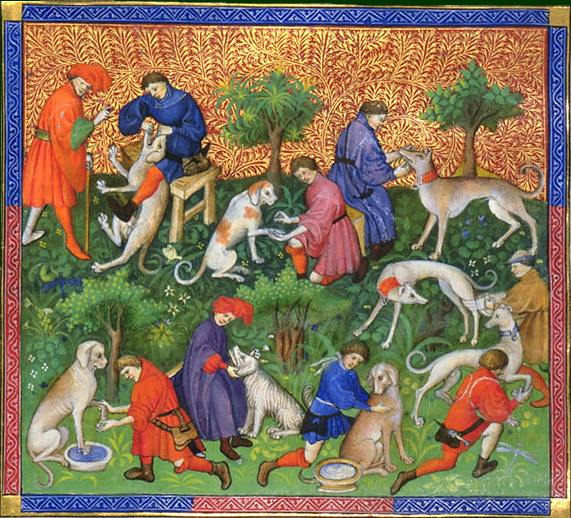
Gaston Phébus, Livre de chasse Des maladies des chiens et de leurs conditions France, Paris, XVe siècle. Paris, BnF, Département des manuscrits, Français 616 folio 40v.
It is kind of comforting how much medieval cats were like the ones we know today and in a way how much those of us who love cats are also similar to our medieval ancestors:
“Bartholemus continued by describing them as having large mouths, sharp teeth and long soft tongues. When young, they jumped on everything put before them and would chase and play with a straw led in front of them. In contrast, when elderly they were heavy and always sleepy”
I love this description of purring:
“Thomas de Cantimpré, added the characteristic of purring when describing cats: ‘They delight in being stroked by the hand of a person and they express their joy with their own form of singing.’’
I love reading the names of medieval pets, just like with common people their existence often vanishes into the fog of time, they were not written about, rarely recorded, we wouldn’t even know they existed and lived entire lives if it wasn’t for someone deciding to put their name to paper once. And they’re such good names too:
“Among individual names for cats, there is ‘Mite’, which is drawn and named in a thirteenth-century account book from Beaulieu Abbey, and Belaud, the beloved grey cat of the sixteenth century French poet Joachim du Bellay. Individual cat names that refer to the animal’s physical appearance appear in Old Irish legal texts, including Méone (little meow’), Cruibne (‘little paws’), Bréone (little flame, probably an orange cat) and Glas nenta (‘nettle grey’). Pangur Bán, the cat immortalized in a ninth-century poem by an Irish monk was likely a white cat, as the name is a reference to fuller’s earth”
Some dog names too:
“Individual dog names could derive from physical attributes, such as Sturdy, a dog belonging to Nicholas Litlyngton, a fourteenth-century abbot of Westminster, or Whitefoot, the dog of a fifteenth-century English family. A Berkshire manorial court ordered John Barker to get rid of his brindled dog called Hardy. Anne Boleyn owned a dog called Purkoy (originally belonging to Lady Lisle), a name derived from the French ‘Pourquoi’ due to the animal’s inquisitive expression”
Sometimes we learn about them from names chiselled into their collar:
“The dog on the effigy (AD 1448) of Sir Brian de Stapleton, at Ingham, Norfolk, is called Jakke, while a dog on a tomb of a member of the de Reynes family, in Clifton Reynes, Buckinghamshire, has the name Bo etched on its collar. Parceval is the name of the hound at the feet of the French knight Jehan de Seure (d. AD 1391) and Dyamant is the name on the collar of his lady’s dog on their effigies at Ozouer-le-Repos, Seine-et-Marne.”
More names:
“A list of a thousand and a hundred names suitable for hunting dogs is appended to a manuscript of The Master of Game, referred to above, listing different names for hounds, brachets, terriers and greyhounds. Although meant to help masters of hounds pick names, some might have been in usage among dogs kept as pets. Among the names are Troy, Blawnche, Nosewise, Swepestake, Smylfeste, Trynket, Amiable, Nameles, Clenche, Bragge, Holdfast, Crab, Ringwood and Absolom. Manuscripts of Gaston Phébus list hounds named Bauderon, Baudellette, Bloquiau, Briffault Cliquau, Fillette, Huielle, Huiiau, Loquebaut, Mirre and Ostine.”
More names, more!
“Another list of dog names survives from the records of a shooting festival in Zurich in AD 1504, which lists the names of the participants and their dogs, some eighty animals in all. The most popular name was Fürst(li) (Prince). Dogs with exotic, Classical and names from romance included Artus, Melesinn, Venus, Fortuna, Turgk and Soldan. The dogs called Sattin and Dammast must have had smooth and shiny coats. There are even dogs called after their owner’s occupation. Stosel (Pestle) is an apothecary’s dog, Hemmerli (Little Hammer) is a locksmith’s and Speichli (Little Spoke) belonged to a wagoner.”
Some of these are so good, I’m going to pick one for when I get another dog.
(c. 1315-1325). British Library
But when they die, they break our hearts, then as well as today:
“Thierry, abbot of Saint-Thrond (d. c. AD 1107), composed a long elegy on the death of his elderly lapdog Pitulus, who is described as a little dog (‘scarcely equal to a Pannonian mouse in his whole body’), with black and white fur. Thierry asks, ‘What was his function?’ and answers, ‘That his large master should love a small dog – that was his duty, to play before his master.’ He speaks of an owner’s grief when addressing the dead dog: ‘Such you were, beloved dog, to be laughed at and grieved over; you were laughter when you were alive, but look at the grief when you have died!’ Although his elegy is based on a classical animal elegy, the Culex, attributed to Virgil, Thierry’s deep sentiment of loss and personalization of the dead animal makes the poem more than mere imitation.”
I bet he deserved it:
“Maximilian, Archduke of Austria, on the night of his marriage to Mary, Duchess of Burgundy in 1477, was bitten in the bridal chamber by her small lapdog”
Dogs really were part of daily life:
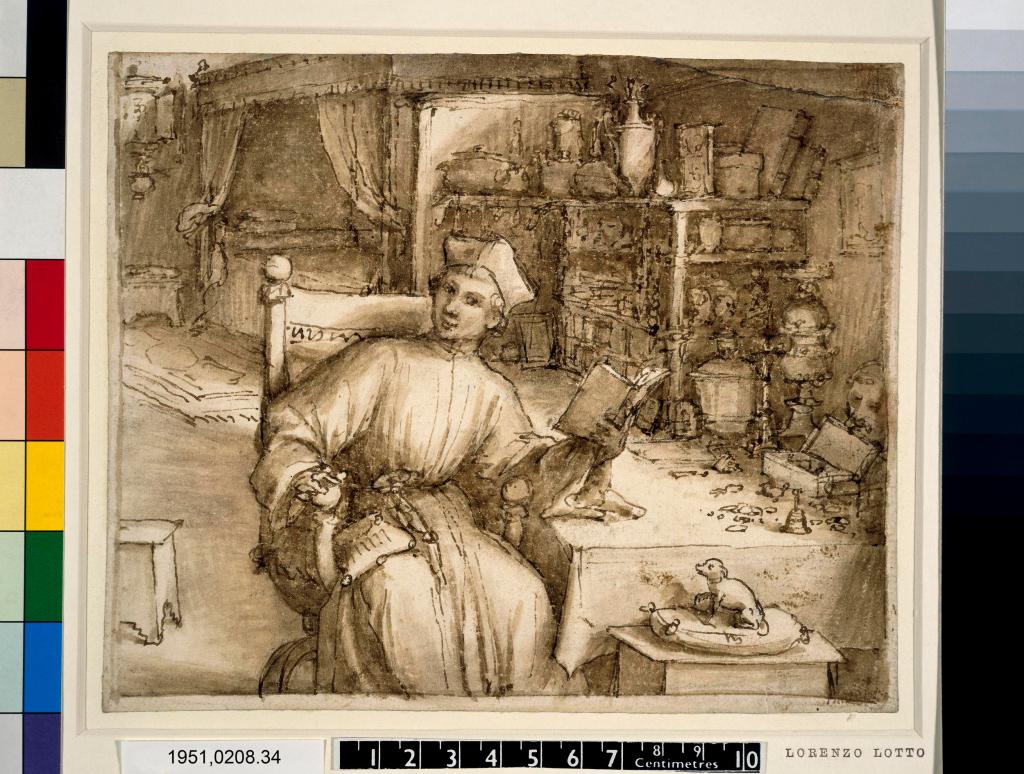
“Children would grow up with pets in their houses and doubtless played with them. Fifteenth-century schoolbooks illustrate this. One speaks of a family dog called Whitefoot, and a fifteenth-century poem written in a grammar school boy’s text mentions that there was a little dog in a house, kept in special quarters, and cared for by the lady of the house:
Clim, clam, the cat leapt over the dam My dame hath in a hutch at home A little dog with a clog; Hey dogs, hey!“
Think about all the times you’ve seen medieval people throw bones on the floor during a feast and dogs snacking on what fell off the table and then read this:
“By the fifteenth century, despite the widespread practice of having animals in close contact with diners, many courtesy manuals claimed it was not genteel for animals to roam around the dining hall, sit on the table, or be fed by hand or patted by owners. Courtesy books discourage the custom:
Yf thy nown dogge thou scrape or clawe That is holden a vyse emong men knawe. Where-sere thou sitt at mete in borde, Avoide the cat at on bare worde, For yf thou stroke cat other dogge, Thou art lyke an ape teyge with a clogge.”
As for pets sleeping in your bedroom…
“Pets had free access to sleeping quarters, the most intimate physical space. This was something that concerned the authors of fifteenth-century courtesy books. Hugh Rhodes’s Book of Nurture suggests that on preparing a chamber one must ‘auoyde the dogs, and shutte the doors’ and similarly John Russell’s Boke of Nurture requests that one ‘dryve out dogge and catte, or els geue them a clout’.”
Love this little story about nuns bringing half a zoo to church:
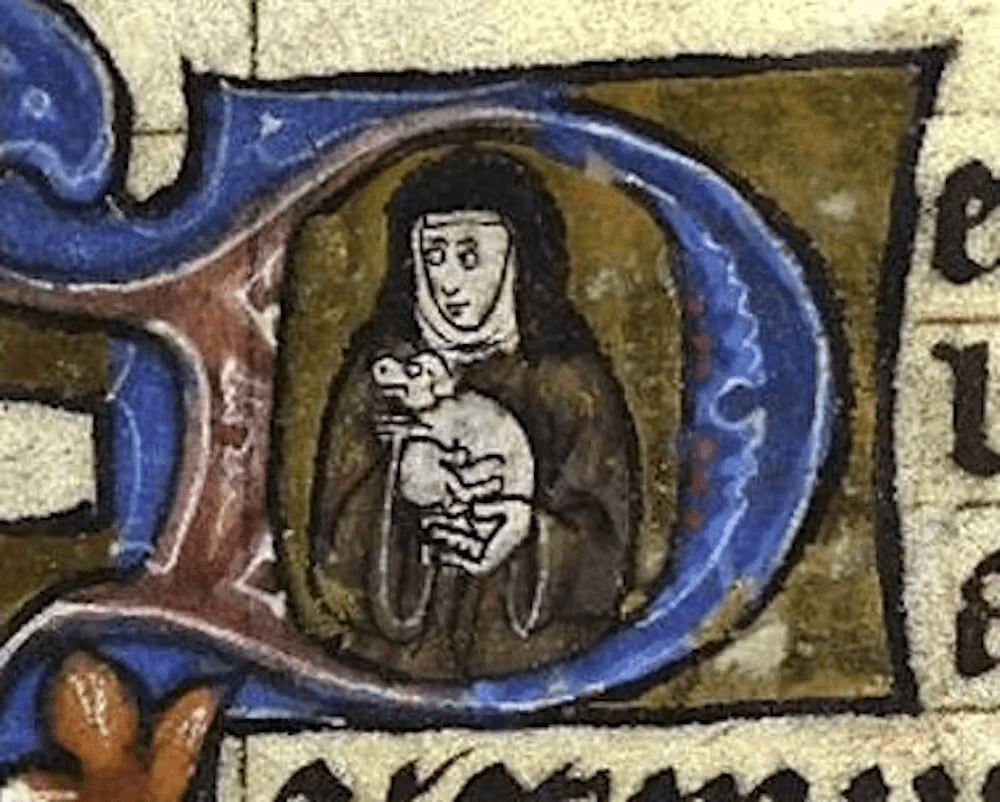
“William of Wykeham, Bishop of Winchester, issued a stern injunction in AD 1387 to the nunneries of Romsey, Wherwell and St Mary’s, Winchester, against taking a variety of animals into church; the nuns were paying more attention to their pets than the Holy Offices. The species listed included birds, rabbits and dogs, which were regarded as frivolous and distracting creatures.”
Stowe MS 17, f. 100r . British Library
Using dogs as an excuse to get close to its owner… a tale as old as time… worked for me:
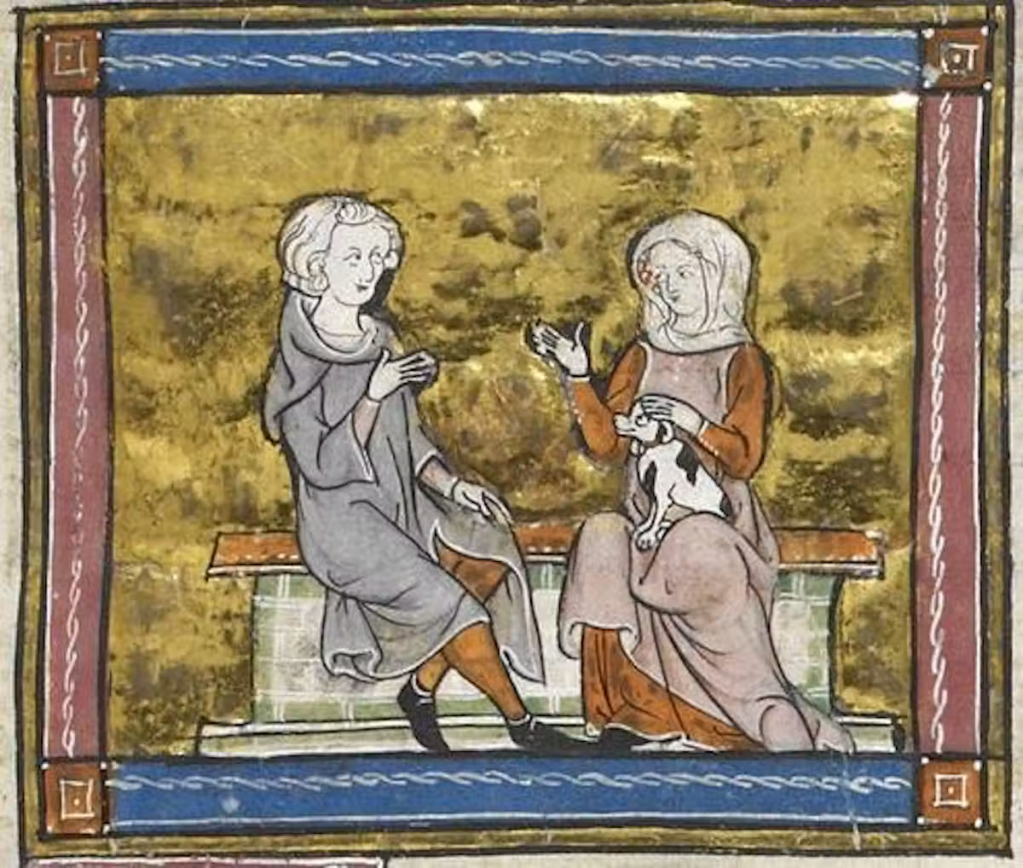
“When I had come so near them that I could see them quite clearly and openly, the little dog, which didn’t know me at all, began to yelp. I noticed that the lady, who well understood proper behaviour, was startled and called to it. But the dog paid very little heed to her call; he approached me barking and sunk his teeth into my robe. I grabbed him and, in his fright, he stopped barking. In my heart I was delighted to bring him back to his mistress, for it gave me the opportunity and occasion to go where I wished; therefore I kept stroking his coat.”
The end.
This is a lovely book full of interesting history but also just a lot of fun stories about pets and humans behaving in very familiar ways. If you love the middle ages and pets, like I do, you’ll love this book, its also a great gift.
Oh by the way, all dogs and cats were all good boys and girls, yes they were.
My dog Beike posing in one of my very very old medieval replica hoods.





One thought on “Book review: ‘Medieval pets’ by Kathleen Walker-Meikle (2012)”