
It is sometimes difficult to comprehend that many of our most favourite and common foods and spices were not available to ‘the old world’ till after Europeans found their way to the Americas.
Yes, once upon a time we somehow managed to survive without potatoes, tomatoes, tobacco and many more delicious things.
And yes, till the spice trade started increasing in size, many now common spices were either extreme luxuries or simply unavailable in Europe.
Some people think that because we didn’t have all the ingredients that we have today, that medieval food was bland and boring.
But this is not the case.
I’ve written a little bit about this here in my ‘Medieval Myths Bingo’ article (I’ll write more, one day), but I thought that making a list of every food, herb & spice available in Medieval Europe before Columbus made his trip, would be just as eye opening and also rather handy to have access to.
I hope that seeing all these ingredients will at least show that if people had the means, they could make really rather exciting food.
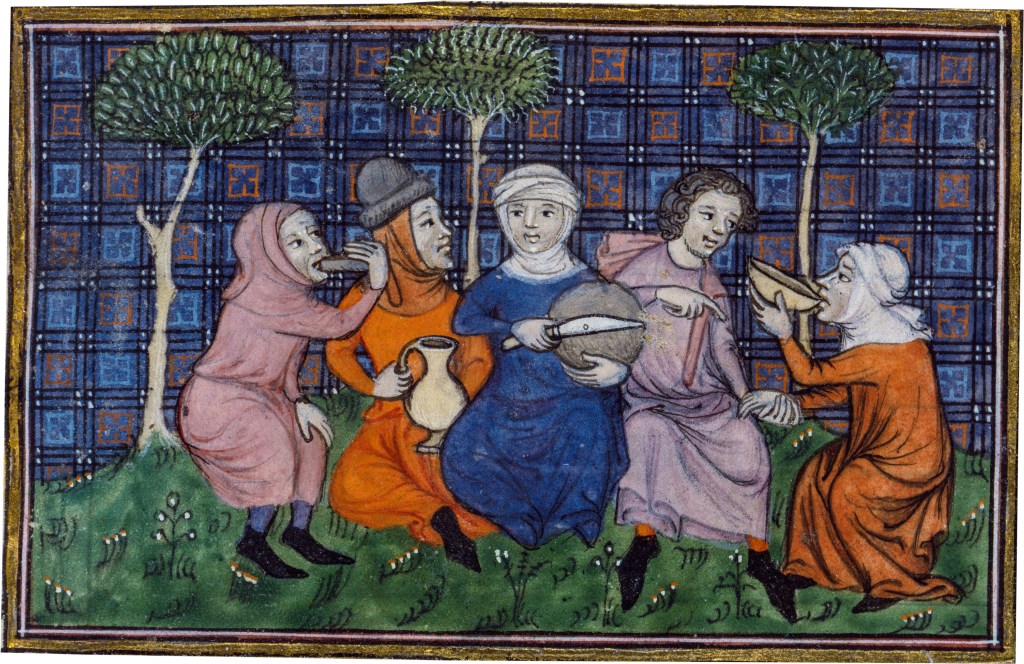
The medieval peasant had a well-rounded healthy diet that, depending on good harvests, kept them well fed and properly nourished as it wasn’t lacking anything major.
A favourite dish was pottage, which is often described or portrayed in a tasteless or boring way but depending on the cook and ingredients can be really rather delicious, I’ve tried medieval style pottage and am yet to taste one I didn’t like.
Recent research has also suggested that meat was a more common part of the peasant diet than was long thought and you’ll find quite a few ingredients below that were not at all luxurious or rare.
For more on the medieval diet, there are a few links at the bottom of this article.
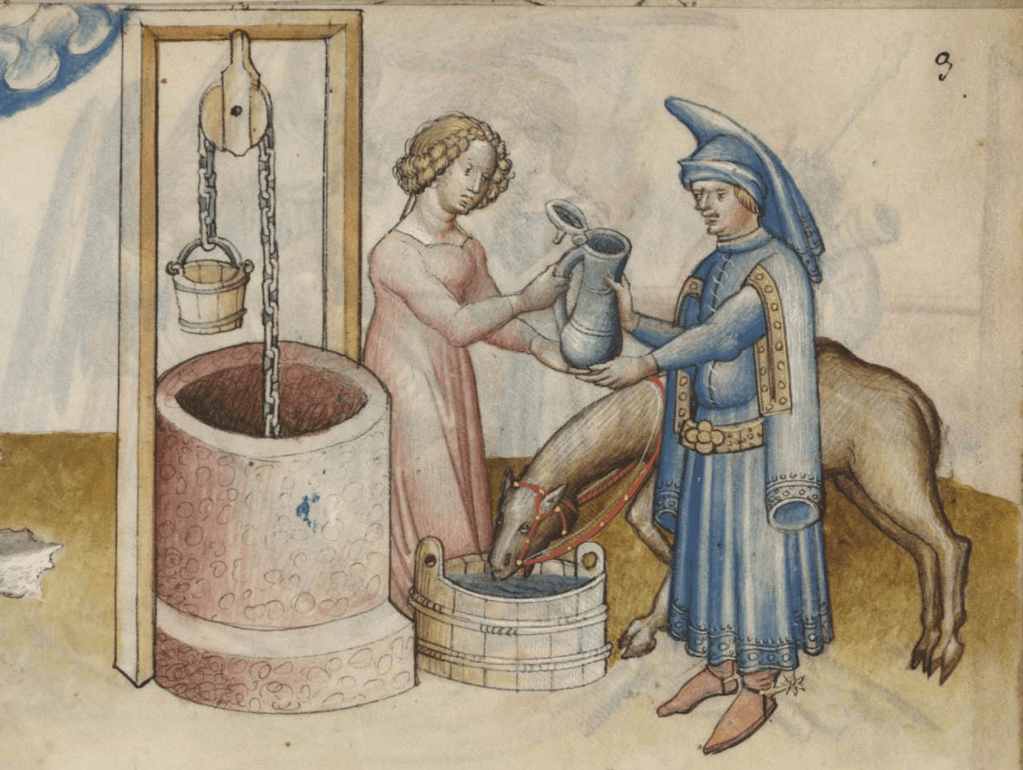
Oh by the way, you may also find this interesting, it deals with the nonsense claim that medieval people drank ale/beer in stead of water because they didn’t have access to clean water:
Drinking water in the Middle Ages
So here’s my list, it’s a work in progress, I’ll keep adding to it, if you spot any that don’t belong on the list or if you think of some that should be, please let me know.
Important: Everything on this list was available during the middle ages in the region we today call Europe.
However some of the ingredients were expensive, rare or very regional.
So not everything would be available to everyone, keep that in mind.
Special thanks to the incredible Medieval Cookery website that contains an extensive list of ingredients from medieval cooking books and also a ton of recipes (link).
Warning: Don’t go cooking and eating with any of these ingredients without doing a lot of research first, you never know if they’re healthy or perhaps even safe to eat.
Grains & cereals:
- Amidon (wheat starch)
- Barley
- Bread
- Buckwheat
- Einkorn
- Emmer
- Frumenty
- Macaroni (pasta)
- Malt
- Millet
- Oats
- Rice
- Rye
- Spelt
- Vermicelli
- Wheat
Meats:
- Bacon
- Badger
- Bear
- Beaver
- Beef
- Bittern
- Bustard
- Capon
- Chamois
- Chicken
- Cormorant
- Crane
- Curlew
- Deer
- Dove
- Duck
- Egret
- Eurasian teal
- European bison
- Gannet
- Goat
- Goose
- Great auk
- Grouse
- Gull
- Ham
- Hare
- Hedgehog
- Heron
- Horse
- House sparrow
- Ibex
- Lamb
- Lark
- Magpie
- Mallard
- Marmot
- Mink
- Moose
- Mutton
- Ox
- Partridge
- Peafowl
- Pheasant
- Pigeon
- Plover
- Pork
- Quail
- Rabbit
- Reindeer
- Seal
- Snipe
- Spoonbill
- Squirrel
- Starling
- Stork
- Swan
- Thrush
- Tortoise
- Veal
- Wild boar
- Woodcock
Dairy & Fats:
- Almond milk
- Brie
- Butter
- Buttermilk
- Cheeses (cow, goat, cheep, reindeer)
- Cream
- Eggs
- Hemp seed oil
- Lard
- Linseed oil
- Marrow
- Milk (cow, goat, sheep, reindeer)
- Olive oil
- Parmesan
- Poppyseed oil
- Ricotta
- Sour cream
- Suet
- Tallow
Seafood:
- Anchovy
- Barbel
- Bream
- Brill
- Carp
- Catfish
- Caviar
- Clam
- Cockle (bivalve)
- Cod
- Common dace
- Common periwinkle
- Common roach
- Crab
- Crayfish
- Cuttlefish
- Dentex
- Dogfish
- Dolphin
- Dory
- Eel
- European conger
- Flounder
- Frog
- Gar
- Gobiidae
- Goose barnacle
- Gudgeon
- Gurnard
- Haddock
- Hake
- Halibut
- Herring
- Isinglass
- Lamprey
- Limpet
- Loach
- Lobster
- Luce (Northern Pike)
- Mackerel
- Marlin
- Minnow
- Monkfish
- Mullet
- Mussel
- Octopus
- Oyster
- Perch
- Pike
- Plaice
- Pollock
- Porpoise
- Prawn
- Rays
- Salmon
- Sardine
- Scallop
- Sea bass
- Seaweed
- Shrimp
- Skate
- Smelt
- Snails
- Sole
- Sturgeon
- Swordfish
- Tench/Tenche
- Trout
- Tuna
- Turbot
- Turtle
- Whale
- Whelk
Roots & Tubers:
- Beetroot
- Burdock
- Carrot
- Fennel bulb
- Kohlrabi
- Parsnips/Pasternakes
- Radish
- Salsify
- Skirret
- Truffles
- Turnip
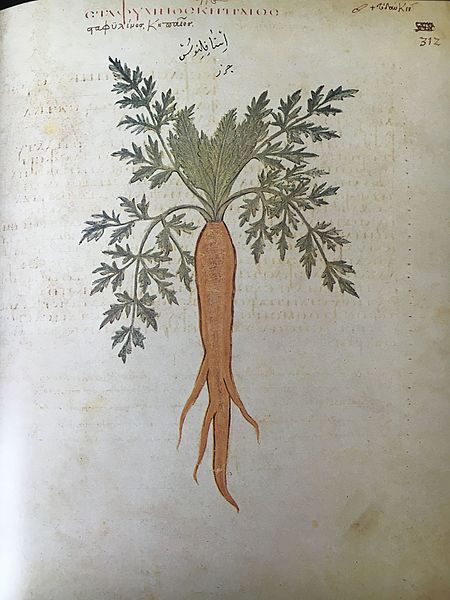
(P.S.: The idea that carrots weren’t orange or part of people’s diets till the Dutch fixed them is a myth, carrots were available in several colours like purple, yellow, white AND orange long before the Dutch developed, stabilised and popularised the orange one and made it more popular, more here)
Leafy Greens & Vegetables:
- Alexanders/alisander (Smyrnium olusatrum)
- Artichoke
- Asparagus
- Aubergine
- Beets
- Betony
- Borage
- Brooms
- Bugloss
- Cabbage
- Cardoon
- Cauliflower
- Celery
- Chard
- Chicory
- Columbines
- Coltsfoot
- Comfrey
- Cowslip
- Cress
- Cucumbers
- Dandelion leaves
- Dock
- Endive
- Fat hen
- Genista
- Good-King-Henry
- Gourd
- Kale
- Lavender
- Lettuce
- Mallow
- Marigolds
- Mushroom
- Nettle
- Orach/Orage
- Oxtongue
- Patience/monk’s-rhubarb/Munk’s rhubarb/Alpine dock
- Purslane
- Rocket
- Samphire
- Sea kale
- Sorrel
- Southernwood
- Sow Thistle
- Spinach
- Turnip Greens
- Watercress
- Wood Avens/herb Bennet/colewort/clove root/St. Benedict’s herb
Alliums:
Legumes & Pulses:
Fruits:
- Apple
- Barberries
- Cherry
- Citron
- Damson
- Hawthorn
- Lemon
- Lime
- Medlars
- Melon
- Olive
- Orange
- Peach
- Pear
- Plums
- Prunes
- Quince
- Raisins
- Rhubarb
- Rose hip
Berries & Small Fruits:
- Bilberry
- Blackberry
- Cloudberries
- Currants
- Elderberries
- Gooseberry
- Mulberries
- Raspberry
- Sloe or Blackthorn
- Sour Cherry
- Strawberry
Mediterranean/Southern Fruits:
Nuts:
Sweeteners:
Vinegars & Acids
Spices & Herbs:
- Angelica
- Anise
- Basil
- Bay leaf
- Black pepper
- Caper
- Caraway
- Cardamom
- Cassia/Casia (AKA Chinese Cinnamon)
- Chamomile/Camomile
- Chervil
- Cinnamon
- Clove
- Coriander leafs
- Coriander seeds
- Cubeb
- Cumin
- Dill
- Dittany
- Elderflower
- Elecampane
- Fennel seeds
- Galangal/Galingale
- Gilliflower or Gillyflower
- Ginger
- Grains of paradise
- Horseradish
- Hyssop
- Juniper berry
- Liquorice
- Long pepper
- Lovage
- Marjoram
- Mastic (plant resin)
- Mint
- Mustard seed
- Myrrh
- Myrtle
- Nutmeg/Mace
- Orange flower water
- Oregano
- Orris root
- Parsley
- Pellitory/Peletory
- Pennyroyal
- Primrose
- Rose
- Rose water
- Rosemary
- Rue, common rue, ruda, arruda or herb-of-grace
- Saffron
- Sage
- Salt
- Spearmint
- Spikenard
- Sumac
- Summer savory
- Tansy
- Thyme
- Valerian
- Viola/Violets
- White pepper
- Winter savory
- Zedoary, white turmeric, or temu putih
Sources;
- Dispelling Some Myths: Mediæval Peasants ate Bland Food
- What did medieval peasants eat?
- Early medieval England food and diet explored in new bioarchaeological studies
- Peasants in medieval England ate a diet of meat stew and cheese
- New research reveals what was on the menu for medieval peasants
- Beefing up Medieval Europeans: Meat Consumption in the 15th Century
- https://www.medievalcookery.com
- Spices found on 15th century royal shipwreck in the Baltic Sea


Thanks for this. It is much more helpful than a simple list of what’s NOT available (although that is interesting, too).
Did you mean to put the Great Auk (a bird) in with seafood, because it was found near the shore?
LikeLike