
A lot of people say that the Vikings had very good hygiene and that this was rare and unusual in medieval Europe.
A lot of other people say that the Vikings were vile and disgusting and that this was common and normal in medieval Europe.
Both these contradicting perspectives are based on two single sources, one Christian and one Muslim.
In this article I will look at the medieval Islamic source and explain what is reliable and what is unreliable about it and what it actually proves about hygiene among Viking-age Scandinavians.
I have analysed the Christian account in another article.
You can read it here:
Viking hygiene according to Chronica Joannis Wallingford
Important: Like all my articles, this is a work in progress. That means that I will change what I wrote when I learn new things, people find mistakes, etc.
When I use the term Vikings I’m talking about Viking-age Scandinavians, I know the word is more of a job description and perhaps not the right way to describe these people, their culture and era.
In AD 921 Ahmad ibn Fadlan ibn al-Abbas al-Baghdadi (better known as ibn Fadlan) accompanied an envoy send by caliph Al-Muqtadir bi’Llāh to king Almış of Volga Bulgaria.
They travelled from from Baghdad all the way to Bulghār, an incredible journey.
Along the way ibn Fadlan kept a detailed record of everything he saw and experienced, his writings are an incredibly valuable document for historians.
Unfortunately the originals have not survived so we have to depend on later, incomplete copies.
What remained for us comes from the Mashhad manuscript, an 13th century copy, and Yāqūt al-Ḥamawī’s quotes from the text, also from the 13th century.
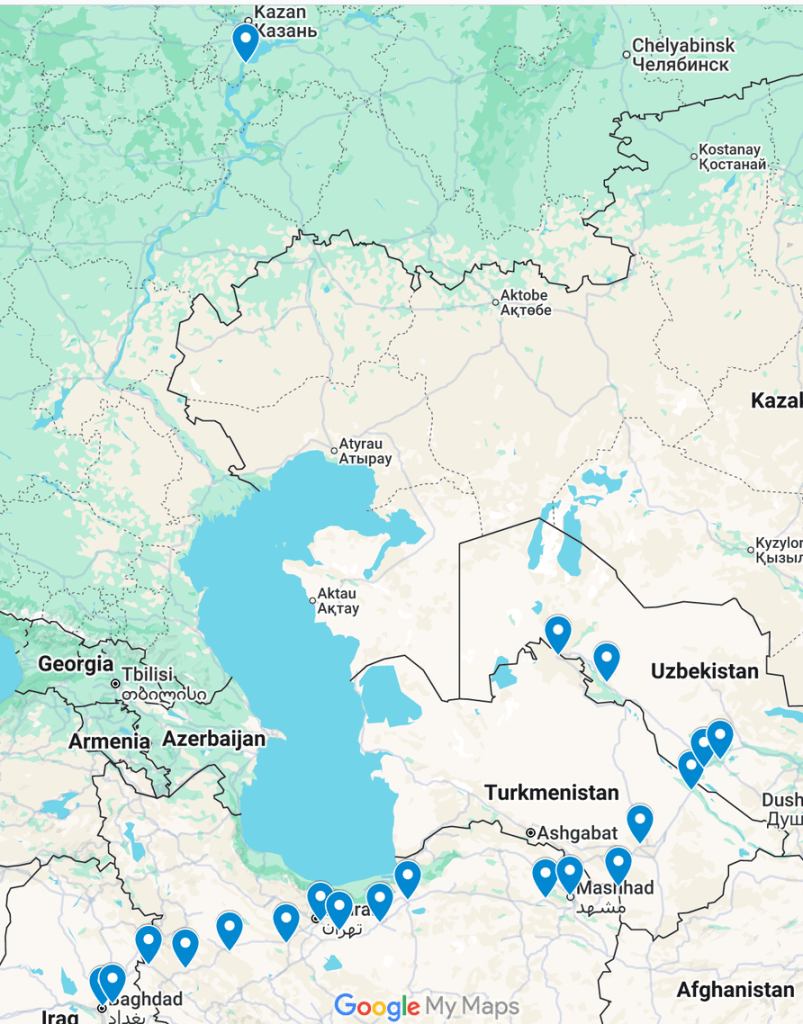
During his journey ibn Fadlan met a group of “Vikings” and what he wrote about them has become a widely known and to this day often shared description.
And as is often the case, what he wrote can be translated & interpreted differently.
The best, most reliable Arabic version of the text I could find is the following and comes from ‘Risālat Ibn Faḍlān’ by Dr. Sami al-Dahhan (1959)’:
وهم أقذر خلق الله لا يستنجون من غائط ولا بول، ولا يغتسلون من جنابة، ولا يغسلون أيديهم من الطعام، بل هم كالحمير الضالة”
ولا بد لهم في كل يوم من غسل وجوههم ورؤوسهم بأقذر ماء يكون وأطفسه. وذلك أن الجارية توافي كل يوم بالغداة، ومعها قصعة كبيرة فيها ماء، فتدفعها إلى مولاها فيغسل فيها يديه ووجهه، وشعر رأسه فيغسله ويسرحه بالمشط في القصعة، ثم يمتخط ويبصق فيها، ولا يدع شيئاً من القذر إلا فعله في ذلك الماء. فإذا فرغ مما يحتاج إليه حملت الجارية القصعة إلى الذي إلى جانبه ففعل مثل فعل صاحبه، ولا تزال ترفعها من واحد إلى واحد حتى تديرها على جميع من في البيت. وكل واحد منهم يمتخط ويبصق فيها ويغسل وجهه وشعره فيها.”
The translation I’m going with comes from ‘Mission to the Volga, in Two Arabic Travel Books’, by James Montgomery (2014), Professor of Arabic at the University of Cambridge:
“They are the filthiest of all God’s creatures. They have no modesty when it comes to defecating or urinating and do not wash themselves when intercourse puts them in a state of ritual impurity. They do not even wash their hands after eating.
Indeed, they are like roaming asses.
They must wash their faces and their heads each day with the filthiest and most polluted water you can imagine. Let me explain.
Every morning a female slave brings a large basin full of water and hands it to her master.
He washes his hands, face, and hair in the water. Then he dips the comb in the water and combs his hair. Then he blows his nose and spits in the basin.
He is prepared to do any filthy, impure act in the water. When he has finished, the female slave carries the basin to the man next to him who performs the same routine as his comrade.
She carries it from one man to the next and goes around to everyone in the house.
Every man blows his nose and spits in the basin, and then washes his face and hair.”
At first sight this all sounds pretty convincing and does indeed suggest that the Vikings had some rather disgusting habits.
But there’s more to it.
Let’s investigate.
What’s very important to remember is that ibn Fadlan was an outsider looking in, a sort of tourist.
An observer trying to interpret a group of people from a different way of life, with habits, ceremonies, etc. that were strange and unknown to him.
Which in some way also went against what his religion and culture considered acceptable.
From his own writings we know he used a translator, everything he wrote about came to him through someone else, if he witnessed something he didn’t understand he’d ask his interpreter who would then translate for him.
Not once would he have been able to directly discuss things with these people.
I’m not saying that he is unreliable but it is important to keep all this in mind.
After all, we know from many cases that it is not uncommon for misunderstandings to start this way.
If we were reading about how for instance an 19th century British explorer would interpret and judge what he saw while observing native tribes, we wouldn’t be surprised to find out that he got things completely wrong.
Another thing that makes this text a bit problematic is that we’re not really sure who ibn Fadlan is actually talking about.
They arrive by boat and live in large wooden houses by the Volga, near where the large Bulghar market is and many foreign traders from all over the known world come to do business.
They traded fur & slaves in exchange for silver dirhams.
Fadlan calls them الروسية, Rūsiyyah, Rus, not Viking, not Dane, not Scandinavian, just Rus.
He also doesn’t mention where he thinks they were originally from.
And although he does mention some of their religious ceremonies, he does not once mention the names of the gods these people worship, which would have helped identify them.
That these people were Vikings does not come from Fadlan, or any other contemporary sources.
What we do know about them suggests that although they likely had Scandinavian ancestry, they had been living, trading & travelling in this region for generations and that they had likely been mixing & living among Khazars, Ghuzz and other regional groups for generations, picking up new habits, traditions and manners that contemporary Scandinavians may have found surprising in stead of familiar.
That they had Scandinavian origins is likely, probably Swedish, but real convincing evidence is lacking.
Regardless, we can say that the people Fadlan mentioned were probably quite different from the people you would have met if you had gone to a Viking settlement, town or city in Scandinavia or Western Europe.
Calling them Vikings or assuming that their habits and way of life were representative for Vikings elsewhere is therefor, to put it mildly, problematic.
There’s a reason they’re usually called Rus, they were their own group, or groups, the Volga-Caspian Rus and the Kyivan Rus.
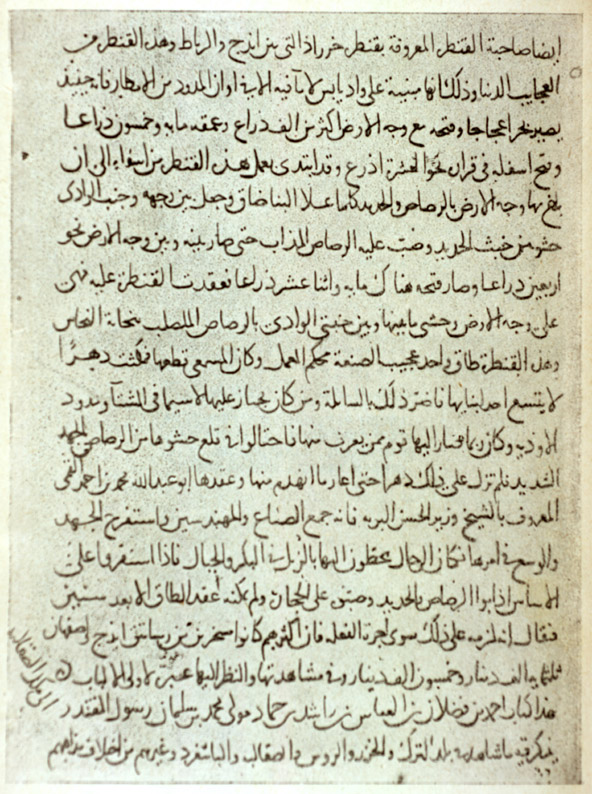
(source)
Let’s look at the first quote.
Here it is important to explain that Fadlan was Muslim and thus looked at things with a specific perspective.
His disgust here is religion based or at least motivated by it, some of the words he uses, the references he makes, are rooted in scripture.
Fadlan claims that the Rus didn’t wash themselves after several acts that he thinks they should have followed up with a specific kind of cleaning.
Fadlan used the word يستنجون (yastanjūna), which was perhaps not meant as just regular washing but a specific kind of cleaning, as the verb corresponds with istinjāʾ, the Islamic way of cleansing yourself after going to the toilet.
Fadlan isn’t saying that the Rus aren’t washing themselves at all, he’s saying that they’re not washing themselves the way he thinks they should based on Islamic ritual law.
To him it is disgusting that they don’t perform istinjāʾ after urinating or defecating and don’t perform ghusl after having sex.
His objection to them not washing their hands after eating seems more straightforward.
We also have to wonder how he knows they didn’t.
Where the people he was visiting really going to the toilet, having sex and eating in public but not washing in front of him?
Was he (and his interpreter?) following these people around after seeing them do those things to see if they were cleaning themselves properly?
What if they went home after their deeds because they perhaps wanted to wash in private or indoors where it was warm and where the water was heated by fire?
Did Fadlan spy on the bathers through an open window?
It paints a rather strange picture.
How did he know how the Rus were cleaning themselves?
It is also interesting to note that in earlier in his writings Fadlan visits the Ghuzziyyah Turks, and judges their hygiene habits using the same terms he used when he judges the Rus later on.
Here he also accuses them of not cleaning themselves properly after having sex and going to the toilet, they’re not practicing istinjā’ or ghusl.
Two completely different groups of people with different religions, habits, ideas, both being accused of being impure, not because they didn’t wash, bathe or clean themselves in any way, but because they didn’t do it according to Fadlan’s Islamic standards.
On to the second quote.
I also tried to find evidence of the Vikings practicing the shared washing bowl procedure but couldn’t find anything.
I find it peculiar that they shared a bowl for washing so thoroughly every morning, it sounds like it could easily take quite some time before everyone is done and would everyone just sit around and wait till it was their turn?
There’s something weird going on here, the whole situation makes no sense to me and Fadlan’s claim is the only time we’ve ever heard about this being done by anyone, ever.
In some of his texts Fadlan writes from a first person perspective, he writes about seeing something himself, that’s not the case in this section.
Did he see this himself?
Was he told about something happening he wasn’t allowed to observe in person?
Did he observe a special ceremony but misunderstood what it was about when the interpreter tried to explain it?
Or did these men just did exactly what he described?
We don’t know.
But there’s more that I find peculiar about the story.
It seems that at least in some cases his disgust about people washing or bathing in a certain way isn’t based on them literally using dirty water or doing it wrong, but on them using still standing water.
In Islam there’s a big distinction between standing (ma’ rakid) and flowing water (ma’ jari), standing water can easily become impure, for instance by dipping dirty hands in them or worse.
You’re supposed to use flowing water.
So Fadlan had hygiene related but also religious/cultural reasons to be disgusted by the idea of using a bowl of standing water, let alone sharing it.
Interestingly this idea seems to have also resonated in other religions and cultures.
Both Jews & Christians would in some cases use flowing water to wash hands.
In Medieval Europe there would be servants walking around during feasts carrying bowls and an aquamanile or jug, so that guests could wash their hands that was poured out for them.
For different reasons, but still a comparison I had to bring up.
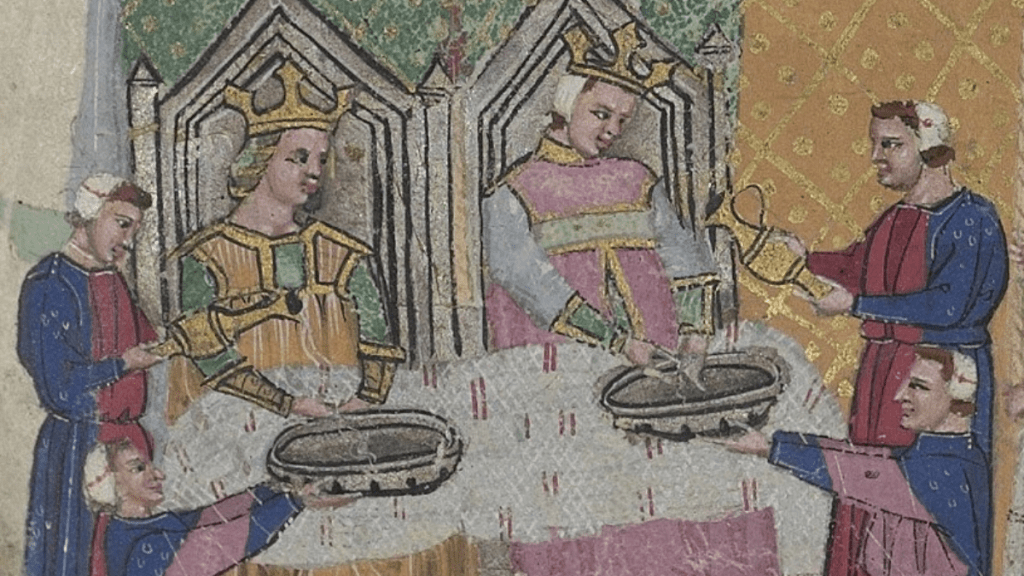
All this makes the scene even weirder and more unusual.
This doesn’t mean it didn’t happen, but it does show that there are a lot of questions surrounding Fadlan’s writing here but no real answers.
Some historians doubt that Fadlan observed this scene in person.
James Montgomery thinks that “Ibn Faḍlān’s Arabic implies that, for the Rūsiyyah, this communal wash is a binding ritual.”.
Neil Price wrote: “possibly, the ablutions that he describes in terms of poor personal hygiene but which might arguably have had ritual overtones that he overlooked.”.
I think, and this is of course just my personal opinion, that Fadlan did indeed observe or heard about a special event but didn’t quite understand what was going on.
There are many ceremonies in as many cultures that involve sharing something that is being passed around, like drinking from the same bowl or sharing a peace pipe.
An outsider may consider this unhygienic but with important cultural practices that doesn’t really matter to the participants.
His interpreter may have failed to properly explain what was going on or perhaps the regular daily habit of washing from a bowl got mixed up with a rare sharing event.
But no matter how you look at it, the scene Fadlan mentions seems to have been something unusual, at least not common enough for anyone else to mention it, ever.
And if it happened exactly the way he described it, it still only describes one occasion done my Rus traders somewhere on the Volga and is in no way, shape or form representative for what Vikings, Scandinavians or anyone else anywhere on earth was doing at the time.
So just like the writings by the monk in my other article, the writings by Fadlan should also not be used to make claims about Viking hygiene.
All the evidence suggests that Viking-age Scandinavians regularly washed, bathed & looked after their hygiene and appearance.
Combs and toilet sets are found all the time by archaeologists, the sagas mention bathing, etc.
There’s no reason to believe that these people were somehow unusually cleaner or dirtier than anyone else at the time.
I’ll end with a little comparison ibn Fadlan might have enjoyed.
Muslims partially wash themsevelves several times a day, they call this the wuḍū, a more complete washing/bathing called the ghusl happens weekly, sometimes more.
The ghusl involves washing your hair.
Which suggests that if Fadlan was correct about the Rus washing their hair every day, they did it more often than the Muslims.
Sources:
- Ibn Fadlan and the Rusiyyah, by James E. Montgomery (2000) PDF link
- Mission to the Volga, in Two Arabic Travel Books, by James Montgomery (2014)
- Two Arabic Travel Books, Accounts of China and India by Abū Zayd al-Sīrāfī, Edited and translated by Tim Mackintosh-Smith and Mission to the Volgaby Aḥmad ibn Faḍlān, Edited and translated by James E. Montgomery (2014)
- Ibn Fadlan and the Land of Darkness: Arab Travellers in the Far North (Penguin Classics)
- Muslims on the Volga in the Viking Age: In the Footsteps of Ibn Fadlan, Edited by Jonathan Shepard and Luke Treadwell (2023)
- Risālat Ibn Faḍlān, by Dr. Sami al-Dahhan (1959)
- New Perspectives on Eastern Vikings/Rus in Arabic Sources, by Thorir Jonsson Hraundal (2014)
- Ibn Faḍlān’s Account of the Rūs with Some Commentary and Some Allusions to Beowulf, in Franciplegius: Medieval and Linguistic Studies in Honor of Francis Peabody Magoun, Jr., by H. M. Smyser, Edited by Jess B. Bessinger Jr. and Robert P. Creed (1965)
- The Vikings: Facts and Fictions, by Kirsten Wolf and Tristan Mueller-Vollmer (2018)
- Muslims on the Volga in the Viking Age, Vikings on the Volga? by Neil Price, Edited by Jonathan Shepard and Luke Treadwell (2023)


