
Medieval Hygiene hasn’t been a serious topic of research for historians till relatively recently, the topic is more related to the daily life of common people, not knights, royals or other famous people, so less interesting for some, but for a long time the old opinions held since Victorian times were just repeated for generations.
Luckily this is changing, many historians these days are more interested in the lives of regular folks and this seems to have resulted in a new look at what we actually know about things like hygiene.
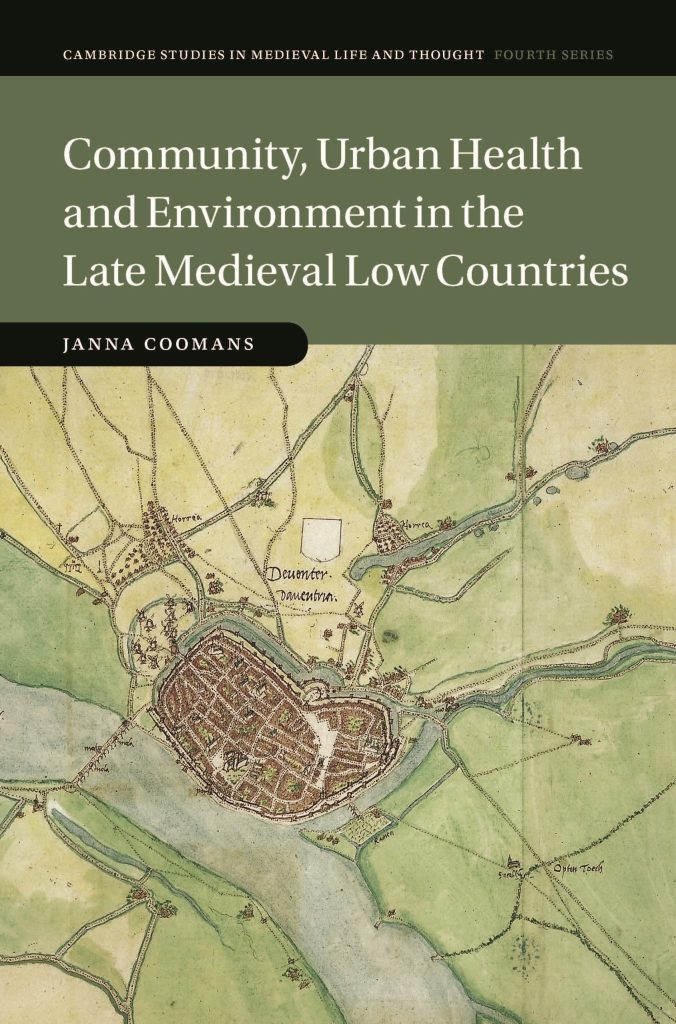
For this book Coomans spend countless hours exploring records and archives and the result is a book full of often small, personal stories that introduce us to people long gone, names we would never have known if they at one time had not gotten into trouble with the law or had to apply for a permit.
But the book also mercilessly destroys those old myths about those dirty middle ages.
Well, at least in the low countries.
And even though I, as a Dutch person, rather like the idea that we were somehow special and cleaner than everyone else in Medieval Europe, what this book mentions actually fits what we know about how things were in many other countries and regions.
Here are are some of the things I found most interesting, I first quote the text I found from the book and then respond underneath the image:
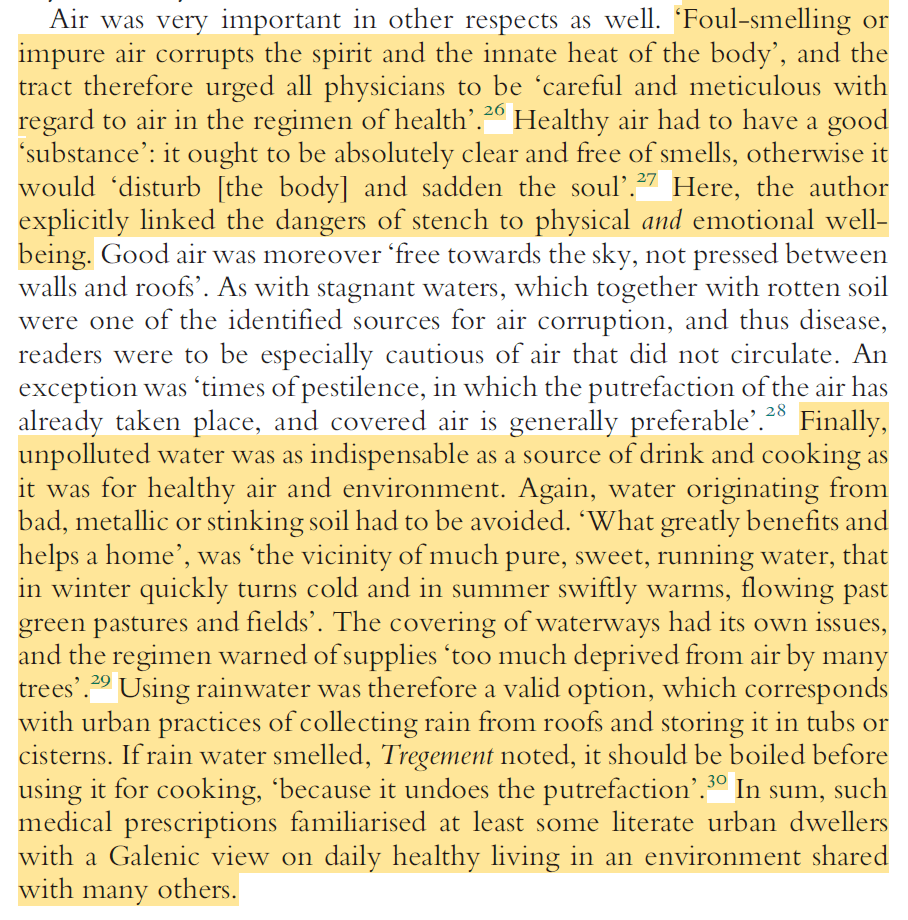
When you think about it this all makes so much sense, yet for some reason for centuries people believed that during the middle ages everyone’s noses stopped working or something.
Thanks to miasma theory people then were terrified of bad smells, they thought they were deadly, literally.
We see that in all the records, everyone was obsessed with trying to avoid stench.
And yes, of course, clean drinking water was essential, also note that people didn’t trust dodgy water and that even rain water should be boiled when it smelled a bit iffy.
Just another reminder that our ancestors were not as dumb as some seem to think.
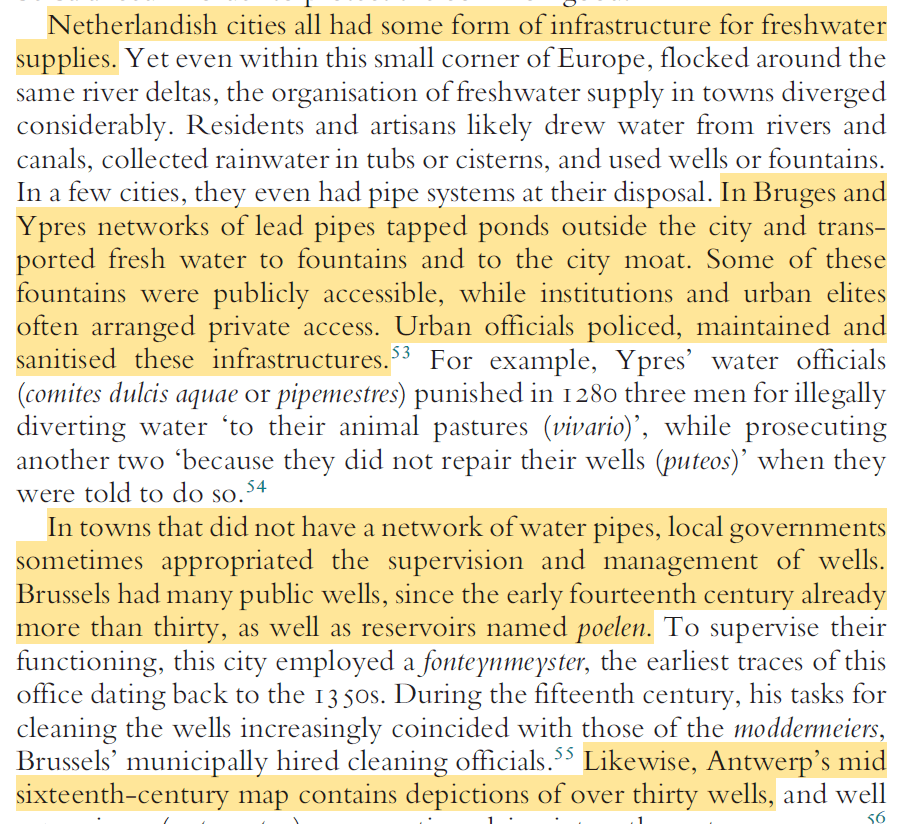
Look at that, ALL Netherlandish cities made sure freshwater was supplied to its citizens, lead pipes, ponds, public fountains, public wells, etc.
Yet we’re still led to believe that medieval people found it so difficult to get clean water that they drank beer in stead, yes, that’s a myth.
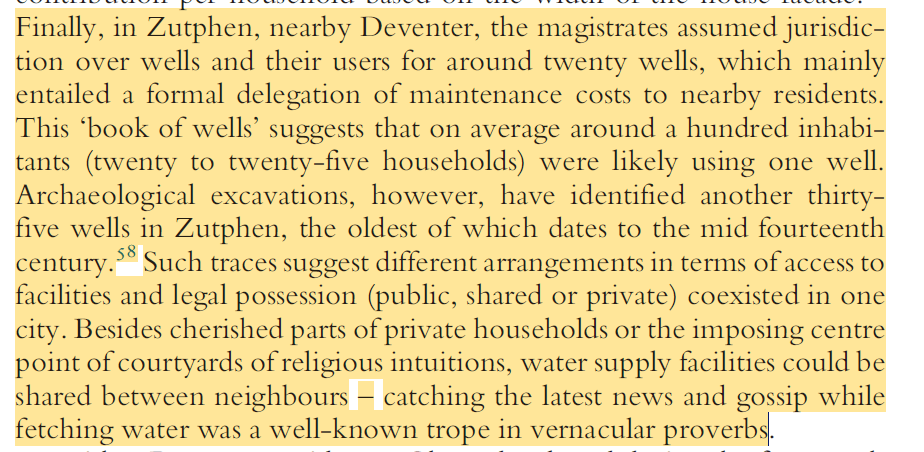
Wells all over the place, records often only mention public wells or wells that for some reason (like complaints) had someone write about them.
There were so many more, after all in much of the low countries water is very near to the surface and not that difficult to access.
As far as I know there has not yet been a historian who wrote a book or paper about how many wells/water sources were available to our medieval ancestors.
I think it’s an excellent topic of research as it’s connected to so many myths and misconceptions.
There being a lot of easy access to clean water will clash with the idea of bathing being difficult, drinking water being polluted, etc.
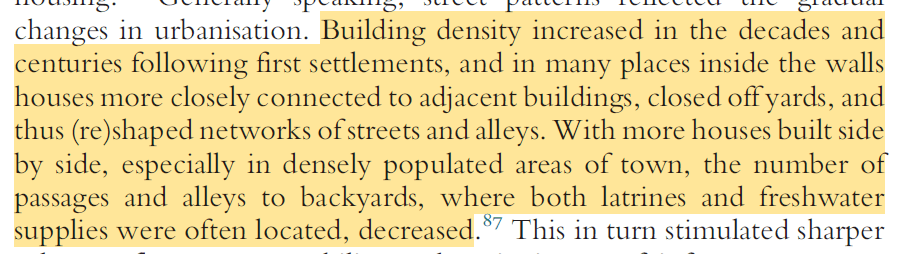
I’ve been trying to explain this for years, people had wells and outhouses in their yards and cities/towns had a highly agricultural character for much of the middle ages and things didn’t start to get seriously wrong till the cities became overpopulated and these outside places started to vanish or become inaccessible.
Many of the stories about pollution and so on actually started showing up after the middle ages.
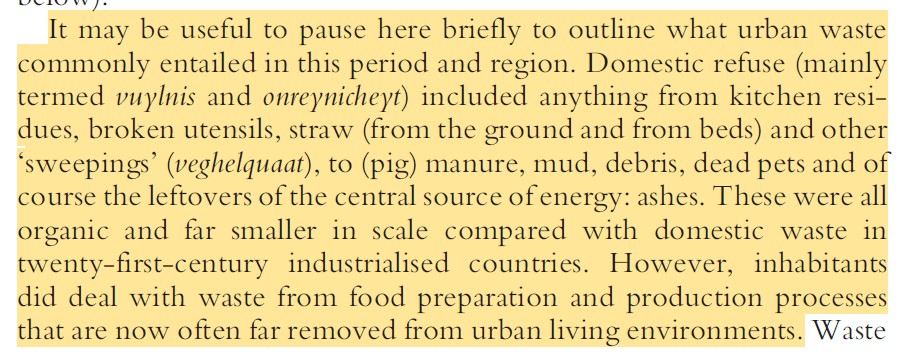
Another important thing we have to keep in mind, we modern folks have SO MUCH waste but our medieval ancestors had almost none.
It was all organic, much was recycled, collected, etc.
We need our waste to be taken to a dump, medieval people could throw much of it in their garden without it causing any trouble or stench.
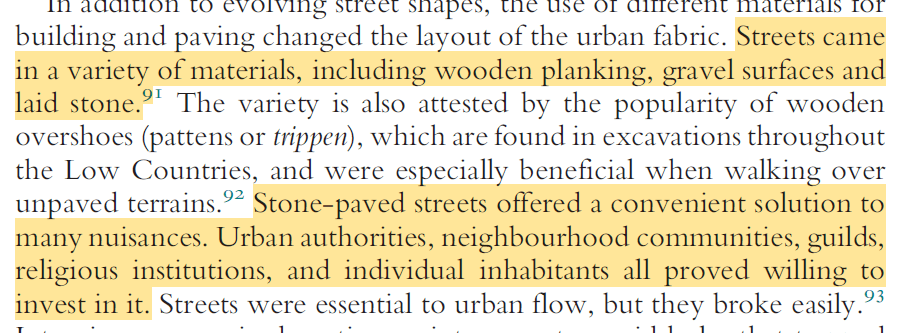
The popular image of Medieval streets is one of dirt, covered in filth, that would turn into a mudbath when it rained.
And although most roads and streets were indeed just compacted earth, paved streets were more common than many people seem to think.
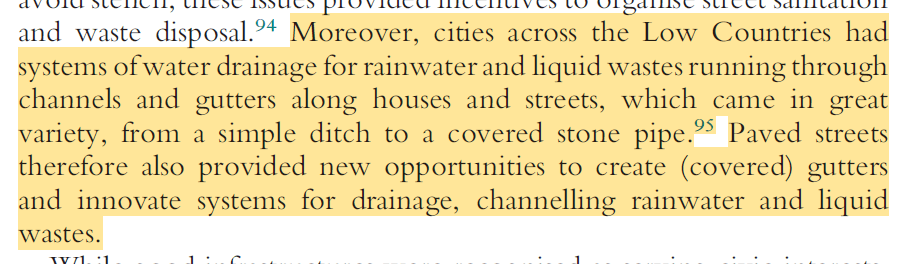
Medieval cities are often described as having open sewers, but it seems that in many cases these were actually just drains that were just meant for liquid waste and rain, just like the street gutters we still have today.
Again it just makes sense.
If you put something solid in the drain, like you know, the famous image of emptying a chamber pot into it…, the whole system could get clogged, the street would flood and your neighbours will come and introduce your face to their fist.
I find it also interesting that we keep talking about covered stone pipes and drains but somehow never call them sewers.

Important to remember is that these laws being made does not mean there were no rules or expectations before this time.
Laws were often only written down because those in power decided to get involved to make a bit of money (yay fines!), to expand a system that was working well in one neighbourhood to the rest of the city or because things got out of hand.
It’s possible, even likely, that people had rules about all these things long before a single law was written.
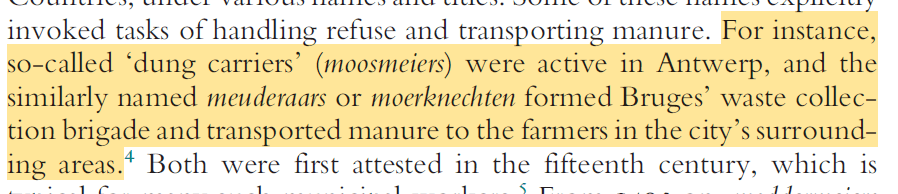
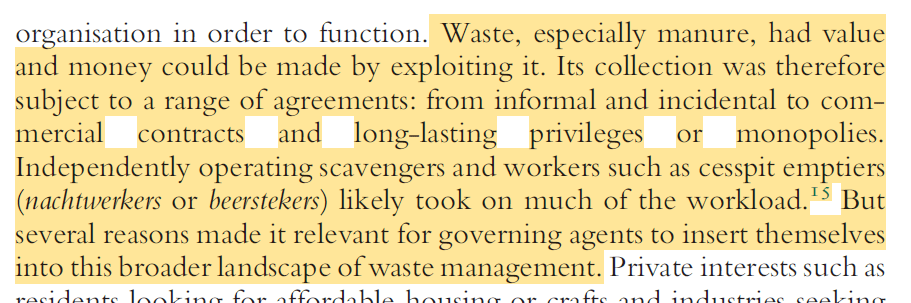
Another thing I keep repeating; yes there was poo and manure all over the place in medieval cities, towns and villages, but they had value and were collected and sold on for use by farmers.
Medieval streets full of manure up to your elbows and nobody caring about it just makes no sense.
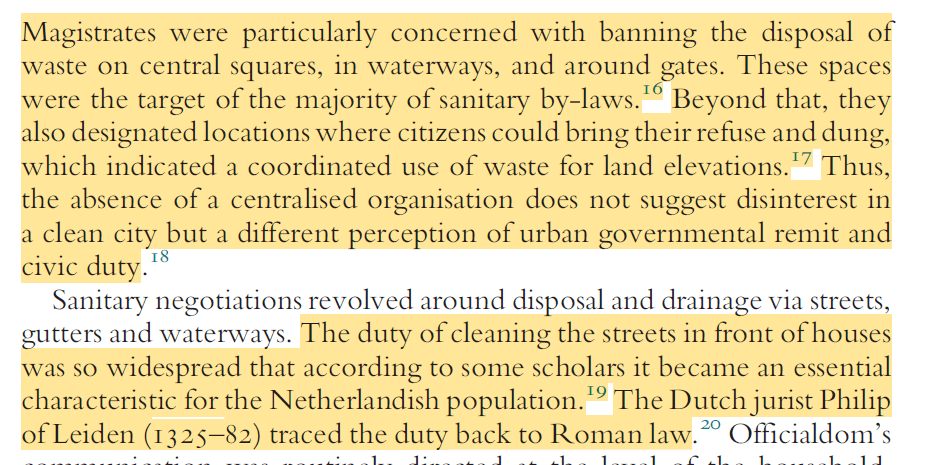
The part about the cleaning the street in front of your house is funny to me because the idea of sweeping the pavement outside your front door was a common sight in the Netherlands I remember from my childhood.
Duty became tradition.
It’s also interesting that it’s traced to Roman times, suggesting that, as I suggested earlier, people were doing these things long before it was written about in the middle ages.
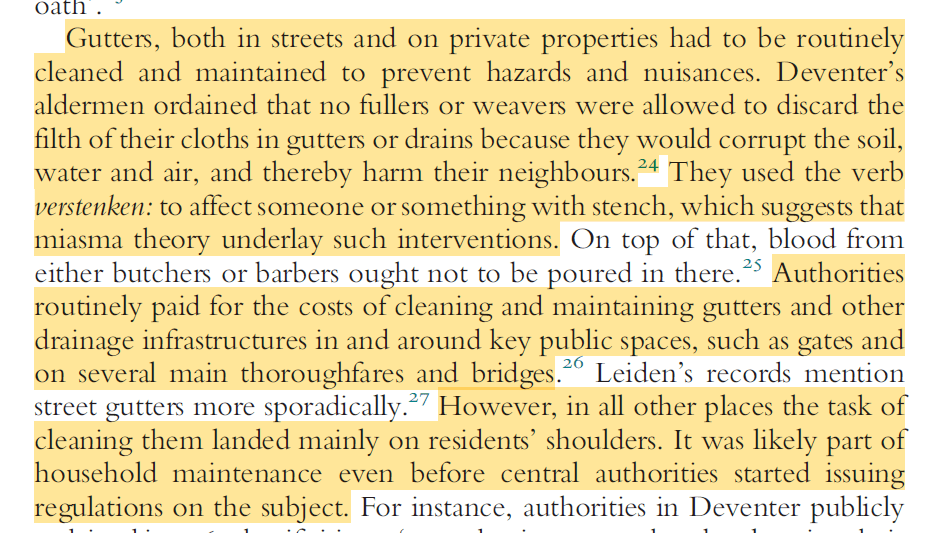
More details about how important medieval people thought it was to keep those gutters clean and free-flowing.
Yes the gutters that according to tv & films were used to just dump any old rubbish in…
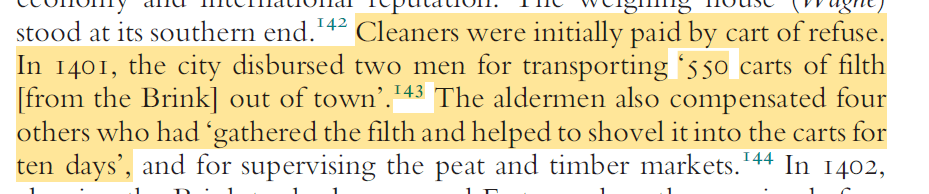
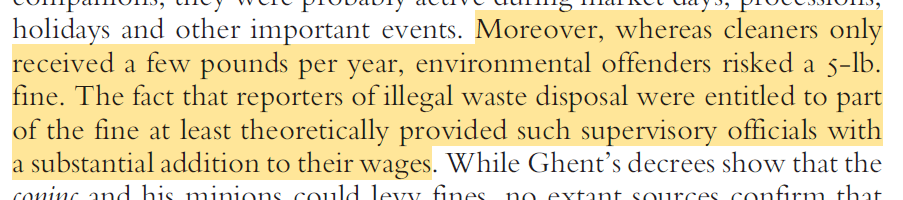
Municipal street cleaners, does that fit the old image of the dirty middle ages?
I also love the idea of snitches getting part of the fine, they should bring that back!
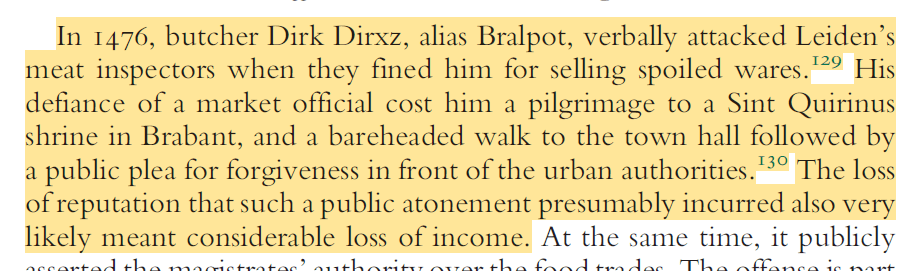
Dirty Dirk!
I must admit I rather like these medieval punishments, public shaming followed by a forced holiday.
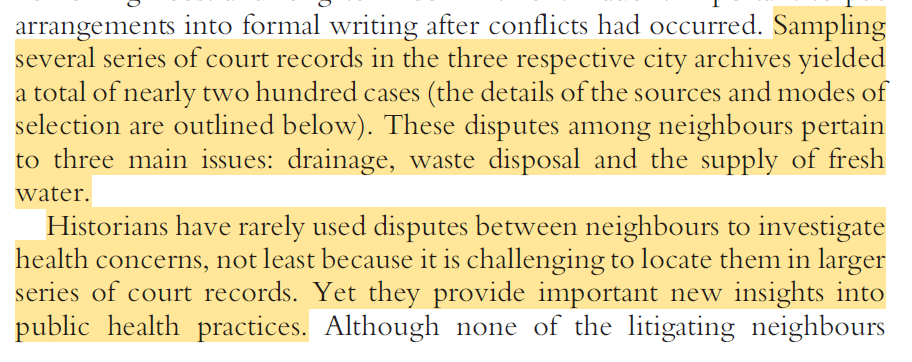
And this is what makes this book so interesting.
It shows us what life was really like by looking into court records that most other historians barely glanced at.
This was the day to day reality in a medieval city, people cared about hygiene, cared about having clean water and got upset and complained when there was filth.
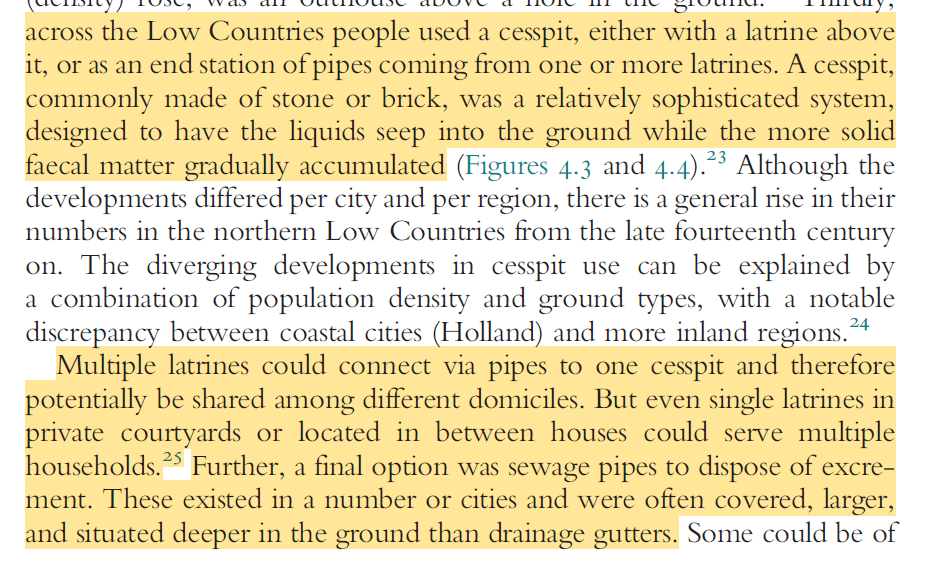
Latrines or outhouses were common but also connected with pipes, which I must admit was news to me.
It’s good to be reminded of how cesspits actually work.
Sewage pipes… covered… large… deeper… but still we’re hesitant to just admit that sewers existed and weren’t just a Roman thing.
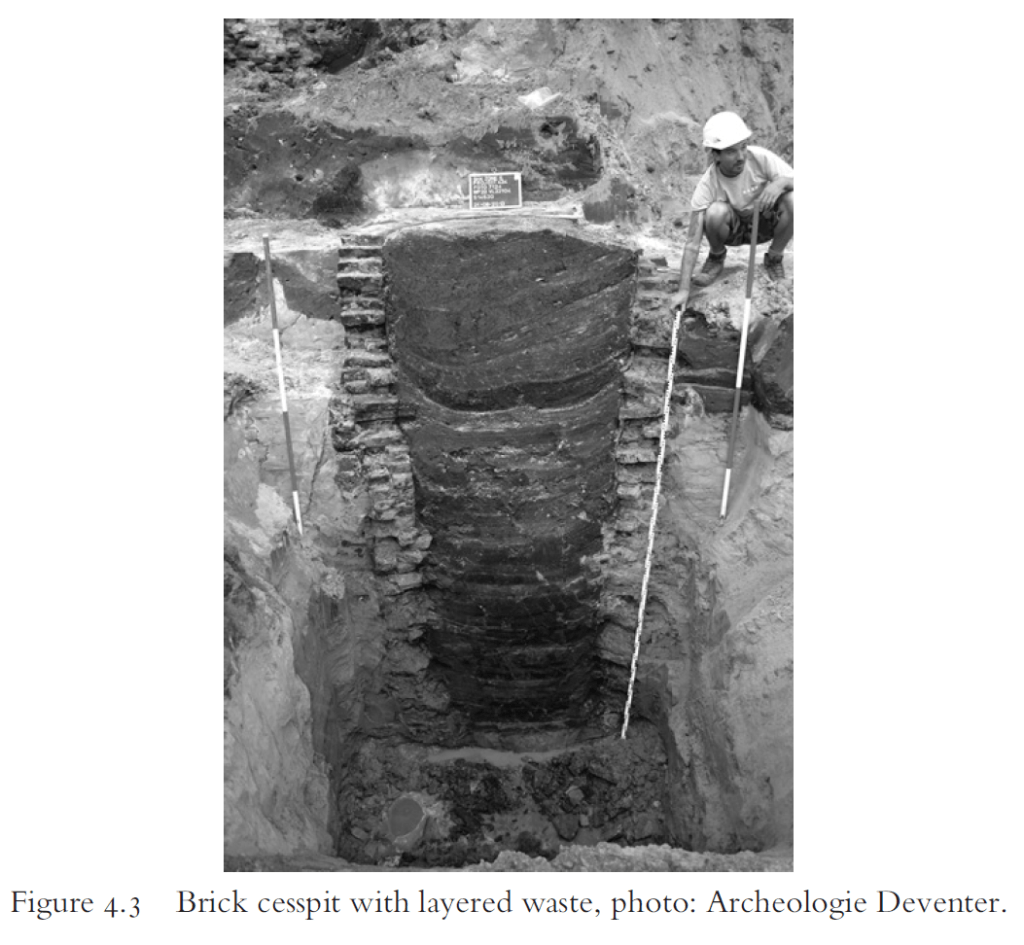
That’s a serious cesspit, imagine how long it will take for that to fill up.
Many of these contain remnants of straw which was likely used to wipe backsides with but would have also had an effect on the smell, just like dry compost toilets do today.
Which according to some experts may mean that these cesspits didn’t smell as bad as one might assume.
You can read more about that here; The environmental archaeology of garderobes, sewers, cesspits and latrines by James Greig.

This is how much value poo had.
But it also shows how scared or irritated people were by the bad smells, they didn’t want to see, hear or smell it so it had to be done early in the morning and not on important days.
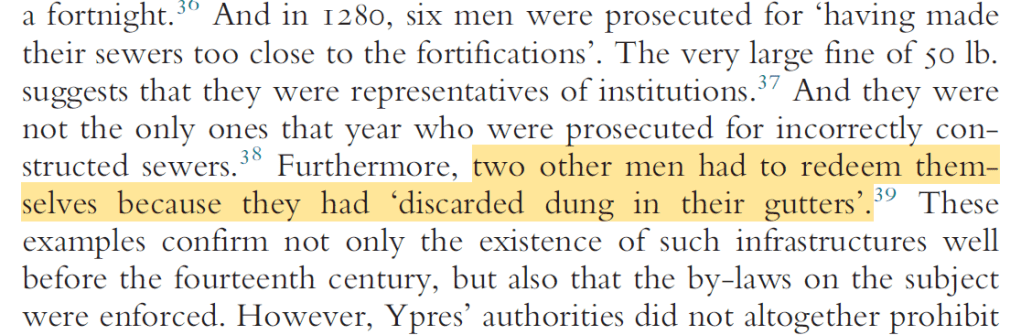
And yet for generations we believed that medieval people just emptied their chamber pots into the streets…
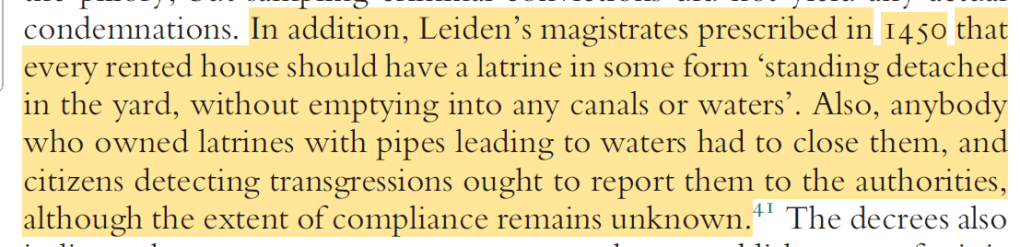
Imagine that, every house a latrine, this wasn’t even a thing in Victorian London till the 1870s.
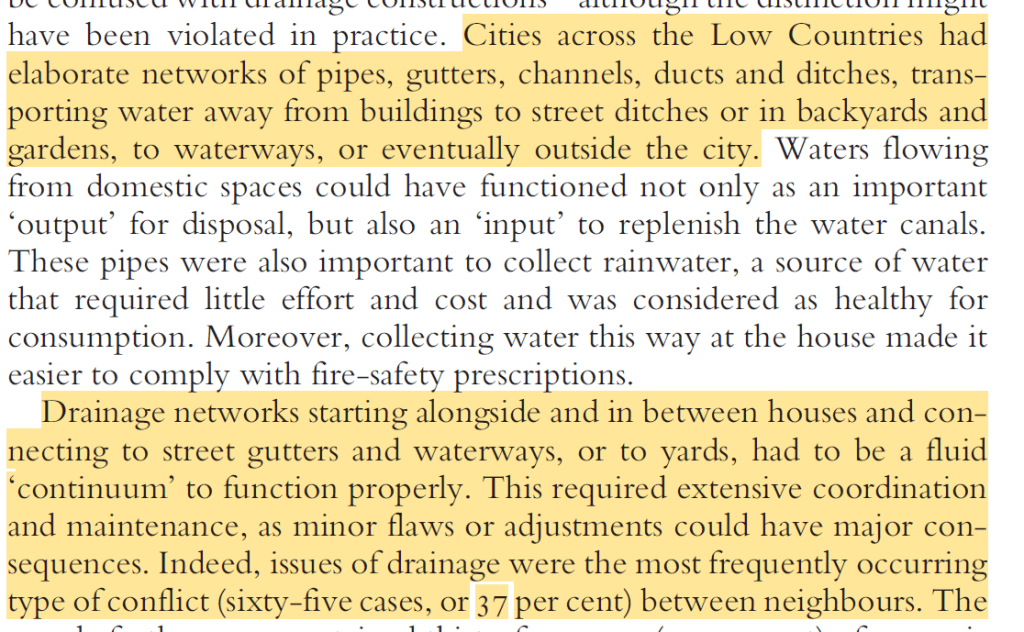
More advanced than many think!
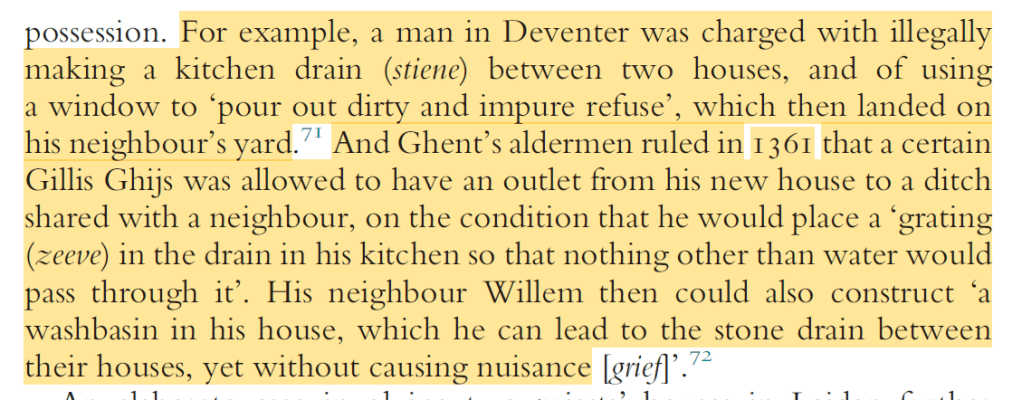
A kitchen drain!
These are mentioned quire regularly in the records, did you even know those existed?
And a sink strainer?
In the middle ages?!
Awesome.
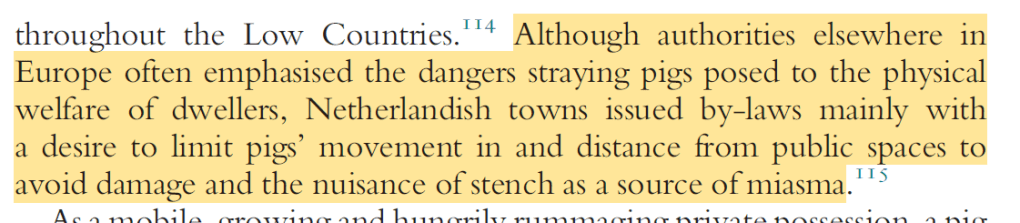

Miasma mentioned! People were literally terrified of bad smells, remember that, have it tattooed onto the inside of your eyelids: if people think bad smells can make you sick and even kill you… they care about filth & waste!

To me this perfectly shows how some historians in the past did their research.
They read the yellow bit, concluded that medieval cities were a mess and closed the book, ignoring the green part where we can see how people fixed the problems!
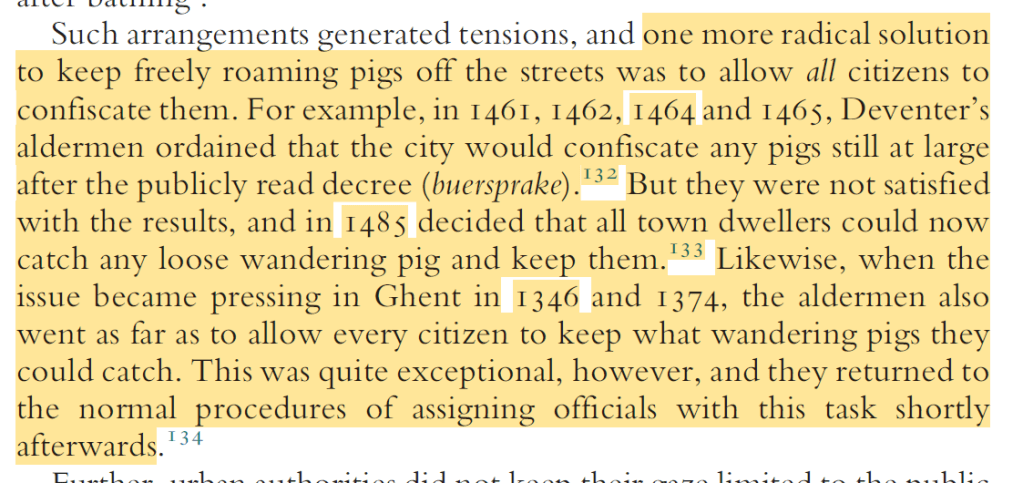
Yes yes, there were laws about pigs but do we know if people really obeyed them?
Well yes, we see this in the records but they also did this smart thing again where people could make money by dealing with law breakers.
How realistic is the image of free roaming pigs in medieval cities (as often shown in tv shows & films) when anyone could just grab the pig and keep it?!
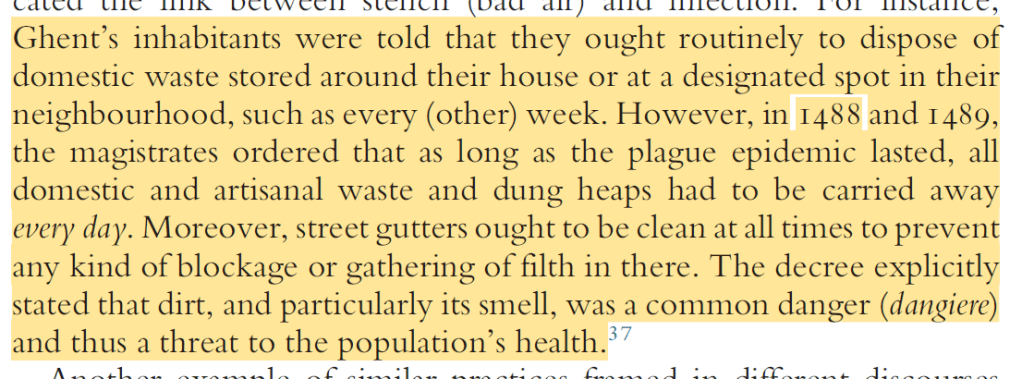
Although a plague outbreak is a pretty good excuse for a city to actually become filthy because society pretty much collapsed, here we see that actually the opposite happened in some cities.
Like here, it made people even more obsessed about keeping everything clean.
Again because of the miasma theory of course.

Can’t repeat this often, so many people still think everyone got married when they were 8 or something.
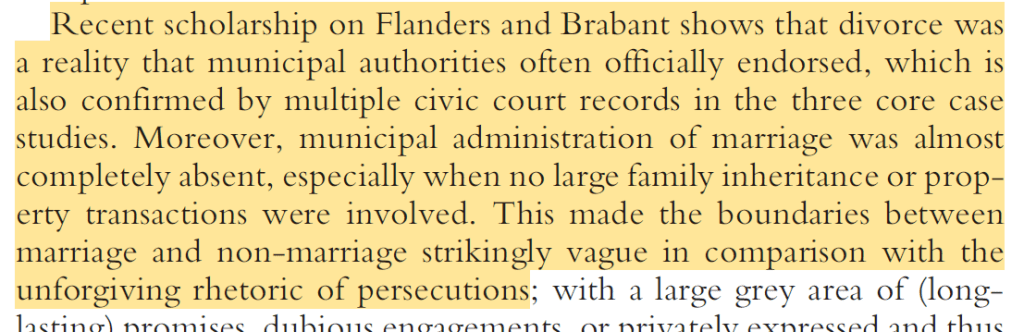
Another thing people may find surprising, we’ve been told that nobody got divorced, reality is that divorce and/or separation were not that uncommon.

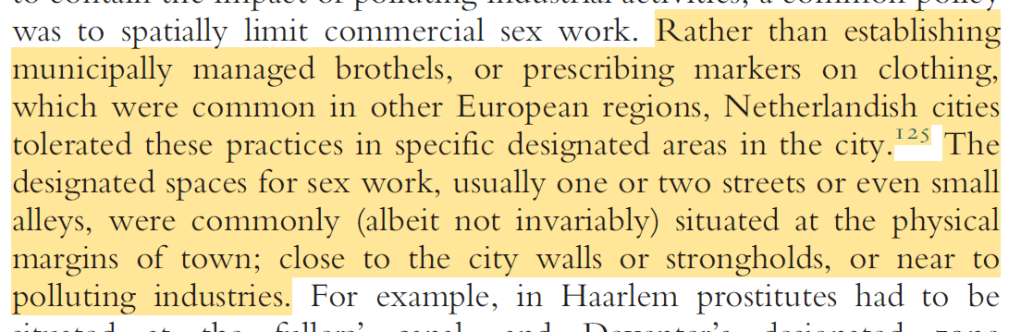
In Dutch cities prostitution was often confined to a street or neighbourhood.
But I especially like this being mentioned because it gives us the names of a few of those women who otherwise would have been lost in the mists of time.
The book has a whole chapter on bathhouses, which makes me happy as I’m obsessed with that subject.
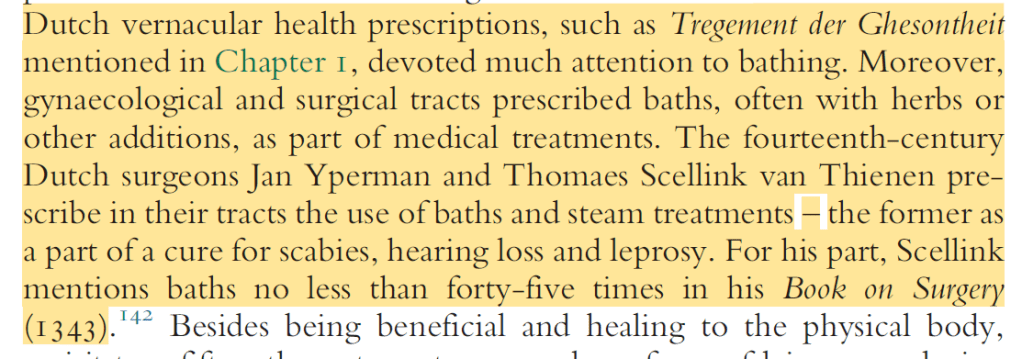
Yes, medieval people bathed!

To be honest, I’m starting to think that our perspective of post-medieval bathing may perhaps also need another look at, I’m no longer so sure that people totally lost interest in it. I’ve been too busy convincing people that medieval hygiene wasn’t as bad as everyone thinks to look into it, but maybe I will one day.
I’m sure something changed, but I’m not sure people just stopped bathing.
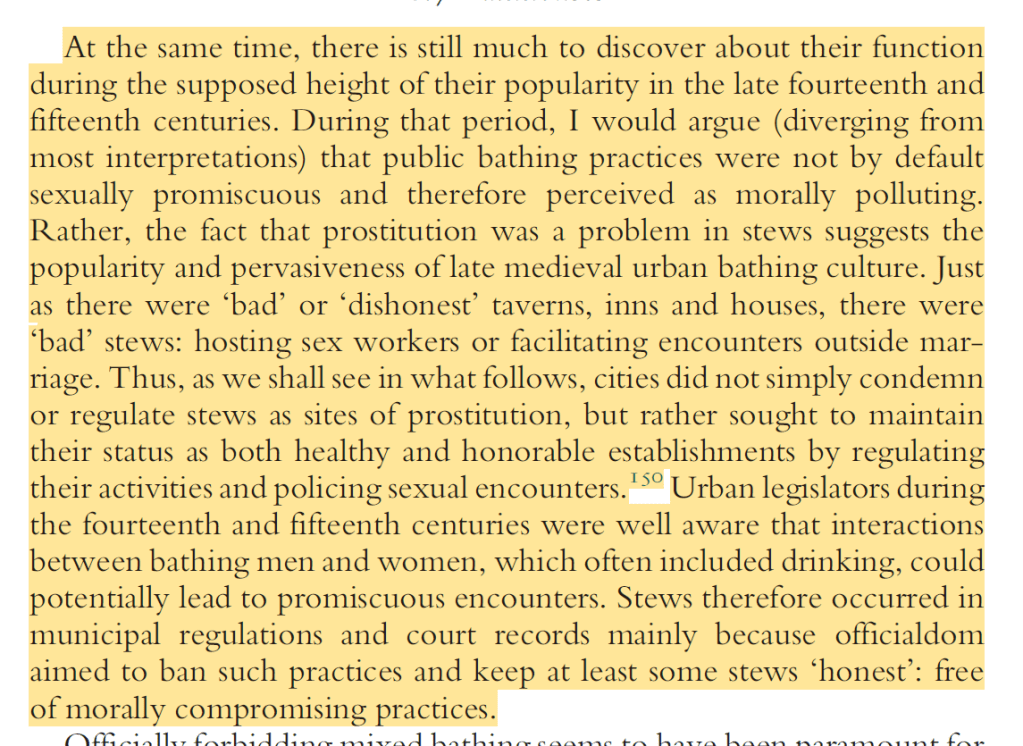
The idea that bathhouses were not also brothels or general places of hanky panky is also relatively new, we’re starting to realise that most were just for bathing and hanging out, places you’d bring your kids to, where you’d meet your neighbour in stead of hot singles in your area.
Medieval people calling both bathhouses and brothels (with bathing services) stews doesn’t help and of course the naughty medieval art showing people having all sorts of cheeky fun in bathhouses doesn’t help either, although many of these depictions actually show what Medieval illustrators thought Roman bathhouses were like!
I’ve just shared a few bits I think people will find interesting but the book has so many more amazing details that will blow your mind.
I was literally cheering a few times when Coomans uncovered more evidence that supported what I’ve been screaming about on the internet for years.
You won’t be surprised to learn that I thoroughly enjoyed this book and although I know quite a bit on the subjects mentioned in the book, there were quite a few things that were new to me.
And of course it gave me more ammo to shoot at the myths about the dumb & dirty middle ages.
 Fake History Hunter
“As far as I know there has not yet been a historian who wrote a book or paper about how many wells/water sources were available to our medieval ancestors.
I think it’s an excellent topic of research as it’s connected to so many myths and misconceptions.”
This one could be it.
All the best
Martin / Switzerland
https://books.google.ch/books/about/Water_Technology_in_the_Middle_Ages.html?id=JxsAEAAAQBAJ&printsec=frontcover&source=kp_read_button&hl=en&newbks=1&newbks_redir=0&gboemv=1&ovdme=1&redir_esc=y#v=onepage&q&f=false
LikeLike