
For a long time historians have been more interested in the stories of royals, nobles, knights and other important and powerful people, than they have been in the lives of the common folk.
But I’ve always cared more about what life was like for people like me, not rich, not powerful, not living in palaces, etc.
The book ‘Urban Women: Life, Love, and Work in the Medieval Low Countries’ (original title ‘Wijvenwereld’) does not just debunk a whole bunch of myth about medieval women and their roles in medieval society but also about the middle ages in general.
As I read it the image of women then having little power and barely playing a role evaporated.
I can highly recommend this book and will in this review share some of the most interesting things I found.
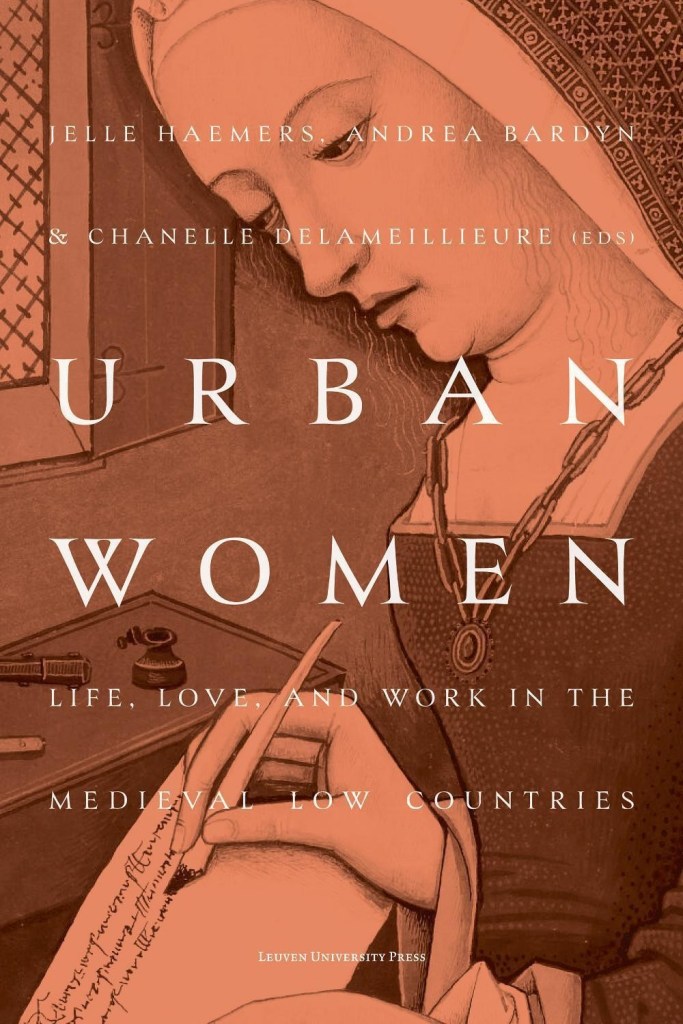
Please note that I read the original Dutch book and will share screenshots of the original but translated into English by Google, which is of course far from ideal.
The book is full of little glimpses into the lives of people that otherwise would have been lost in the mists of time.
Like this very intimate story about an unmarried couple with children:
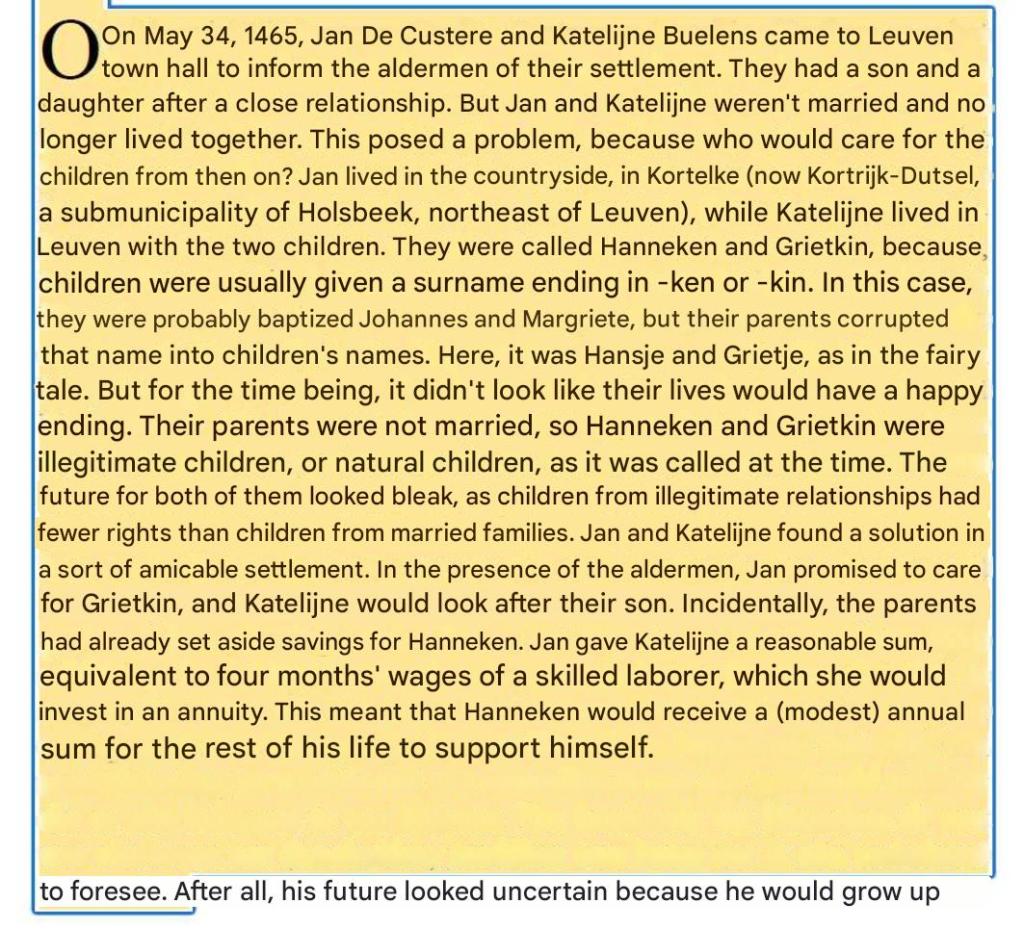
Does this story fit the image you had of the middle ages?
I don’t know about you but it sounds so modern, so rational.
We’ll never know how the lives of the people involved continued after this one time they showed up at the town hall, but if it wasn’t for that one day, we’d never even have known that they lived.
And here’s another myth that refuses to go away:
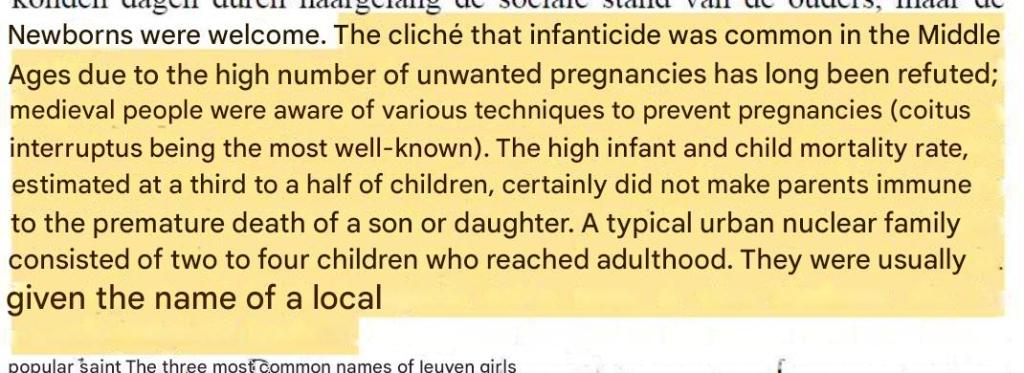
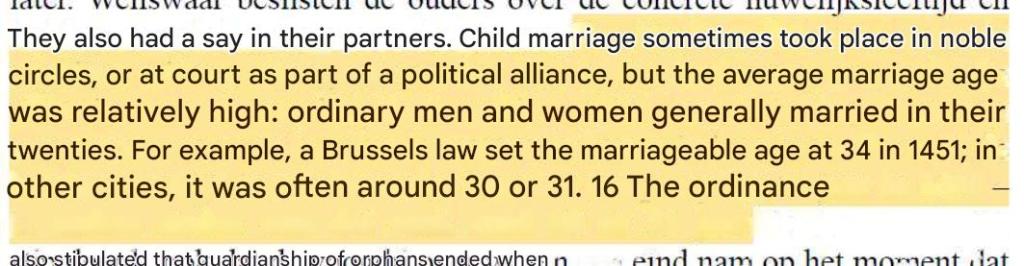
The idea that child marriages were common in Medieval Europe is another one that just won’t die.
They did happen but they were rare and most people married in their late teens or early twenties but the following was even news to me:
And I have to admit that this was also news to me:

Read it again, slowly.
Daughters receiving a thorough basic education till th age of 14, just like boys!
This seems to clash with how things were in many other European countries and imagine the effect this must have had on the societies of the low countries.
As a Dutch woman I must admit I enjoyed learning about Dutch woman, as often, being a bit more independent, stubborn and free than others 😉
Another interesting quote that shows us that shows us that children were protected:
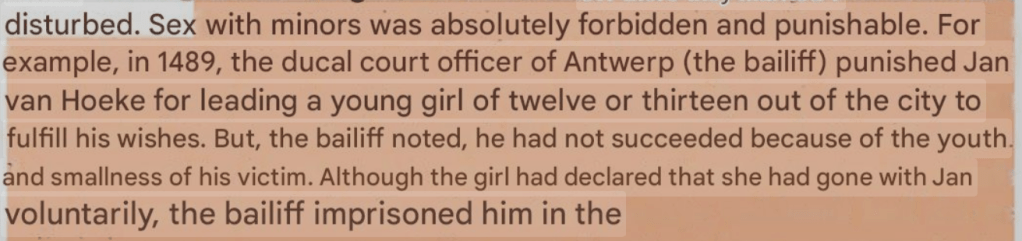
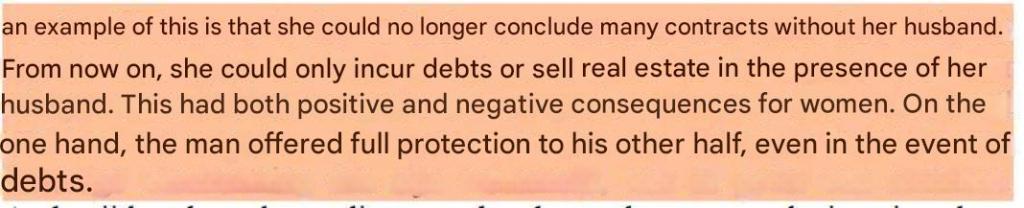
Some more negative sides of the past are true though and were unfortunately still normal till just a generation or two ago, getting married still meant giving up rights and freedoms, but I do like that the book reminds us that it can also be rather handy to be able to make huge debts and then let your husband deal with the fallout…
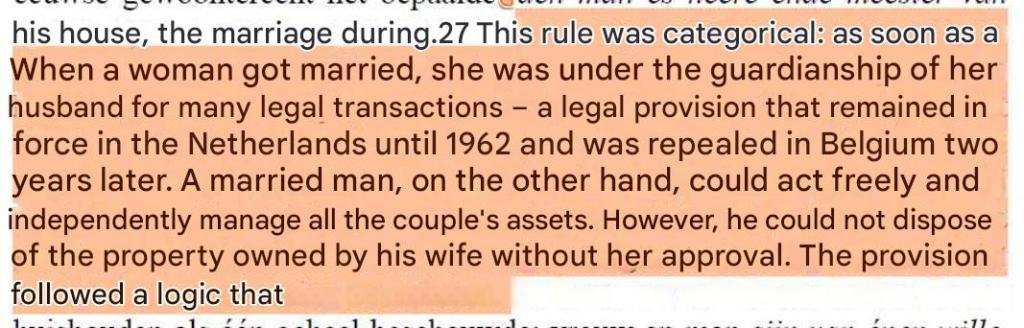
It was interesting to learnt that although, legally, the man was in charge of the household, he still couldn’t do whatever he wanted with his wife’s property.
But this is very important to remember:

If we just study the laws & rules we get the idea of a medieval world where women had few options and little independency, if we look at the records we suddenly find many examples of women and an entire society ignoring how things were supposed to be.
Here we have another glimpse of reality that may clash with your image of the middle ages:
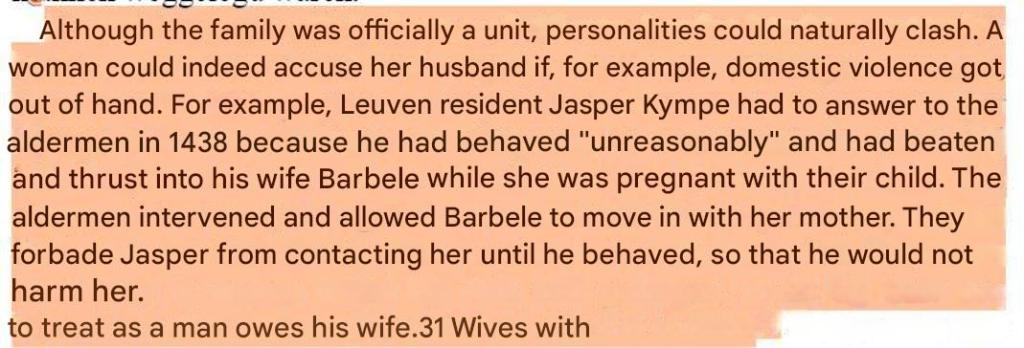
Imagine that, a man being punished for domestic violence and then ending up with a restraining order!
And how about this one:
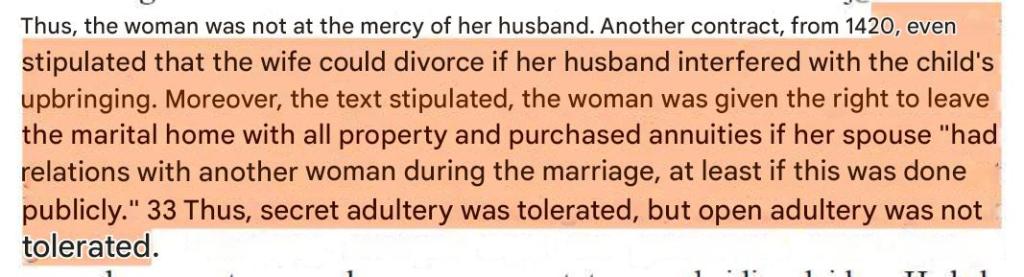
We’re told that divorce was pretty much out of the question in Medieval Europe, impossible!
Yet here we are, a wife being able to divorce her husband if he got involved with a child’s upbringing and being allowed to leave the house with everything she owned if he cheated.
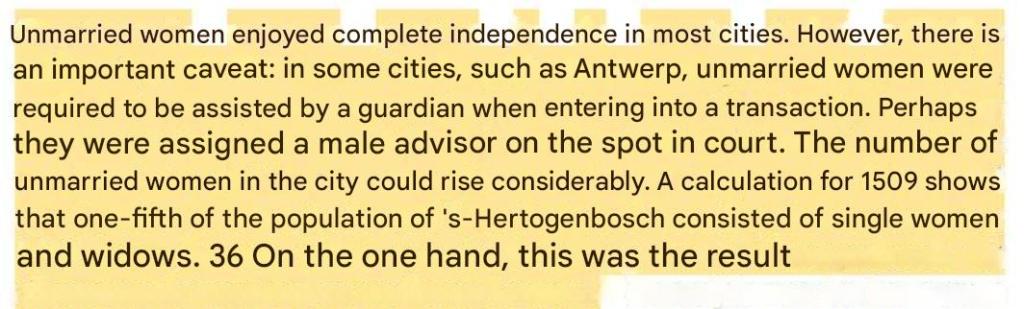
The general image of medieval life involves women marrying young and becoming a husband’s property and the few single women barely managing to survive.
But the sources show quite a lot of women living independently being able to work, find a home and life their lives, yes they sometimes needed a man to help with a transaction or a legal matter but as we just discussed, this could in practice be a lot easier and less formal than the law prescribed.
Timeless good advice from Anna:

Here another official document that shows us a family unit that sounds so familiar, so modern.
People getting married but making sure the step kids from a previous marriage would be looked after, a son being allowed to choose the career he wanted and mention of a bathtub!
Sorry, I’m obsessed with Medieval hygiene.

The following snippet just reinforces my opinion that becoming a wealthy widow was the best career choice for a medieval woman.
Inherit the business and even the job, gain independence, wealth, guardianship of the kids and suddenly becoming extra attractive to dapper young cads:
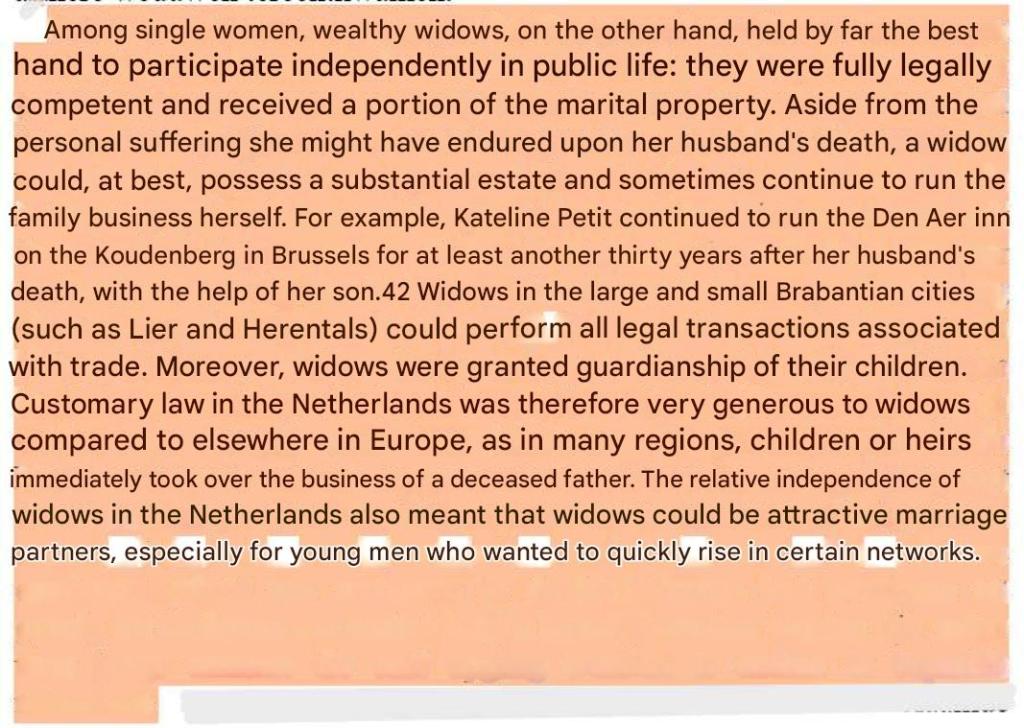
The following is huge:

This changes everything, while in much of the world the sons would inherit most, more or all when the parents died, in the low countries sons & daughters got an equal share.
In stead of being a woman who was suddenly poor and homeless, having to get married or move in with your brother, you would in stead be alone in the world but with money and property.
Making it again easier for them to postpone getting married and starting a family.
Resulting in cities full of independent women who could almost do what they wanted and were part of the workforce.
An almost modern situation.
Another example of women going their own way and avoiding marrying someone they didn’t like:

Once more I’m just delighted that we even know Ydeke existed.
Being abducted was both good and bad, bad of course because it sometimes involved women who didn’t want to be abducted and who were then pressured into a marriage they didn’t want.
But as Ydeke shows it could also be good when the woman was involved in planning her own abduction.
And well done Woyeken, not wanting to marry an ugly man with a beard makes sense!
Another example of reality sometimes being very different from what we expected based on what the church and those in charge said:

No comment:
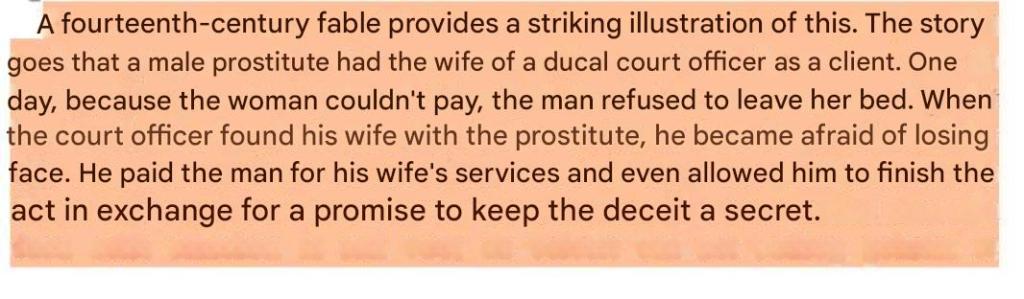
Another way people who no longer loved each other could move on with their lives when divorce was a lot more difficult than it is today:
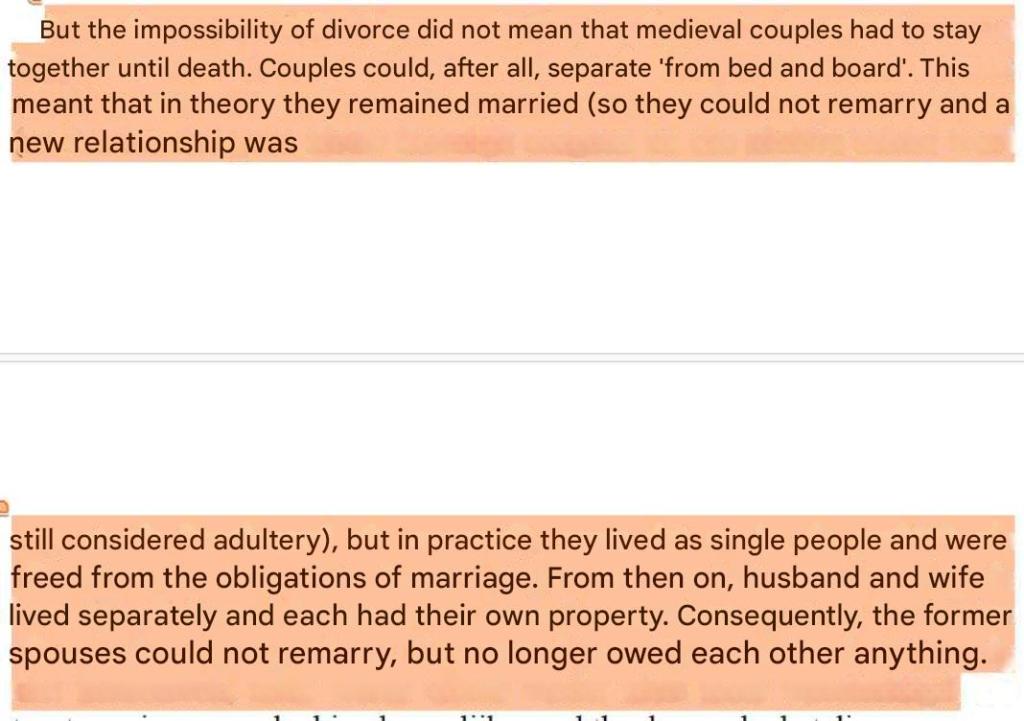
Of course in practice both people would likely find new love and move in with someone and unless one of them would object, I doubt it would ever be an issue.
And it was relatively common:

Translation note: this bit above is about separation of table and bed, not actual divorce.
And here’s another thing that seems to have been unique to the low countries:

Which is interesting because I think it’s the most important reason to get divorced.
Another bit about equal inheritance:

No wonder travellers from outside North Western Europe were regularly quite shocked by how things were there, how women behaved, the freedoms they had, the independence.
These laws would change the entire structure and appearance of a society.
They were way ahead of their time, or better said: everybody else was behind.

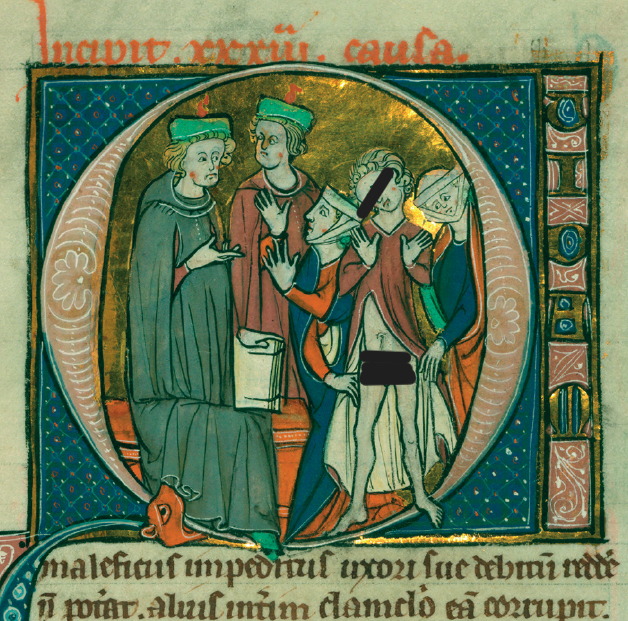
Privacy & honour of the man has been protected by me.
A wonderful insight into how women were represented in certain parts of life, like here in the arts:
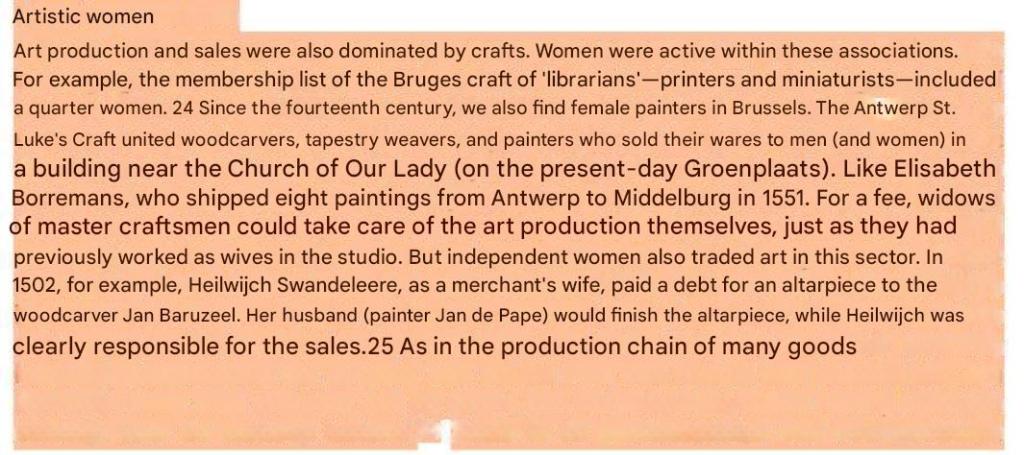
A quarter of printers & miniaturists were women!
We all know about young boys and men being apprentices far from home but women and girls were doing the same;

This too allowed women more independence and gave them more time to prepare for a marriage and starting a family or perhaps avoid both altogether.
And something that would shock men for generations to come:

Yes you read that correctly, they earned the same as their male colleagues!
I guess glass being expensive meant that they couldn’t afford a glass ceiling… badoom-tish!
I can’t get enough of reading about foreigners being shocked about Dutch & Flemish women;

And here we deal with another old myth about medieval bathhouses;

And a clause in a bathhouse rental contract reinforces the idea that people enjoyed visiting bathhouses once (or more) a week;
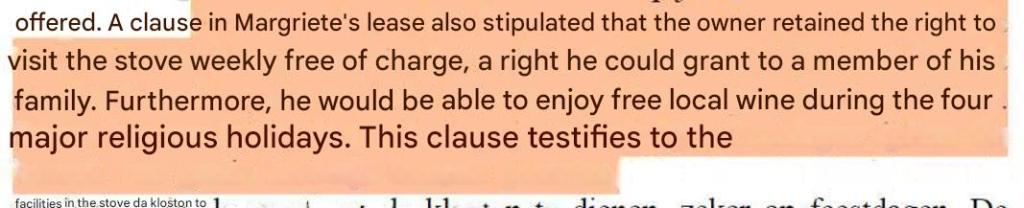
More evidence of minors being protected;

And yet people think that child marriage and consummation of this marriage was common and accepted.
Imagine that, forcing children into prostitution being punished by flogging and banishment, certain countries today should think about the punishments they hand out.
So, anyway, I love this book, couldn’t put it down.
Much of what I already knew was backed up and reinforced but there were also quite a few things I didn’t know and loved learning about.
Above all I really enjoyed reading all those little stories of real people with real people problems.
The book does what I think is the best thing about good history books: it brings the past closer to us, makes it more familiar.
 Fake History Hunter
One thought on “Book review: ‘Urban Women: Life, Love, and Work in the Medieval Low Countries’ by Andrea Bardyn, Chanelle Delameillieure, Jelle Haemers (2019)”