
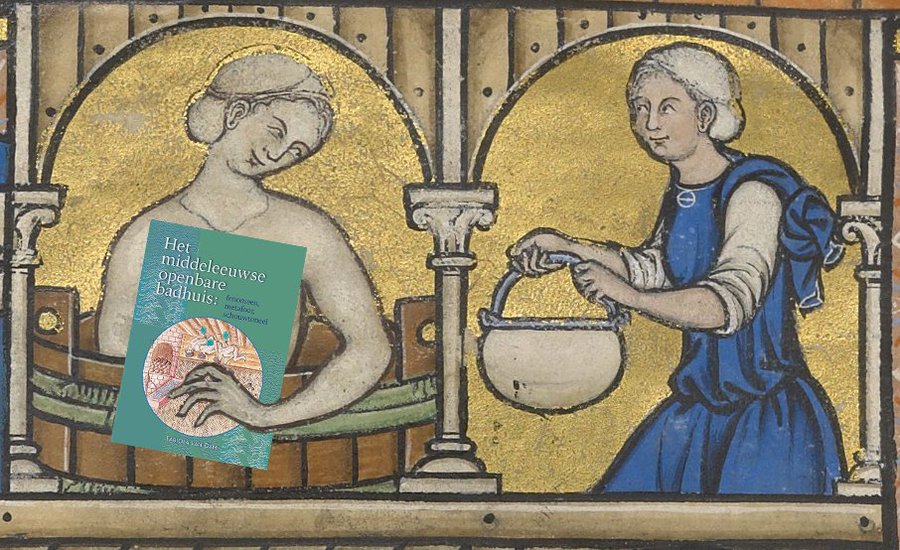
I recently read ‘Het middeleeuwse openbare badhuis’ by Fabiola van Dam, I read it twice. I realise it is not available in English and VERY specific, but it had some interesting stuff in it I want to share with you anyway, so here we go.

Oh if you’re a history book publisher, check this book out, I reckon an English translation would be great. So, in general, the book tells us about the position a bath house had in medieval communities, how they worked but also why people thought bathing was important.
I’m not going to properly review the book and go through it all, just going to share a few gems. For starters this bit from ‘Ein geistlich Badt der Seelen / angezeigt im Leiblichen Bade’ (1552):

Van Dam describes how a bath house was part of daily life and one of those things every town had and everyone knew where it was. If you arrived in a town you’d ask a stranger where the bath house was, they’d give you directions and you’d have a bath to relax from the journey.
She also explains why we know so little about this subject. For starters it’s not really been an popular subject among historians for a very long time. Even in archaeology for a long time people just didn’t realise they were looking at bath house remains.
For instance if you were taught medieval people didn’t bathe and you then find a house with an oven, you may just assume it was used for baking or some other industry. Bath houses often looked just like other houses, except for a few details you have to be looking for.
Serious research into bathing history, both archaeologically and architecture historical, was uncommon till relatively recently. We have no idea how many bath houses there were because of that reason. A problem is also that these bath houses were often recycled.
Unlike Roman bath houses these bath houses at their core were just houses and when the owner decided to change profession, they’d just make a few changes and you’d never know it once was a bath houses. But it’s still clear that bath houses were a popular and common part of life.
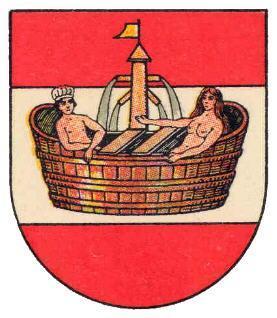
This is the coat of arms for the city of Baden by Vienna. Guess what this place was famous for 😉
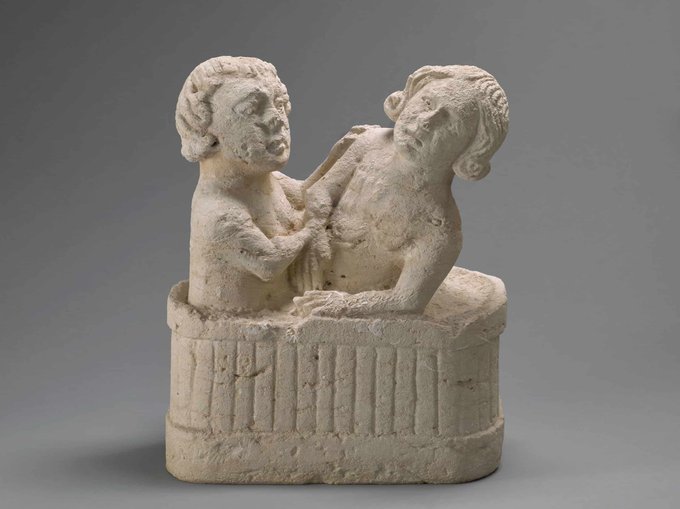
13th century Gabel stone, Marseille. So this was stuck on the outside of a bath house, a kind of advertising sign. I bet it was originally brightly coloured. Marseille, Musée d’Histoire de Marseille, © bpk / RMN – Grand Palais / Benjamin Soligny / Raphaël Chipault.
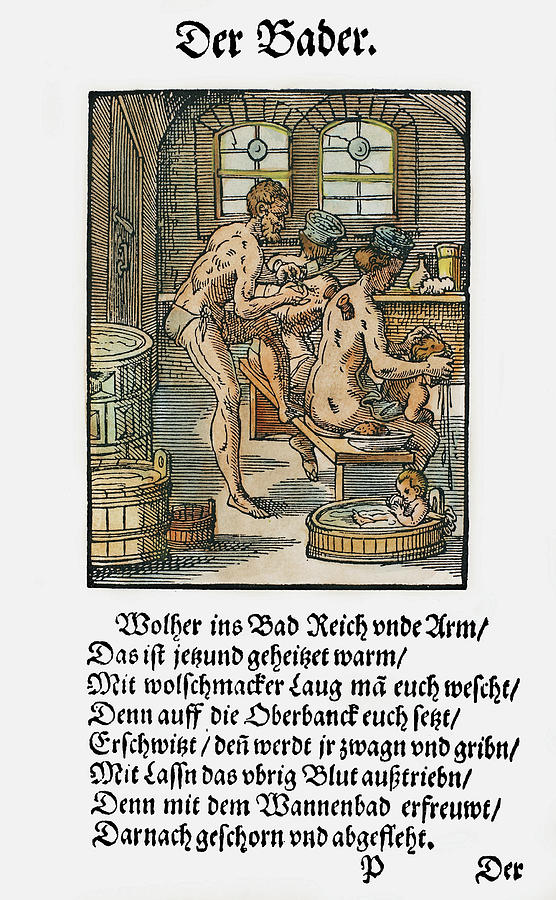
Lovely 16th century etch of a family visiting a bath house. Mum is washing her kids hair, a toddler is left to play in a tub while tied up so it won’t drown, bath house helper is preparing cupping. Mum is wearing an apron, dad tiny undies.
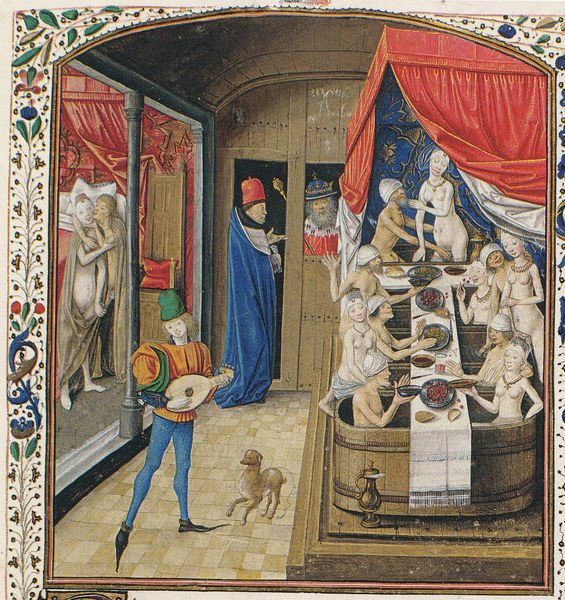
Bath houses were community gathering places, everyone came there, people gossiped, children played, it was a bit like a communal spa. You didn’t just bathe, you did your hair, enjoyed the steam room/sauna, worked on your health, etc.
Which explains why the misconception we have about bath houses often being brothels is wrong. Yes the church mumbled disapprovingly about mixed bath houses and yes there are naughty stories, yes some brothels ALSO were bath houses or offered bathing fun, but…
Most bath houses were nothing like that, often prostitutes were not even allowed to visit them. And bath houses regularly had men or women only days. Paintings that show us all sorts of naughtiness are sometimes a bit misleading.
For instance some of these illustrations tell a story, like a cartoon not everything happens at the same time, but its all put together, so its not like someone is going to bed right next to people bathing. And sometimes the pictures are supposed to depict the NAUGHTY ROMANS!
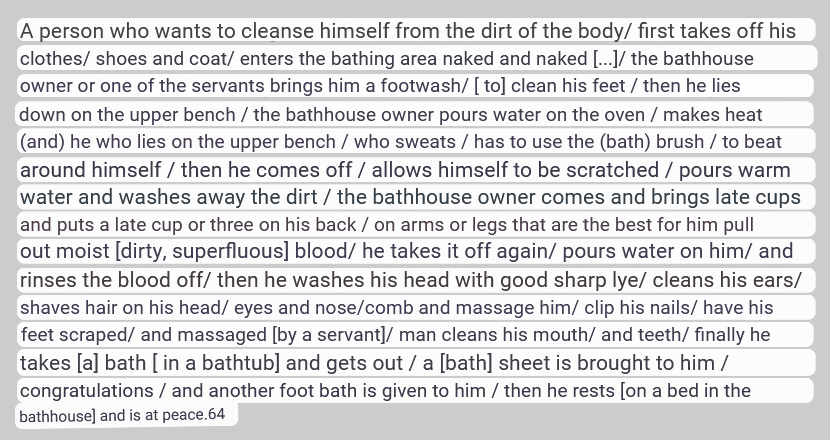
Late medieval theologian Johannes Spangenberg wrote down what a visit to the bath house could involve, he used this to later explain something else, because everyone would know and understand these parts of daily life;
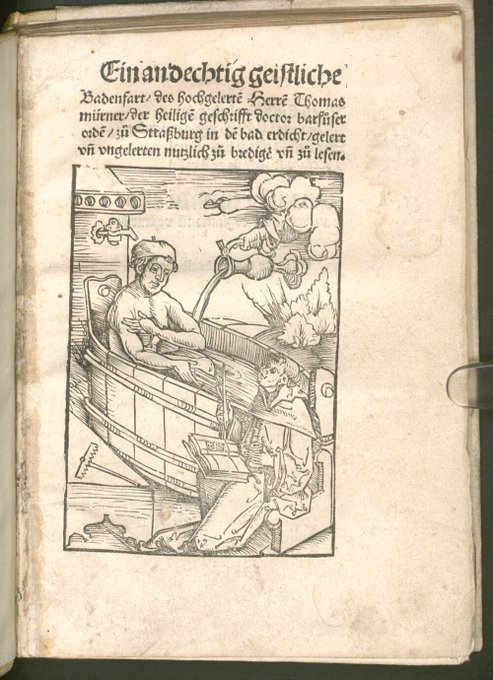
This book by Thomas Murner also uses the for people then common bath house routine as a way to talk about Jesus, by making him the bath house attendant. These pictures tell us a lot about what your visit to a bath house in the early 16th century would have been like.
These pictures are so interesting I made a twitter thread about it you can see here.
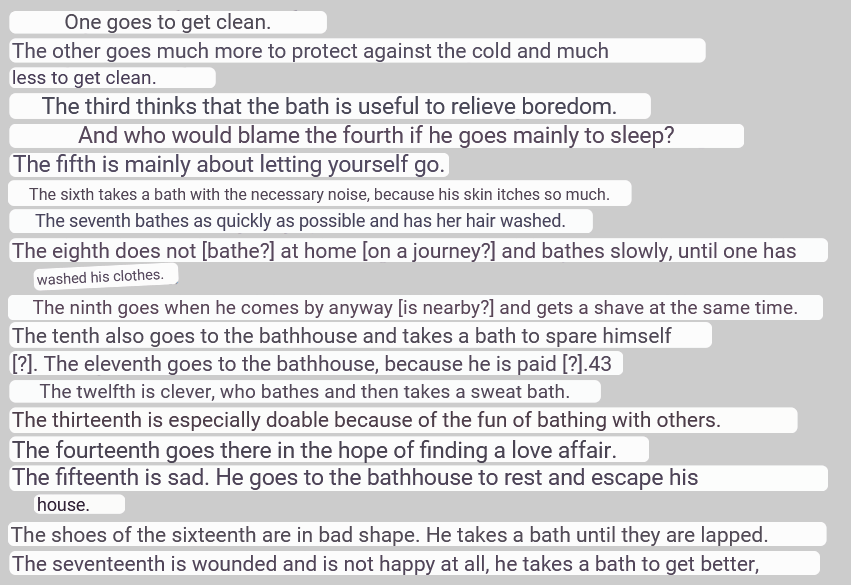
Records & stories speak about how common the cries of bath house managers were, calling people to their place because the hot water was ready. According to an 14th century poet these are some of the reasons people went to a bath house:

Van Dam also explains that crusaders were indeed impressed with some bath houses in the middle east but not because they didn’t know about bathing but because bath houses there were much prettier and fancier because they were often sponsored by the rich.
Bath houses there were part of the religious experience, so they were almost like churches, all dolled up, while in Europe bath houses were more just about function, you could perhaps say European bath houses were more secular and functional.
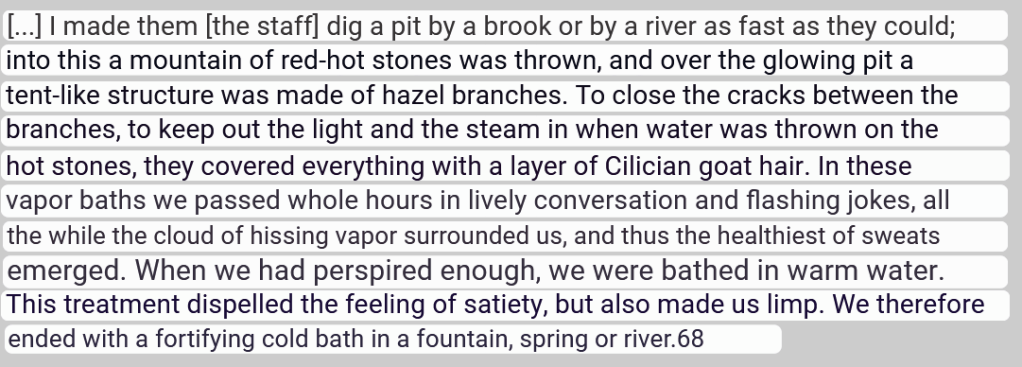
In 475 Gallo-Roman Sidonius Apollinaris wrote in a letter that he visited a house where the bath was not being used so he had to improvise:
Pero Tafur, 15th century writer, traveller & historian, was surprised to find Northern Europeans being so relaxed about men & women bathing together, eating, playing games, he seemed to think this was something typical for the region. Sounds familiar.
Van Dam also explains that according to some guild rules those who work hard sweat a lot and to restore the balance in their body they were given an extra allowance on top of their wages to spend at the bath house, to get back some moisture.
Anyway, as you may have gathered, I loved reading this book and learned a lot. It reinforced the idea that bathing & hygiene were a common part of daily life in Medieval Europe and the idea of dirty medieval folk being scared of water is nonsense.
This is all very well supported with tons and tons of research. You can read an English summary of the book here;
https://academia.edu/44859713/
You can buy the book here, sorry, only in Dutch:
Uitgeverij Verloren
 Fake History Hunter
Did people have sebum coated hair? Surely not as their hair would go waxy very quickly with bathing!
LikeLike