
This time I’ll review a school textbook; KS3 History by Aaron Wilkes: Renaissance, Revolution & Reformation Student Book (1485-1750)

The KS3 books are very popular and common in UK education, it’s very likely that you or your kid have been taught from them if you went to a British School.
So why am I reviewing it?
Well on social media I spotted this hilarious ‘meme’;
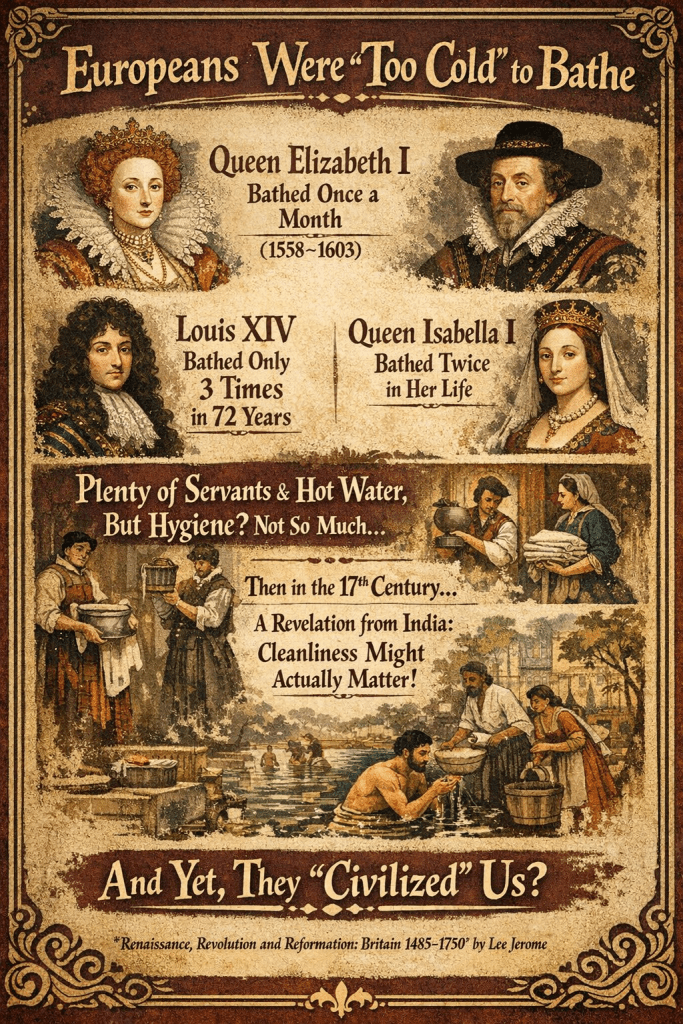
It’s of course AI slop and literally every claim made in this picture is nonsense.
But unlike most ‘memes’, this one came with a source.
Although there’s no such book written by a certain “Lee Jerome”, there’s one written by Aaron Wilkes.
Typical AI, mixing up book titles with author’s names.
But I still had to go see if the book had given the AI or the person who instructed AI to make this meme made the claims.
I didn’t go through the whole book to fact check every detail, this particular era isn’t my specialty, but I’ve got the feeling that those historians who are specialised in it will find quite a few more things wrong with what’s being claimed.
I just looked for a few topics I do know a bit about and that were related to the ‘meme’ above.
So, here’s everything I found that’s iffy:
For starters, Columbus was not the first, he wasn’t the first explorer but also not even the first Europeans to reach the Americas, that was of course the Norseman Leif and his pals.

The following is true but I find it odd that there’s no mention of the diseases Europeans brought to the Americas, killing millions.
Or the horrific things Columbus did.

Check out the description of this famous painting:
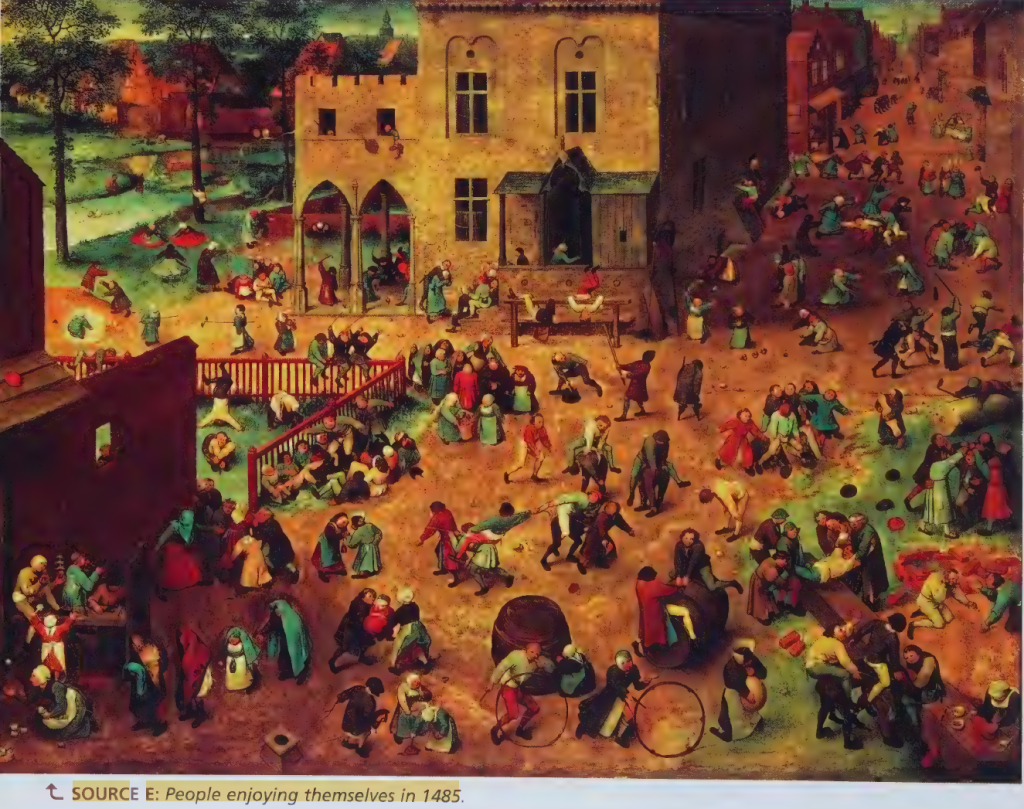
This is of course the painting ‘Children’s Games‘ by Flemish Renaissance artist Pieter Bruegel the Elder, it was painted in 1560… I guess these kids are all time travellers or something?
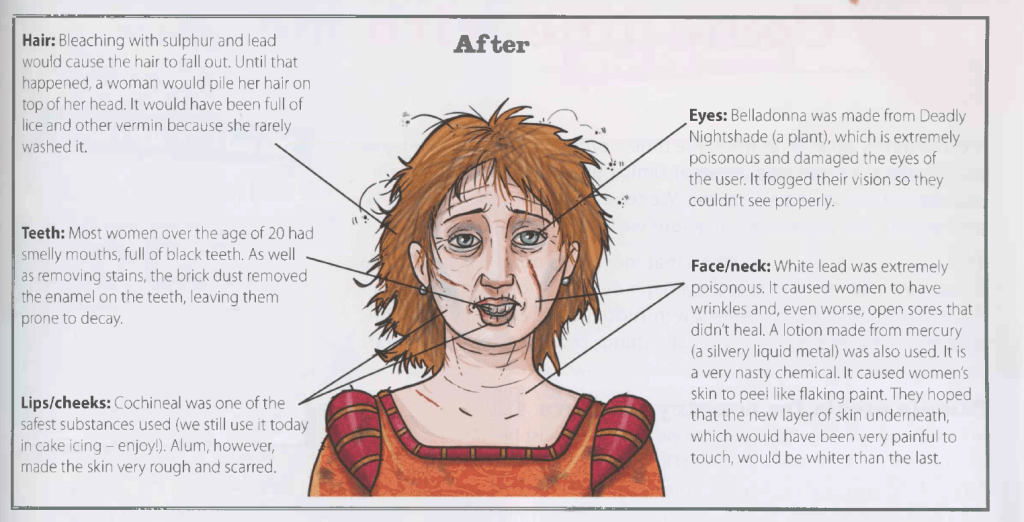
Although some of the makeup Tudor women used was indeed unhealthy, the following image is an exaggeration:
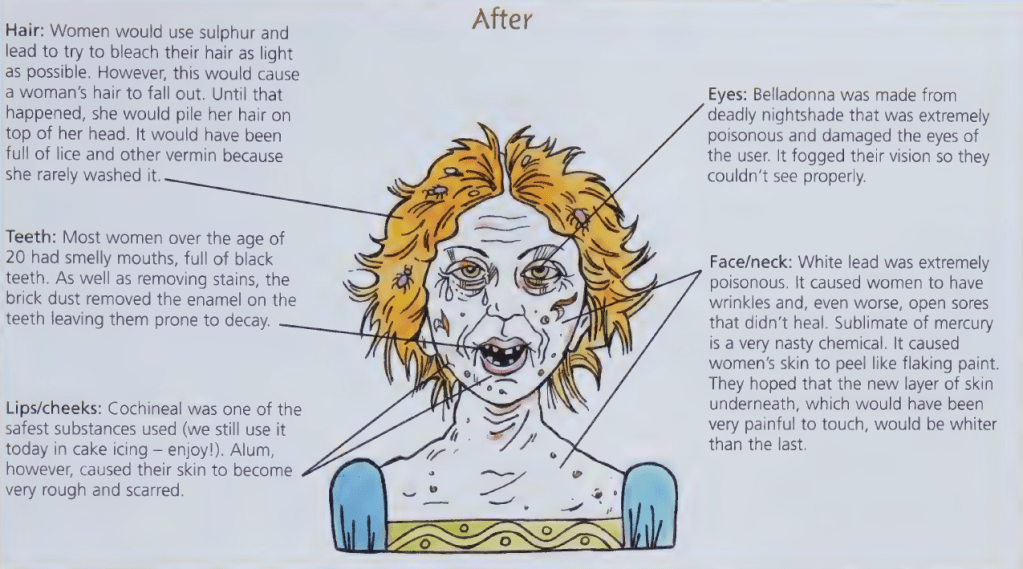
Women (and men) washed their hair, regularly.
But even if they would choose not to, they would comb their hair to get rid of the lice and other vermin.
This may come as a surprise to some but bugs on your head are not fun, it itches.
Humans have been combing out the lice out of their hair for 1000s of years, Tudors were no different.
And no, most women over 20 would not have had smelly mouths full of black teeth.
The black teeth were related to extensive sugar usage, Queen Elizabeth had that problem but for most, even mong the nobility, sugar would just be too expensive to cause damage at that level.
Tudors also cleaned their teeth.
The brick dust comes from an earlier claim that they cleaned their teeth with “the frayed end of a stick dipped in brick dust skin and honey”.
I’m yet to find a Tudor source backing this up, they did make paste with abrasive ingredients, to scrub the teeth and I think brick dust may have been used later, but nothing for Tudors.
They may have of course, but I’m yet to find it.
Either way, I doubt that harsh dental products resulted in most women over 20 having stinky mouths full of black teeth.
If you want to know more about this sort of think, you can read the excellent book ‘How to be a Tudor’ by the amazing Ruth Goodman.
Here’s what she writes about dental care:
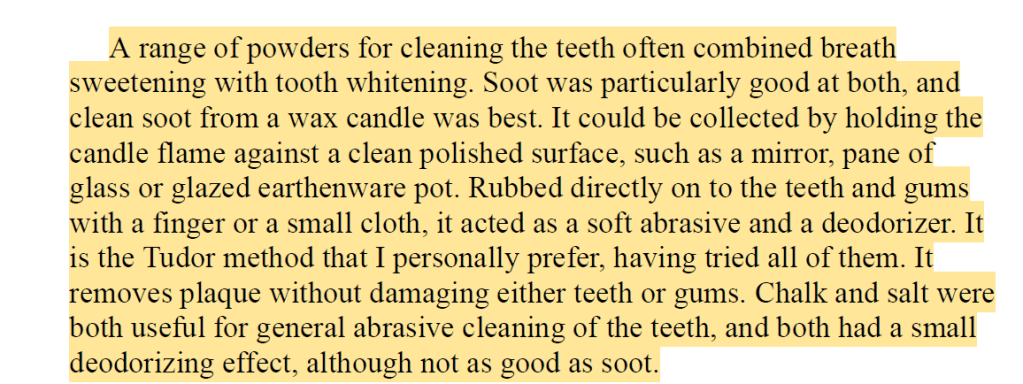
Ruth’s text makes a lot more sense.
Here’s an (archived) article by Dr. Kate Maltby about why Elizabeth I is today often depicted horribly looking you may find interesting;
https://web.archive.org/web/20240613225126/http://www.katemaltby.com/why-is-elizabeth-i-the-most-powerful-woman-in-our-history-always-depicted-as-a-grotesque/
An another article about the myths regarding her makeup:
https://www.stevenveerapen.com/elizabeth-i-the-myth-of-the-makeup
And a video:
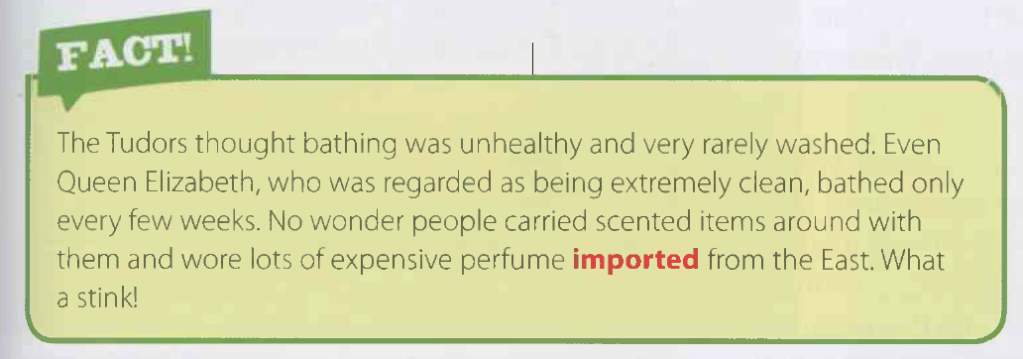
The following claim is quite peculiar;
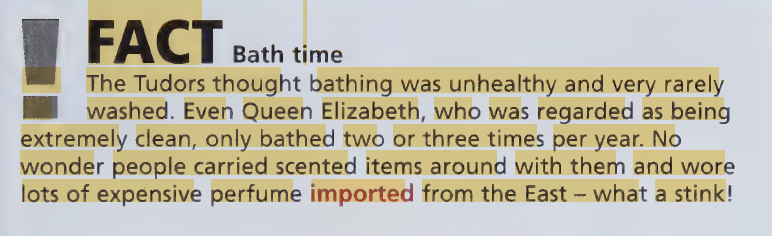
Although it is true that Tudors were less keen on bathing than their medieval ancestors, it seems that people are a bit too keen to go overboard with how this effected their actual habits.
Bathhouse culture declined, mostly because of fuel costs & syphilis, but that doesn’t mean people stopped bathing & washing at home.
Sometimes folks, even historians, confuse the use of the word baths with bathing.
So a text warning people to avoid baths can gets understood as telling people not to bathe, when they were actually telling people to not go to bathhouses.
And even if people avoided bathing, as in submerging yourself in a tub, they still washed.
Goodman writes:

Personally I think they regularly also washed a bit more than just hands and face, especially when getting up.
I bet they also washed their naughty bits or just gave their full body a quick once-over.
I also doubt they only used cold water.
They were scared of pores opening due to hot water & steam, but in mainland Europe they believed the same and bathhouses & steam baths remained popular long after the middle ages.
So I reckon they were talking about proper hot baths, not a wash with warm water.
Anyway, Elizabeth I did not bathe 2-3 times a year, this is a long debunked myth, in part debunked by yours truly, you can read more about it here:
https://fakehistoryhunter.net/2022/01/14/the-curious-claims-about-elizabeth-is-bathing-habits/
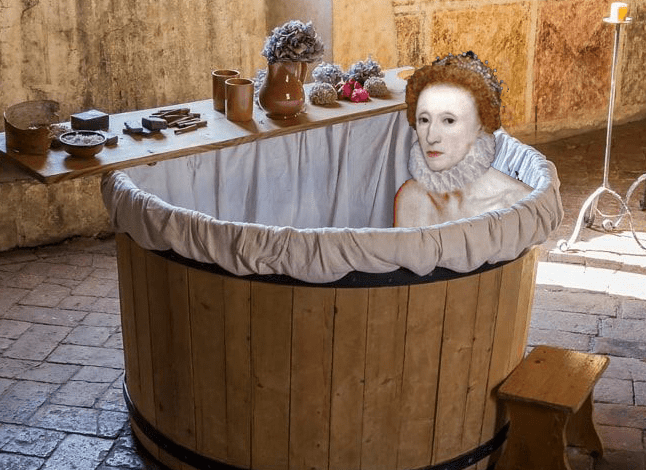
In short: she bathed & washed quite a lot, even hat a travel tub for when she was on the road, had bathrooms installed in her palaces and seems to have enjoyed using them.
The only time that her hygiene declined was when she was literally dying, the last few weeks of her life when she was no longer herself.
There’s no evidence whatsoever for her bathing 2-3 times a year.
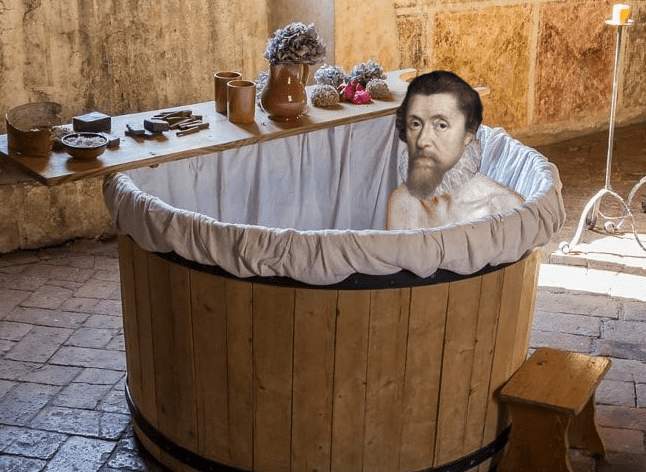
Another royal is given the bad hygiene treatment, this time James VI & I:

This old myth is debunked here:
https://fakehistoryhunter.net/2023/07/22/the-curious-claims-about-james-vi-is-bathing-habits/
We don’t know much about Squanto and much of what historians claim about him comes from the book by Feenie Ziner that is regularly called a biography but is actually a fiction book for young adults, full of completely made up dialogues.
So you have to always check the sources when claims are made about him.
But here I’m more curious about what he’s wearing:

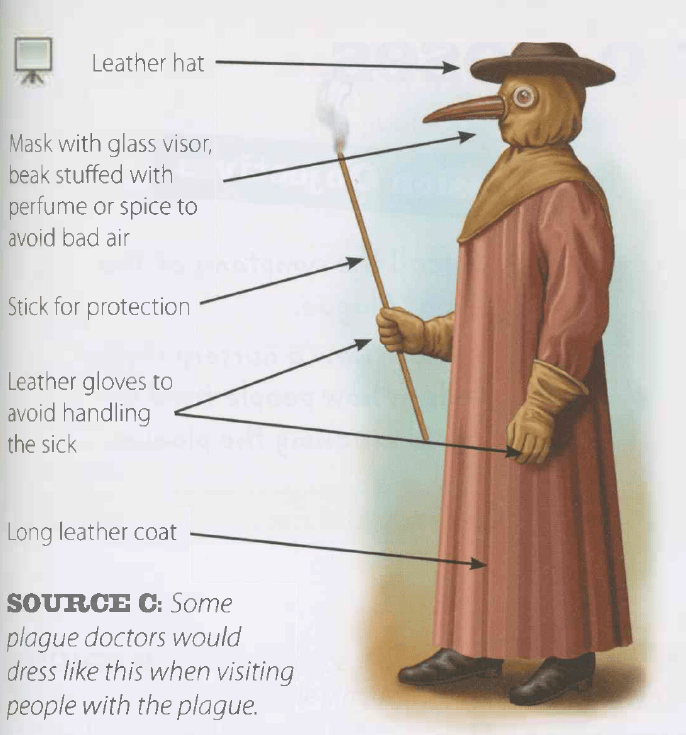
And there’s the plague doctor…

The plague doctor with the beaked nose first appeared in 1618-19 in Paris and there’s no evidence that there were more than one or two or that they were worn outside France and maybe Italy.
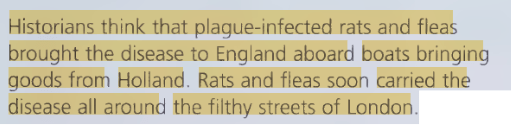
They no longer think that.
Currently the theory is that although it started with fleas on rodents in Asia (probably marmots, not rats) it was humans and the goods they traded that spread it around the known world.
The rats don’t deserve the blame and the idea that filthy cities had more plague because of all the rats no longer makes sense.
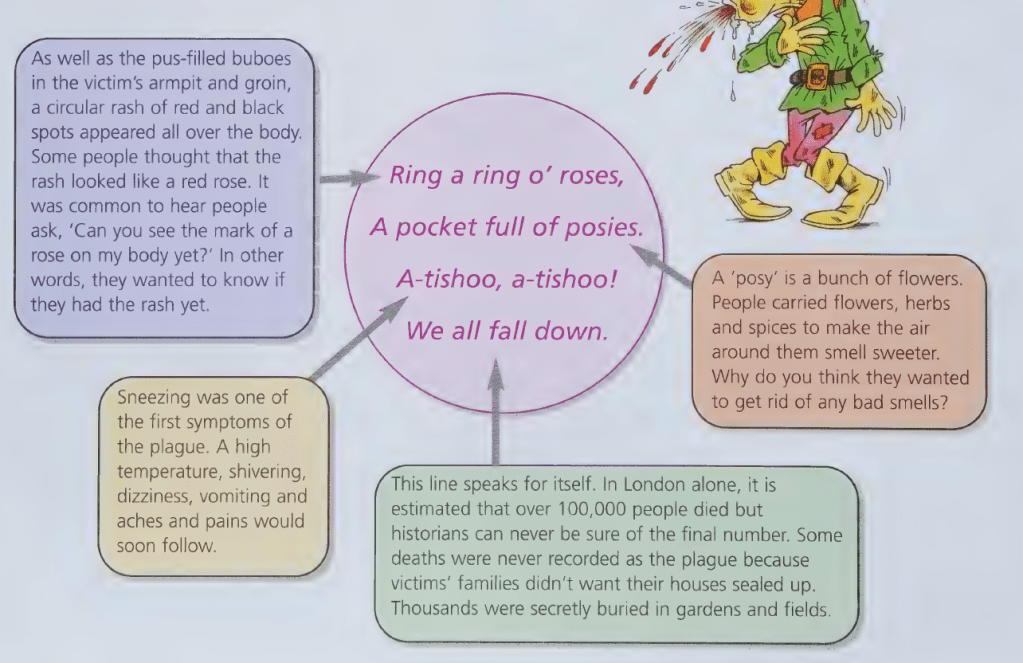
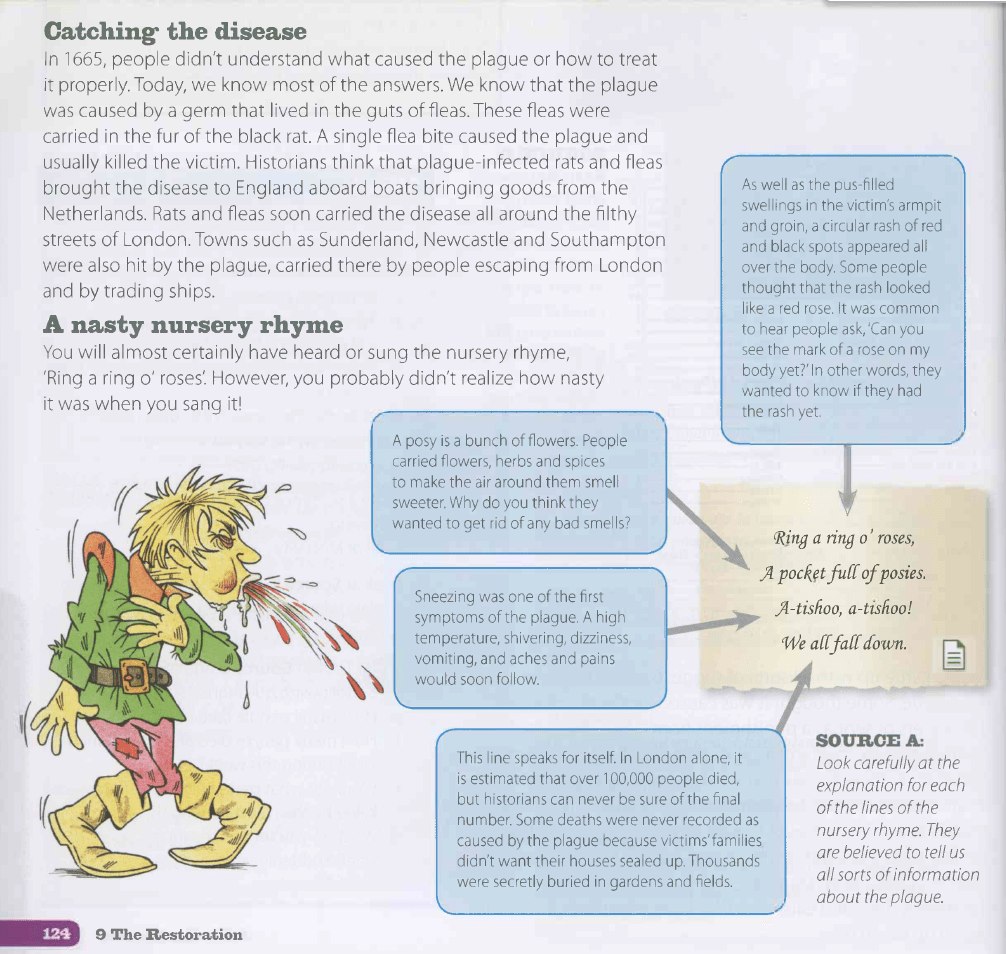
The nursery has nothing to do with the plague.
I dedicate a chapter to this myth in my book as well.
The 2008 version of this book has been replaced by 2 newer versions, I wanted to see if the errors in this old book were fixed in the newer ones.
I couldn’t get the 2020 ones, but I did manage to obtain the 2014 publications of ‘KS3 History: Invasion, Plague and Murder: Britain 1066-1509’ and ‘KS3 History: Renaissance, Revolution and Reformation: Britain 1509-1745’.
I again didn’t go through both books page by page, I just did a quick check for errors I usually am on the hunt for.

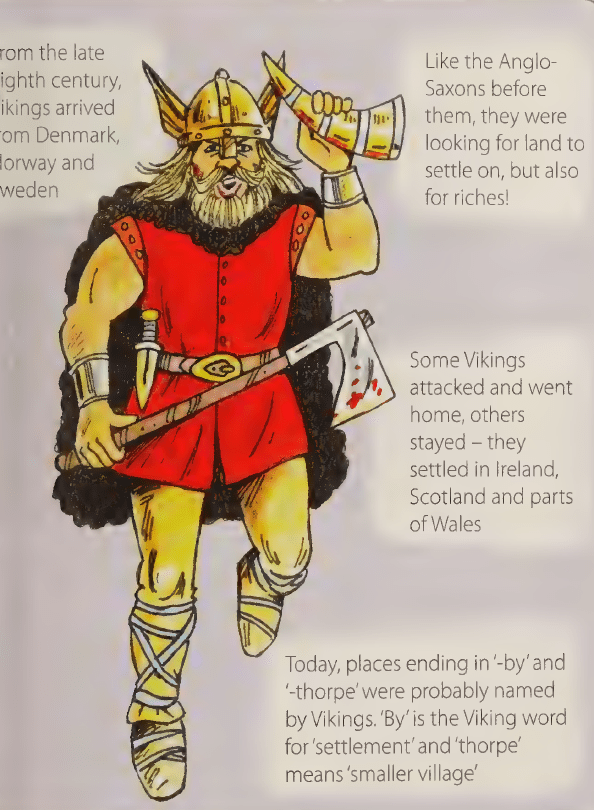
Er… what on earth is this fellow wearing?
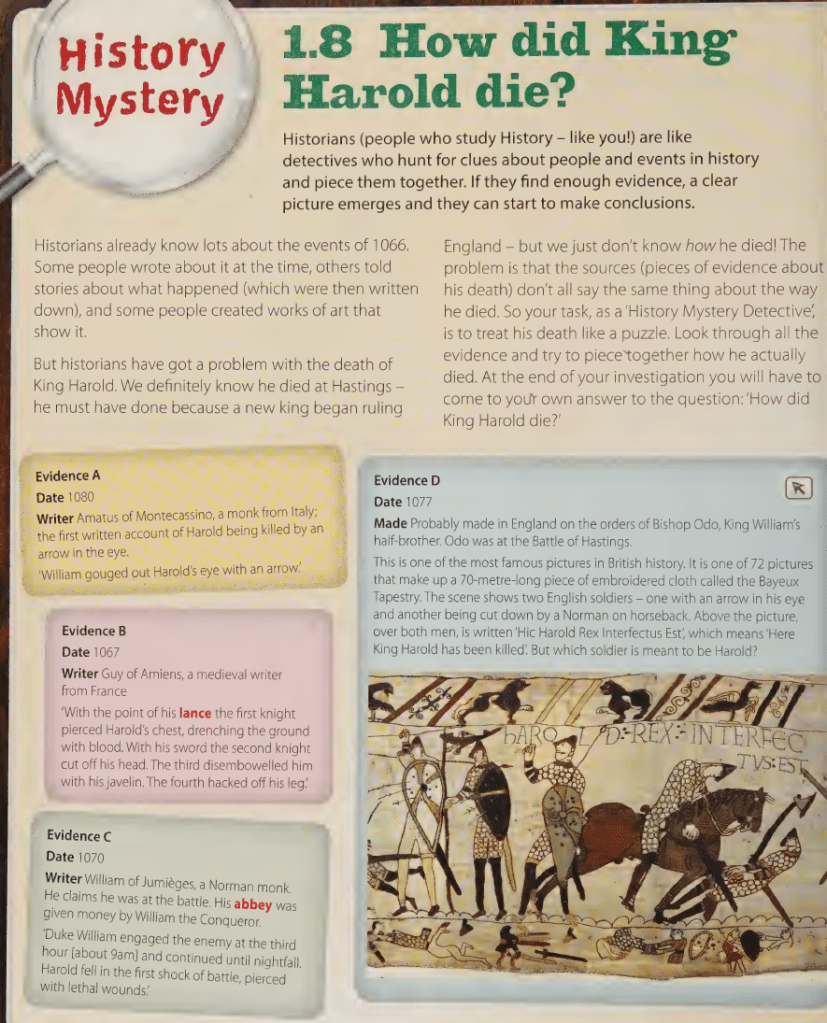
I like this a lot, 2 full pages about why we’re not sure how King Harold died and why the Bayeux embroidery isn’t as clear about that as some think:
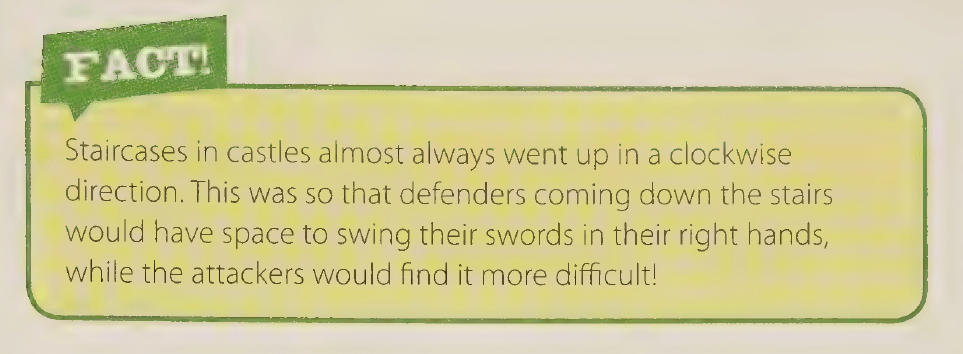
Oh dear, this is a long debunked myth, repeating it made worse by sticking the FACT! label to it:
I wrote a whole chapter on this myth in my book ‘Fake History 101 Things that Never Happened’ and you can also read about the debunking here;
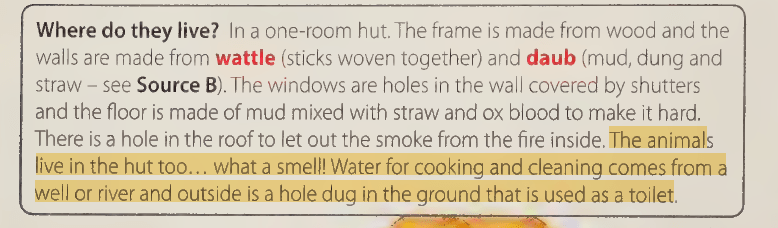
Although some people did indeed share a roof with animals, they were usually separated from the space where humans lived, more about that here:
https://fakehistoryhunter.net/2025/11/15/did-medieval-people-share-their-homes-with-cattle/
Also “hole dug in the ground” is making it sound a lot more primitive than it was.
People had outhouses or at least latrines, which often involved a seat above the hole.
These holes were in many cases also lined with wood or even stone, in some places this was required by law to keep ground pollution to a minimum.

Oh dear:
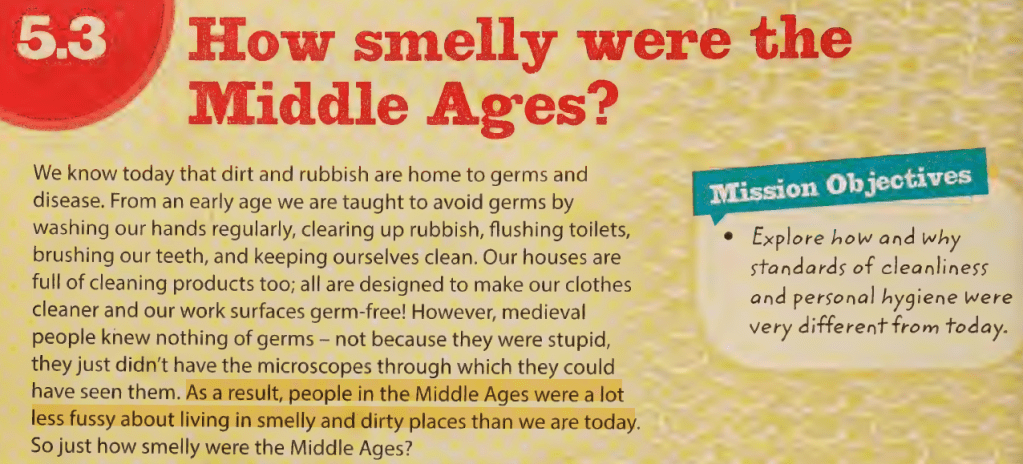
Although Medieval people didn’t know about germs and so on, they of course knew that dirt could make them sick.
Thanks to the miasma theory they even believed that bad smells could literally kill them.
So I bet they were a lot MORE fussy than we are about living in smelly & dirty places.
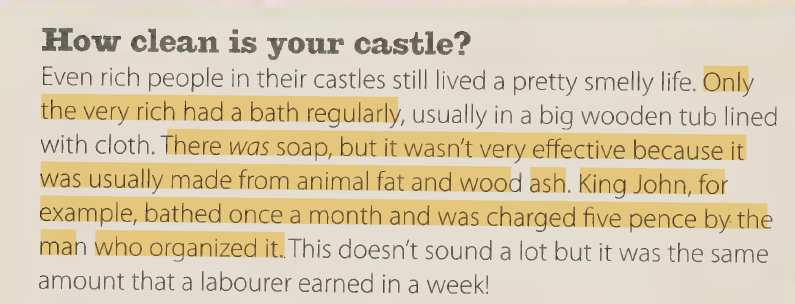
Bathing was actually quite a regular and common part of life in Medieval Europe even for common people, bathhouses were visited weekly or more, people bathed in rivers, canals but also had home, although usually not in tubs big enough to submerge yourself in.
The luxury here was having a tub full of warm water where & when you wanted, so like in your bedroom, nice and private.
But not the bathing itself.
More about that here:
https://fakehistoryhunter.net/2025/11/26/articles-links-videos-about-medieval-hygiene/
Soap made from animal fat & wood ash is actually quite effective, perhaps even a bit too, it could be quite harsh on the skin.
We do not know how often King John bathed, it was likely more than once a month.
The 5 pence source comes from the Misae Rolls (financial records) but this cost was likely not for a single bath but included more work the attendant did, just like you getting paid your salary once a month doesn’t mean that you only work one day a month.
Most of these payments also seem to have been made when the King was not at one of his own castles but on the road, which would mean he would have to find a local bathman to provide a tub, heat water, etc.
It’s a bit like us writing down how often we spend at the baths during our holiday every time we visited a spa and people thinking that was the only time we bathed because none of us bother to keep records of how often we shower & bathe at home and how much that costs us.
Which could mean these were extraordinary costs and not related to how often he would bathe at home.
Finally some of these baths were likely medicinal baths, extra hot, not fun, not for hygiene.
So just looking at these records doesn’t tell us very much about how often he just had a regular bath at home or how often he washed.
Because remember, you can clean yourself without a bath.
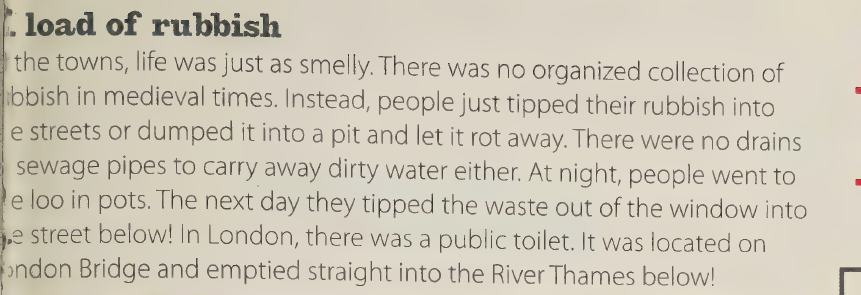
There was organised collection of rubbish in medieval times.
Throwing rubbish into the streets was frowned upon and often illegal and severely punished.
There were drains.
There were sewage pipes, probably not many, but there were some.
They didn’t empty their chamber pots into the street below, think about it.
There were quite a few public toilets.
Read:
https://fakehistoryhunter.net/2025/11/26/articles-links-videos-about-medieval-hygiene/
Book review: ‘Clean, a history of personal hygiene and purity’ by Virginia Smith (2008)
Book review: ‘Water technology in the Middle Ages’, by Roberta J. Magnusson (2003)
Book review: ‘Community, Urban Health and Environment in the Late Medieval Low Countries’ by Janna Coomans (2021)
Book review: ‘Urban Bodies: Communal Health in Late Medieval English Towns and Cities’ by Carole Rawcliffe (2013)
The following story is true but although it seems to have been used here to show how dirty the middle ages were, it actually shows that people got very upset when filthy things like this happened, they protested and the dirty boys were ordered to remove their toilets:
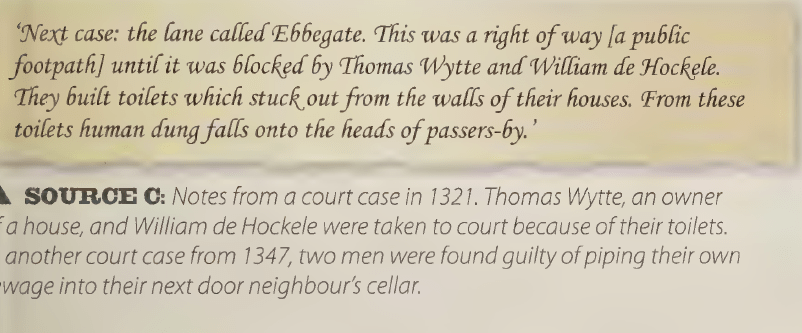
Also, why would they built such a sophisticated outhouse attached to an upper floor of your house if it was o so common for everyone to just chuck that filth out the window?
The following also contradicts what is claimed elsewhere;
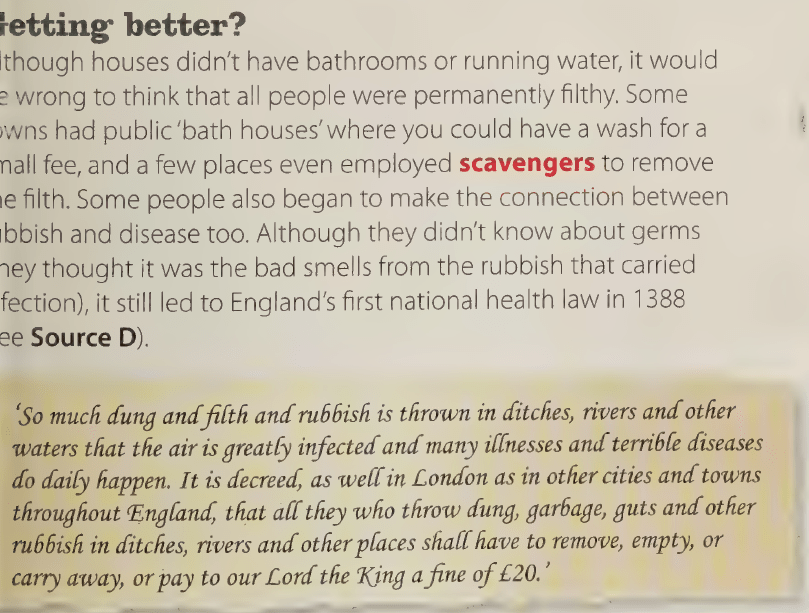
It is not “some towns” that had public bathhouses (or steam baths), it was pretty much every city & town and many, if not most villages.
People being paid to clean streets or citizens being ordered to keep the street in front of their house clean was also quite common.
The law shared again shows that Medieval people hated filth & were terrified of it and the smells it brought with it.
These laws & rules existed in many places, some dating back to Roman times (those guys were really filthy) and in some cases were only written down because local government realised this was a way for them to make extra money.
But the law mentioned here needs some more explaining.
That fine of £20 is not for those who dump rubbish, but for the town officials if they ignored the king’s orders.
Twenty pounds compared to today would be tens of thousands of pounds, perhaps even hundreds.
Not a fine for your random mucky peasant…
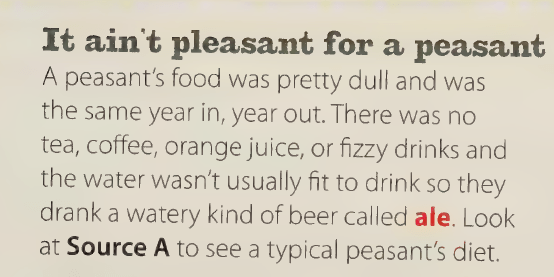
The idea that medieval people drank ale/beer in stead of water because the water was usually polluted is a long debunked myth;
Just a couple of links about that:
https://www.medievalists.net/2014/07/people-drink-water-middle-ages/
http://www.jbsumner.com/blog/2011/08/small-beer-to-you-perhaps/
https://www.ianvisits.co.uk/blog/2017/01/02/the-myth-of-medieval-small-beer
https://web.archive.org/web/20250917001850/https://zythophile.co.uk/2014/03/04/was-water-really-regarded-as-dangerous-to-drink-in-the-middle-ages/
https://slate.com/human-interest/2013/05/medieval-europe-why-was-water-the-most-popular-drink.html
https://leslefts.blogspot.com/2013/11/the-great-medieval-water-myth.html
https://history.howstuffworks.com/medieval-people-drink-beer-water.htm
https://www.tastesofhistory.co.uk/post/dispelling-some-myths-dirty-water-drink-beer
https://www.cs.cmu.edu/~pwp/tofi/medieval_english_ale.html
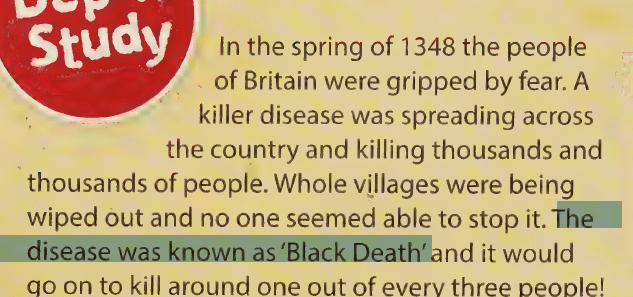
The disease wasn’t known as the “black death” in English till the 18th century, even in other languages it doesn’t show up till the 15th century.
Another long debunked myth, I wrote a chapter about it in my book:

On to the next book;

The following did make me smile, I like the idea of Elizabeth being like DCI Gene Hunt:

The Columbus being the first is still in this copy of the book:

Still no mention of Columbus being a right bastard, or the millions of natives dying of old world diseases, etc:

At least here the year was removed, but I’m still not sure we can call Flemish kids Tudors:
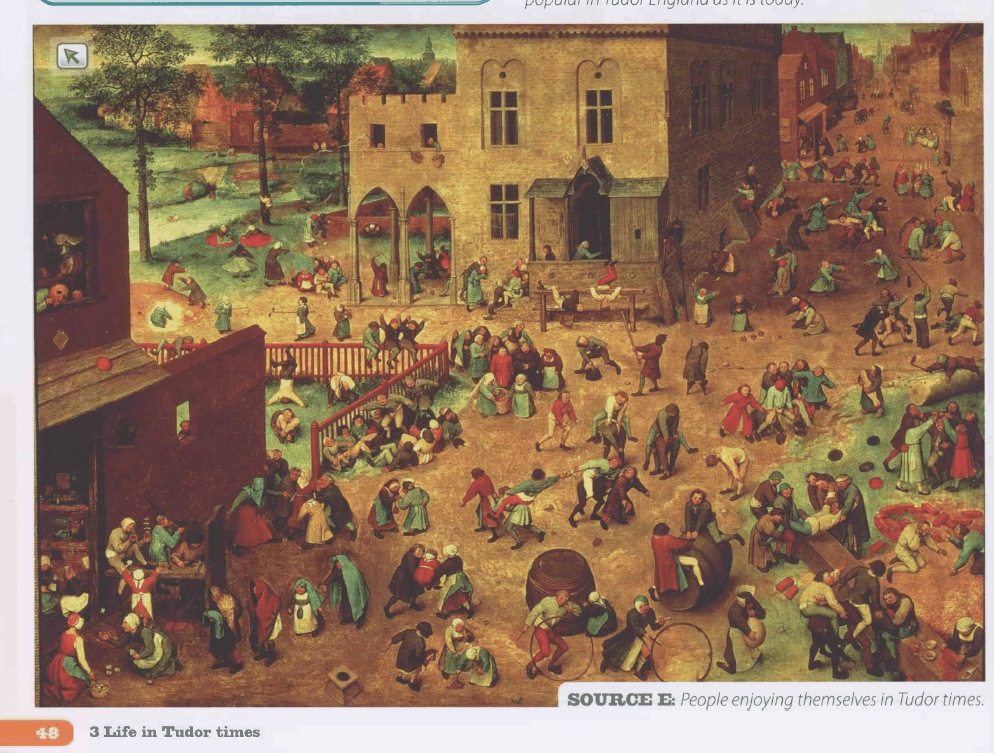
The image is a bit less horrid, but the claims still iffy;
But here we have a correction!
The claim about Elizabeth has been altered, in the previous book it was suggested she bathed 2 or three times a year, but now its every few weeks:
The claim about James VI & I seems to have gotten worse!

Squanto is still wearing fancy dress:

The plague doctor claim is repeated:
Another tiny correction; Holland has been changed to the Netherlands, but the rest is repeated without change:

The nursery rhyme story is repeated:
So that’s that.
Again, I did not go through the books with a fine toothcomb and the Tudor era is not my specialty.
These are just the things I noticed while quickly going through the texts.
And again; there are more recent publications, so I have no way of knowing if those have had further corrections.
But if these older ones are still being used in your or your kid’s school, they may need an update.
All this because of a ‘meme’ that desperately tried to make Europeans look backwards & filthy and suggested Indians taught them hygiene.
Oh by the way, there’s no mention of Isabella’s hygiene in any of the books.
I’ll write an article debunking the nonsense about her one day.
 Fake History Hunter