
This article was originally a thread on social media, which is why it is formatted with lots of images and short responses.
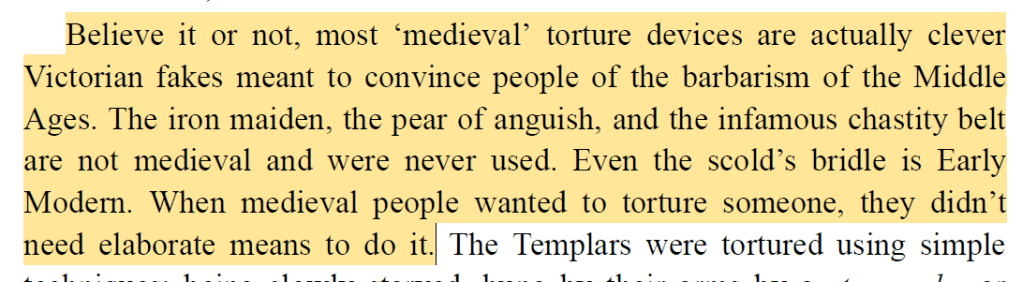
The text is about the image below that paragraph.
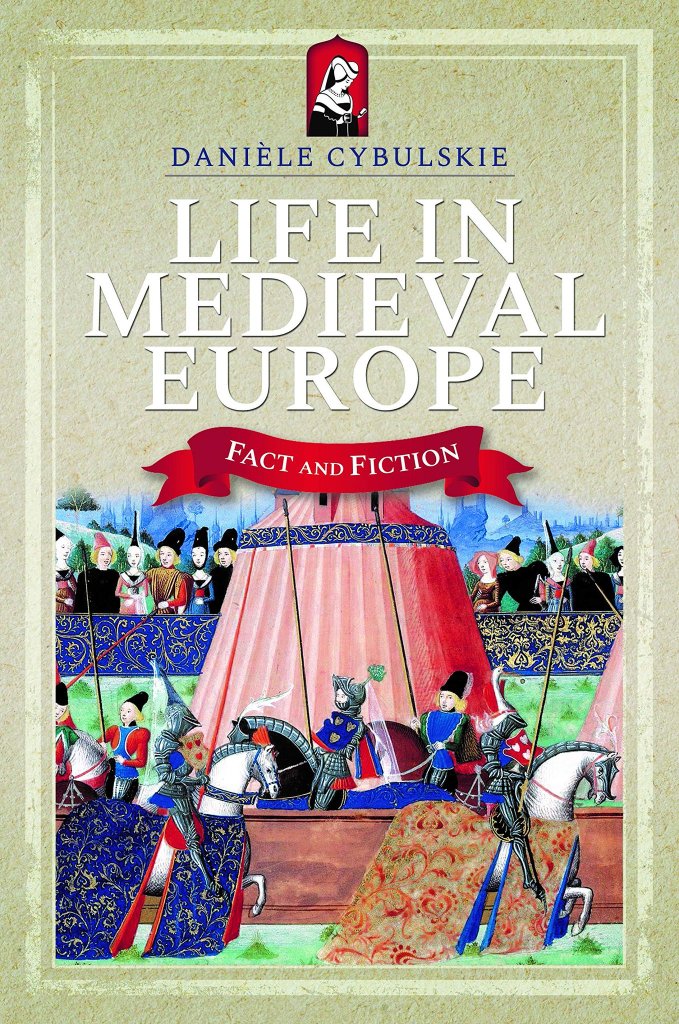
Today I’ll review ‘Life in Medieval Europe, fact and fiction’ by Danièle Cybulskie.
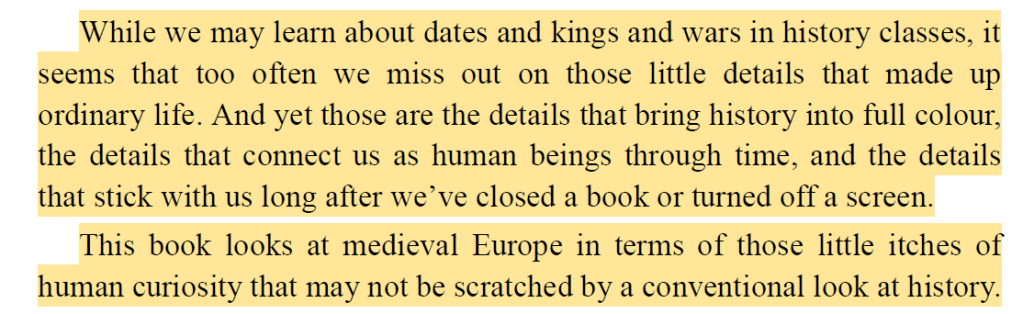
When I read this in the introduction, I knew I was going to enjoy reading this book because I care so much more about the daily life of our common ancestors than about whatever the fancy pansy lot were doing;
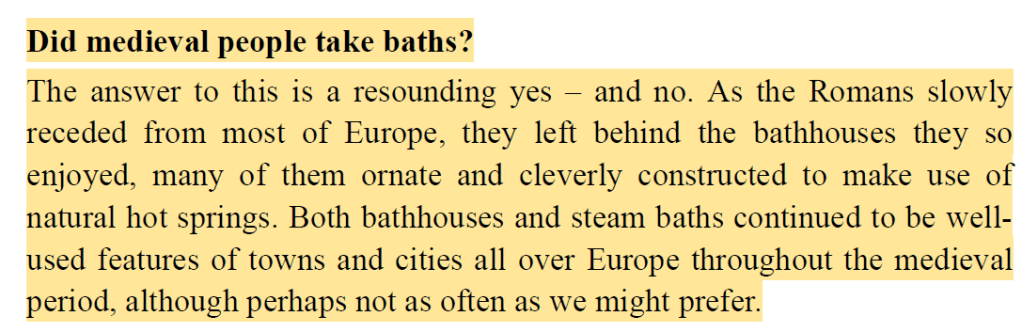
Cybulski begins with one of the most stubborn myths about the middle ages and one of my favourite subjects; Hygiene.
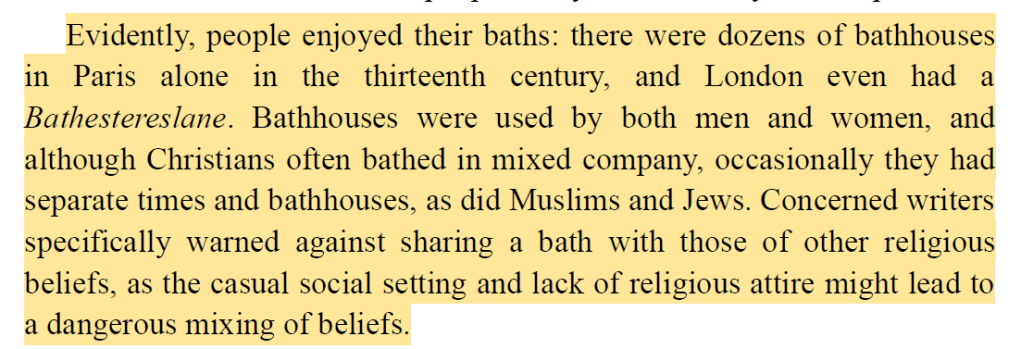
Although this makes sense and was something I’ve believed for a very long time, I’m now doubting it, I think it may have just been for comfort.
It sounds like it makes sense, but I’ve seen wooden tubs made by professional coopers and they’re amazingly well made, very smooth.
I think that the chance of a splinter would have been extremely small but to be sure I think I need to do some experiments.
So if you’re a cooper who makes massive medieval style tubs I can bathe in, send me one for free, for science!

The following I found extra interesting, I already knew this but the way Cybulskie described it made me think about how in the 1930s in the Netherlands people were worried about the radio allowing people to listen to the opinions of those with different religions or political ideas;
Another subject I think differently about now than I once did is the bad reputation of bathhouses.
It seems that both normal bathhouses and brothels with bathing services were both called stews and this may have helped things get extra complicated.
But books like ‘Community, Urban Health and Environment in the Late Medieval Low Countries’ by Janna Coomans (2021), ‘Het middeleeuwse openbare badhuis’ by Fabiola van Dam (2020) and ‘Urban Bodies: Communal Health in Late Medieval English Towns and Cities’ by Carole Rawcliffe (2013) have made a good point suggesting that most bathhouses were not the naughty fun palaces of perviness that they were long accused of being:
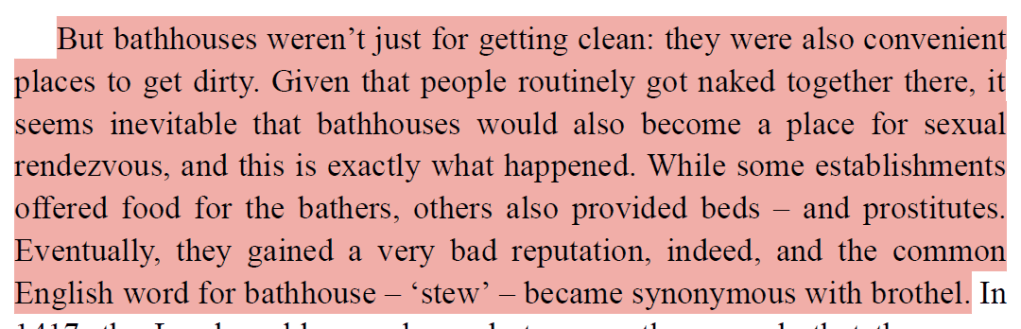
I think that a lot of villages, even very small ones, did have bathhouses but nothing like the ones in cities.
More like a sweat shed next to the baker, using the heat of the baker’s oven to fuel a sort of sauna where the locals would sweat and then scrub themselves clean and pour water over themselves.
I’ve even heard a historians suggest that this is how public bathhouses started, even before Roman times.
But the lots of people drowning is very true, it happened quite a lot.
People who can’t swim risking their lives to clean themselves, does that sound like folks who were a mucky bunch and who didn’t care about being dirty?

The following bit may be the result of people using the word bathing differently because to me bathing is having an actual bath and bathing weekly doesn’t sound rare to me at all, bathing is not washing or showering, bathing is bathing.
Most of us today don’t bathe every week, most of us don’t even have a bath tub to bathe in.
I also don’t think anyone bathed only twice a year, bathing weekly seems to be a pretty common thing;

Yes, they had soap!
Europeans have had soap since pre-Roman times, hard soap may even have been invented there and it’s those little details like soap being donated to the poor but also this detail about the monks that give us a clue how big a part of life it was;
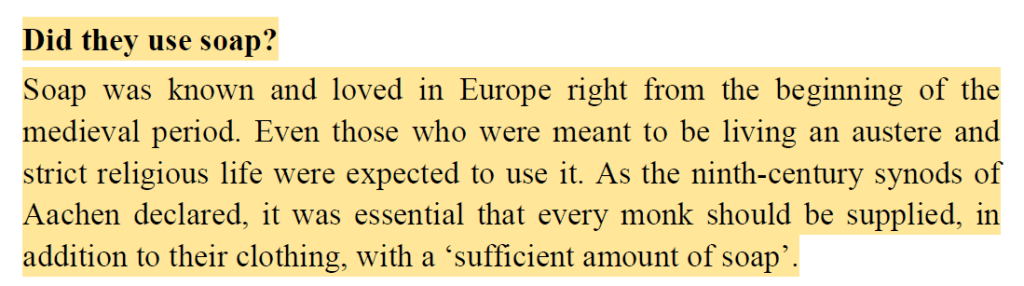
Personally I think I prefer humans smelling like humans in stead of the wild chemical freshness of freedom, or whatever nonsense advertisements use that resulted in me nearly passing out every time I use public transport and am poisoned by the clouds caused by gallons of aftershave and deodorant.
I also think that medieval people who washed daily, regularly did their laundry, wore antibacterial sweat combatting linen and were surrounded by open fires most likely just smelled of smoke, so not that bad at all.
But yes, I love this conclusion that’s again a subtle little dig at those who came after the middle ages;
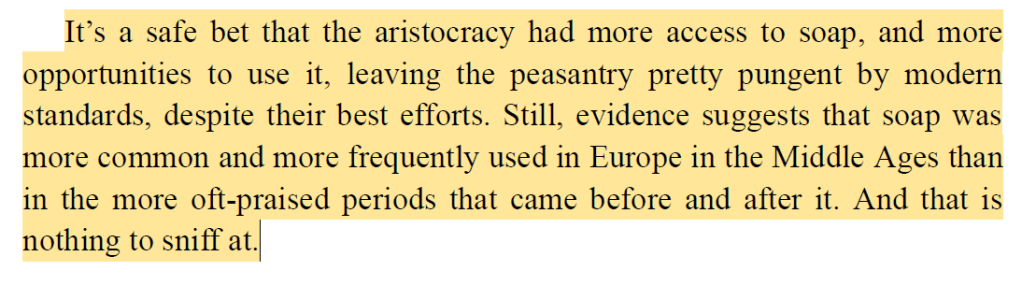
Cybulski going strong debunking old myths, left right and centre!
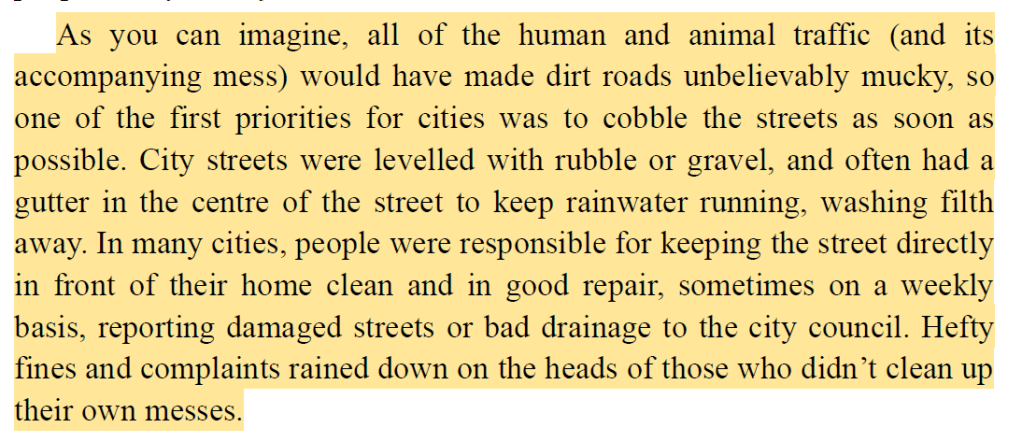
This is also such an important fact, it makes sense but sometimes someone has to tell you this before you realise it.
We modern humans have a lot of rubbish, every single day we fill our bins, litter our streets, etc.
But when you live like a medieval person (and I did, at an open air museum) you suddenly realise that you practically have almost no waste at all;
Yes, yes, yes, tell them Cybulski, tell them again and louder, especially for the readers in the back;

I love how this still surprises a lot of people;
Another classic myth I still regularly have to deal with;
Yes! Another debunk, medieval people drank water, they didn’t drink beer/ale because all the water was polluted;
This too is still a surprise to many, yes medieval people rarely married when they were still kids and their marriages were also rarely arranged, both men & women worked, got an education (which could be school but also learning a trade, serving in a household) and waited for the right time to get married;

I regularly have to still debunk these old myths, so it’s wonderful to see it dealt with in this book as well;
The book is well written, has short chapters and quickly gets to the point.
It isn’t a very intimidating book, it is not a thick book with lots of pages, it’s not difficult to read, so it’s very suitable for people who perhaps aren’t used to reading lots of history books, which makes it very suitable for younger readers as well, a perfect starter book for teenagers interested in history & debunking myths, perhaps even some readers that are even younger.
It deals with a lot of myths but is also just a good description of what life was like, here are some of the subjects dealt with in the book:
Did medieval people take baths?
Did they ever wash their hands?
Did they use soap?
What about their teeth?
Did they wash their clothes?
Were the cities filthy?
What about toilets?
What did people eat?
Wasn’t the food all bland?
What did people drink?
Were they constantly drunk?
Was everyone up for a night of drunken excitement?
What was a feast like?
Did they really eat with their hands?
Did people have any table manners?
Did medieval people date?
Weren’t all of the marriages arranged?
What about their sex lives?
What about LGBTQIA+ people?
People were using contraceptives?
What was childhood like?
Did everyone die young?
When a serf got married, did the lord get to sleep with the bride?
If people didn’t confess to their crimes, were they tortured?
What about knights?
Could they even move under all that armour?
Weren’t monasteries also schools?
Did everyone believe?
Wasn’t the church always burning people for heresy?
What was life like for the Jews?
What about Muslims?
What about the crusades?
Did they have doctors like we do today?
What about people with disabilities?
What was the Black Death?
Did medieval people wear underwear?
In short, I recommend this book, I enjoyed reading it.
If you enjoyed reading my review, check out this list of other reviews I’ve written:
https://fakehistoryhunter.net/2022/11/14/my-reviews/
 Fake History Hunter