
This article was originally a thread on social media, which is why it is formatted with lots of images and short responses.
The text is about the image below that paragraph.
Book review!
Well technically, it’s more an exhibit guide than a book, but close enough. It is about the medieval section of the Römerthermen Zülpich-Museum der Badekultur, a museum in Germany that is all about bathing culture, so how could I resist!
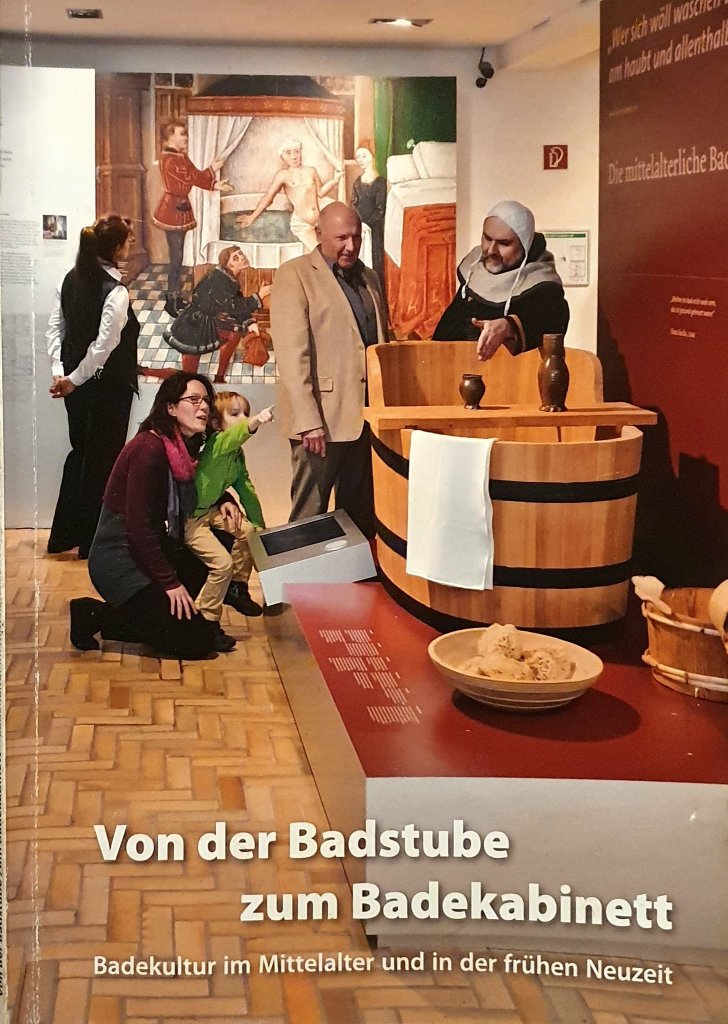
The museum looks great but is a bit too far for me to visit, so this guide will have to do for now. It’s on top of some Roman bath ruins!
More about the museum here:
https://www.roemerthermen-zuelpich.de/de/besucherinfo/fuer_kinder_/english/english.html
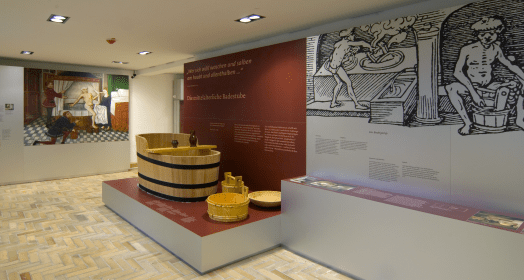
And yes the guide is in German, but I can read German.
Anyway, I enjoyed reading the guide, it’s well written and deals with a ton of myths. You can order it here, they also have one about Roman bathing:
https://www.roemerthermen-zuelpich.de/de/besucherinfo/museumsshop___publikationen/museumsshop___publikationen_1.html
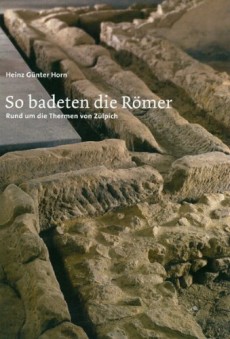
Anyway, I noticed a few interesting things in the guide I wanted to share with you. Sorry if google translate messed up here and there.
I simply don’t have the time, patience or talent to check the grammar and then translate all this stuff myself, properly.
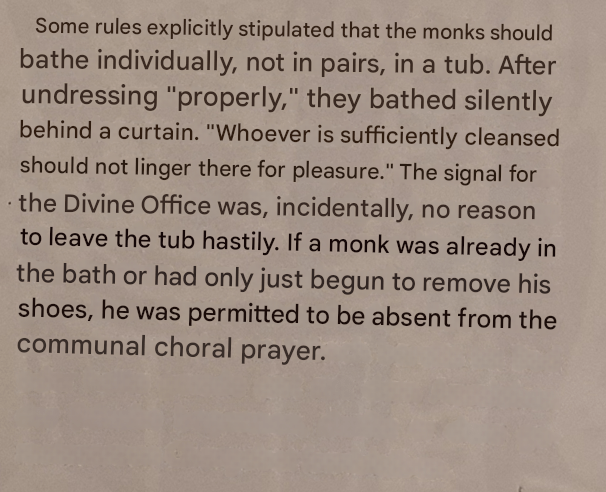
This amused me. Poor monks, not being allowed to share a tub. And I can imagine a smart monk timing his routine perfectly to end up in the bath during prayer so he could enjoy it longer:
This is the famous plan of Saint Gall, a medieval architectural drawing of a monastic compound dating from 820–830 AD:
https://en.wikipedia.org/wiki/Plan_of_Saint_Gall

About it the guide says;
Karl the Great, (aka Charlemagne) loved his bath, perhaps a bit too much 🙂
Mind you, hundreds may have been a bit of an exaggeration.
He also had some Roman baths restored:
I admit it, I’m envious of Jakob.
This looks like a pretty awesome bath;

Sometimes figuring out details takes a bit of detective work, I love how the author backs up the claim of people having water piped in for baths here;
HAHAHAHA!
This is like a Monty Python sketch;
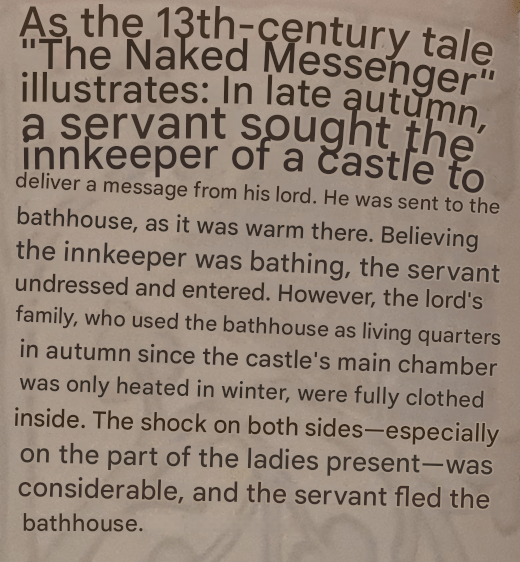
I don’t completely agree with this, I’ve shared evidence of fresh water supplies, underfloor heating, sewage systems & public toilets in medieval Europe that sort of contradicts this bit. But I agree with the end, smaller communities didn’t need much of this “Roman” lark. 😉
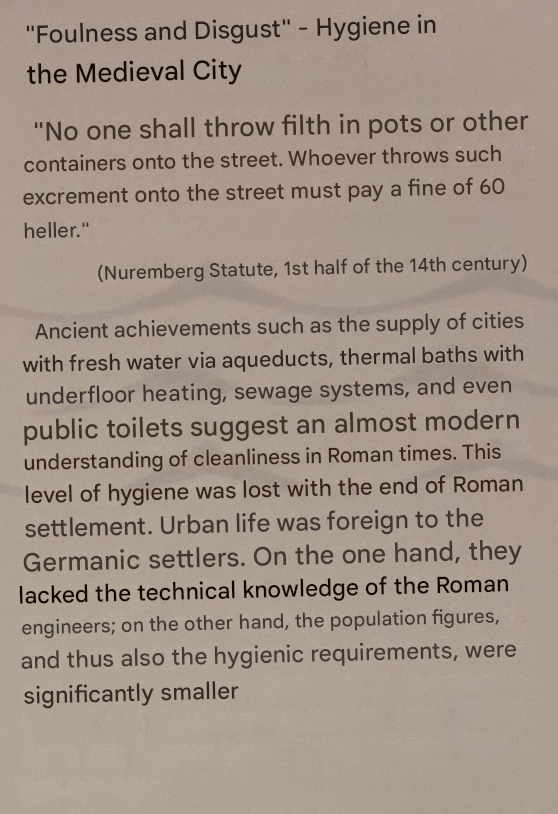
Google confused cesspool with cesspit here. But yes, they knew that they had to keep this away from water sources;
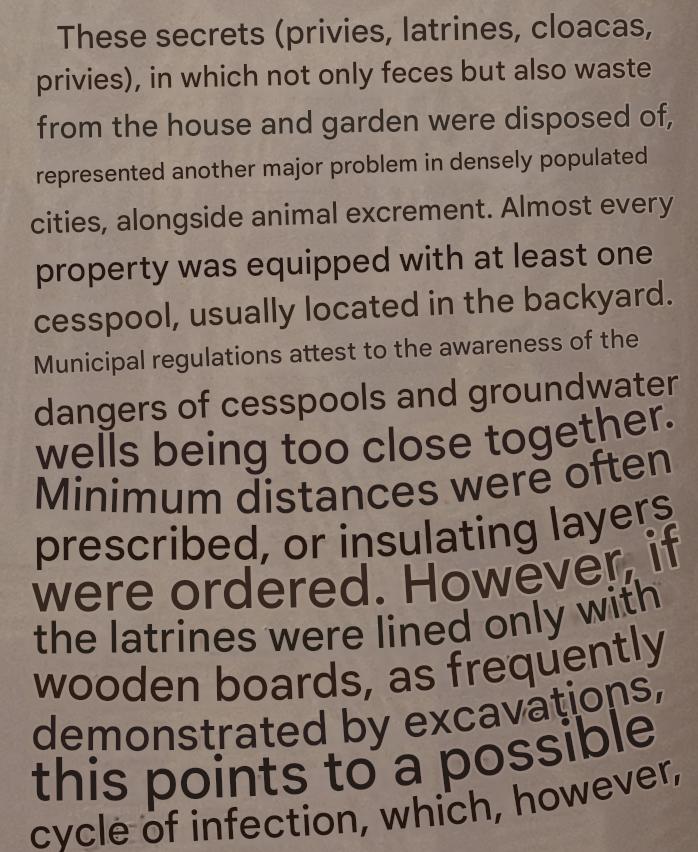
So, yes, they did dump icky stuff in rivers, canals & lakes but also yes, they were only allowed to do this in some spots and not in the canals that ran through the city, so that water was kept clean. Makes sense, right?
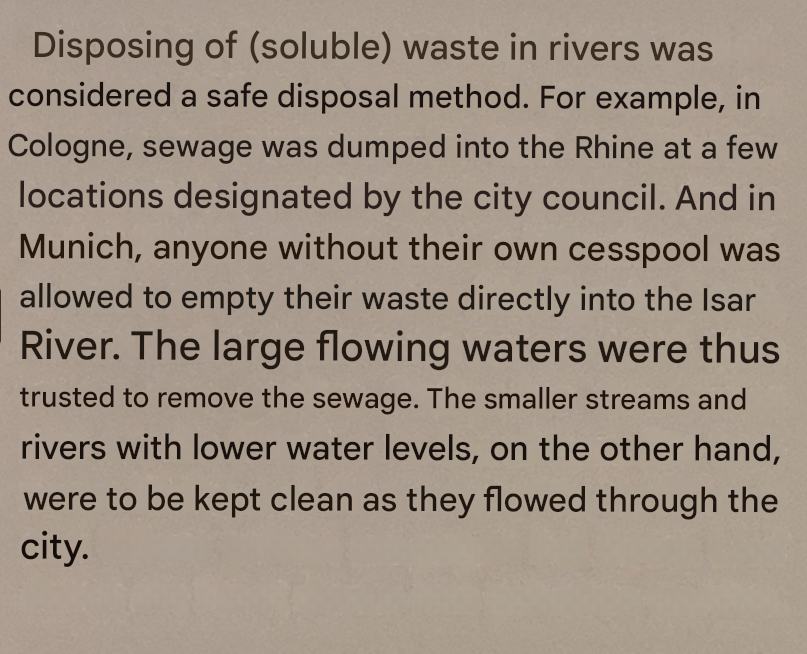
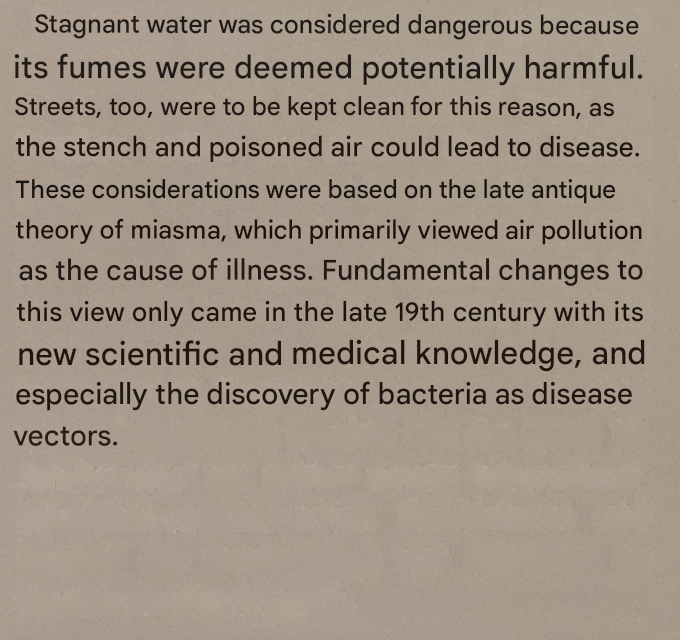
We sometimes mock the medieval people for believing in the miasma theory, but this did result in everyone being petrified of bad air and bad smells!
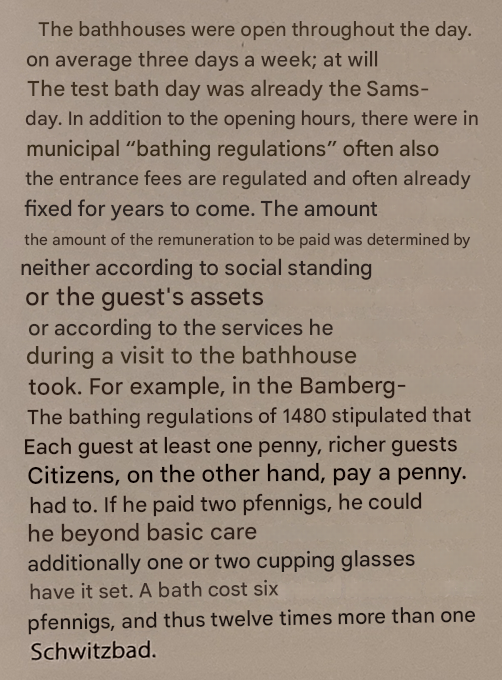
Some technical details about bath houses, what they cost & services they provided:
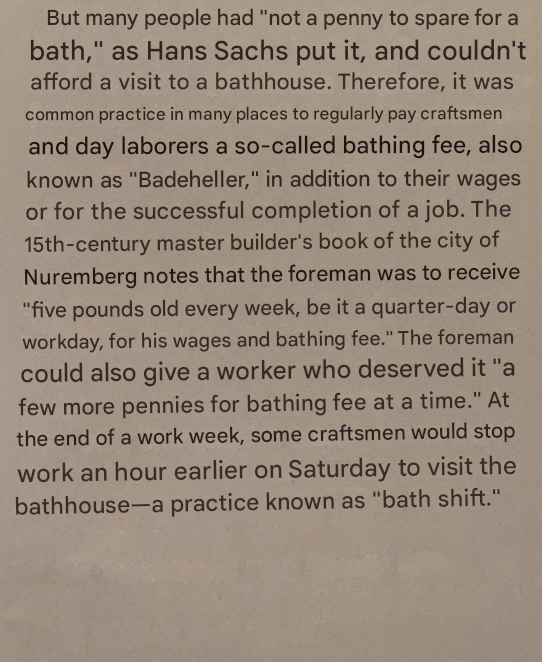
But what if you couldn’t afford the fee? Workers were given bath house tokens!
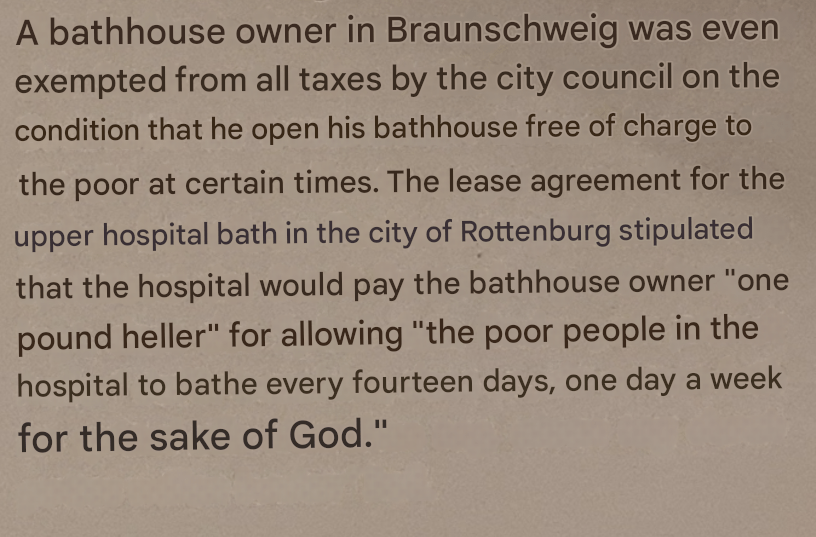
And opening your bath house free of charge for the poor was also not uncommon:
Interesting detail here, we’re often told that medieval people avoided bathing because they were scared that the water would open their pores and this would make them sick. And here the Germans are joyfully whacking their pores open!
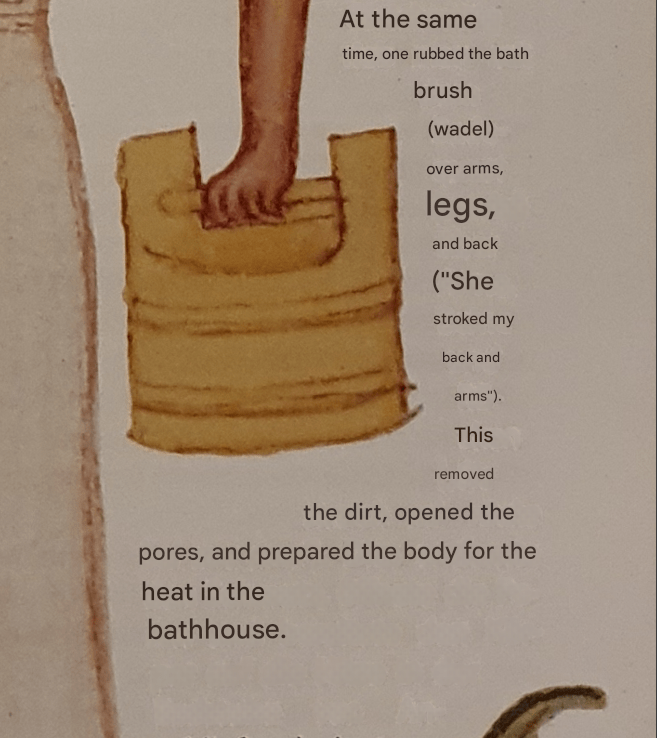
I’m starting to think we’re missing out on a lot of fun just because we have bathrooms at home;
As the kids say: well duh. We’re told they never bathed because they thought bathing was dangerous. SOME people thought that, but others:

We know bath houses became less popular at the end of the middle ages, but this is interesting.
Here it says the bath became less popular not just because of diseases but also costs.
Deforestation made firewood more and more expensive, which meant that those who needed more hot water had to pay more for it.
But people still had their sweat baths!
We often read how people stopped bathing after the middle ages, but in reality they stopped bathing at bathhouses (still bathed at home) and focused more on steam baths, saunas.
When you say people switched from baths to having saunas, it suddenly sounds very different:
Medieval baths have a bad image, a place where people would do naughty naked stuff. In reality men & women often bathed separately, in different rooms or at different times. And they cared about their privacy…
What about all the naughty art we’ve seen then? Some of those pictures show us stories, like about the Romans or from the bible, not real daily medieval life.
But in some cases….
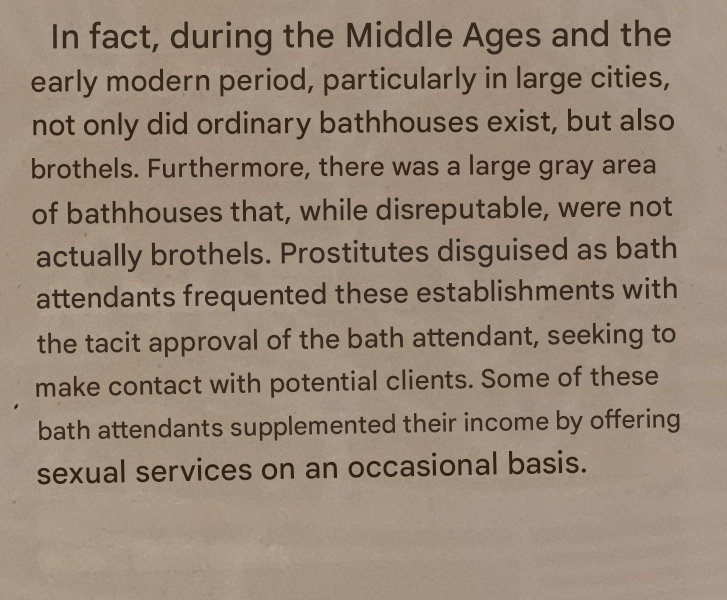
This explains why bathhouses got such a bad reputation that they didn’t deserve.
Most bathhouses would be those places where you’d go with your family, your kids, meet your neighbours, etc.
But because of the brothels with bathing services, that were often called the same (stews), people have for centuries just assumed that all bathhouses were places you got both clean and dirrrrrty.
Our medieval ancestors weren’t complete morons!
I told you, didn’t I? I told you so;
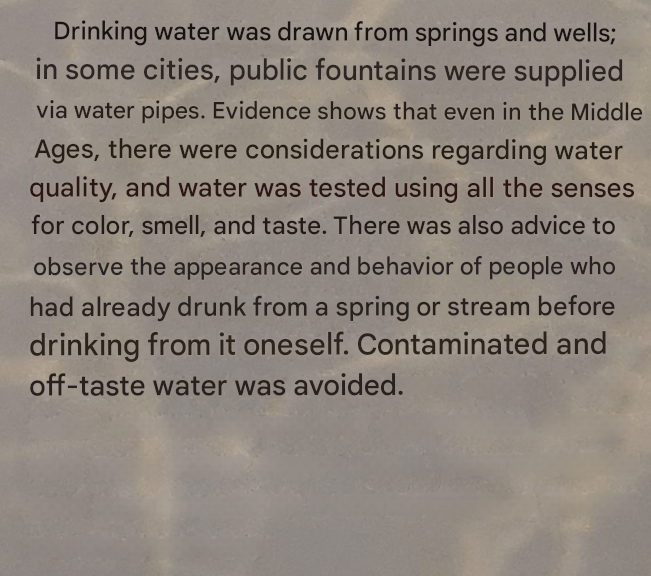
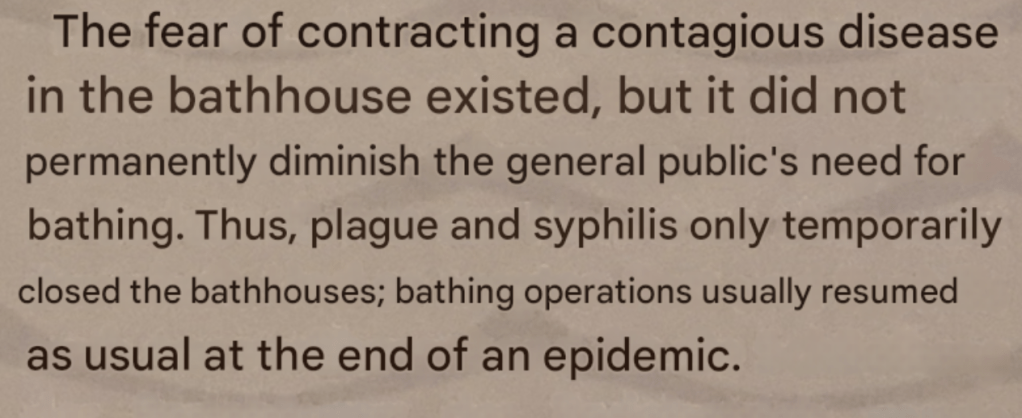
Yes, the attitude towards bathing did change, in part because of disease outbreaks often happening there were people gathered, like in bath houses… but bath houses didn’t vanish till much later:

But the medieval people knew this! Of course they had noticed that visiting a public bath sometimes meant you could get sick. And they tried to do something about it;

But bathing didn’t stop, sometimes it did for a short time, but then it became popular again. Other things had a much bigger impact on bathhouses becoming less common, wars, public spas opening up at springs, more private baths at homes, syphilis arriving from the Americas, but mainly the price of wood:
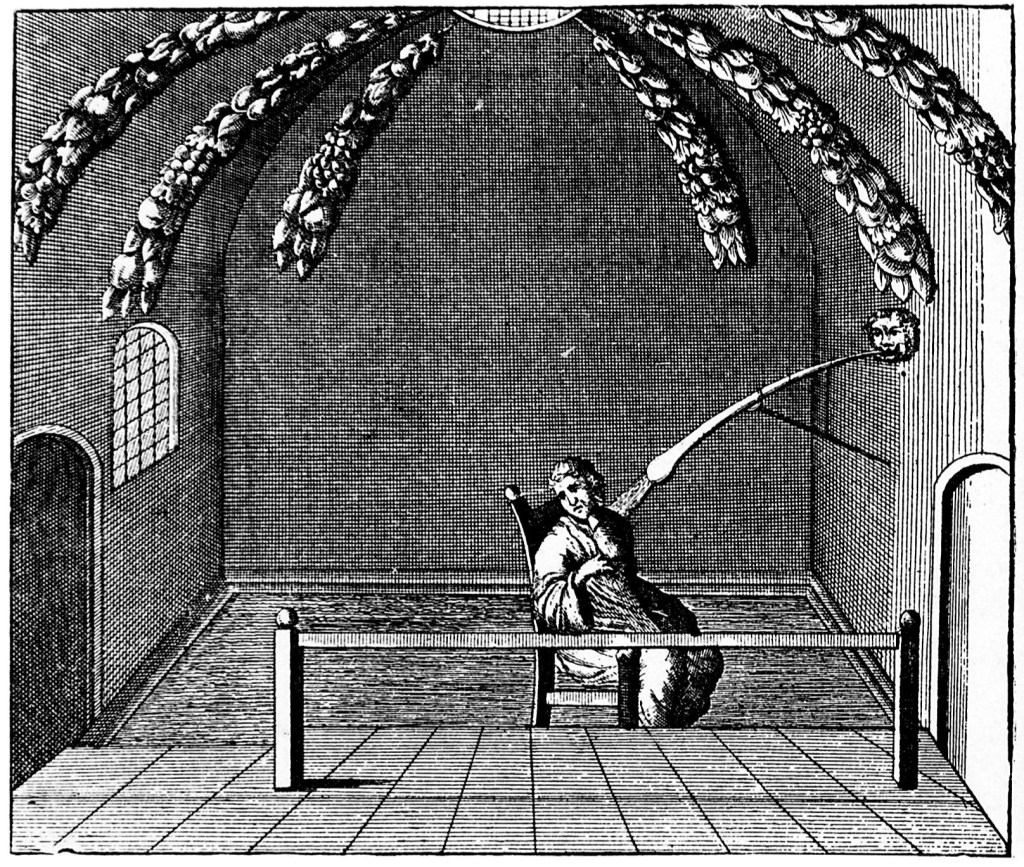
Just a pretty cool image of an 18th century shower;
Anyway, I enjoyed the book and wish I could see the exhibit, maybe one day. I hope that many people who visit the museum will have some of their misconceptions of the subject wiped clean. If you liked this review, there are more here:
 Fake History Hunter