
This article was originally a thread on social media, which is why it is formatted with lots of images and short responses.
The text is about the image below that paragraph.
This article was also turned into a youtube video you can watch here;
One of the many things we think are weird/gross about the middle ages is the idea of people sharing their homes with animals, especially cattle.
But is this true? Did they really have cows & sheep walking around their living room?
Let’s research.
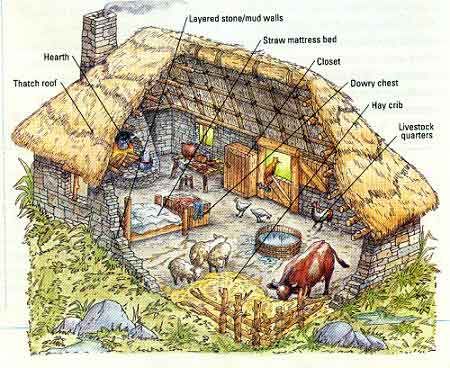
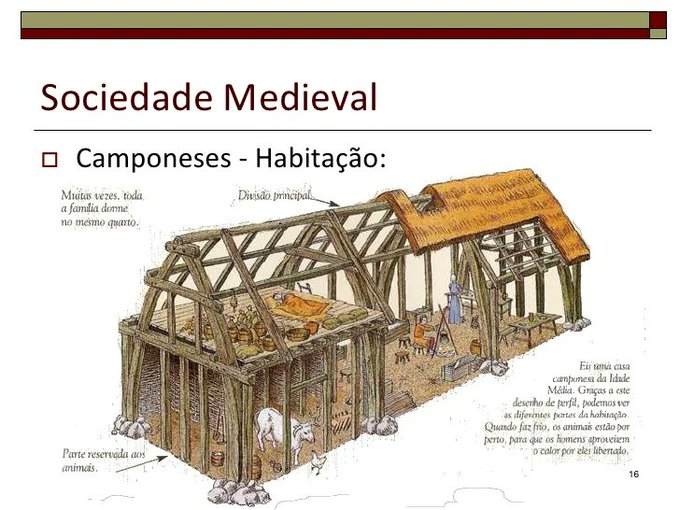
I regularly hear this being mentioned as just another bit of evidence of how dirty & backwards medieval people were and that it’s no wonder they got all those diseases, were covered in filth all the time, etc. Especially this image is often used, it’s nice but is it accurate?
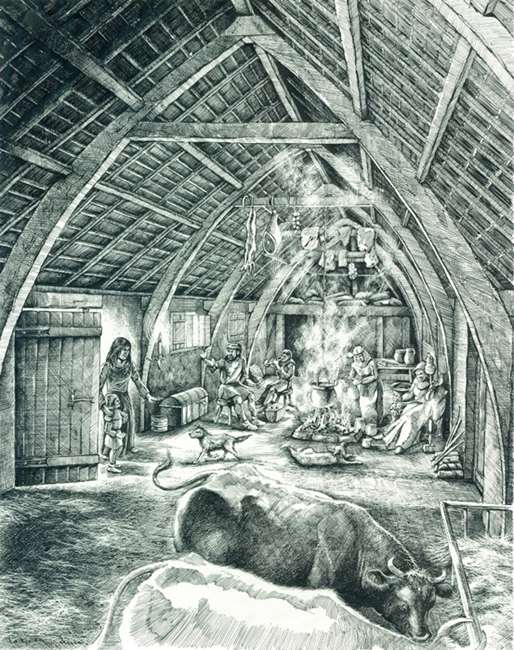
Let’s first think about it logically and rationally. Would you like to have animals walking around your home? Do you think medieval people wouldn’t mind the feces & urine splattering on their precious belongings, clothing, bedding, etc?

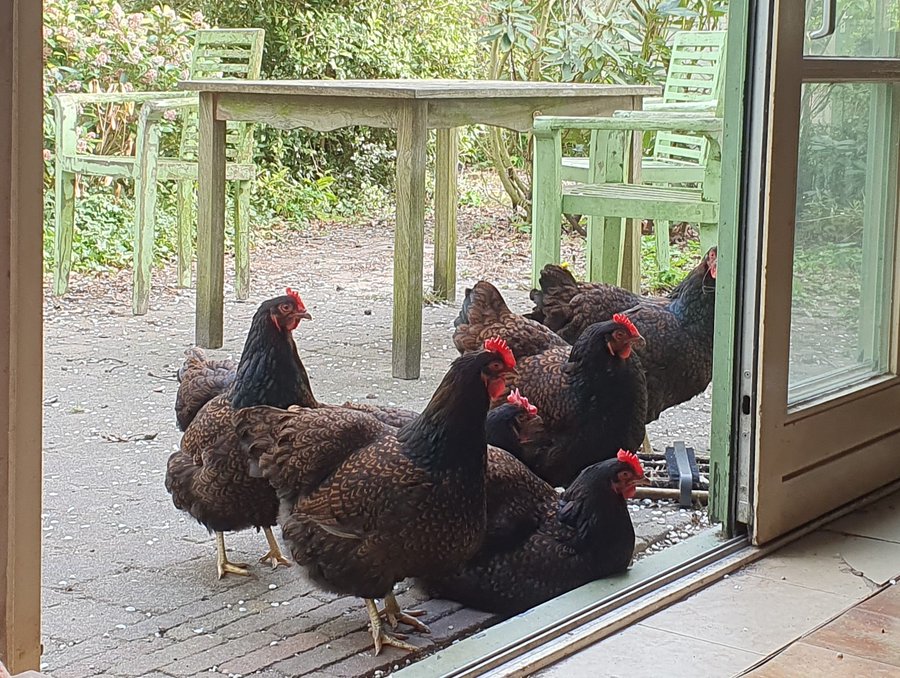
I live in the countryside, I leave my doors open when the weather allows it and the chickens love to visit, but I have trained my dog to bark and chase them out every time they do.
I like chickens in my house but I don’t like cleaning their faeces.
A lesson I learned quickly.
Yes, they are still upset about not being allowed into the house;
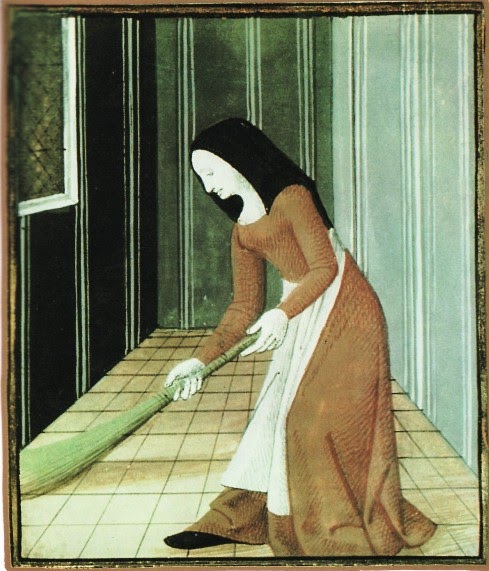
Remember, washing blankets, clothing, our floor & furniture is not fun but for us with all our tech & tools it’s easily done. For a medieval peasant these jobs would take even more work and a lot more time.
Time better used elsewhere.
Besides it being dirty, sharing a home with animals is also dangerous. They can bump into stuff, accidentally pus something into the open fire, steal your food or you know, eat your child. As we know pigs sometimes did, more about that here;
Of course our rational, logical look at it doesn’t mean much because humans are weird and people of the past have often done things we think are irrational and dumb, but it is still important to at least try and see if we can understand the free roaming idea, but I can’t.

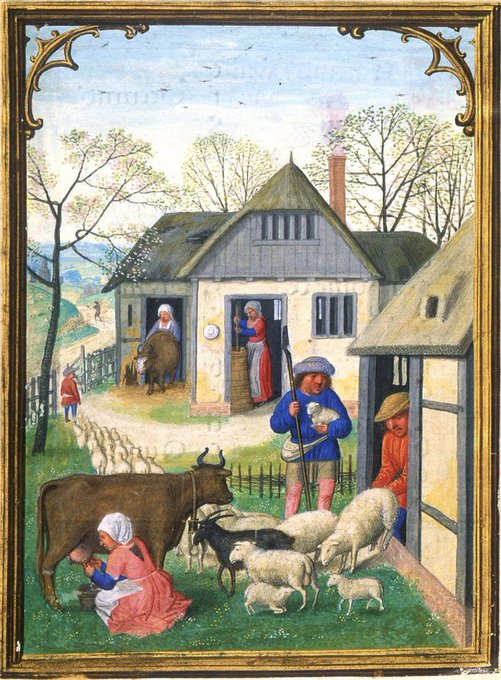
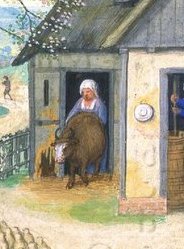
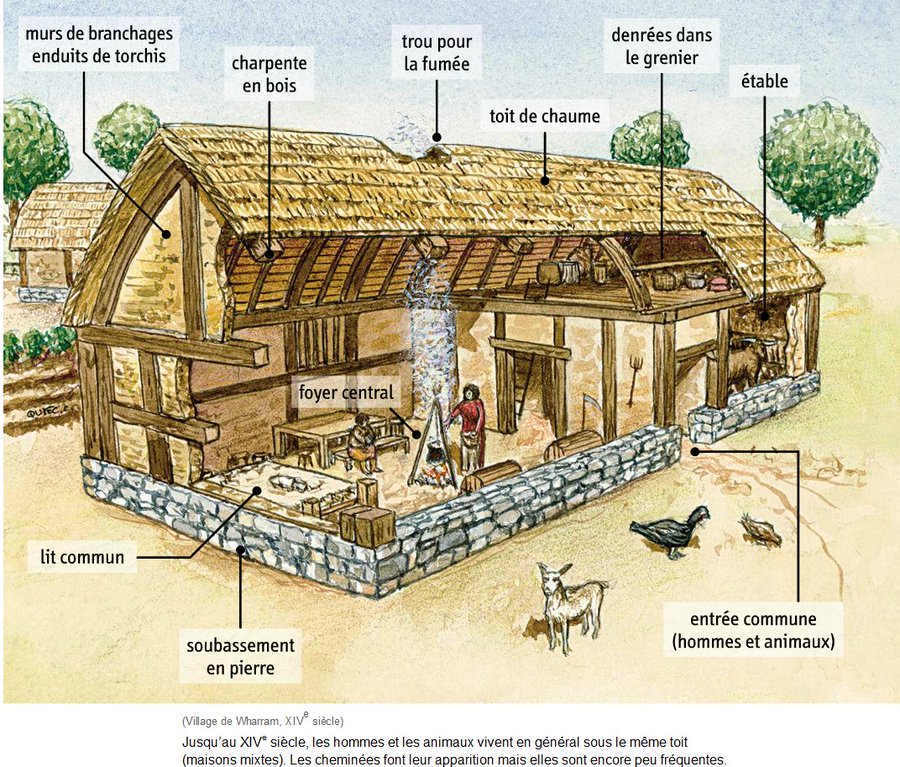
So we need to try and look at the evidence, is there any proof of this happening during the middle ages? I only found 2 contemporary images about animals sharing a roof with humans and in both the animals seem to have their own door & thus likely own part of the house:
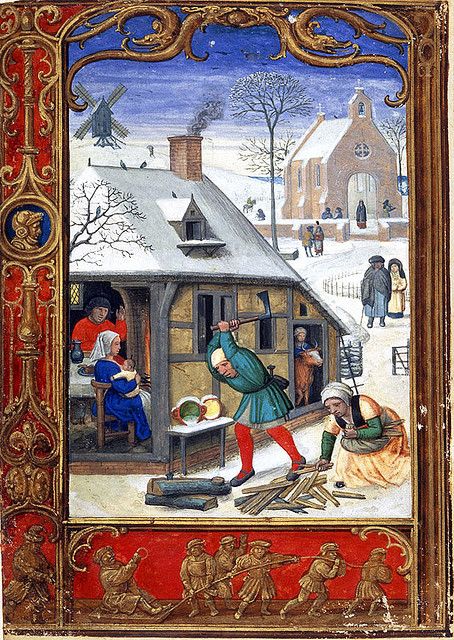

Sharing a roof is of course smart, it means you don’t have to built a special building just for the animals (expensive, lots of work, needs land) but animals also provide warmth and they’re safe from predators & cold indoors.
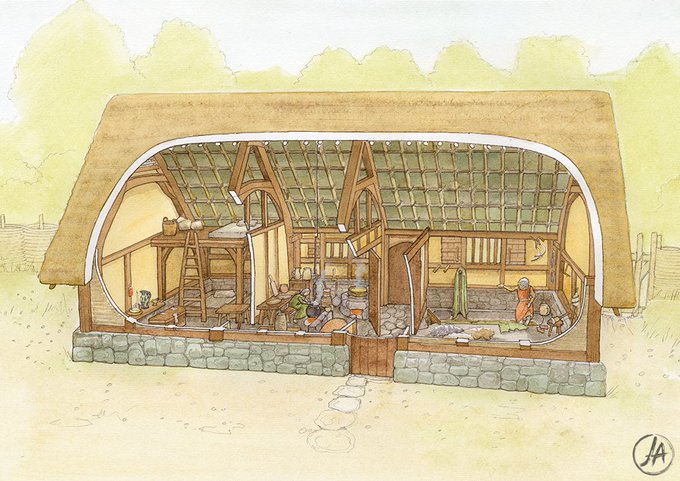
Of course if you had the space, time and/or money, you’d just built a stable like in these lovely drawing by Jennie Anderson of a C14th farmstead at Eckweek, Somerset, UK.

But we know that many people did share a roof with their cattle and some still do, in my country it was relatively common till not that long ago, but as you can see here the actual barn bit is separated from the home, you can even see it from outside:
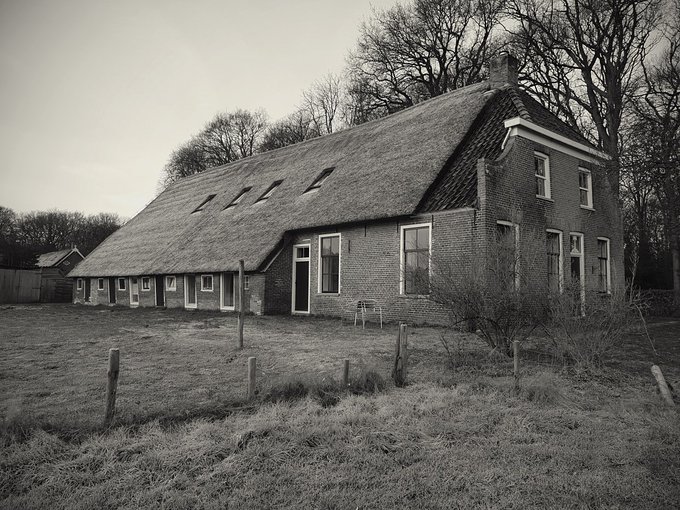
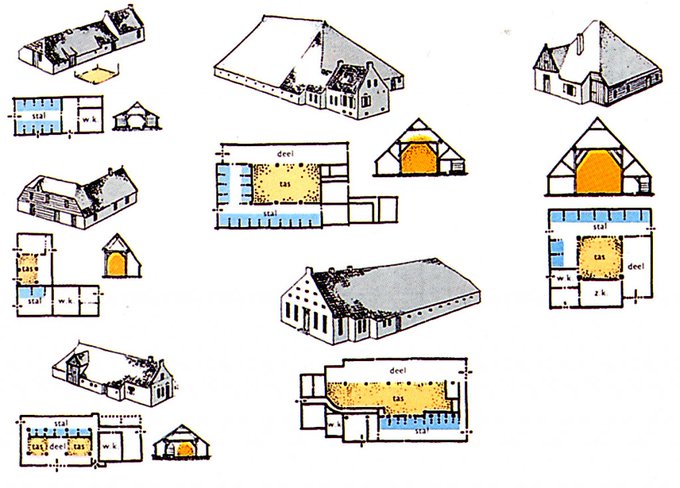
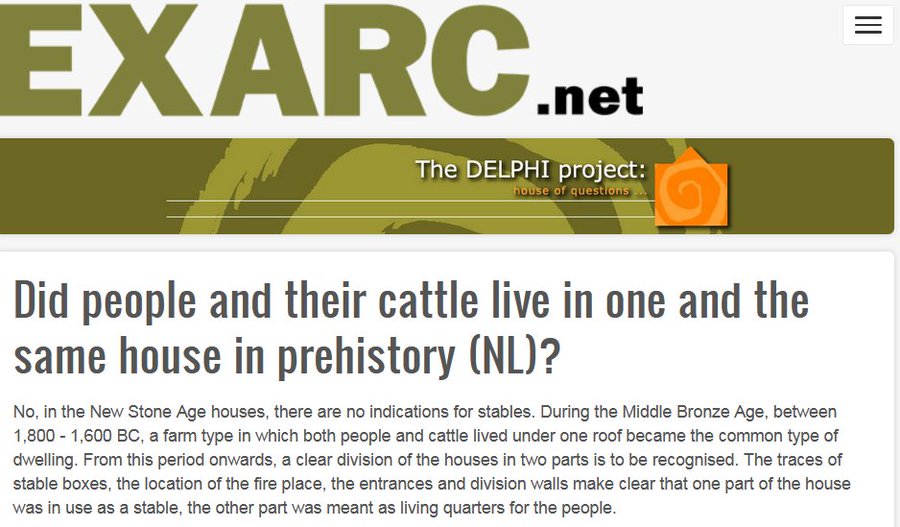
Without records or art the only way to prove how things were in the middle ages is by looking at the archaeology of these buildings. Let’s start before the middle ages, according to Exarc dividing homes for animals started in the Middle Bronze Age:
https://web.archive.org/web/20250501000000*/https://exarc.net/questions/did-people-and-their-cattle-live-one-and-same-house-prehistory-nl
The book ‘The village & house in the Middle Ages’, by Jean Chapelot, was quite helpful, there is evidence in medieval hovels, peasant homes, that show that they did indeed divide their homes.
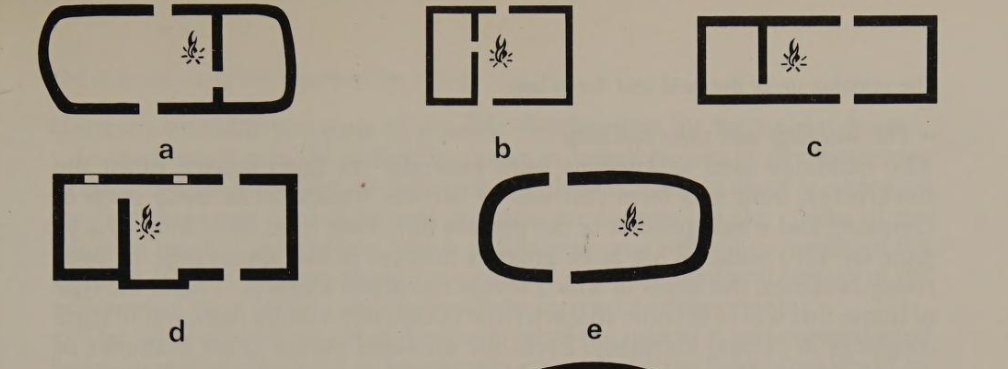
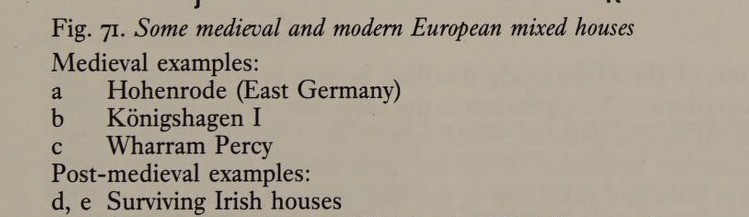
Now we know the technical term for these houses, Mr. Chapelot explains:

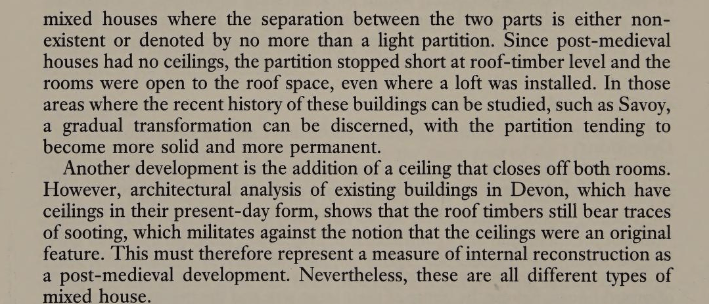
Archaeological evidence of people sharing a roof with cattle but not their living spaces:

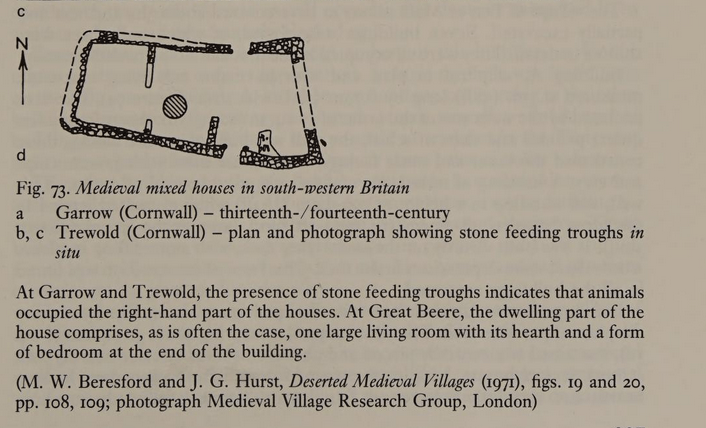
A remaining problem is of course that although a feeding trough and sometimes drainage can tell us where the animals lived, from archaeological remains it’s difficult to say how high the partitions were and impossible to know if they used rope to keep animals in place.

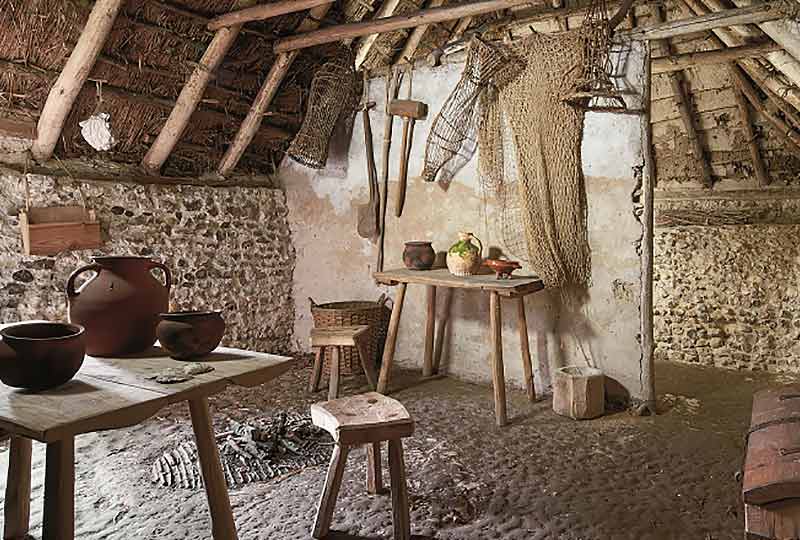
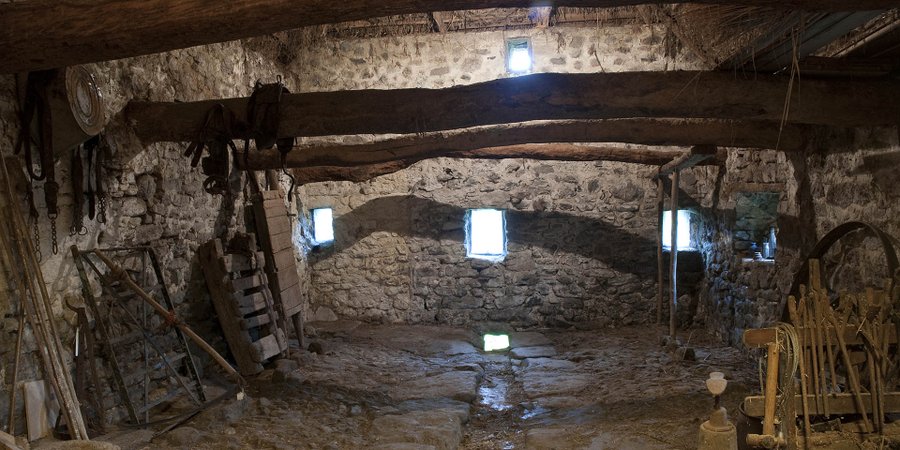
Even if a hovel shows no evidence of a wall or partition, we will never know if they divided the area the animals lived in by rope or perhaps by hanging blankets from a beam. Reconstruction at Weald & Downland living museum:
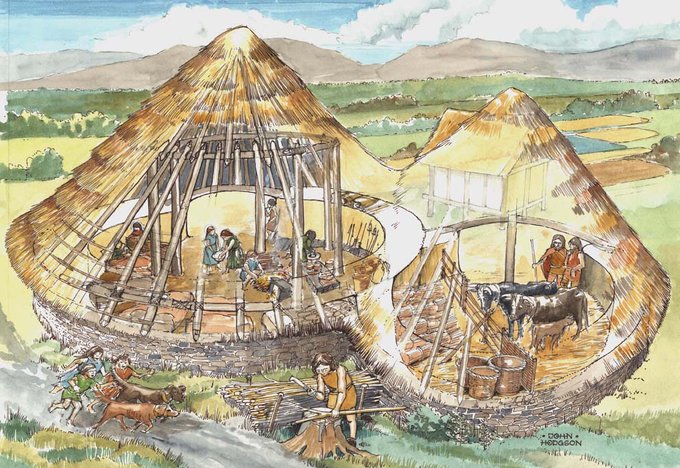
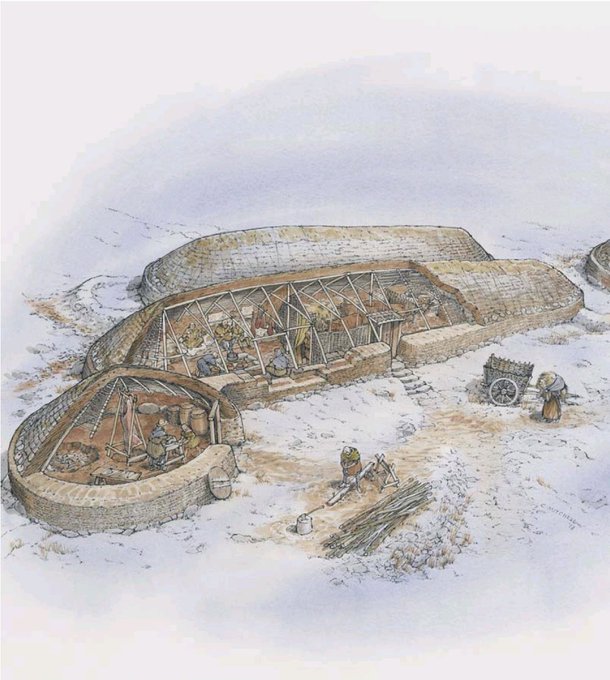
Finally here are a bunch of random illustrations I found online that show a more realistic, I think, image than the ones I started the thread with, they show people sharing a roof but not their living space with cattle.
This is just a sort of virtual “mood-board”, images I found & collected over the years, I’m sorry I don’t name the artists or have sources or more information for them all, but let me know if you want to find out more about one of them and I’ll see what I can find.
Also my apologies to the artists, if you see your art here and want credit, let me know.
I usually add that sort of thing, but there’s just too much to do right now:
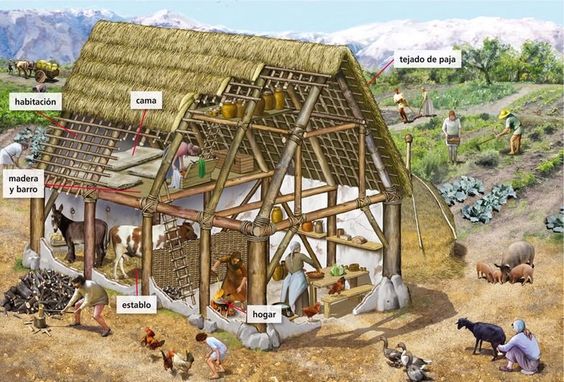
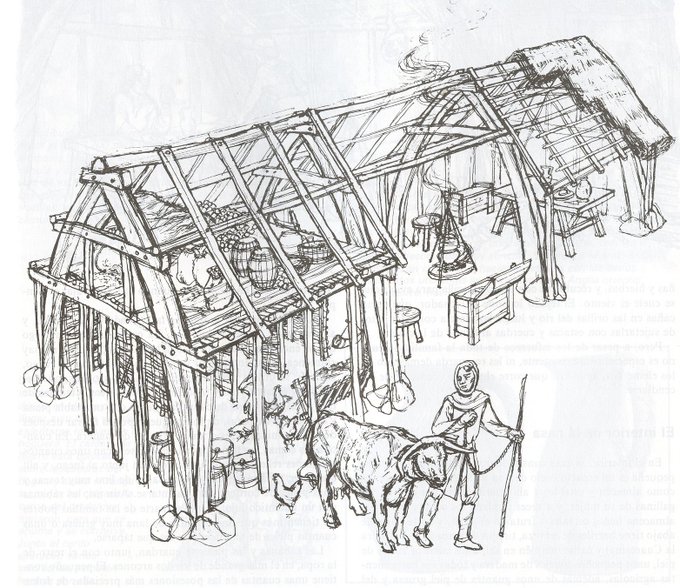

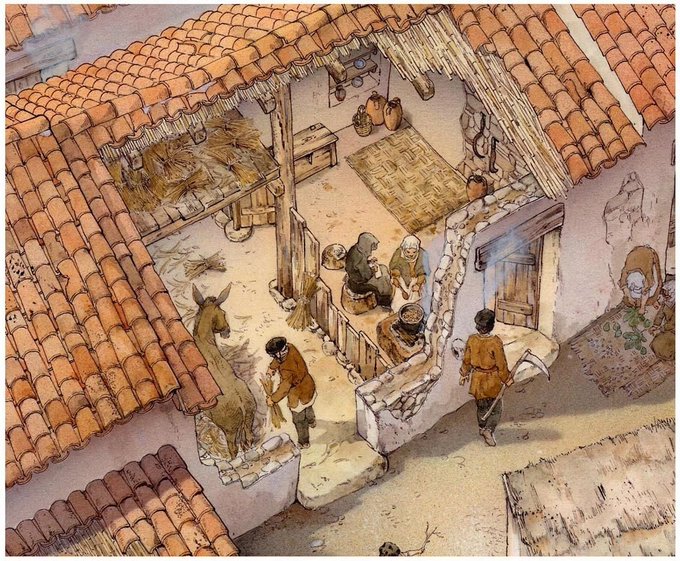
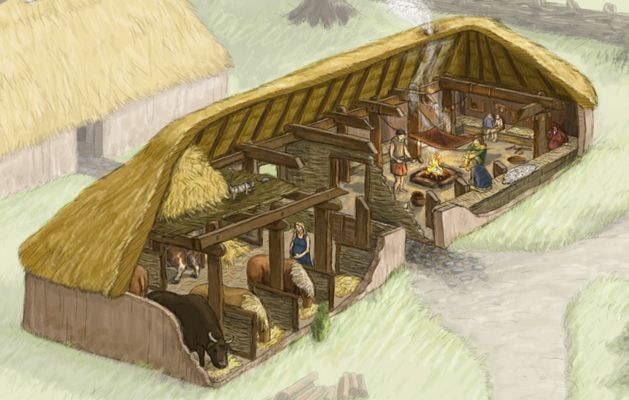
The animals share a roof with the humans but don’t walk around freely, are behind partitions or at the very least tied up, the animals that is, not the humans, or maybe both 😉 We have of course no evidence for the animals being tied up but it would make sense.
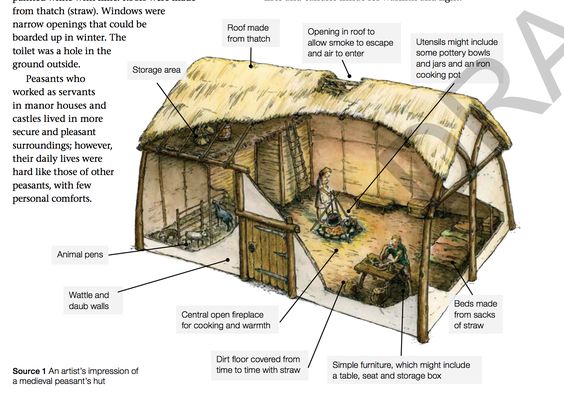

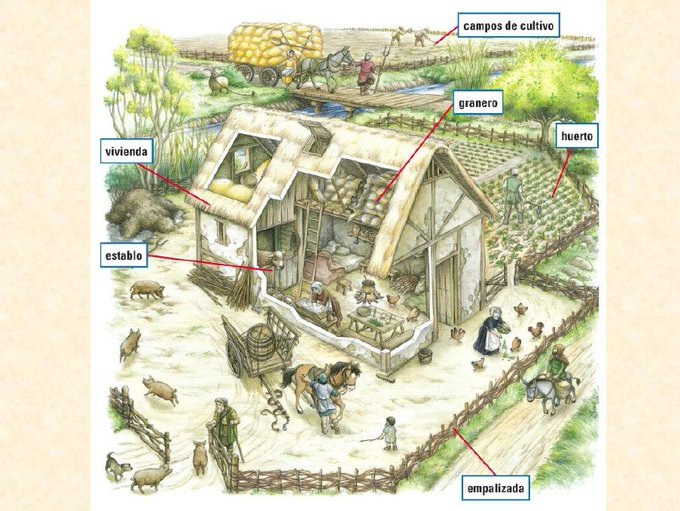
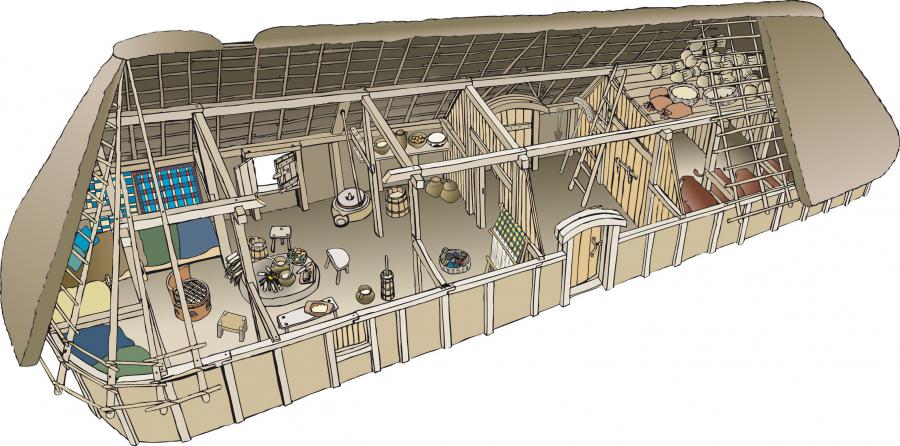
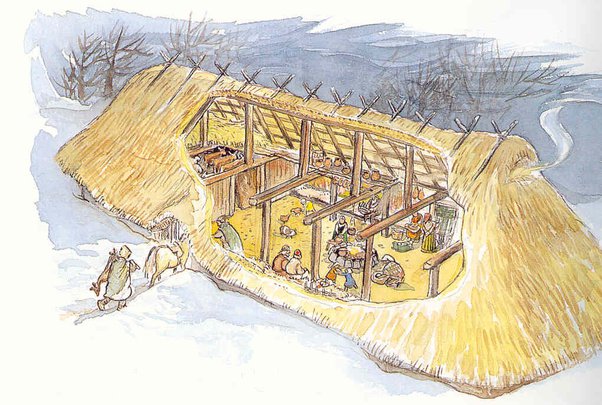

This is a research thread in progress, so I will add new things to it when I discover something new. I also hope that you, if you find something post it in the comments so this here can become a valuable source of research.
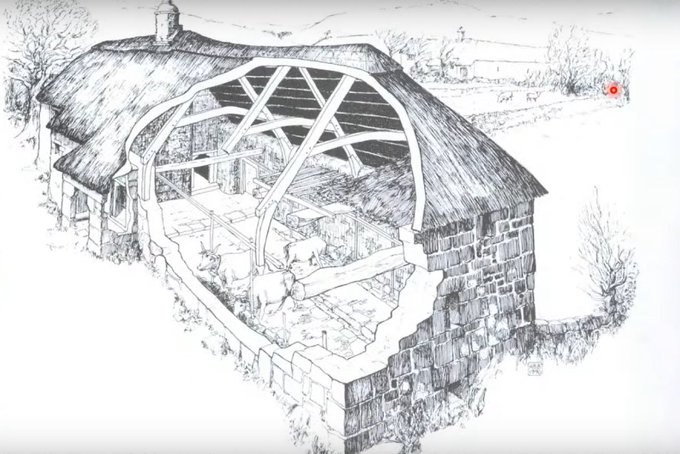
This is Higher Uppacott, a Dartmoor longhouse with early/mid 14th century origins where the lower-end shippon remains intact, you can see the drain in the middle which would have made getting rid of waste a lot easier:
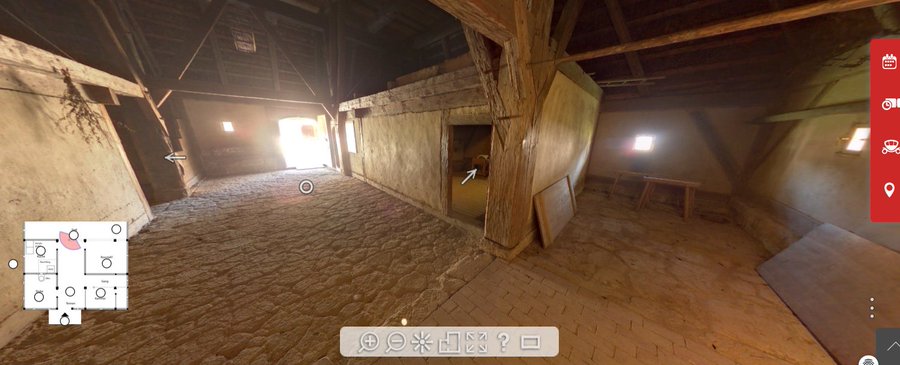
Oh wunderbar, on this page you can do an 360 tour of an 14th century farmhouse! Walls between human & animal living spaces 🙂
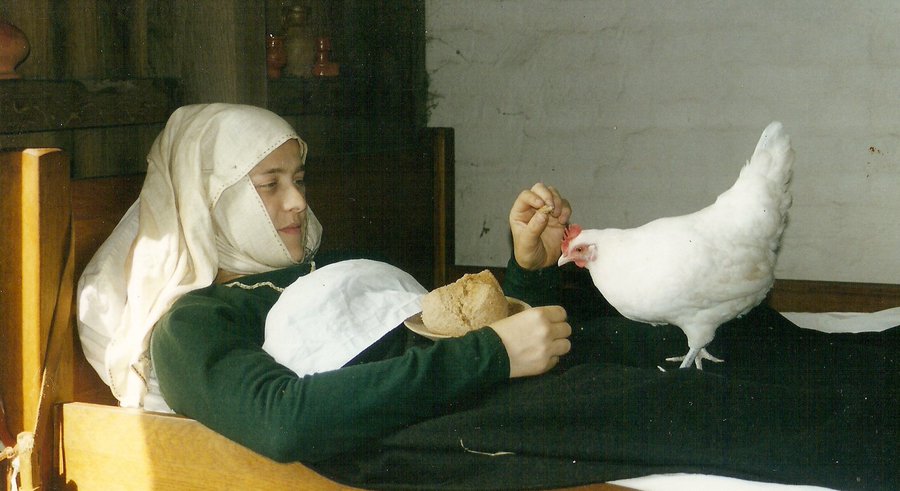
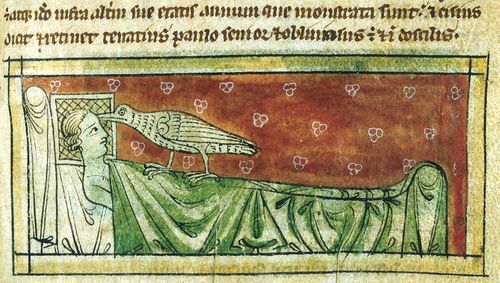
Mind you, back when I was pretending to be ill at the open air museum I worked in, I may have made things worse by being friendly to the chicken who came to check on how I was feeling. Mind you, nobody can say that wasn’t authentic, I found a source 😉
Here’s an interesting talk about Higher Uppacott, a traditional Dartmoor longhouse:
It also has a couple of interesting illustrations that I decided to copy and add to this thread, they all come from the youtube video I just shared.

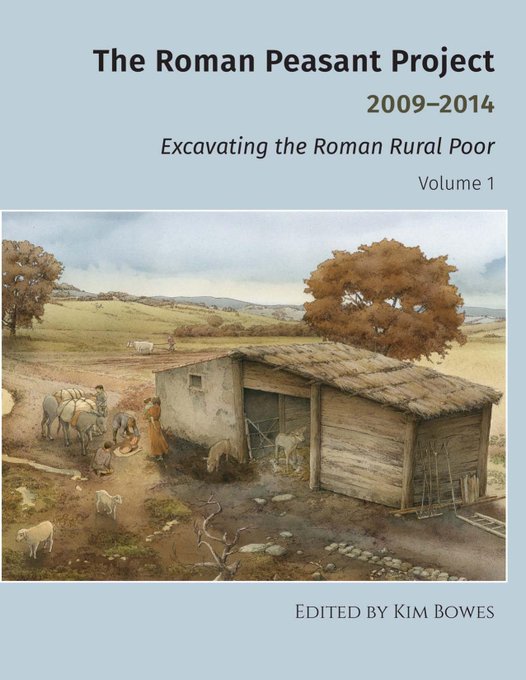
I’ve also been going through this book and it mentions evidence for people sharing their house with cattle… in Roman times!
So once more something that’s used to make medieval people appear dirty, was something the Romans did too 😉
And before you think this was just an European thing, the Tata Somba houses of the Tammari people in Benin/Togo, also have/had space for cattle under the same roof. (source)
Thanks to everyone who contributed in the original discussion thread on twitter!
Sources:
- The village & house in the Middle Ages by Jean Chapelot
- Did people and their cattle live in one and the same house in prehistory (NL)?
- Dartmoor longhouse
- A Virtual Tour of Higher Uppacott- a Dartmoor longhouse
- Weald & Downland Living Museum
- Bauernhäuser (Spätmittelalter) by Konrad Bedal
- Entdecken Sie die Feddersen-Wierde
 Fake History Hunter
One thought on “Did medieval people share their homes with cattle?”