
Let’s review a youtube video.
“What Hygiene Was Like During the Black Plague“, made by ‘Weird history‘, a channel with 4.6 million subscribers.
This video has 1 million views.
First illustration is from 1625… not medieval.

The thumbnail:
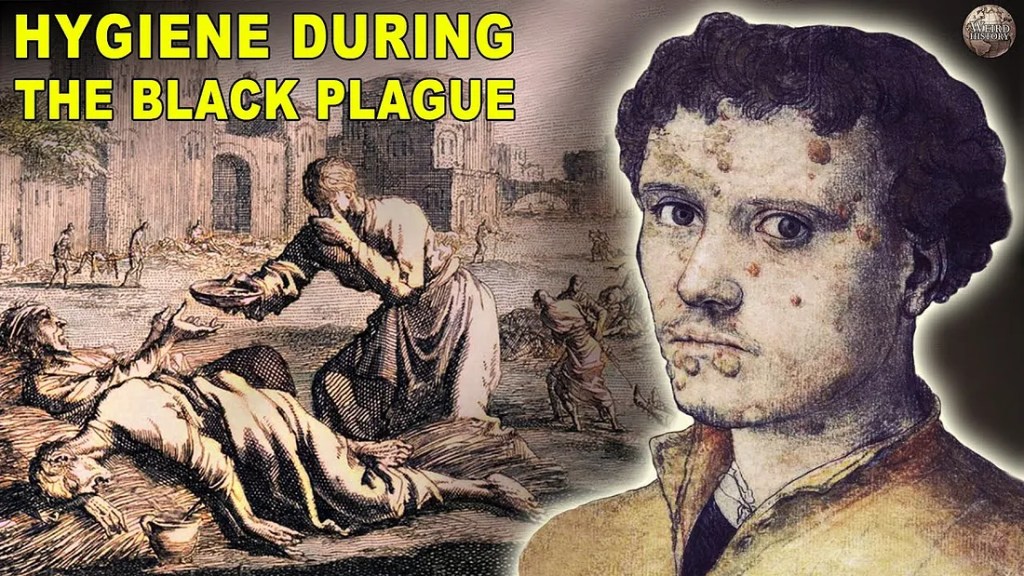
The video is about the “black plague”, but it’s actually about the Black Death.
Plague was the disease, Black Death is the (much later) name for the actual outbreak, the pandemic, the event.
Not a good start…

“In the 14th century, the bubonic plague swept through the Middle East, Asia, and Europe.”
Yes, the plague swept through the middle east, Asia & Europe… but why leave out Africa?
It did incredible damage in Northern Africa and it likely reached other parts of Africa as well, although this subject is sadly understudied.
A recent theory suggests that lice played a bigger part in spreading it, but yes, it started with a rodent being bitten by a flea (or lice?) and then this creature bit humans and then the human went running around like a taxi driver taking the flea out to find other victims.
I think the image of the rat playing a bigger role in the black death than it actually did may actually be one of the reasons people think the middle ages were so filthy.
They assume that there were rats everywhere, all the time, all over the place.
Rats like filth.
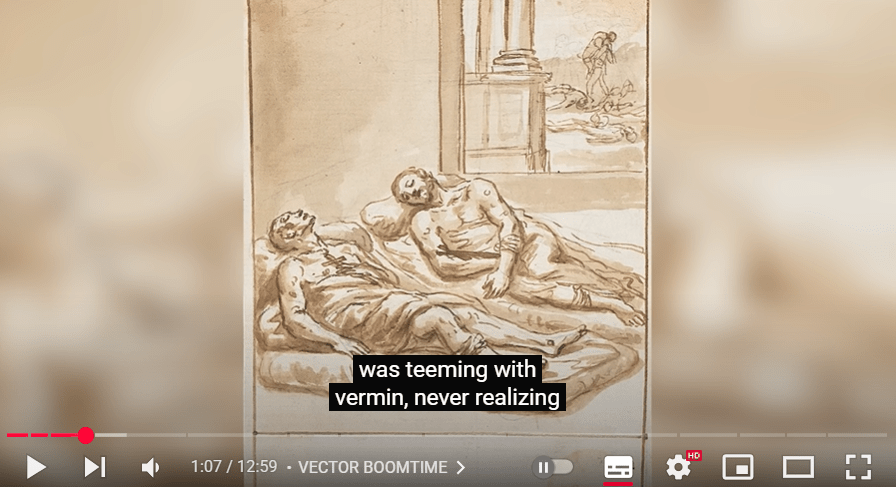
“Doctors of the era never identified fleas as a vector for the plague. So people continued to sleep on straw bedding that was teeming with vermin, never realizing the risks they were taking for their barely comfy bed.”
Doctors of every era didn’t identify the flea as the spreader, not till the 19th century anyway.
Although there were fleas & lice everywhere, in bedding, clothing, etc. people did care.
They spend a lot of time combatting these pests.
In ‘Le Ménagier de Paris’ the writer literally explains about how to keep bedrooms free of fleas.
Also straw mattresses are very very comfy, I slept like a log.
Reminder: before we had vacuum cleaners, better isolated homes & pesticides it was practically impossible to get rid of fleas/lice completely and even today they’re still around.
They were a normal part of life since prehistoric times, Romans had them, Victorians had them, we have them.
Yet somehow it’s somehow mentioned as if it’s a typical medieval issue…

“Europe wasn’t very clean in the 14th century and everything was pretty much covered in grime.”
Sigh.
Yeah, compared to today it wasn’t, compared to every other era it was, at least not somehow much worse anyway.
Before judging your ancestors remember that we’re the weird ones, how often we bathe, wash, the products we use, nobody ever was hygienic the way we are.
Grime?
What kind of grime?
Why?
Just because they weren’t as clean as we clean freaks are today, doesn’t mean they were fine with everything being covered in grime.
They cleaned houses, streets, their clothing and their bodies as often as they could.
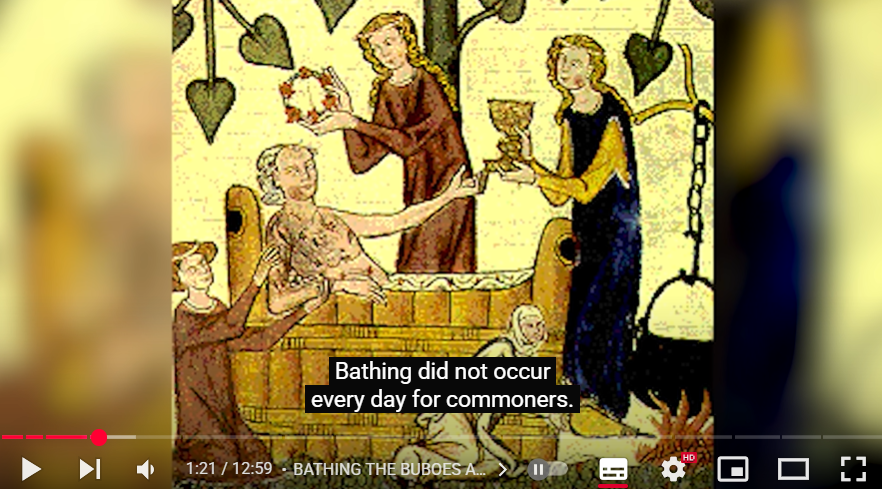
Bathing didn’t occur daily for everyone, ever.
Even today very few people bathe every day.
Bathing of course being the act of immersing yourself in a body of water.
But that doesn’t mean people don’t wash their bodies or shower…
Do you take an actual bath every day?
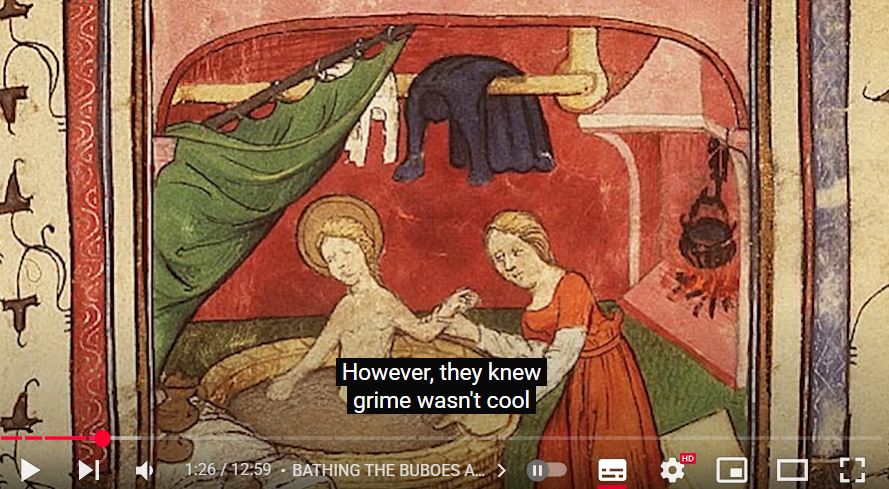
“However, they knew grime wasn’t cool and most peasants began their day by at least washing their hands and face. Contrary to the stereotype, medieval Europeans did occasionally take baths. The rich bathed in private tubs, while everyone else visited public baths or dunked in the local stream.”
Phew, that’s better, don’t have much to disagree about here.
We even see an actual medieval illustration!

“…people had to make their own soap. This required a few ingredients—ashes from an oak tree, tallow, which is animal fat, lime, which was heated to become quicklime, salt, flour, water, a pot, a pan, fire, and a sturdy stick to stir with.”
How to make soap…
Ashes-correct
Tallow-correct
Lime…. wait… what?
Is this a joke?
Please tell me this is a joke.
Does he think quicklime is made with… lime… the Citrus fruit??
Soap needs fat (animal or vegetable), water & heat.
That’s pretty much it.
And although tricky to get right at first, once you get a bit of experience it’s not that difficult to do.
Humans have been making soap for 1000s of years.


“In some areas, the Jewish population had a mortality rate lower than their neighboring Christians. This was likely because of their sanitary traditions.”
There’s no evidence for this claim whatsoever.
It also wouldn’t make sense, Jewish people were not that much more hygienic than others and they lived among Christians, Jews living in ghettos started a bit later and even then they were not completely isolated from non-Jews.
Fleas/lice don’t skip you because of your religion or because you wash more.
One bite is all it took.
There’s a theory that Jews had a little protection from the plague due to a recessive genetic mutation, but it’s also likely that some morons just believed it then without any evidence or used it as an excuse for a pogrom.
Which uniquely Jewish sanitary traditions could have saved them from any contact with fleas/lice/humans/goods, etc?

“Some Christians believed Jews were resistant to the plague, accused them of tainting wells to spread the disease”
The old poisoning the wells nonsense story still goes around. Based perhaps on Jews using their own wells and someone thinking they didn’t get plague as much as everyone else. Scared desperate and dumb people often need scapegoats and start imagining things.
“This led some Christians on a mission to convert, exile, torture, and sometimes kill their Jewish neighbors. This despite several popes declaring Jews had nothing to do with the plague. But mobs aren’t known for their listening skills.”
Credit where credit is due, well said, yes, thank you youtuber, Popes indeed declared that the Jews were innocent of causing the plague and that it killed them too.
Clement VI also said that those who blamed the Jews were seduced by the devil and attacking them was a sin.
Good job pope.

“In hindsight, it looks a lot like the lower infection rates were because Jewish hygiene practices required more handwashing than the Christian counterparts. Handwashing. Yeah, that seems more probable than God’s wrath.”
Although handwashing is always a good idea and will help when you’re touching sick people, it will not help you from flea/lice bites or breathing in plague, yes, black death was likely also airborne…
Oh and Christians washed their hands too, quite a lot.
Washing yourself daily and washing hands before, during and after dinner was normal, so were weekly (or more) bathhouse visits.

“In the 14th century, townsfolk might share one toilet among dozens of households.”
Dozens of households sharing one toilet is extreme and unlikely.
Archaeology shows that there were quite a lot of toilets, why wouldn’t there be?
All they usually were was a seat over a cesspit dug in the garden.
Practically every house had a garden or yard, even in the cities.
Sharing one with your neighbour or maybe even two or three households happened, but a dozen?
That’s a neighbourhood.

Always fun when a youtuber can’t find relatable images.
Here we have a medieval flood of faeces illustrated with a photo of the second battle of Passchendaele in 1917…
“Heavy rains and floods caused community cesspits to overflow, which sent human waste cascading into the local water supply.”
Yes, heavy rain did sometimes cause cesspits to overflow, which upset people greatly, especially when it polluted the local water supply.
Luckily this was not a very regular occurrence and something people fought hard to avoid.
Of course today our water is never polluted by waste… right…?

“…many emptied their chamber pots directly into the street.”
Noooooooooooo.
Although this of course did happen in some alleyways in some overpopulated late medieval cities, it’s mostly an exaggeration, a tv trope, something that wasn’t very common thing at all, probably less common than it was in Roman and post medieval cities.
Most medieval houses didn’t even have a 2nd floor while most did have a cesspit in the garden…
We have many records of people complaining about people throwing waste into the street, but this was often about kitchen waste and the main problem was that it sometimes clogged the drain/gutter.
Filtering all the legal documents to find out who was really talking about human waste being thrown from windows or someone just dumping dish wash water into the gutter is difficult.
But these days most historians think that the image of people emptying chamber pots from windows is mostly an exaggeration.
It was not the norm, it was not a widespread practice, yet somehow we see it in every movie…
I’m yet to find a source that mentions the call of “gardez l’eau” during the middle ages, related to human waste or even just water.

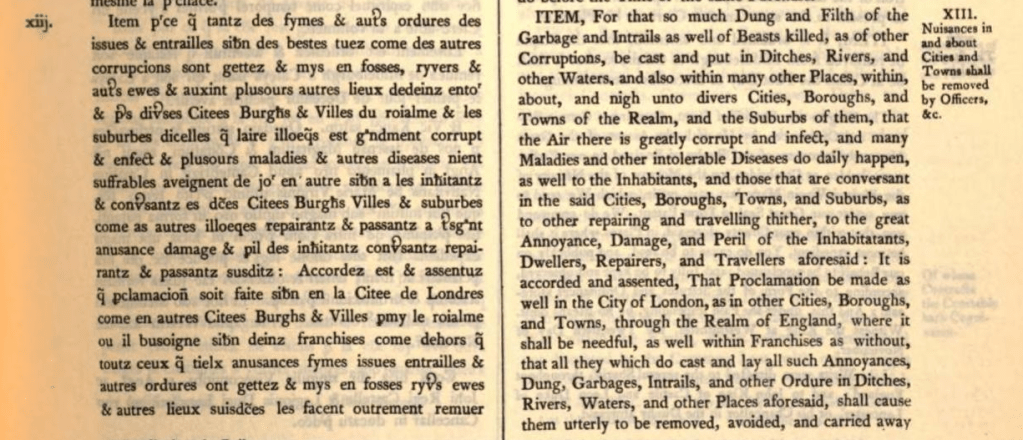
“Having begun to see the connection between effluence and disease, England’s parliament tried to stop people from dumping waste into the water supply. In 1388, the body declared, “so much dung and filth of the garbage and entrails be cast and put into ditches, rivers, and other waters that the air there has grown greatly corrupt and infected and many maladies and other intolerable diseases do daily happen.”
This is true, but this does not describe the normal situation.
There had been local laws to deal with pollution but this was the first time parliament made it a national thing.
Its not like suddenly everything was mucky, just first time it was nationally dealt with.
So when it says all those things about pollution, we should perhaps not read it as “filth everywhere aaargh” but “we know most towns & cities have laws about it so lets make it a national law”.
It was plague paranoia combined with show of authority.
Here’s how Professor Emerita of Medieval History Carole Rawcliffe describes the statute in her excellent book ‘Urban Bodies: Communal Health in Late Medieval English Towns and Cities’:
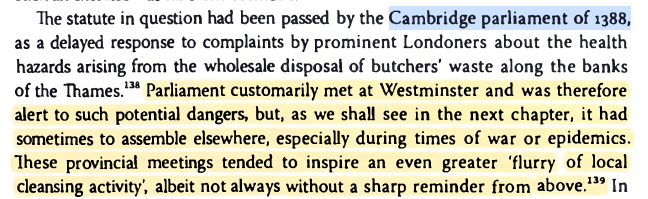
To me this sounds like the whole national law was set up because some fancy folk were complaining about a very local issue in London.
Not quite the “this was happening everywhere all the time” as sometimes suggested.

“The plague doctor costume became emblematic of the era. The birdlike mask worn by doctors held dried roses, herbs like mint, or spices thought to protect against infection.”
There is no evidence at all for the costume existing during the Black Death or even the middle ages.
The first mention of it dates to the 17th century (!) and even there’s very little evidence for it having been worn by more than just a couple of physicians.

“In the 14th century, Europeans often laid straws, or rushes, on their floors. Straw covered up the dirt floor in poor people’s homes. While wildflowers were sometimes added to the rushes, and the top layer changed occasionally, the bottom layers might remain for decades.”
It is unclear how these floors actually looked, some historians think they literally just placed loose straw on the floor, others think it was woven.
Perhaps both was done, personally I think it was usually woven, it just makes more sense.
I’ve stayed in a house with a dirt floor and they’re quite practical, dirt is hard compacted earth.
Easy to brush.
The idea that people wouldn’t clean their floors, even with rushes, for decades is suspicious.

“In the 16th century, Erasmus, a Dutch philosopher and Christian scholar, was disturbed to find that in many homes, the bottom layer is left undisturbed sometimes for 20 years, harboring expectoration, vomiting, the leakage of dogs and men, ale droppings, scraps of fish and other abominations not fit to be mentioned. These putrid rushes exhaled a vapor that was harmful to the health, Erasmus declared. They also attracted rodents and let bacteria flourish.”
Erasmus wrote this in a letter to his friend Franciscus Cranveldt in 1515.
He seems shocked and surprised by what he saw in England, suggesting that this was not the case elsewhere in Europe (he travelled a lot), he also may have been talking about just one case or maybe someone told him the rushes were so rarely replaced, we just don’t know.
He was also extremely obsessed with the plague and how to avoid it, which of course makes sense.
He may have also had certain biases against the English, he complained a lot during his trip to England.
Perhaps I seem overly suspicious of the source, but that’s because it’s the most well known, most often quoted and repeated claim about rush flooring that always comes back when talking about medieval hygiene.
Many records for richer households show regular payments for rushes, showing regular renewal.
In her excellent book ‘How to be a Tudor‘, Ruth Goodman describes her experiment of living a medieval life with a rush floor:
“At the end of my six months of castle building I had a look at the state of the rushes. Not all of us had been sleeping on them every night, but they had most certainly been heavily used by my colleagues and me, both on and off screen, for sitting, walking, standing and working on. Much food had been cooked in there, much drink drunk, and all the spillages that you might expect had certainly happened. A hen had moved in and raised a brood of chicks among us on the rush floor – we didn’t have the heart to evict her – and they of course had been rather messy; there was also a mouse that kept trying to raid the grain ark. But there was no sign whatsoever of any of this activity.
That the surface remained clean was no great surprise: stuff simply
fell down between the rushes, out of sight, smell and mind. We never
noticed any odour or muck the whole time we were there. But when I came to clean it all out at the end I had expected there to be gunge at the bottom.
There wasn’t. It was clean and sweet-smelling, free of both insects and
evidence of rodents. The earth was clean and smelt only of itself, while the bottom layer of rushes had broken down a little into a dryish, fibrous sort of compost. There was no mould, mildew, slime or gunge of any sort. What it would be like after twenty years I don’t know, but as Erasmus himself implies it was only in the occasional home that the bottom layer was left undisturbed for that long. It is clear to me that it is possible to manage a floor with strewn rushes cleanly and comfortably without too much effort.”
So even if Erasmus was describing a real situation, it would have been unusual and not common and if after 6 months of experimentation there’s not even a hint of filth, I doubt it was a serious issue back then.

They didn’t.
The coined the name, but the concept of isolating the sick to prevent the spread of disease goes back a lot further, for instance it’s in the bible.

Yes, the Black Death had some benefits for the survivors, but some of these were only temporary and their impact is often exaggerated.

I don’t think I’m going to subscribe, but I may review some of their other videos…
Sources & further reading tips:
- The video in question on youtube
- Scientific facts about the Black Death on medievalists website
- 2023 lecture by Johannes Krause about the genetic history of the plague and the origin of the Black Death
- Human ectoparasites and the spread of plague in Europe during the Second Pandemic
- We Were Wrong About Rats Spreading The Black Death Plague
- A Very Short Introduction to the Black Death
- Yersinia pestis can infect the Pawlowsky glands of human body lice and be transmitted by louse bite
- An Experimental Exploration of the Earliest Soapmaking
- Ancient familial Mediterranean fever mutations in human pyrin and resistance to Yersinia pestis
- Pope Clement VI Exonerates Jews from Causing the Black Death
- Jewish Virtual Library on the Black Death
- Medieval Myths Bingo
- Statutes Of The Realm Volume 2 1377 – 1509
- ‘Urban Bodies: Communal Health in Late Medieval English Towns and Cities’ by C. Rawcliffe
- ‘How to be a Tudor‘ by Ruth Goodman
If you enjoy my writing check out my book!

If you like my work, please consider supporting me on Patreon;

Disclaimer;
Picture(s) found online, used for (re-)educational and journalistic purposes only, it falls under ‘fair use’.
I do not own the copyrights to these images, I only share them here for educational purposes to try and make sure the real story behind it becomes known and people will stop spreading false information.
If the copyright owner objects to the sharing here, kindly contact me and I shall alter the article.
If you’re interested in using any of the images here get in touch with the copyright owners mentioned in the article.
Feel free to contact me with questions.
 Fake History Hunter

Oh my gosh, I LOVED this email so much as I am fascinated by, and drawn towards, the medieval era.
I am so glad that you set things straight and I will forever question whatever I am reading about it, now that you pointed out that it wasn’t quite as outrageous an era as others made it out to be.
Kind regards
Monica
LikeLike
Interested to know what you think of this video about ancient Rome (the city, not the empire as a whole), which purports that all the bad things people like to say about medieval life and medieval sewage, applied in Rome.
https://www.youtube.com/watch?v=jxqRl_GYJds
On the one hand, I know Rome was huge and it makes sense that its sheer size made dealing with human waste more difficult than in more normal sized cities, then or in the medieval period. On the other hand, despite the being an actual historian, his characterization of Rome makes me very suspicious, because it sounds a lot like the fake narrative of medieval times.
LikeLike
Anyway I might have an explaination for the “Black Plague” part: I suspect it may come from a literal translation of the way the outbreak is referred to in other languages, such as italian where it’s called “Peste Nera” (meaning Black Plague); then this literal translation would get repeated until it becomes a widespread error.
LikeLike