
This story has been quite popular on social media for a while now but is there any truth to it?
Here is the claim with the picture most often accompanying it:
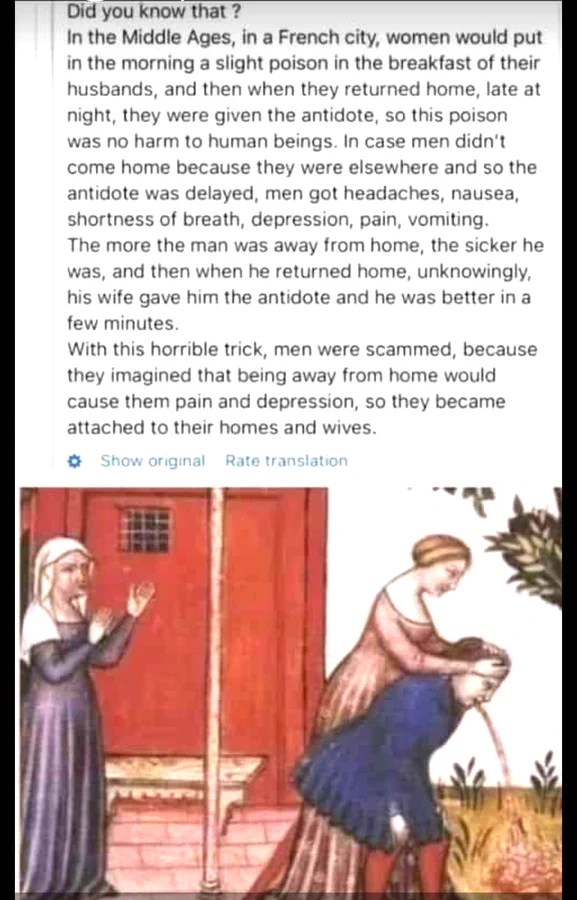
For starters the story makes little sense.
Husbands tend to notice when they keep feeling a bit under the weather after each breakfast, don’t ask me how I know.
And if you keep getting ill, you visit a physician who would probably suspect foul play.
Poison was/is a typical women’s weapon and she’s the one who made the meals so guess who they’d start looking at as the possible perpetrator right away?
Also if this was something quite a few women knew about surely sooner or later a mistress would tell the man she’s having an affair with that this is why he feels ill when he stays away from home too long.
Besides, at a time when marriages were not always as voluntary or love based as today (voluntary loving marriages were more common than many seem to think though) I reckon quite a few wives wouldn’t mind at all if their husband stayed away too long, they might even be delighted.
Another little detail here is that nobody seems to know of a poison that would work like this, medically, chemically, criminally, the claim is rather iffy.
This just isn’t how poisons & antidotes generally work, especially with the natural poisons people had access to back then.
So what is the origin of the story?
I think that the main reason this story started going around the internet a couple of years ago is because it was mentioned in the film ‘Le Pacte des loups’ (Brotherhood of the wolf) from 2001.
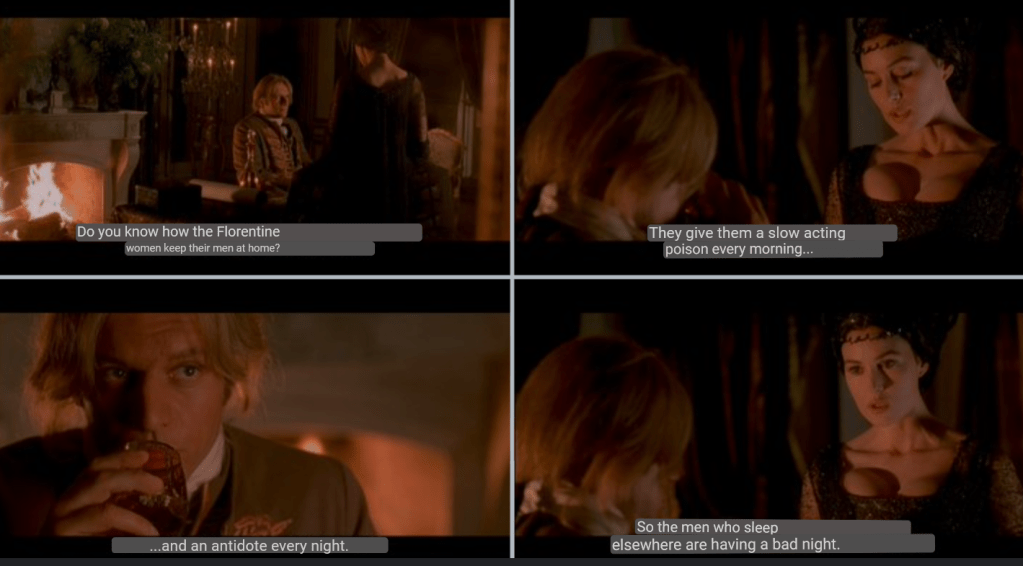
But there is an older possible source that sounds suspiciously familiar from this 1926 University of Virginia student magazine;
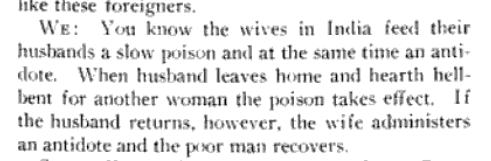
So the core of the story goes back at least a few decades but there’s no real evidence for this or anything even similar actually happening during the middle ages.
Of course women have been poisoning their husbands since the dawn of time, maybe the origin of this story lays with one of those famous cases.
For instance there’s Giulia Tofana, an 17th century professional poisoner who sold poison to women who wanted to get rid of their husband, but there’s no mention of it being used as in the legend.
The story could have been based on Aqua Tofana, a slow working poison but with an antidote made of vinegar & lemon juice.
But here too there are lots of questions about both Tofana and her poison and how much of the story is real or if the antidote would actually work.
Again, here women just killed their husbands to become widows, not poisoned and then saved them again and again and again to keep him from staying away from home too long.
So, my conclusion based on what I’ve found so far is that there is no evidence of the story being true and it most likely is all based on an old wives tale that I can find no earlier mention of than the 1920s.
If you can find earlier evidence for this story or something similar, please get in touch.
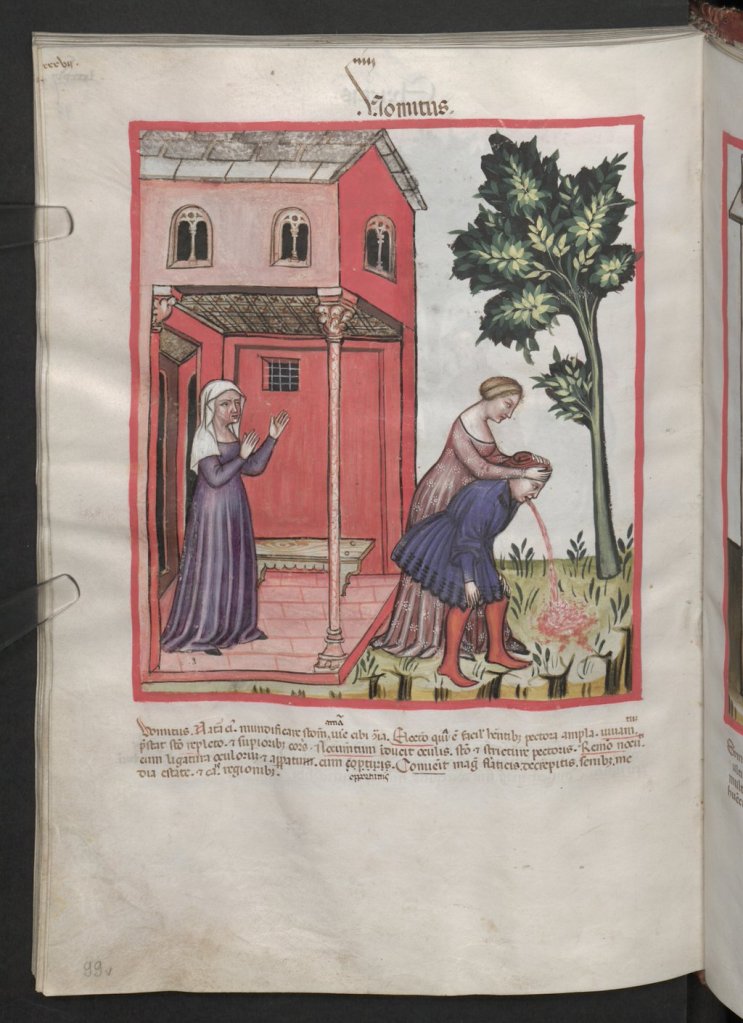
Oh by the way, just in case you’re wondering, here’s the original source for the picture used: Cod. Ser. n. 2644, fol. 99v: Tacuinum sanitatis: Vomitus .
If you enjoy my writing check out my book!

If you like my work, please consider supporting me on Patreon;

Disclaimer;
Picture(s) found online, used for (re-)educational purposes only.
I do not own the copyrights to these images, I only share them here for educational purposes to try and make sure the real story behind it becomes known and people will stop spreading false information.
If the copyright owner objects to the sharing here, kindly contact me and I shall alter the article.
If you’re interested in using any of the images here get in touch with the copyright owners mentioned in the article.
Feel free to contact me with questions.
 Fake History Hunter
For more fictional French poisoning scenarios, read The Count of Monte Cristo.
LikeLike
this is a very interesting story! Thanks for sharing
LikeLike
I’m more fascinated by that picture. Does that image have anything to do with antimony cups used for purging? As I understand, there were some quack physicians (even for the time) who sold people these poisonous cups to encourage people to purge as it would “balance” the “humours”. They were to fill the cups with warm wine, let it sit overnight, and drink it in small quantities the next day.
Within the next century (I do not remember which, but I’m assuming the late 1700s), it became fashionable as an emetic (same instructions) and people would buy them and keep them in special containers to keep them out of reach (people knew even then that antimony was a toxic metal). I saw one in a video from the V&A Museum in London. You can find on YouTube.
LikeLike