
This article was originally (partially) a thread on social media, which is why it is formatted with lots of images and short responses.
The text is about the image below that paragraph.
Let’s check out ‘The Seven Works of Mercy’, painted by the Master of Alkmaar in 1504.
His real name is sadly unknown.
The painting shows people being merciful.
It is currently at the Rijksmuseum in Amsterdam.
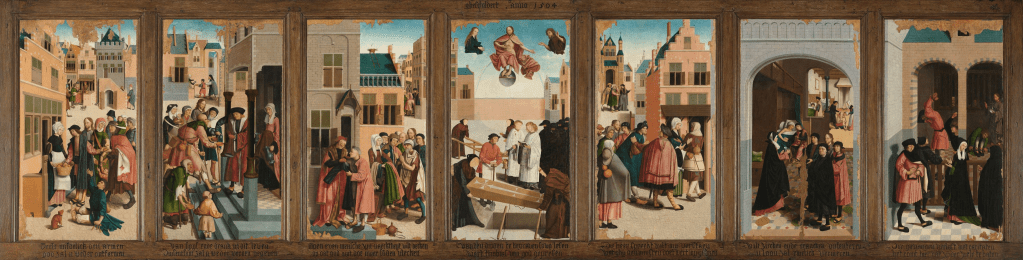
First frame.
Unfortunately the painting has some water damage, during restoration it was decided to leave this as it was.
The text says something like “share generously with the poor, God will in turn have mercy on you”.
Notice how clean the street is & colourful the clothes:
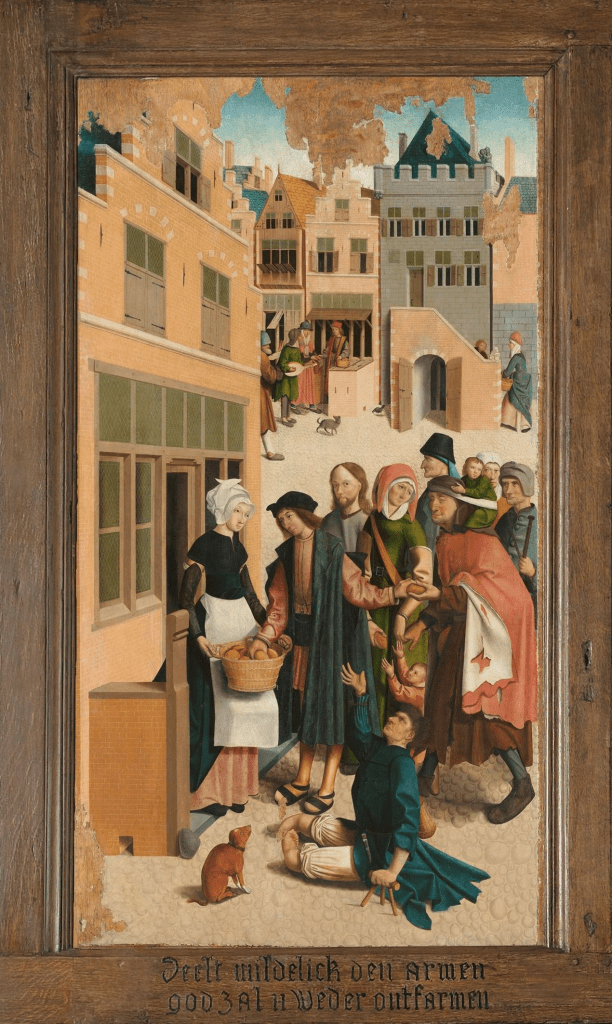
The details are amazing!
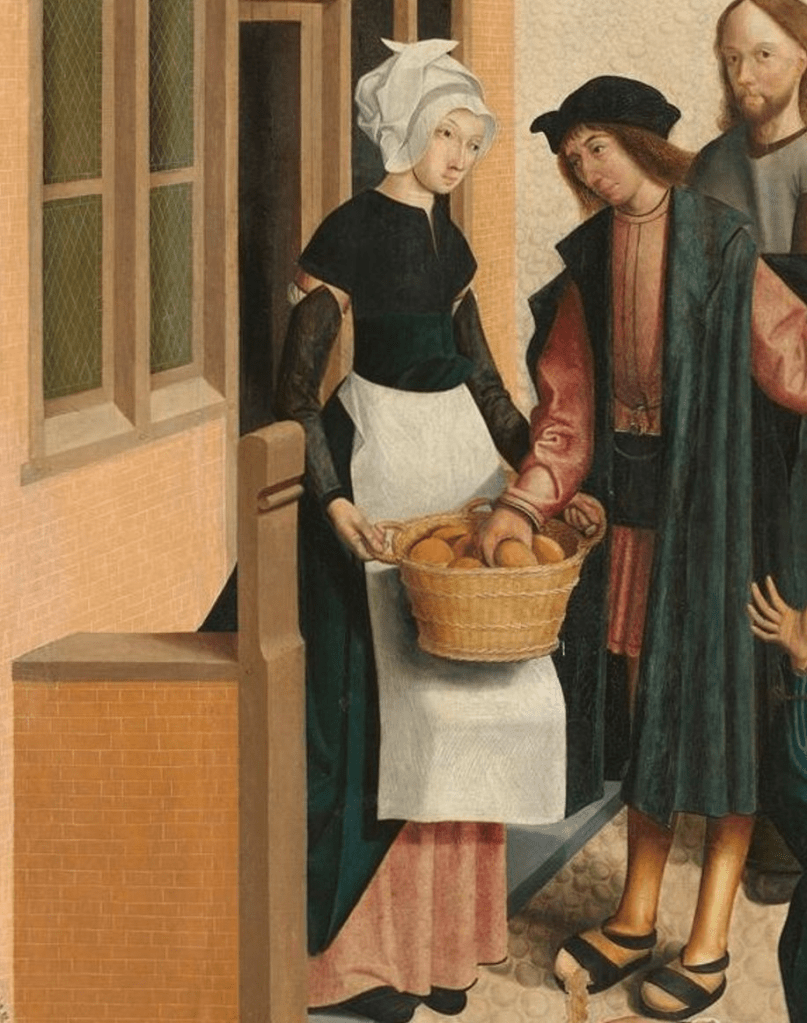
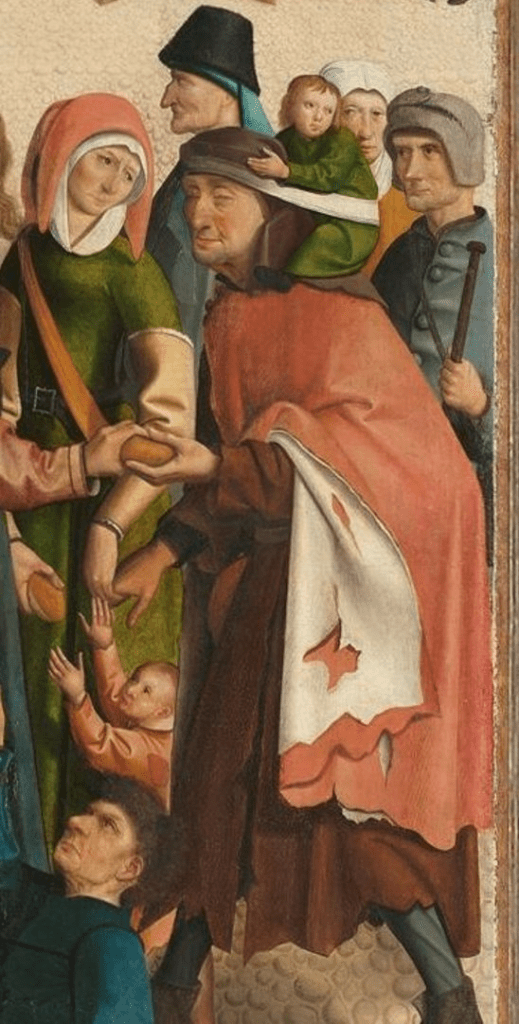
Here a wealthy couple, as we can see from their clothes and the fact that their house has glass windows, are handing out bread to the poor.
Her clothes, the detachable sleeves, clean apron, head cover, the painter truly is a master:
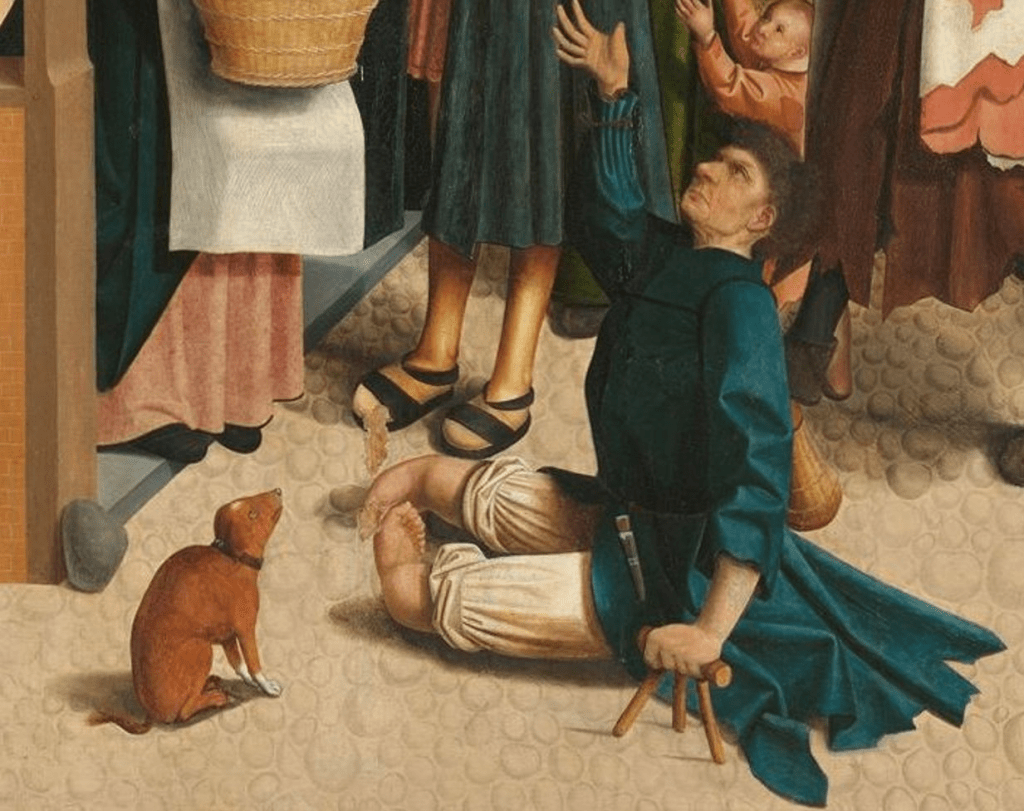
One of the needy is a disabled man, his life must have been extremely difficult, having to drag himself over the ground.
I wonder if the dog is his comrade, I hope so, but it might belong to the wealthy couple.
No idea why there is a rock there!
Note the nicely paved street in stead of the mud & filth that we usually see when this era is depicted in film or on TV:
The rest of the group isn’t wearing brown, drab rags, but nice colourful clothing, we only notice their poverty in the details, like a hole in the clothes here or there.
The poor dyed their own fabrics or wore second hand clothing they bought on markets or were given.
The man has his eyes closed and a woman holds his hand, is he blind?
Are the two kids theirs?
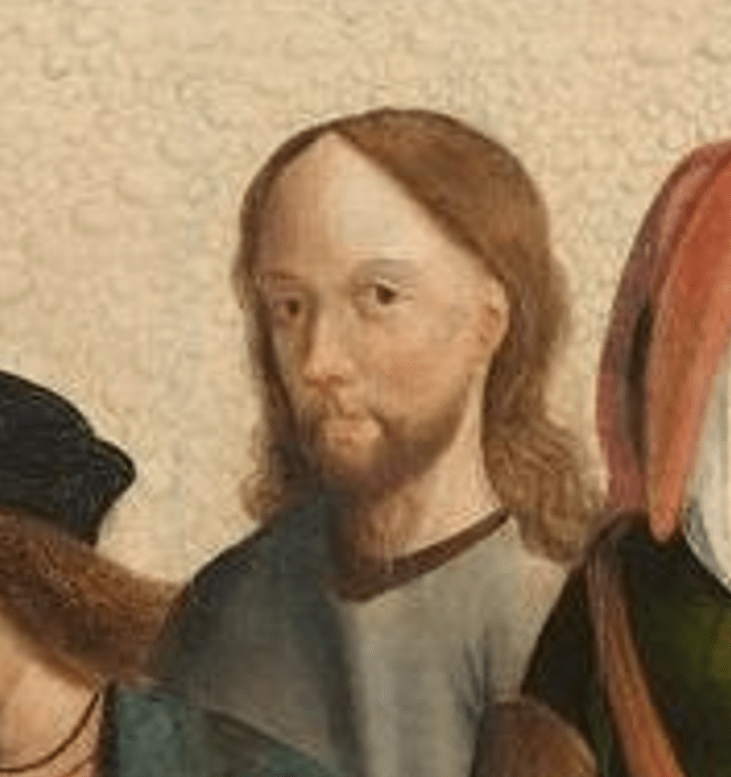
Now you may have already spotted this chap and thought he looked familiar.
Yes, it’s him, Jesus himself, staring at us, hiding in the crowd, making sure people are being good Christians.
He’s doing the Where is Waldo thing in this painting, we’ll see him again!
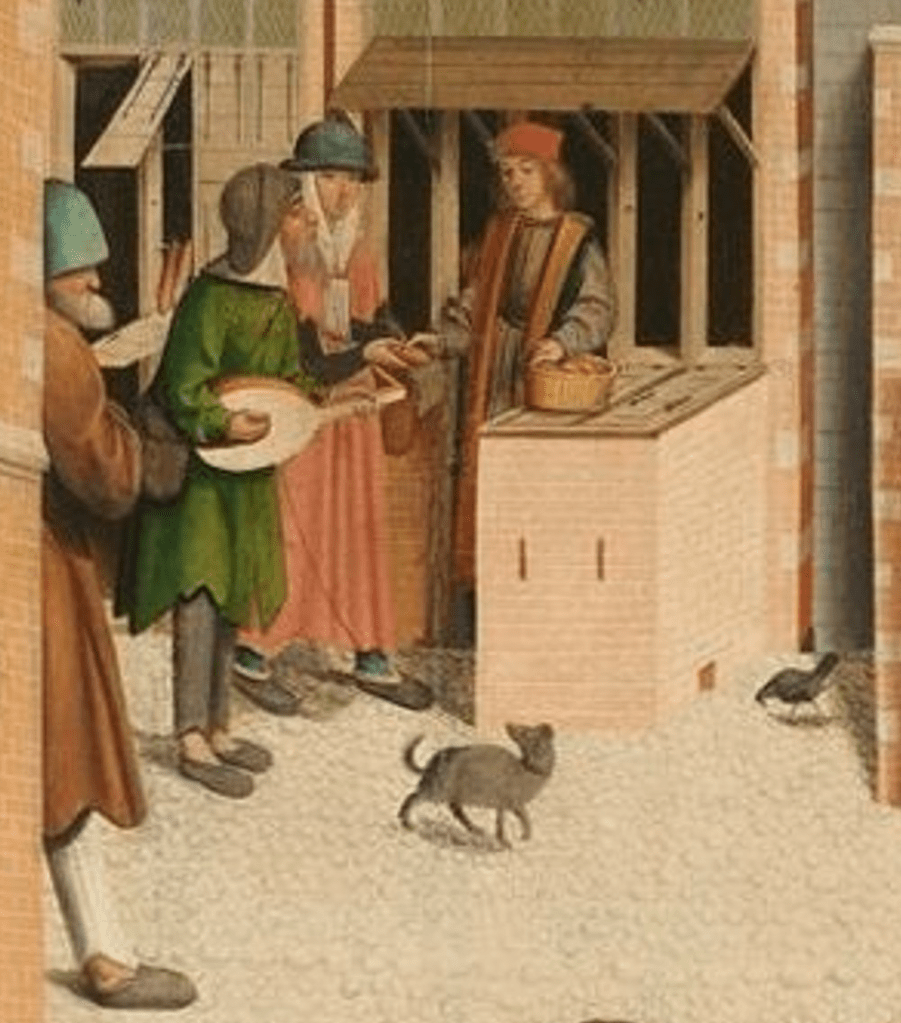
In the back we see more poor people being given food by a wealthy chap, the man is a musician and there’s a tiny dog on a leash.
Again superb detail, I wonder if the people of Alkmaar would have recognised these houses and people:
Second panel.
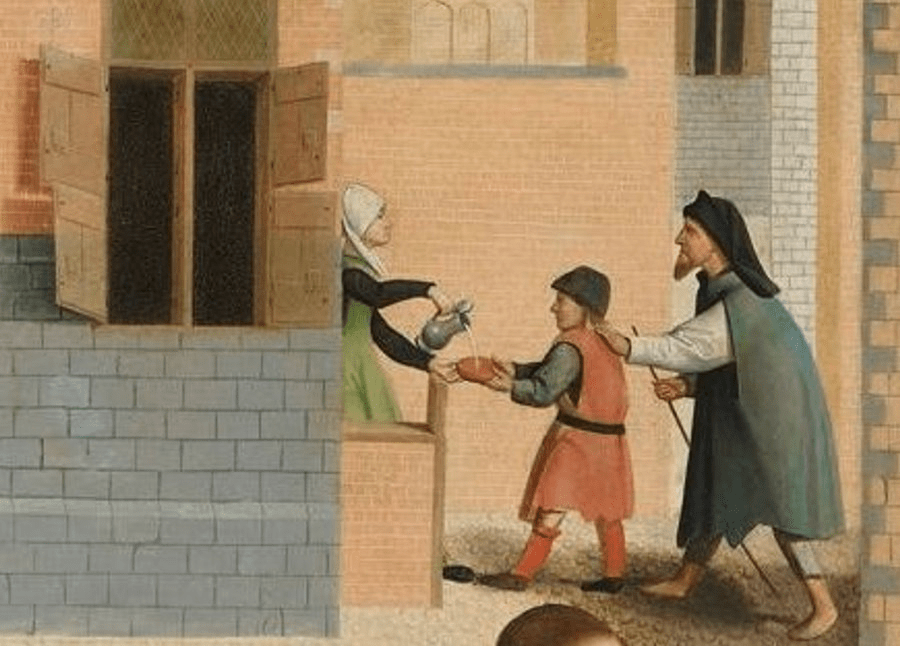
Description says something like “For food and drink in this life, thousandfold will you again be given.
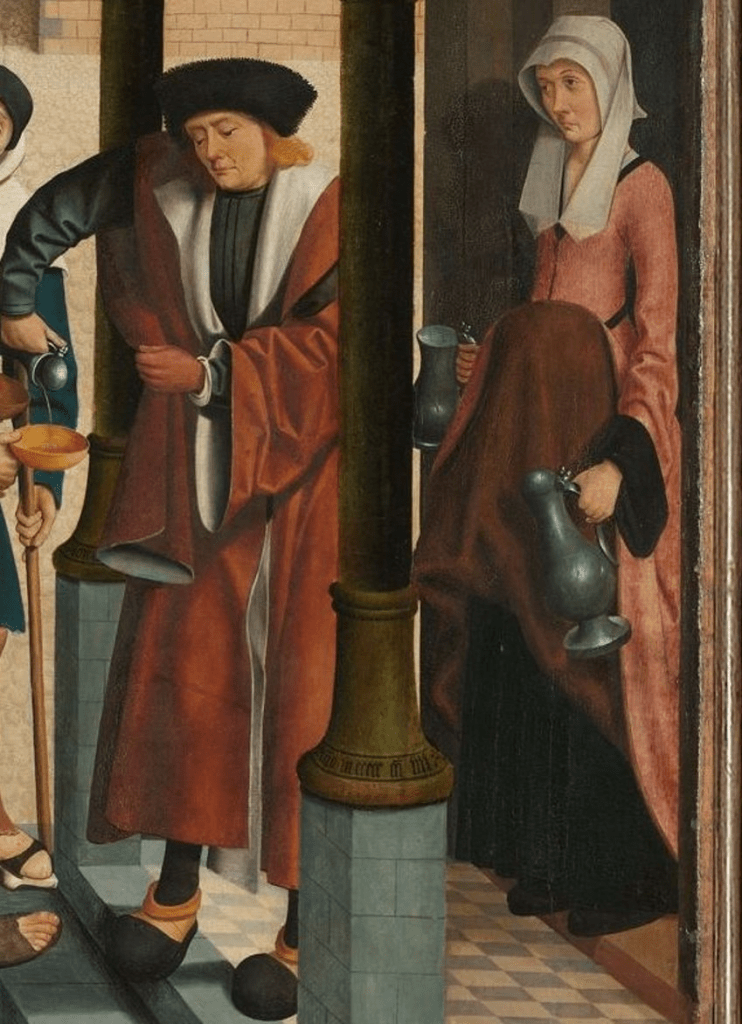
At this address the poor are given something to drink:
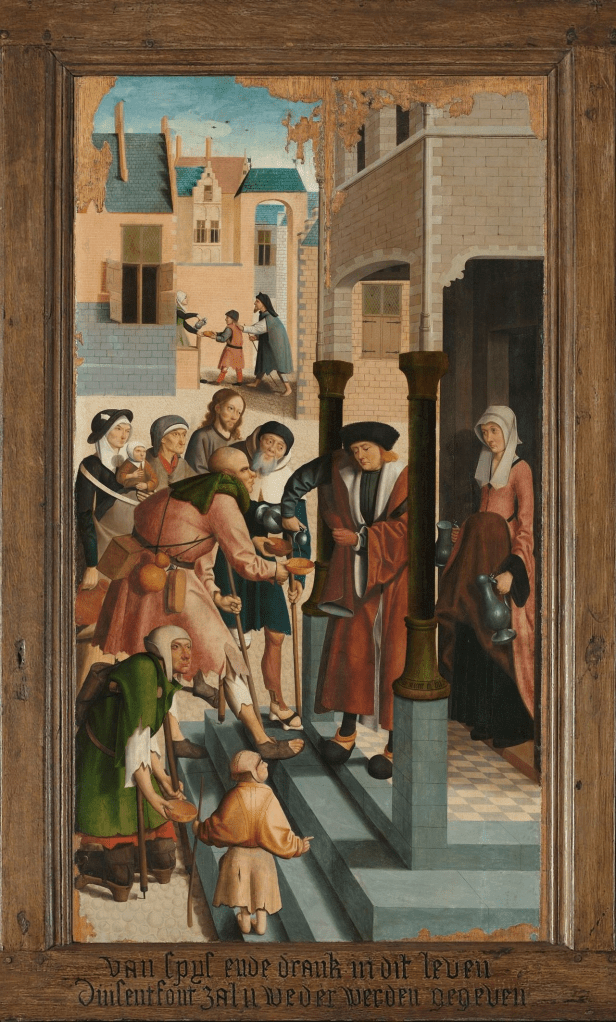
Again a very wealthy couple, big fancy house, pewter (I assume) jugs, expensive clothes.
They don’t look too happy though.
Why is he wearing Micky Mouse his shoes?
The numerals on the pillar say 1504:
Another disabled man, which makes sense as disability back then often resulted in poverty.
But although the clothes are torn, they’re not overly dirty and still quite colourful.
Does the artist just like using colours or is this how he saw the poor with his own eyes?
Seeing how he puts a lot of detail into everything and how much character and individuality the people in the paintings show, my guess is that like all great artists he painted what he saw:
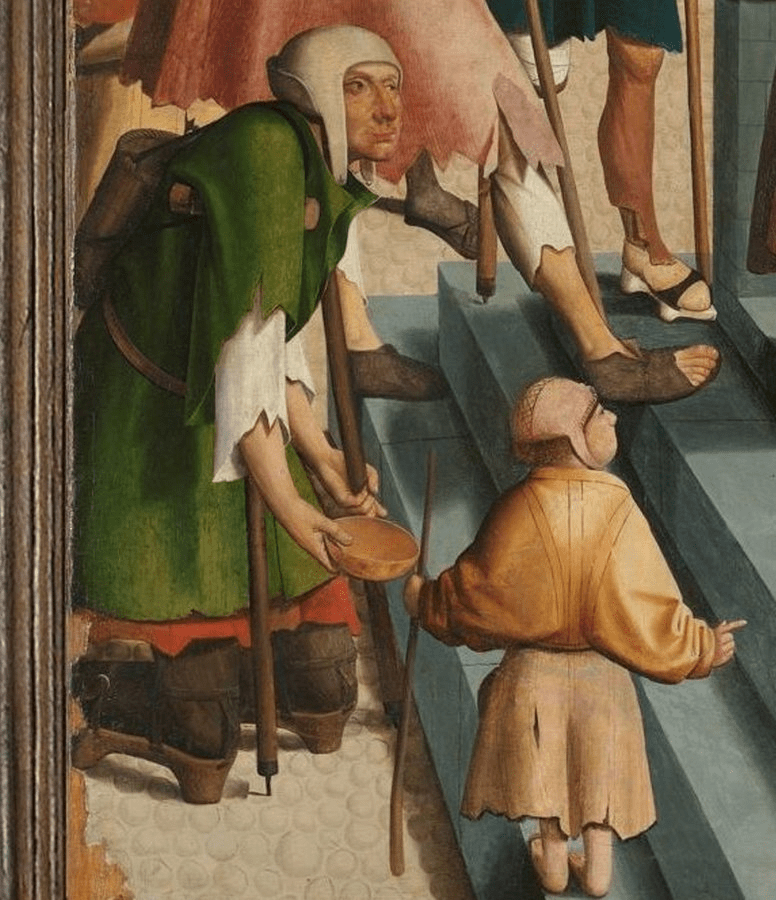
The details on this chap also shows that the master is really into details, all the little things on his belt, probably his only possessions in the world, the hole in his shoe, his shaven head.
It all suggest an eye for reality.
The orange Barbapapa shaped thing is a Calabash, often emptied, dried out and then used as containers:
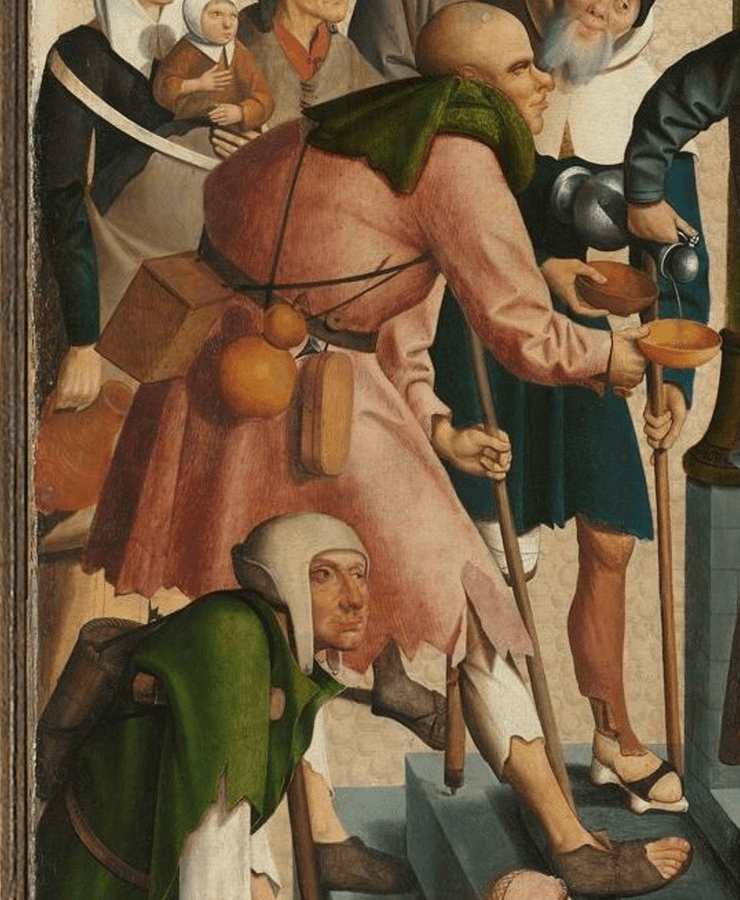
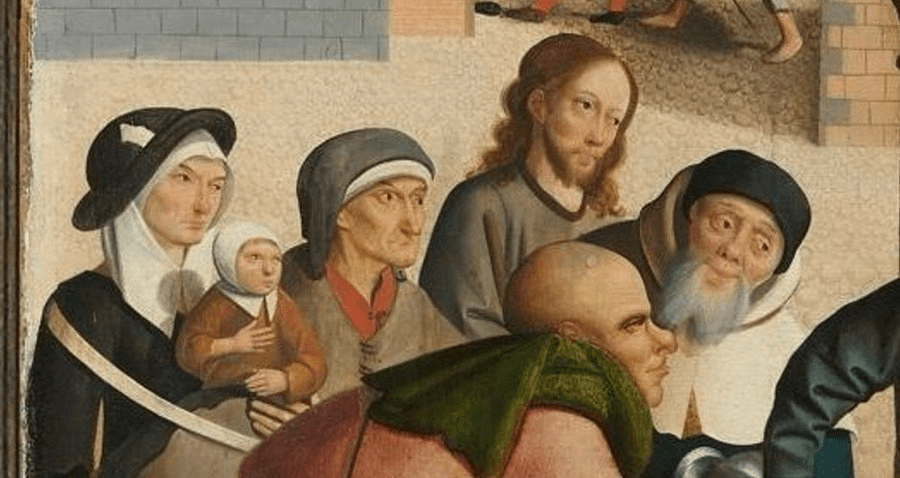
More wonderful details, the hole in the hat, the strap to help hold the baby, the chap on the right looking a bit too excited about getting a drink and there’s Jesus again, quietly observing, like a first class undercover agent.
You better be nice:
In the background perhaps a father and son,
What is that black spot on the ground?
Another rock or the ladies shoe?
The way dad is placing his hand on his son’s (?) shoulder might mean he’s blind.
Panel 3
The text says something like “Your fellow-man his nakedness will cover so that God away makes your sins’ stains.”
But the message is clear, besides giving food & drink, you also have to give clothes:
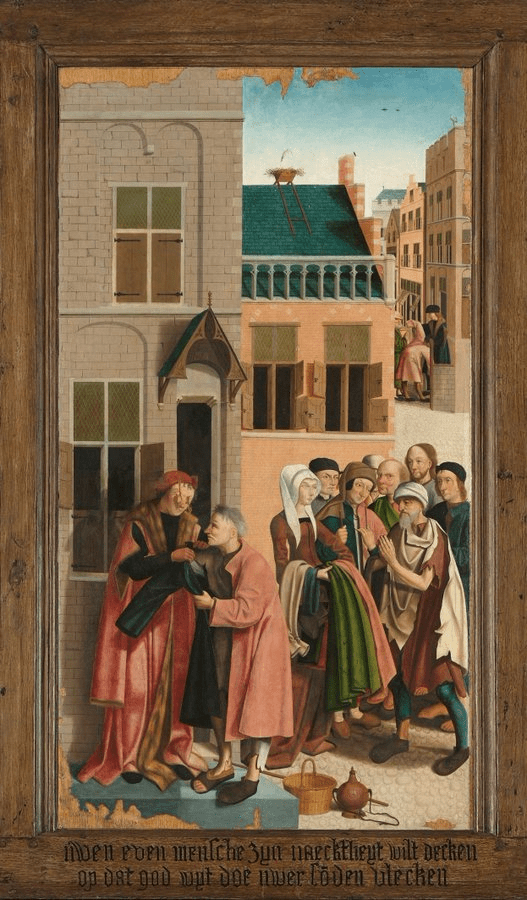
The rich man’s cloak is fur lined.
Not only does he give the poor man his old clothes, he even helps him put it on.
The face was damaged in later centuries, his wife’s face also has some damage, but the poor have been left alone:
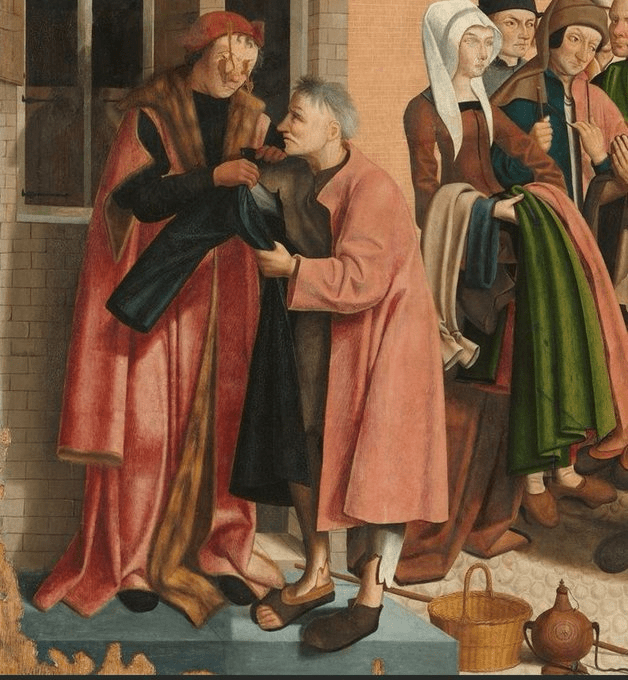
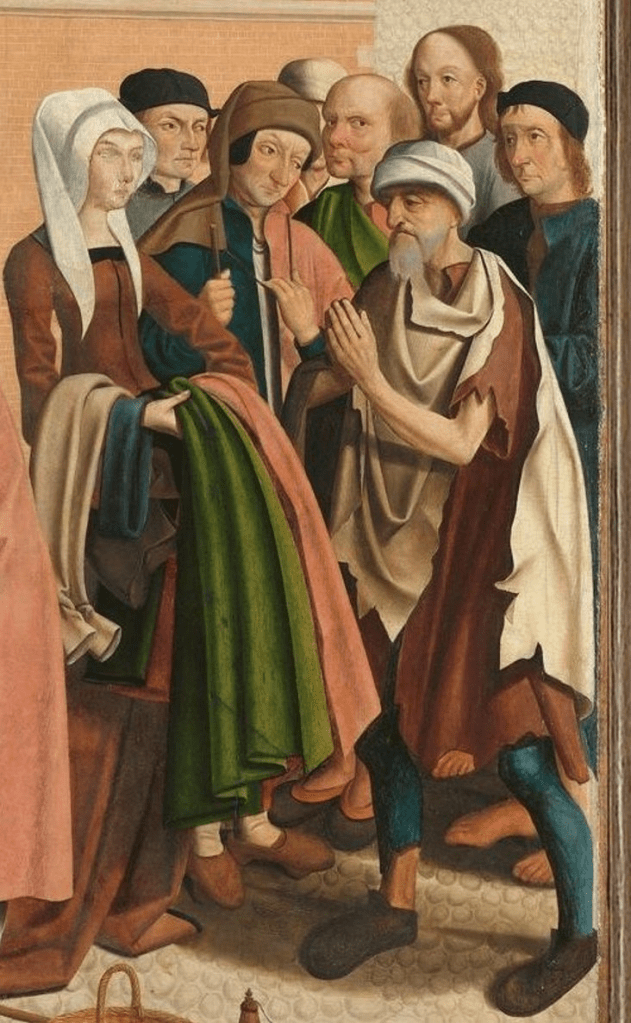
More amazing details, like the man holding the string of his cloak to keep it from strangling him, I’ve had that problem with cloaks.
The old man shows his gratitude, the clothes the lady is giving are good quality but a bit dirty… Jesus is watching… she might be in trouble!
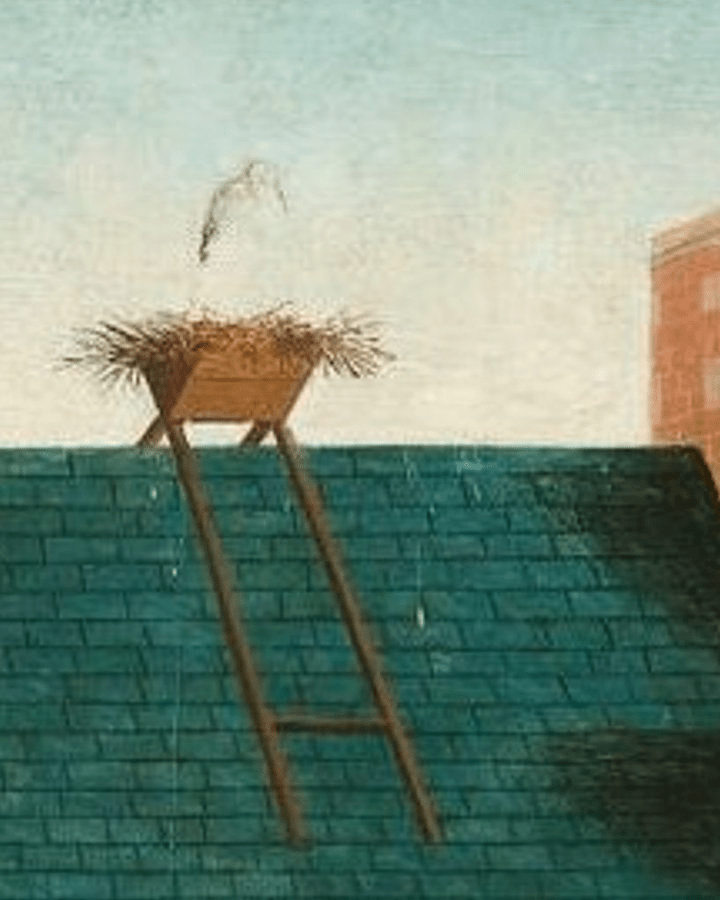
On a roof a stork on a nest specially placed there for the bird.
Once more the master shows us he likes to share details, things he himself has seen:
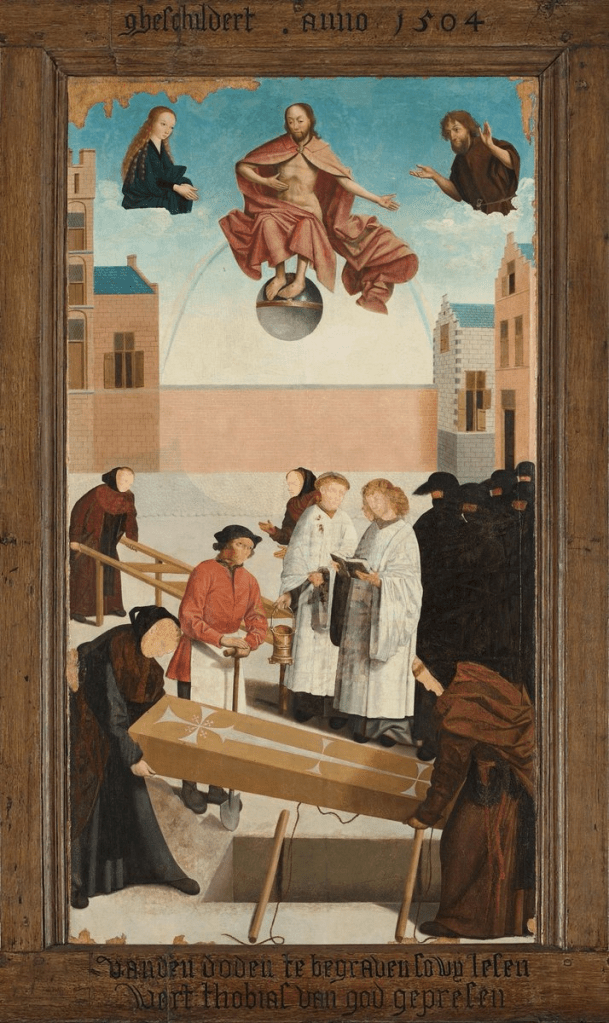
Panel 4.
Text says: “For the dead to bury as we read, was Tobias by God praised.”.
Tobias is the Latinised version of Tobit, who in the old testament, risked his life to bury the dead:
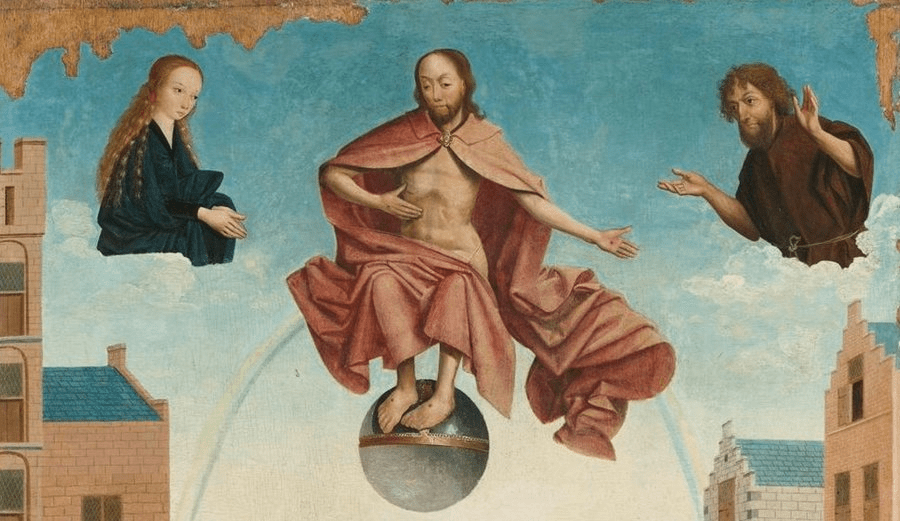
This time Jesus isn’t being sneaky, he’s just sitting on a rainbow, hanging out in heaven with Mary and John the Baptist looking down onto what’s happening below:
Although not very clear, this image probably reminds the viewer of death but also that it is the community’s duty to bury the poor who can’t afford such a ceremony.
That fits the general message from the piece:
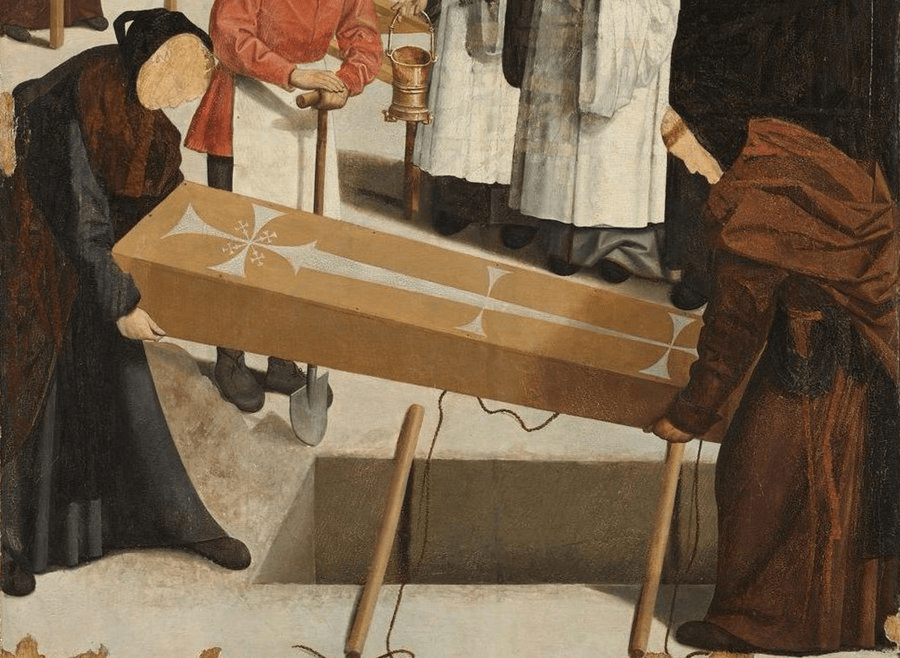
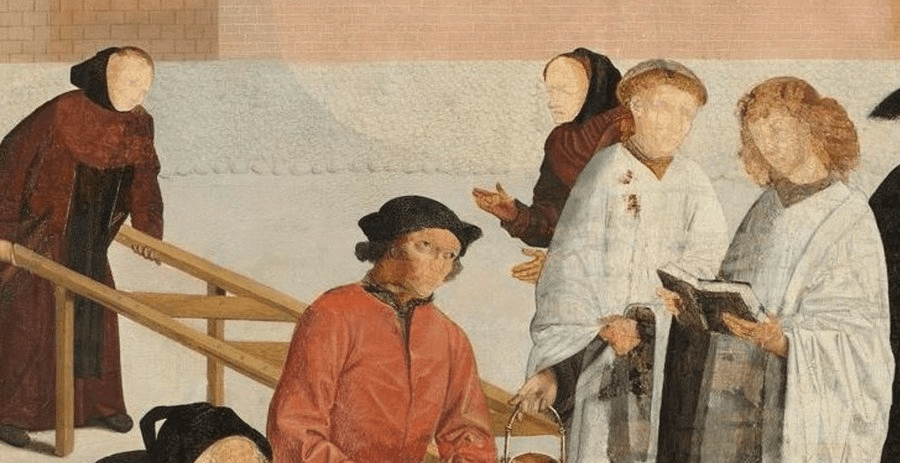
You perhaps already noticed the vandalism here.
During research a bit of metal from the tool that did the damage was discovered still embedded into the painting, it was analysed & dated to before 1582, so the damage was probably done during iconoclastic riots!
Science yay!
Panel 5.
Text says: “The Lord speaks Will me understand, what you the least do is to me done.”.
Which means something like how you treat others you treat me.
Here we’re told to provide shelter for the needy, the poor, travellers, immigrants, strangers…
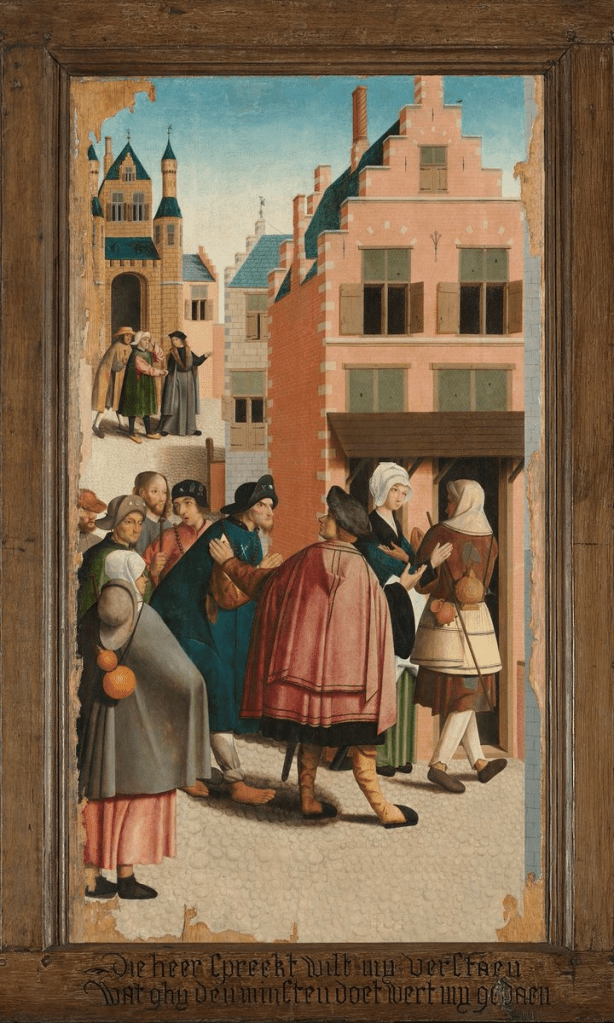
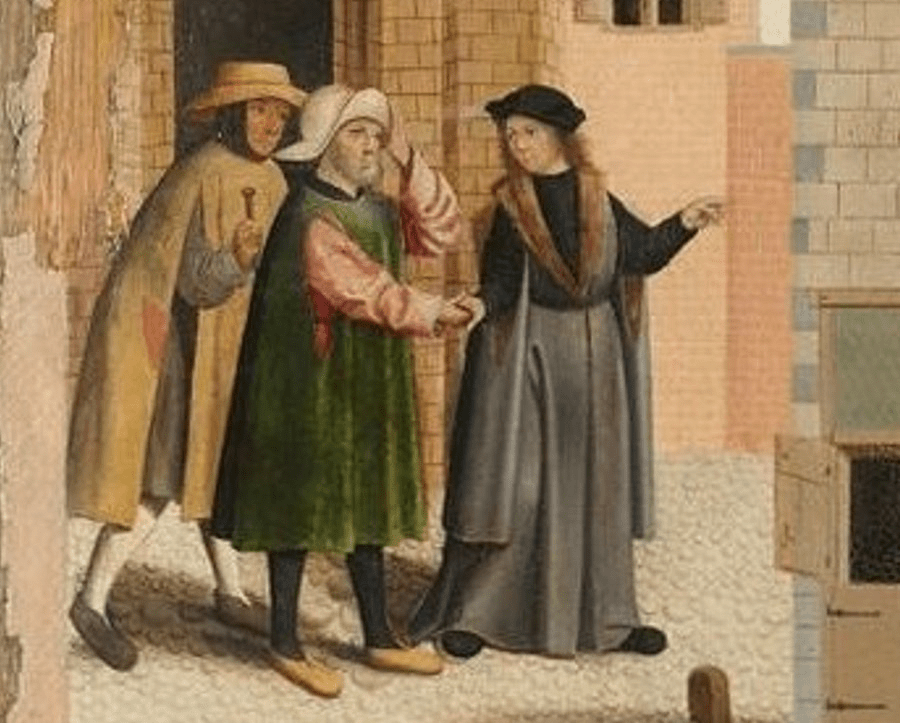
More fantastic details, we see another rich couple welcoming these strangers into their own home, the man is grateful, on his bag a wooden canteen, a little pot to cook on, fabric around his waist, perhaps a blanket, patches in his old clothes:
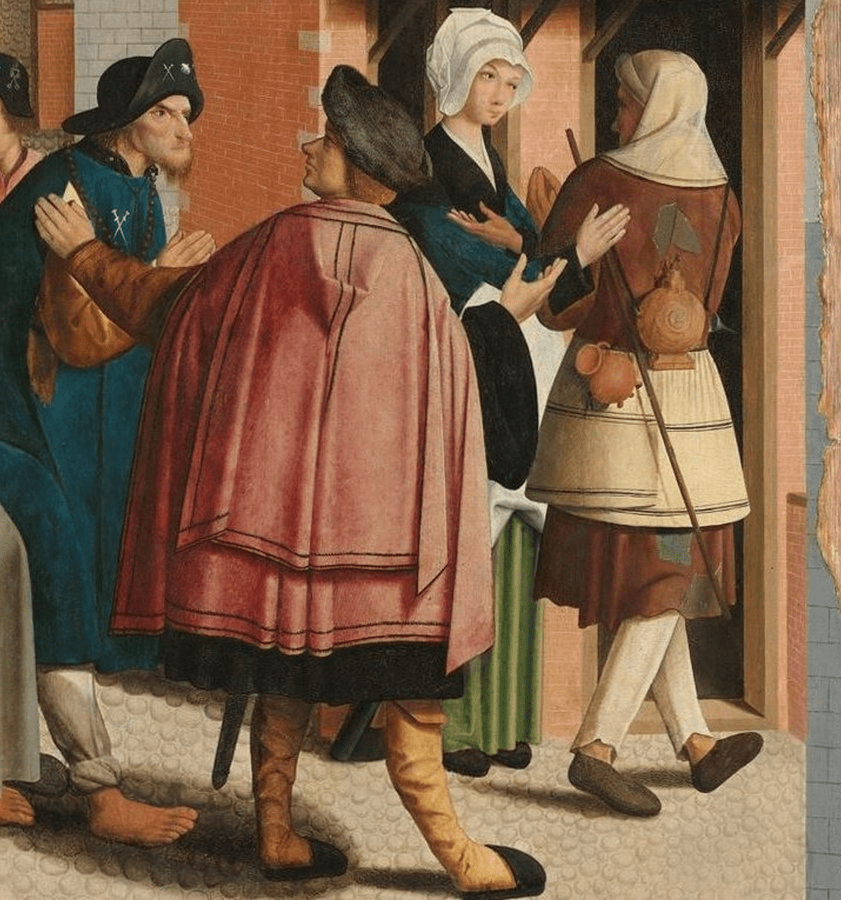
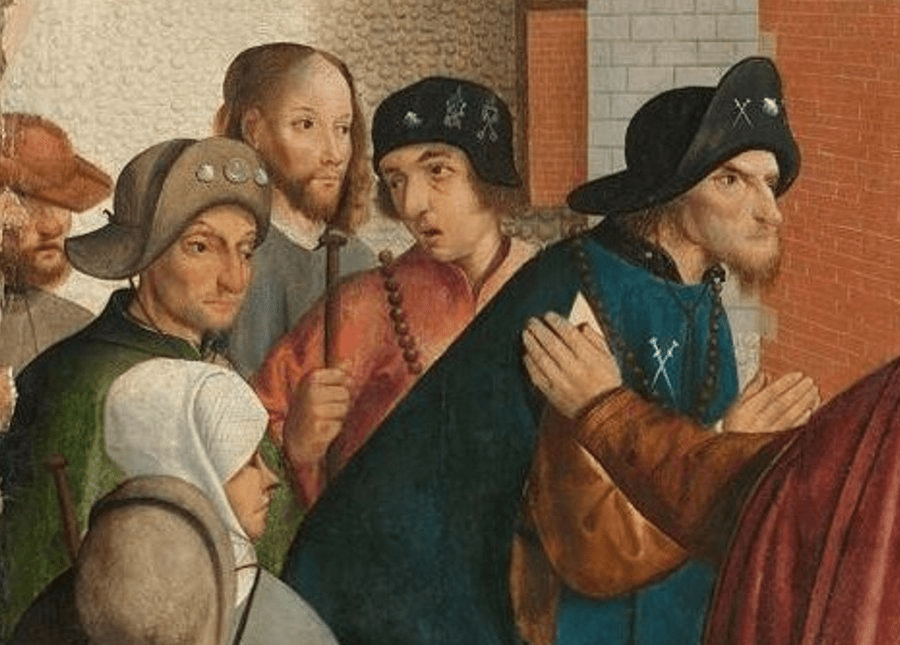
By the lead alloy badges on their hats we can see that these people are pilgrims.
Always wise to be nice to them, especially when Jesus is subtly standing within hearing distance:
In the back we see an interesting lady guiding two chaps to her home.
More fur lined clothing and an interesting hat, is her hair uncovered?
Panel 6.
“Will sick and frail visit, your reward will eternally increase.”.
That’s quite clear.
Here we see people, again mostly rich folks, visiting the sick but also helping them:
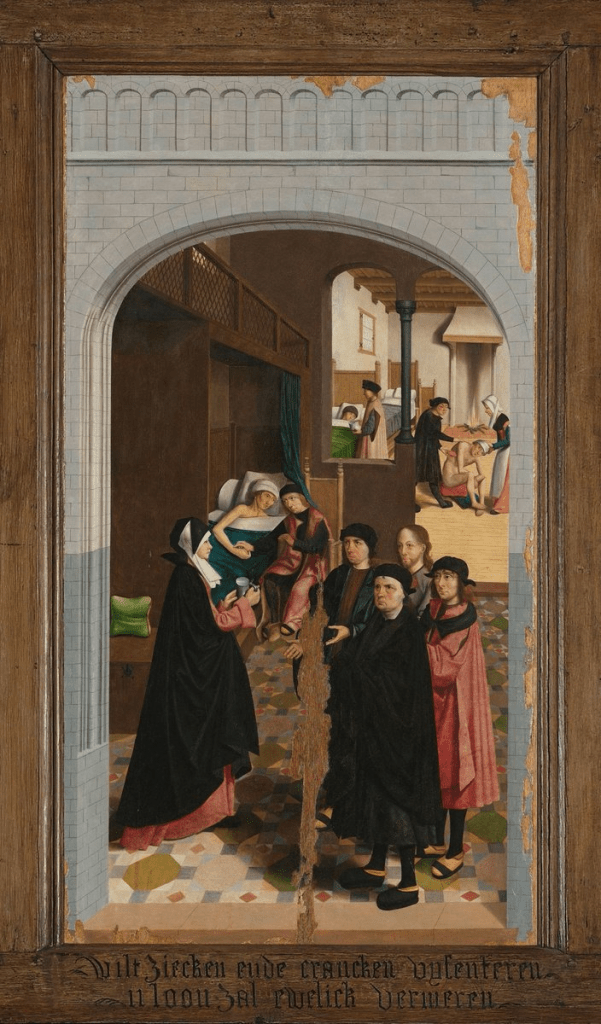
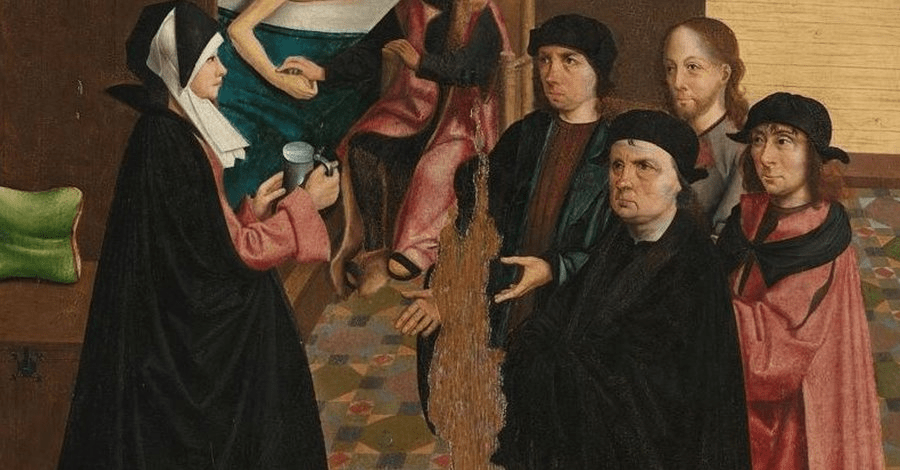
The lady is offering the wealthy men a jug, go on, go bring this to the sick.
They don’t seem keen.
Maybe I’m imagining it but Jesus seems to be smirking and so is the chap to his left, what’s so funny?
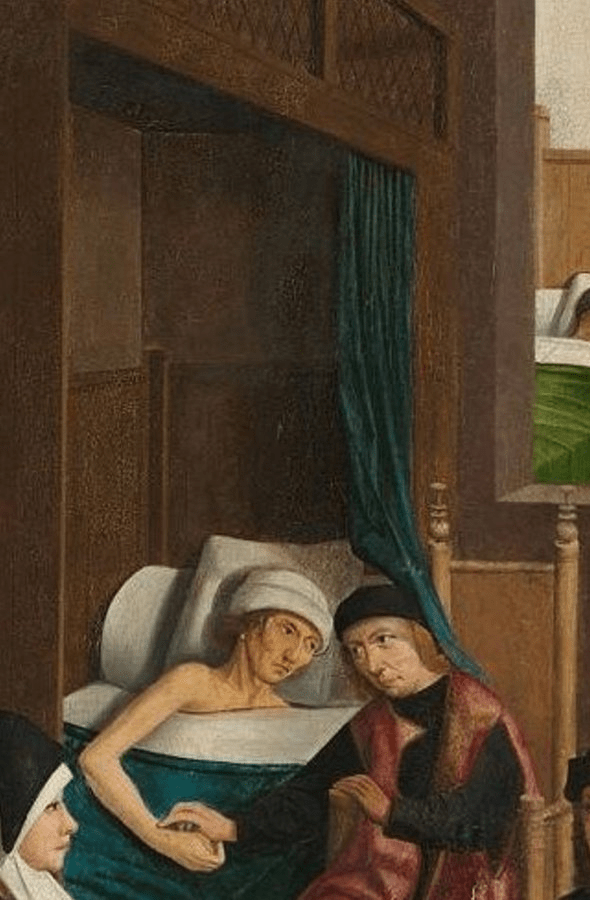
This looks like one of the fancy beds, lovely nice curtain.
And the guest is holding the sick man’s hand.
The painting makes me think about visiting hospitals, I guess the art is doing it’s job:
The slightly cheaper beds in the back, or maybe they’re more expensive because they’re nearer the fire?
They don’t need curtains.
But they do need a fancy chap to give them a nice drink, don’t we all:
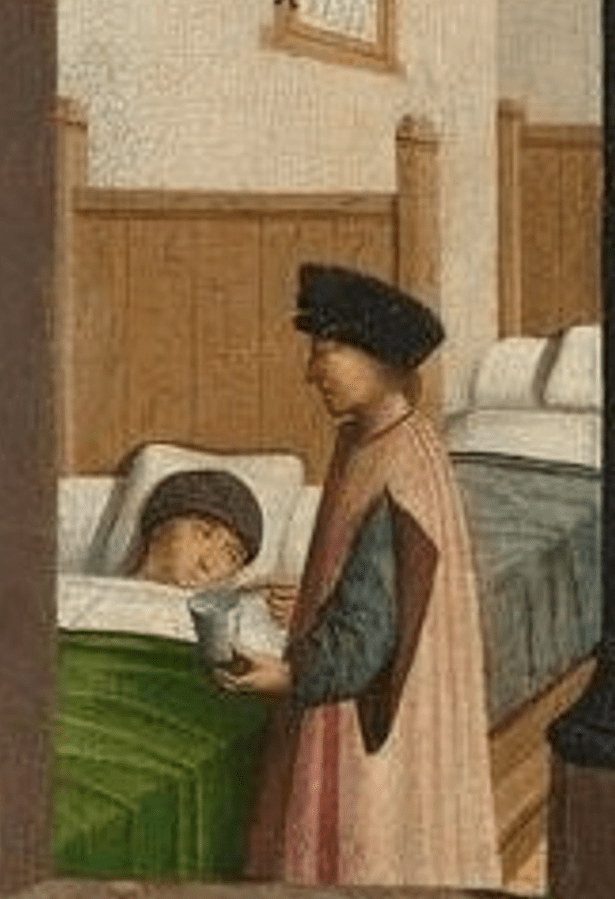
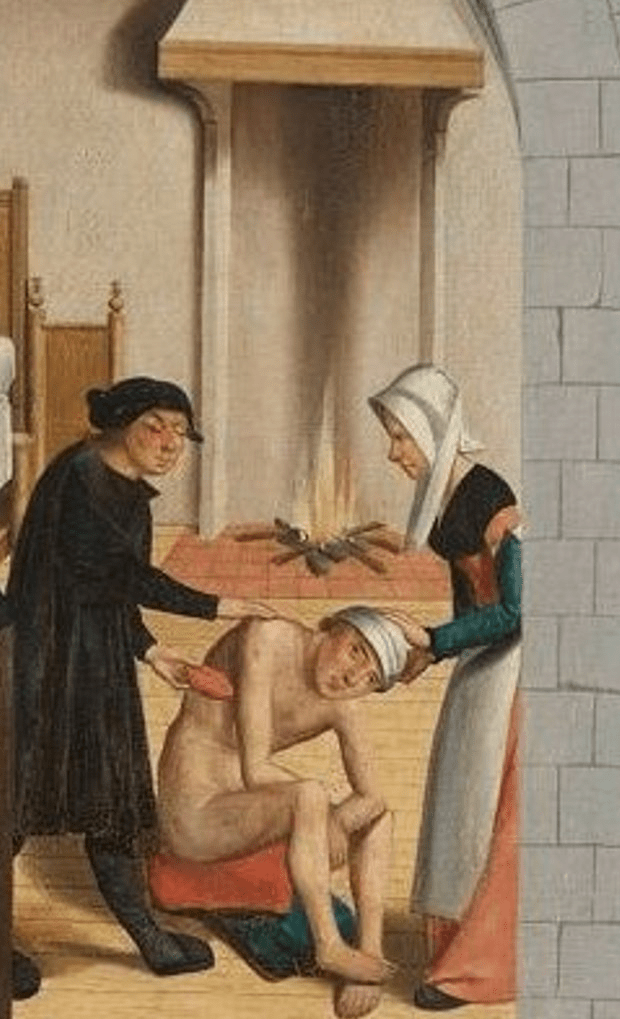
But being merciful is more than just giving sick people something to drink, the sick need to be cleaned because you know, people back then cared about hygiene…
At least I think they’re cleaning him, but I see no water, so maybe its a medical procedure?
Panel 7.
“Who prisoners frees with charities, it comes hereafter his soul to benefit.”
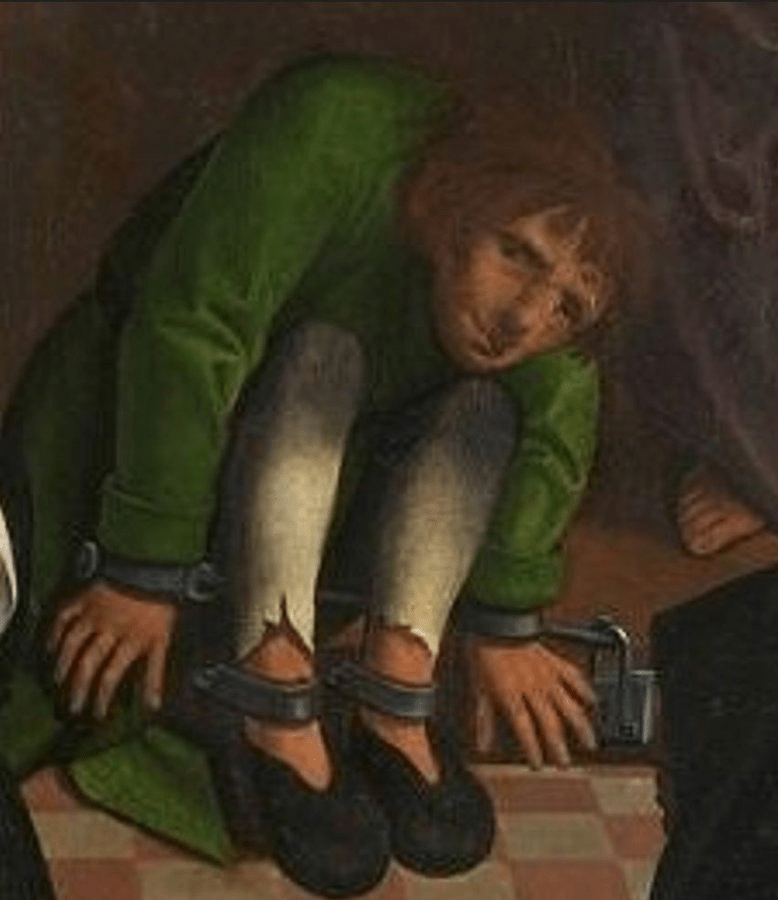
Here we see the rich rush forward to buy the freedom of prisoners who are brutally mistreated:
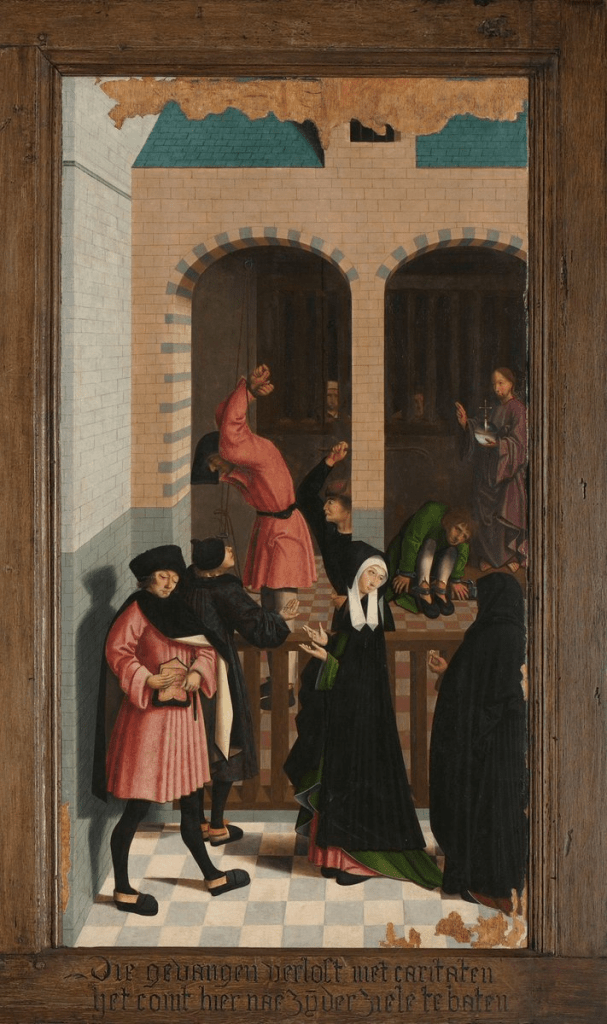
This man is being whipped, but with his clothes on, which is a bit weird.
Did the master never see someone get whipped?
Is he perhaps not as reliable and authentic as we first thought?
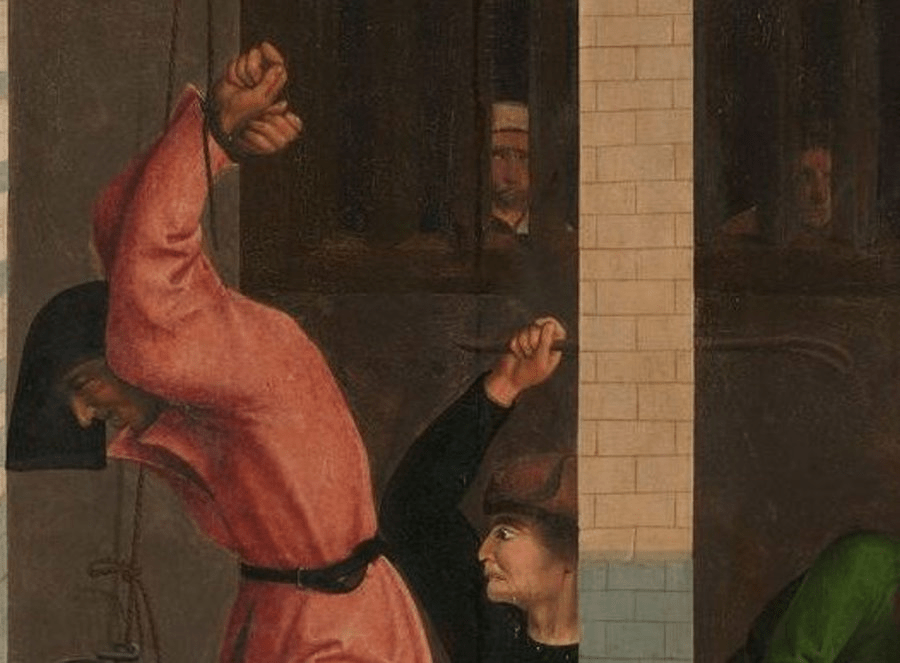
Ouch.
Depending on what he did, I’d buy this man’s freedom, that must hurt:
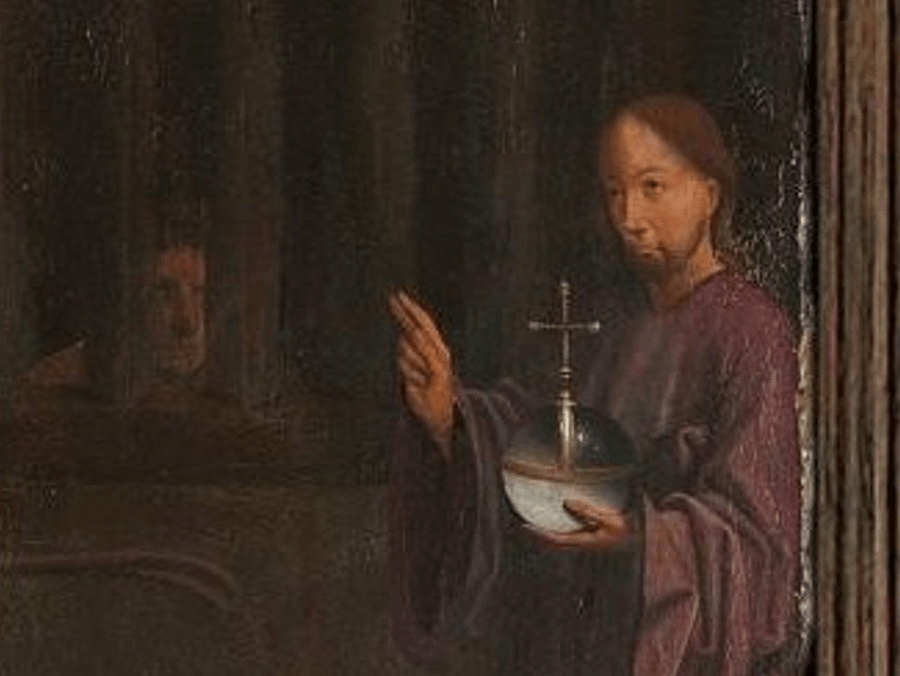
For this scene Jesus is no longer undercover, here he has to come and do his job in public, he seems to be blessing the prisoners:
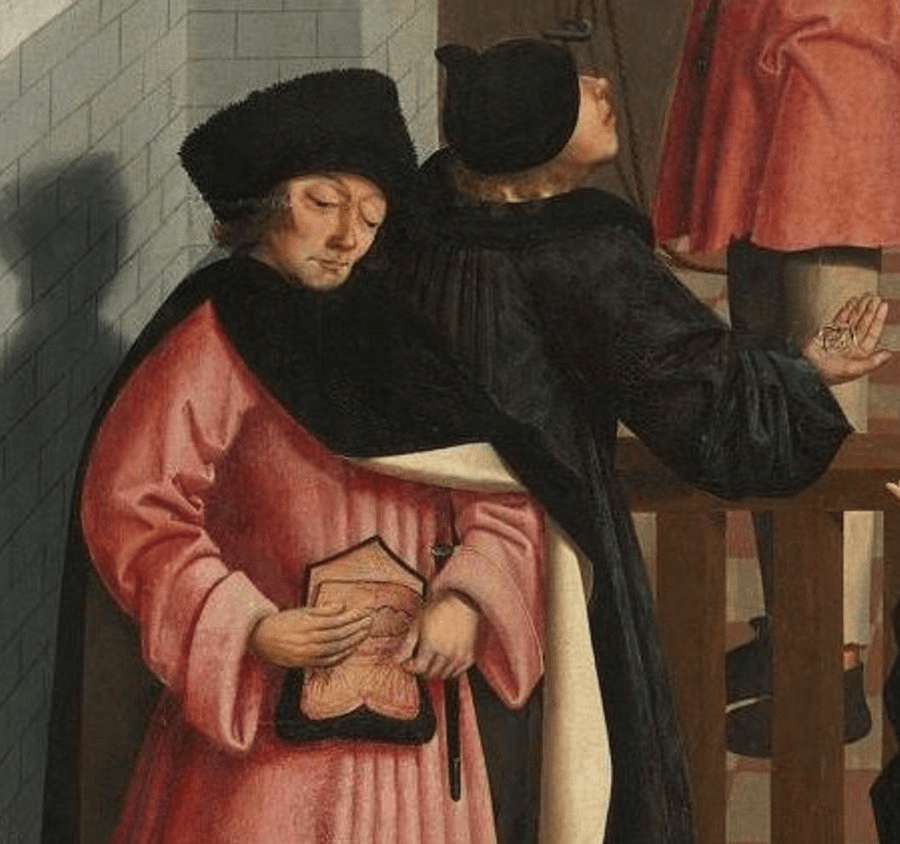
I love this, the very wealthy are literally offering whatever they have on them, looking for coins, perhaps even jewellery.
Giving what they have to either aid the prisoners or even get them to be set free:
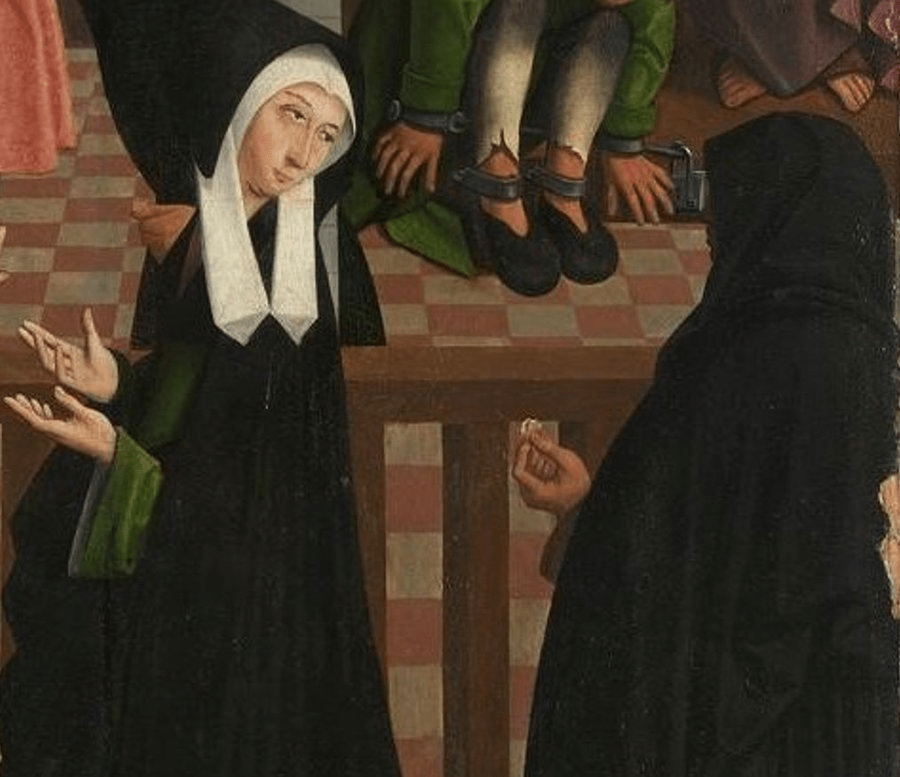
Come on Doreen, just one coin?
What is Jesus is watching, come on, dig deeper:
The end!
It’s a fascinating piece, so much colour, so little filth & drabness.
And we learned how to be better Christians.
I wish we knew more about the artist though, he was very talented.
Enjoyed my little art review?
You can read more here:
 Fake History Hunter
Fascinating indeed. Thank you (again) for opening my eyes.
LikeLike