
A lot of people still believe that in medieval Europe everyone got married at a very young age, that child marriages were very common.
This is not the case.
Please note: this article is a work in progress, as I learn more, I may add, change & replace parts.
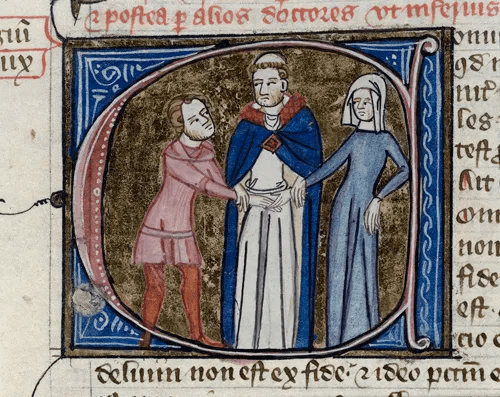
In reality most people in most of Europe during the middle ages married in their 20s.
Sometimes earlier, sometimes later, but getting married in your early teens or even younger was very rare.
Yes, nobles/royals did it, but mostly for political or inheritance reasons.
And even in those cases they often waited for years to consummate the marriage.
Ideas about when girls/women were too young for child-birth go back quite a long time in Europe.
Greek & Roman writers like Hippocrates (c. 460 – c. 370 BC), Aulus Cornelius Celsus (c. 25 BC – c. AD 50), Soranus of Ephesus (c. 98– AD 138) and Galen (129 – c. AD 216) recognised that a narrow pelvis makes births riskier for both mother and child and Soranus wrote, ‘one must judge the majority from the ages of 15 to 40 to be fit for conception‘.
Medieval texts also write about both young and old age are not suitable for giving birth, so people knew, they were worried about birth being dangerous and wanted to protect girls, rightly so.
Let’s look at the child marriages we can find in Medieval European history and compare the ages with how old the mother was when the first child was born:
- Constance of France (1078 – 1125)
Married at approx. 15–17; first recorded child born at approx. 30. - Cecile of France (1097 – 1145)
Married at approx. 9; first recorded child born at approx. 22. - Empress Matilda (1102 – 1167)
Married at 8; first recorded child born at 31. - Theodora Komnene, Queen of Jerusalem (c. 1145 – 1182)
Married at 13; first recorded child at 23 or 24 - Isabella of Hainault (1170 – 1190)
Married at 10; first recorded child born at 17. - Agnes of France (empress) (1171 – 1220/after 1240)
Married at 9-10, no recorded children. - St Elizabeth of Portugal (1271 – 1336)
Married at 11–12; first recorded child born at 19. - Isabella of France (1295 – 1358)
Married at 12; first recorded child born at 17. - Bianca of Savoy (1337 – 1387)
Married at 13; first recorded child born at 14. - Isabella of Valois (1389 – 1409)
Married at 6; first recorded child born at 19 (second marriage). - Lady Margaret Beaufort (1443 – 1509)
Married at 6-7; first recorded child born at 13. - Beatrice d’Este (1475 – 1497)
Married at 15, first recorded child born at 17. - Lucrezia Borgia (1480 – 1519)
Married at 13 (first marriage annulled, not consummated); first recorded child born at 19 (second marriage).
We have to of course keep in mind that we don’t know when these marriages were actually consummated but we know that it was very common for noble/royal couples to wait for both parties to be “of age” and these numbers support that even though there could have been cases of fertility issues or other problems.
It is still quite telling that although child marriages were common among the extremely small number of nobles/royals, children giving birth was very rare.
Also interesting is that there’s quite a bit of evidence of people being concerned about the young age of some of these women, commenting on it and even being critical, like in the case of Lady Margaret Beaufort who got pregnant when she was 12 and gave birth at age 13.
People disapproved of it, were disgusted.
That she herself considered it something that wasn’t right is proven by her objecting to her own granddaughter being married at 13.
The birth of her child was traumatic and she never had children again.
More about this in ‘The English Works of John Fisher‘, ‘Margaret Beaufort: Mother of the Tudor Dynasty’, ‘The Paston Letters’ & ‘The King’s Mother: Lady Margaret Beaufort, Countess of Richmond and Derby‘.
We can also find these ideas confirmed by medieval laws.
In England the law made a mention of ‘infra aetatem’, this meant within age and for girls this meant 12 years and older.
In relation to laws about rape this meant that having sex with a girl under the age of 12 was automatically considered rape, regardless of if she consented.
In the 1275 Statute of Westminster (Statute of Westminster I) it says “AND the King prohibiteth that none do ravish, nor take away by Force, any Maiden within Age (neither by her own Consent, nor without) nor any Wife or Maiden of full Age, nor any other Woman against her Will.”
This law is probably much older than this statute.
And, again, although child marriages did happen among the noble/royal class of Europe, even among this tiny minority of the population it was also not as common as is sometimes suggested.
For them too it was more common to marry in your late teens or after.
It is a massive stretch to suggest that child marriage was a widespread practice among the elite.
Rape being a punishable offence was also quite common in much of Medieval Europe, women and girls were protected in many ways.
Among common people children getting married was practically unheard of, even marrying at a young age was very uncommon.
There are several reasons for this that were almost unique to Europe, especially North-Western Europe:
- Both men & women inherited from their parents and had the opportunity to actually work and look after themselves.
So the need to get married young was not the same as in other parts of the world.
A woman on her own, at least in the cities, would not necessarily find it impossible to survive. - When you got married you were expected to move out of your parent’s home and find your own place, for this you needed quite a bit of money.
This money didn’t (all) come from the parents, dowries were rarely enough to buy a house and in most cases the dowry would be things, not money.
It could also take years for the dowry to be big enough to start a household, even without having the actual house. - On top of that both man and woman had careers.
With that I mean that they could both be apprentices, learning a trade or worked in someone else’s household as a help.
This could take years and it was often very difficult to cancel such an apprenticeship, your parents could have paid dearly for your education. - The church had been pushing for marriages to be consensual, so both parties had to agree to the union, which made it a lot more difficult for parents to marry their kids off.
All this put together explains why most medieval Europeans didn’t get married till they were into their 20s.
I will now share a whole bunch of quotes & sources that back up my claims and explain some of the details.
My conclusion follows after that.
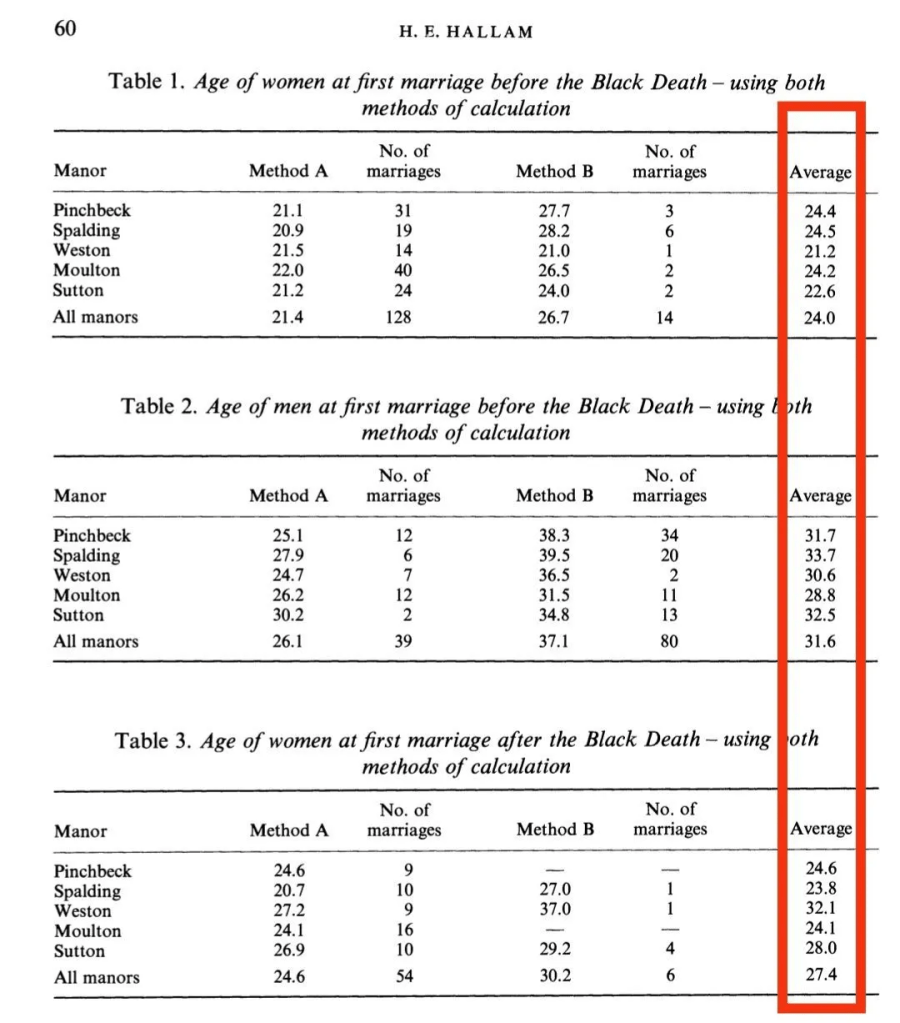
Age at first marriage and age at death in the Lincolnshire fenland, 1252-1478, by H.E. Hallam:
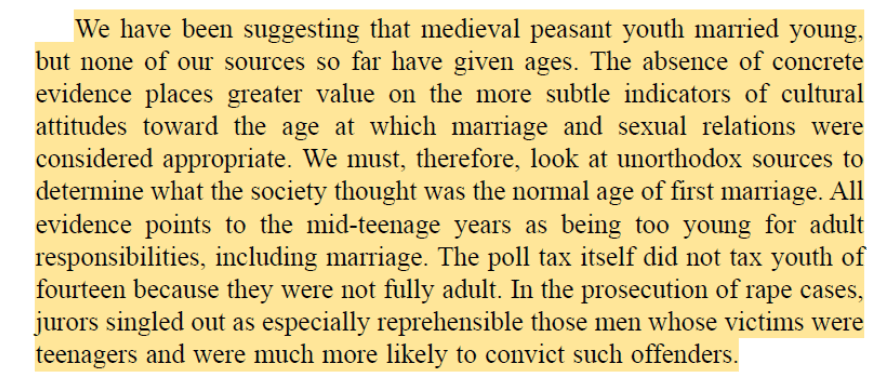
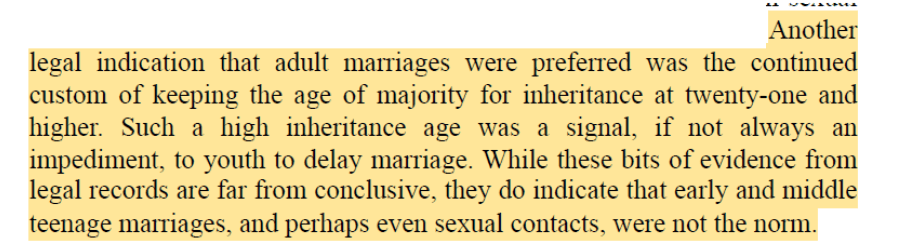
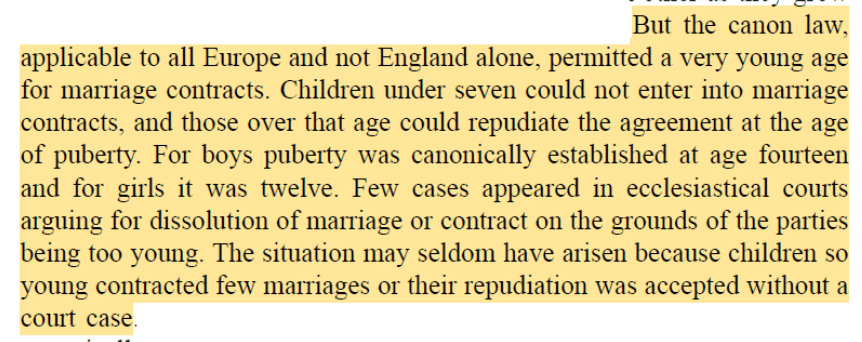
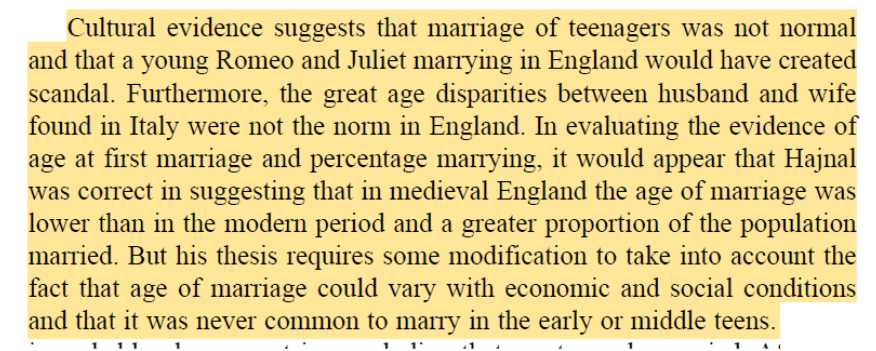
From The Ties that Bound: Peasant Families in Medieval England By Barbara A. Hanawalt:

You can read my full review of this particular book here:
https://fakehistoryhunter.net/2026/01/17/book-review-the-ties-that-bound-peasant-families-in-medieval-england-by-barbara-a-hanawalt-1986/
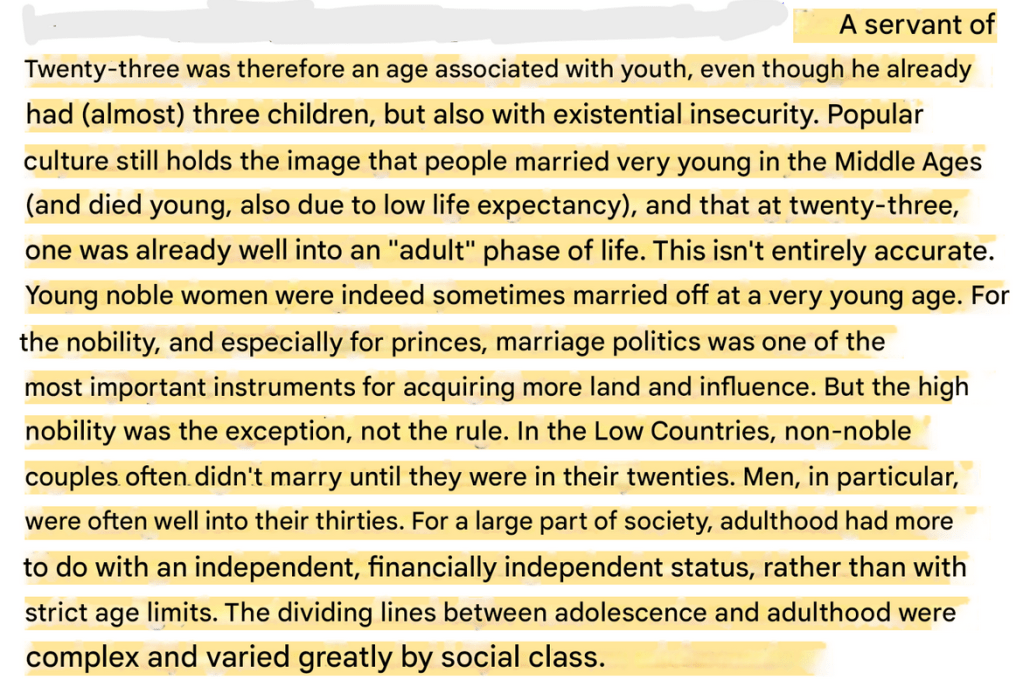
The following texts come from the book ‘Dievenland: Overleven in de Middeleeuwen’ by Janna Coomans:

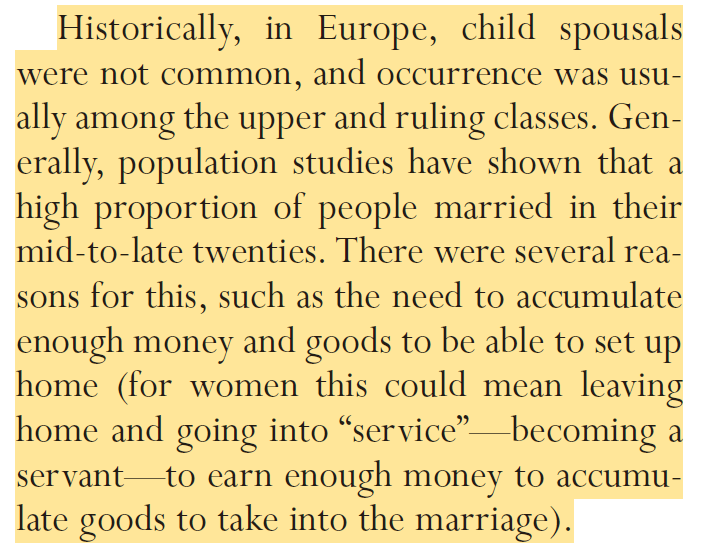
The following text comes from ‘Marriage Customs of the World: From Henna to Honeymoons’ by George Monger:
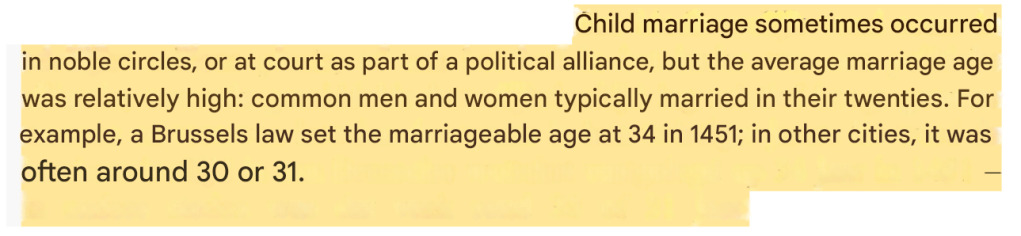
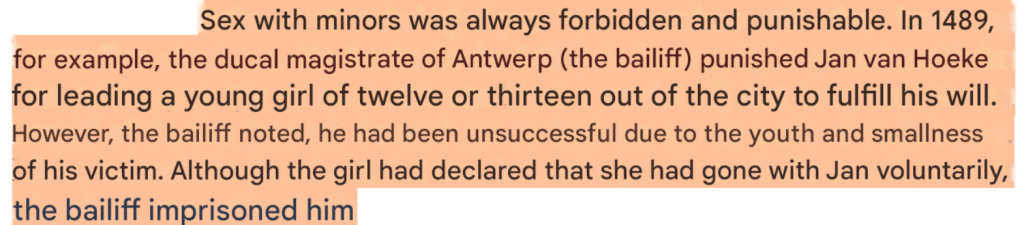
The following texts come from ‘Urban Women: Life, Love, and Work in the Medieval Low Countries’ by Andrea Bardyn, Chanelle Delameillieure, Jelle Haemers (2019):

You can read my review of this book here:
https://fakehistoryhunter.net/2025/08/04/book-review-urban-women-life-love-and-work-in-the-medieval-low-countries-by-andrea-bardyn-chanelle-delameillieure-jelle-haemers/
The following texts come from ‘Married Life in the Middle Ages, 900–1300’ by Elisabeth van Houts (2019).
Please note that this book is about the early-high middle ages, not the late middle ages:
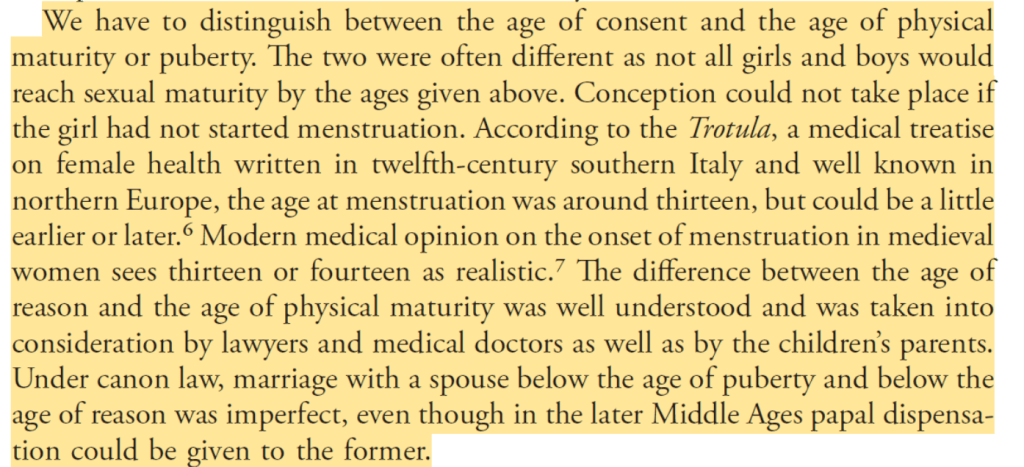
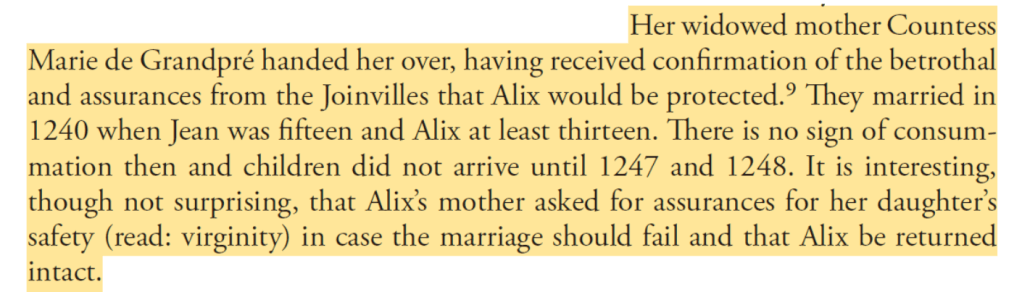
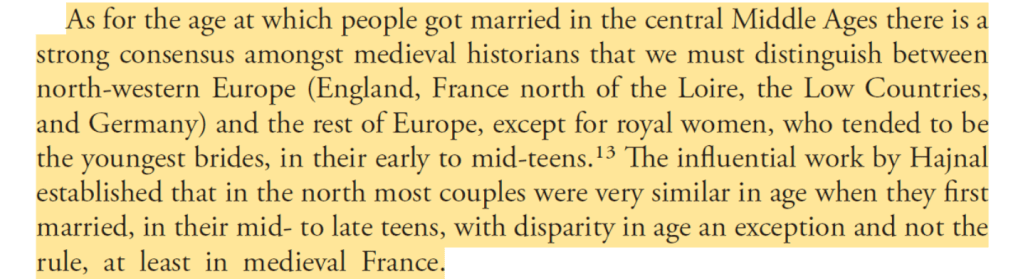
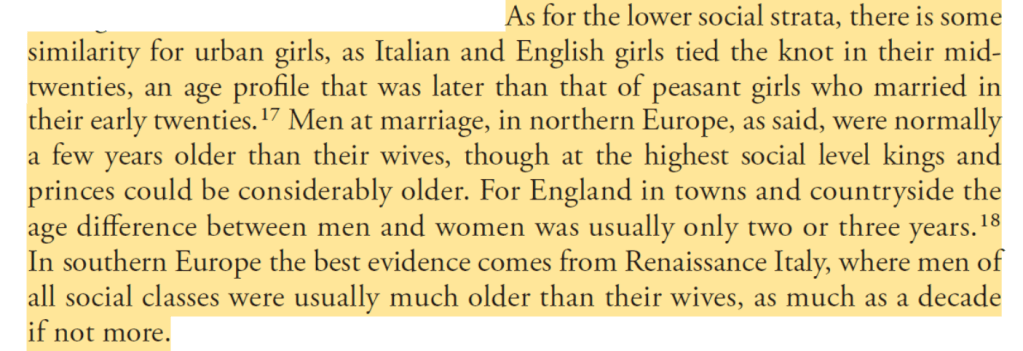
The following text comes from ‘A Cultural History of Marriage in the Medieval Age’, eited by Joanne M. Ferraro (AD 2021):
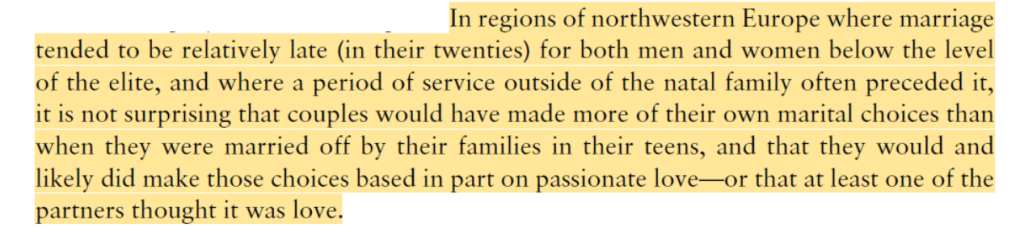
The following texts come from ‘Population in history. Essays in historical demography.’, edited by D. V. Glass and D. E. C. Eversley, specifically the chapter ‘European Marriage Patterns in Perspective’ by John Hajnal:
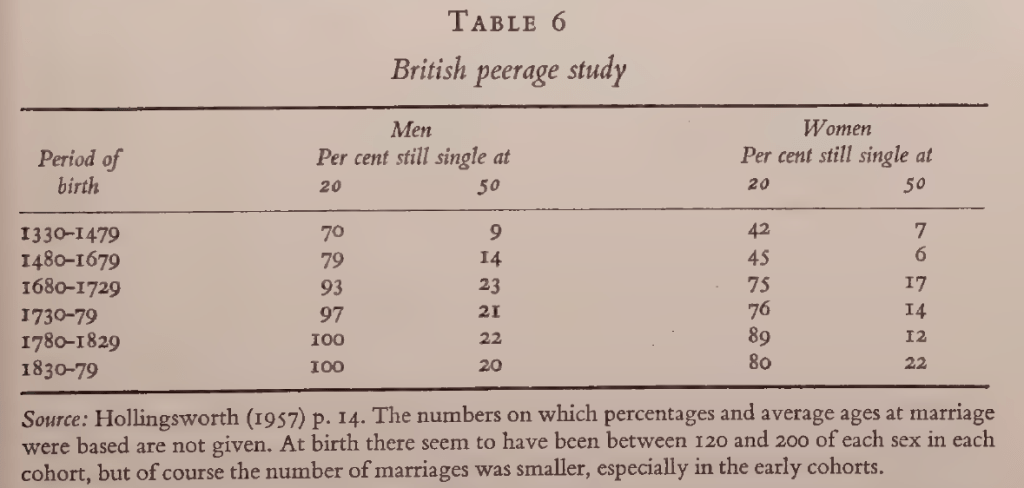

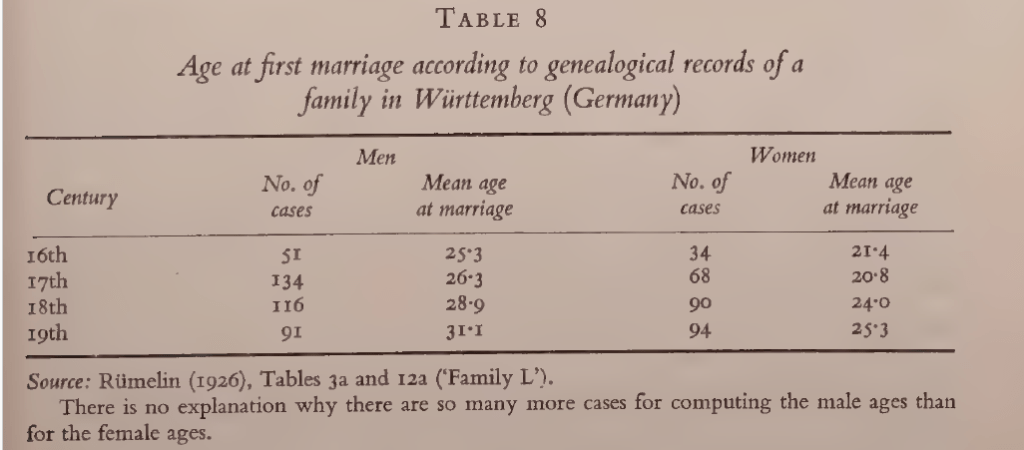
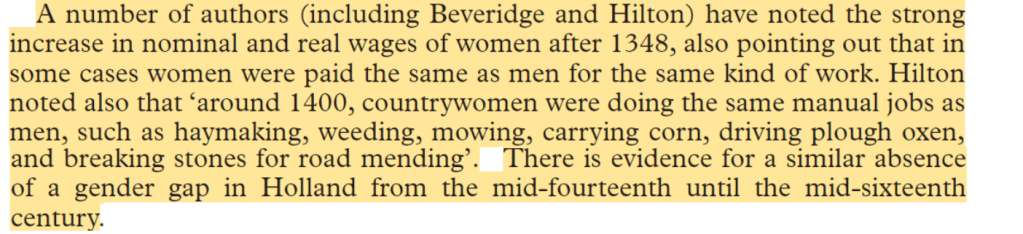
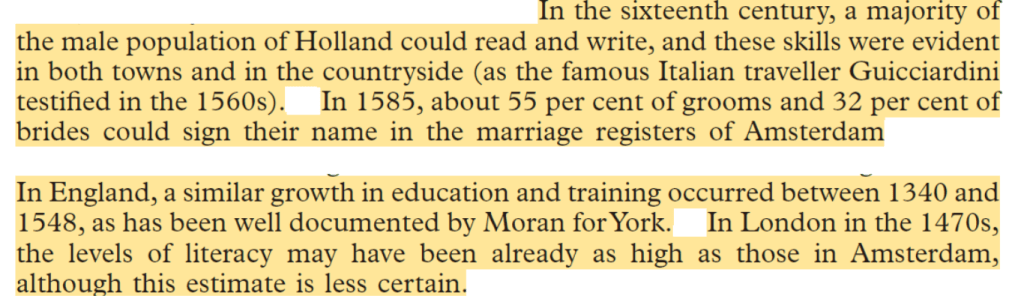
The following texts come from ‘Girl Power: The European Marriage pattern and Labour Markets in the North Sea Region in the Late Medieval and Early Modern Period’ by Tine De Moor and Jan Luiten Van Zanden:


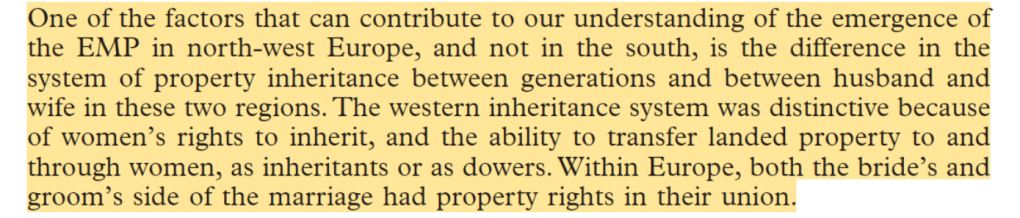



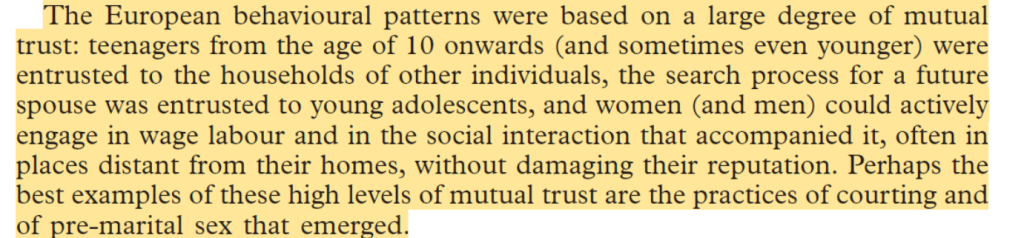
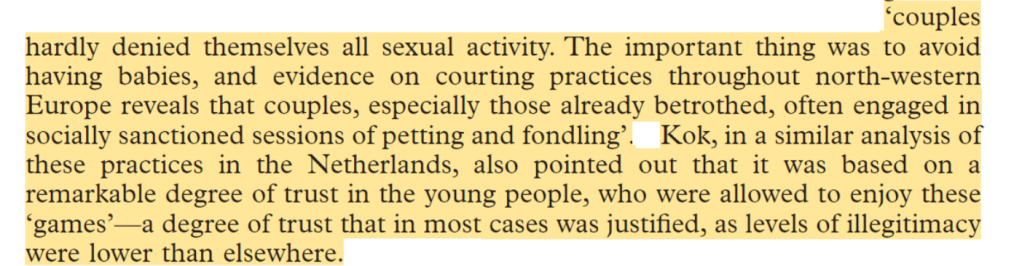
As all these texts and the historical sources & records show, Europeans, at least in the North West, did not marry young, except the tiny percentage of nobles & royals.
This had a huge effect on progress in this region, very likely playing a role in why Western Europe became such a powerful entity in the following centuries.
People marrying later and both men & women having to earn a living before that time meant much more workers were available for the labour market, this would boost the economy.
This European marriage pattern lasted for many centuries, marrying later than elsewhere in the world took place during the industrial revolution, the time of European colonisation of other continents, the British empire, etc.
With men & women marrying later it gave men but especially women opportunities unheard in much of the world then but sadly even still today.
It was more common for women in NW-Europe to have an education, learn to read and write, have a job, gain independence and it increased their chances of marrying someone they actually liked or even loved.
They experienced levels of freedom & equality that for billions of other women remained impossible for centuries to come and in some countries is barely imaginable at this moment.
This all had a huge effect on the lives of countless people and would have a direct impact on global history.
Finally a few words on biology.
I am not a biologist, far from it, but I can’t resist adding a few interesting facts & figures about the human body, marriage & having babies.
But if you’re a doctor, biologist, scientist, etc. and know better, please don’t hesitate to correct the following.
Nature seems to give us a few clues on when you should get married and have babies.
Both of these moments in life involve making some very big important decisions, so you should make them when your brain is at its best premium state to think about things.
Part of our brain, especially the frontal lobe, continues to mature long after puberty starts & ends.
We use this part to make important decisions, but it’s also important for impulse control and regulating your emotions.
I’m not saying your brain is all done growing up when you reach your 20s, but it does seem that you’re better at those things I just mentioned then when you’re a teenager.
So mentally nature is giving us a hint about that its perhaps wise to wait with big decisions till you’re in your 20s.
But physically we also get a few clues.
For instance the female pelvis widens to prepare for childbirth, this begins during puberty but continues for years, reaching the “obstetrically most adequate morphology” when women are in their late 20s.
So both mentally & physically your 20s are the safest time for having babies.
Puberty is the beginning of your body sexually developing, but this is a phase, not an instant moment, it takes years for these changes to finish.
Humans can have babies early on because it seems like nature did a complicated bit of maths and realised that if humans are having a really bad time and keep dying, the odds of the species surviving are higher when you just make babies asap and as often as possible, putting having babies above the survival of the mother.
Waiting till you’re in your 20s when you may not even live that long just doesn’t always work.
This biological system is millions of years old, set up at a time when we were barely surviving.
This was no longer the case during the middle ages.
Anyway, it’s very interesting to me that so much is pointing towards your 20s being the most fitting age for marriage & babies and this being the situation in Medieval NW-Europe.
This too may have had a big effect on the health & survival chances of women in that region.
Links:
 Fake History Hunter