
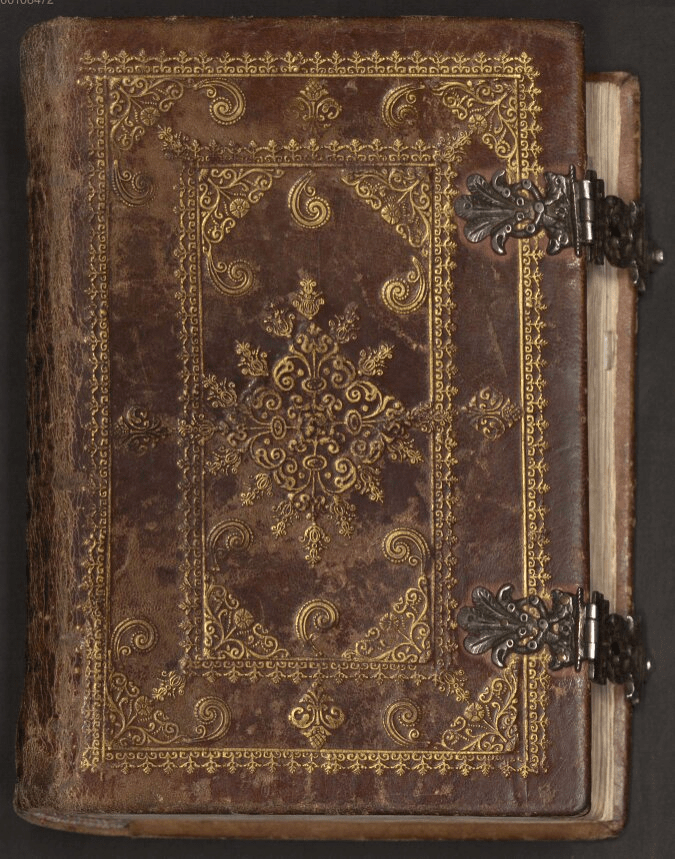
This is a Flemish book of hours, late 15th century.
You can check it out here, in this thread some of the best illustrations.
They’re awesome, showing such detailed depiction of daily life back then.
In this article I describe the image before I show it, so the picture in question can be found below the text.
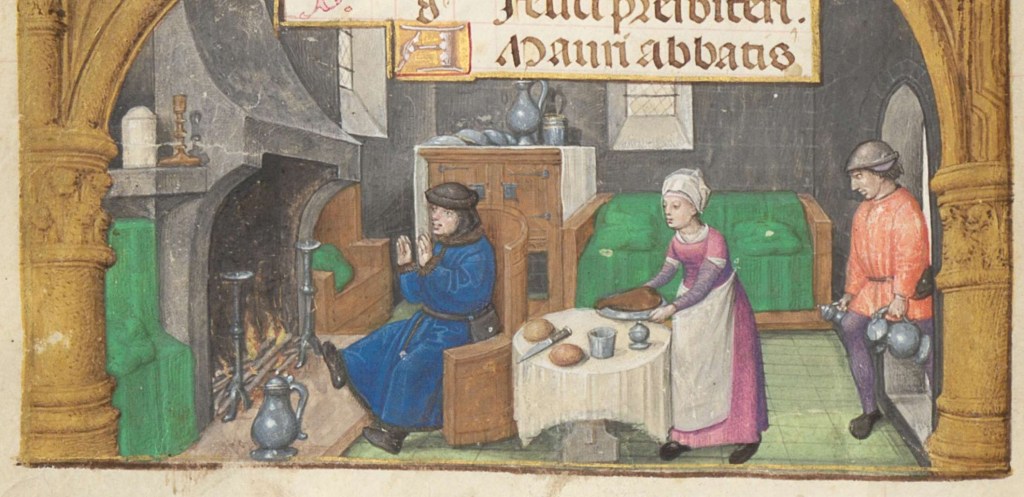
The book begins in winter, we see a well off household, the man is warming his feet by the fireplace, a jug is nearby, likely also warming up, possibly water for washing hands or maybe wine or some other drink.
Dinner is being served, my guess is that it is smoked fish, purely based on shape & colour.
Note the woman’s detachable sleeves.
The benches look like the type people also slept on at night:
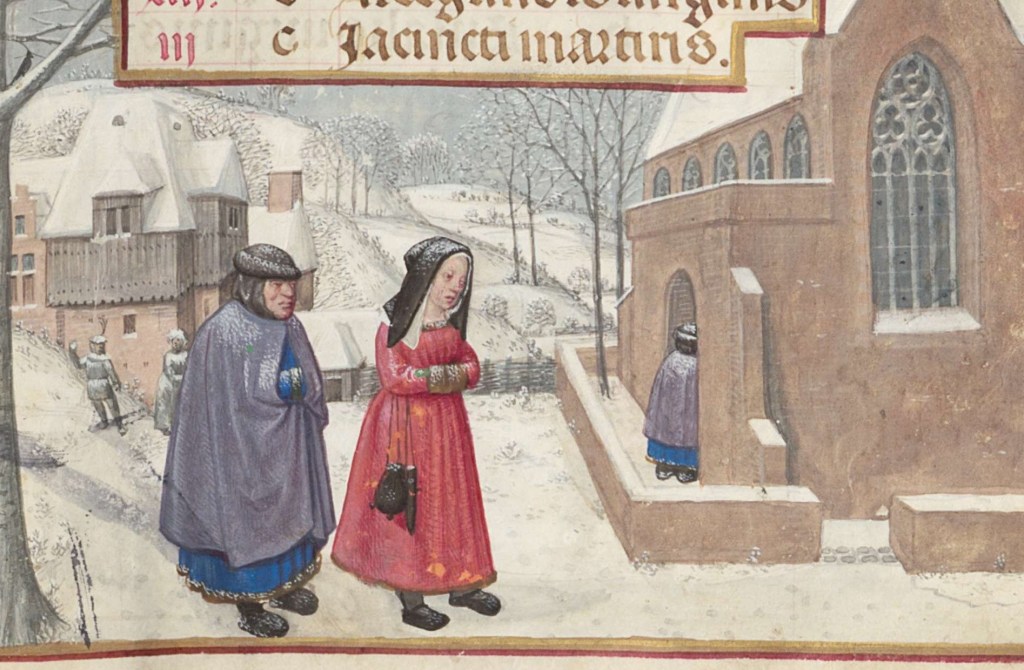
Regardless of the weather, one can’t skip church.
That cloak looks amazing, made of natural wool, so very good at keeping warmth in, cold & wetness out and it looks so cool.
We should bring back cloaks!
Another fun detail is that they’re not wearing muffs but are simply putting their fur lined sleeves together with their hands hidden inside.
And in the back we see some cad throwing a snowball, some things never change:
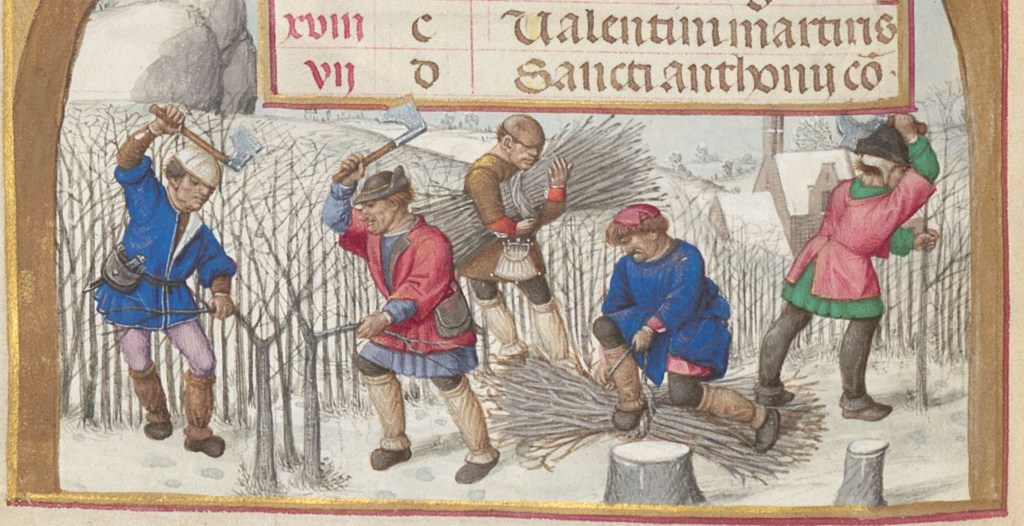
Here we see one of the most important jobs in winter time, the chopping & gathering of firewood, a fascinating detail here is that they’re cutting thin branches of young trees that seem to be planted just for this function.
This wood won’t be very dry but because it’s so thin it doesn’t have to dry long.
It won’t burn very long either, which is why today we use wood blocks in our fires, however those weren’t really a thing till modern saws and less need for wood to be used for other things became a thing.
We do see evidence of chopped down trees, but there’s no real evidence of wood blocks being used or people chopping those wood blocks on a trunk, even though we see that in pretty much every film, tv show or even historical re-enactment set in the middle ages.
I researched that topic here in this article:
When did people start using a chopping block for firewood?
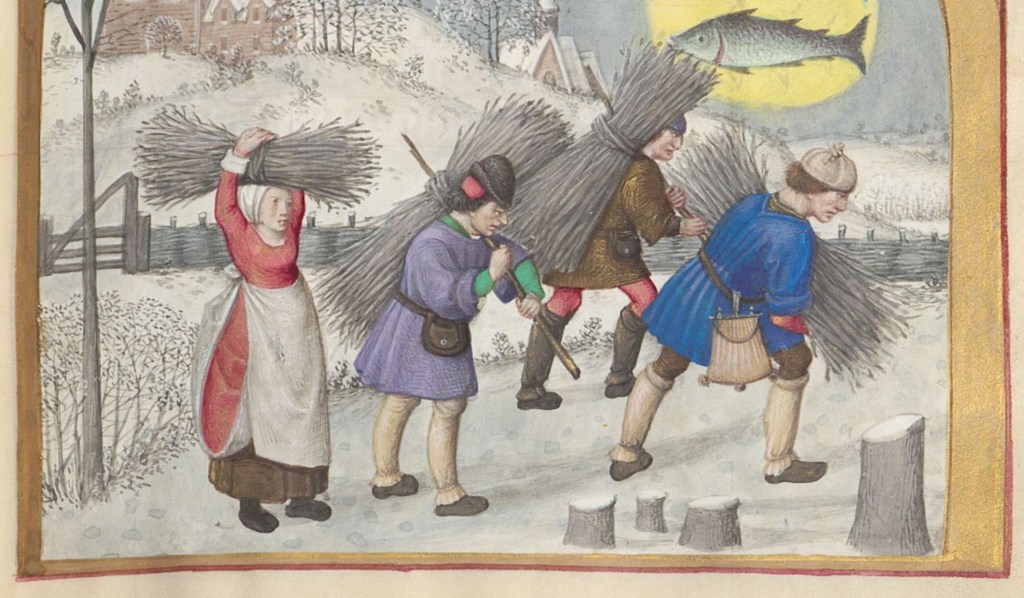
In this illustration we see the workers carrying firewood home, note the leg warmers and the particular way they carry the firewood by sticking a stick through it.
Also note the lack of gloves, that a woman is also doing this work and the bright colours of the clothing these common workers are wearing:
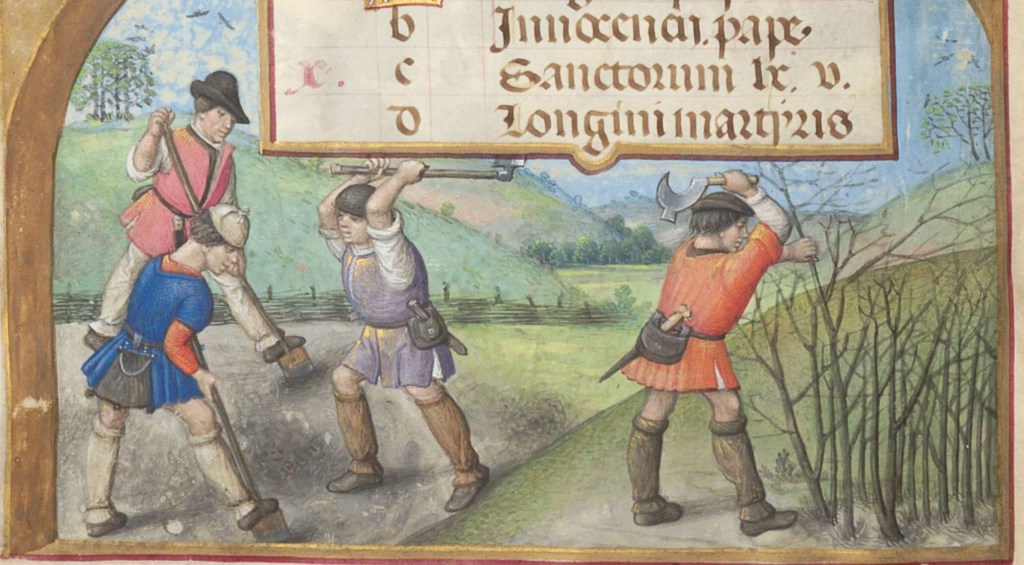
After winter the farmers return to the land, it’s hard work but the farmers don’t look poor or dirty.
They wear brightly coloured clothing, quite nice pouches and knives on their belts and again legwarmers, this time without hose underneath:
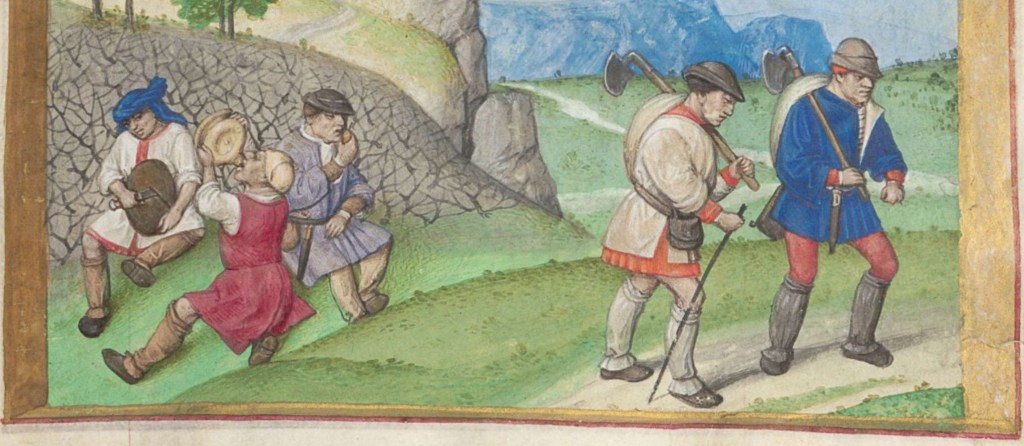
The work was hard, they made long hours, it was often dangerous but they enjoyed their lunch of bread, ale or beer and perhaps some sausage or cheese, in the fields and somehow every depiction I’ve seen of these breaks makes it look like at least that part of their day was rather nice:
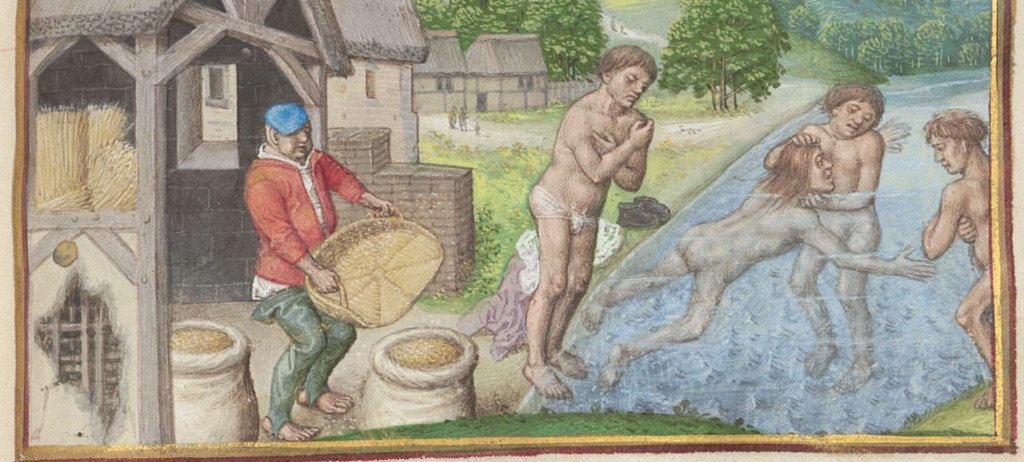
Time for the winnowing of grain, note the peculiar sort of blue baret the chap is wearing and that he took of his shoes for this job.
And after work on a warm day everyone is going for a swim, some naked, some wearing teeny tiny undies.
Wait, what, swimming!!?
But we thought medieval people were all scared of water and never bathed and so on…
It looks like one is trying to teach the other to swim, or trying to drown him:
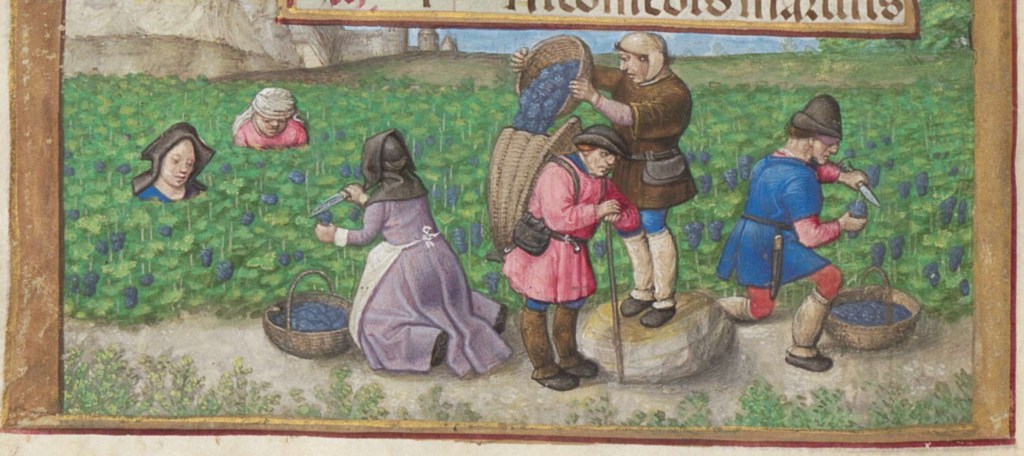
Harvesting time, it looks like they’re plucking grapes.
Once more we can’t help but notice that women are working as well, the whole idea of women staying at home and only doing household chores is a very new one, for most of history this wasn’t much of a thing, very few families could afford anyone, especially not a healthy strong adult, not helping with the work that paid the bills.
Medieval women worked, a lot.
Also note, again, the nicely coloured clothing and the interesting leg warmers, we don’t see those very often but it looks like they were very popular in this region of Europe back then:
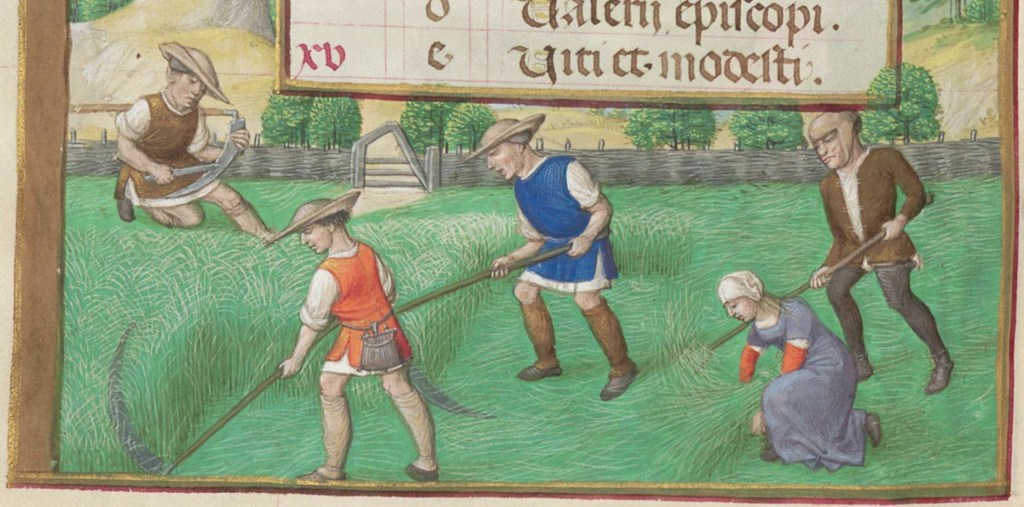
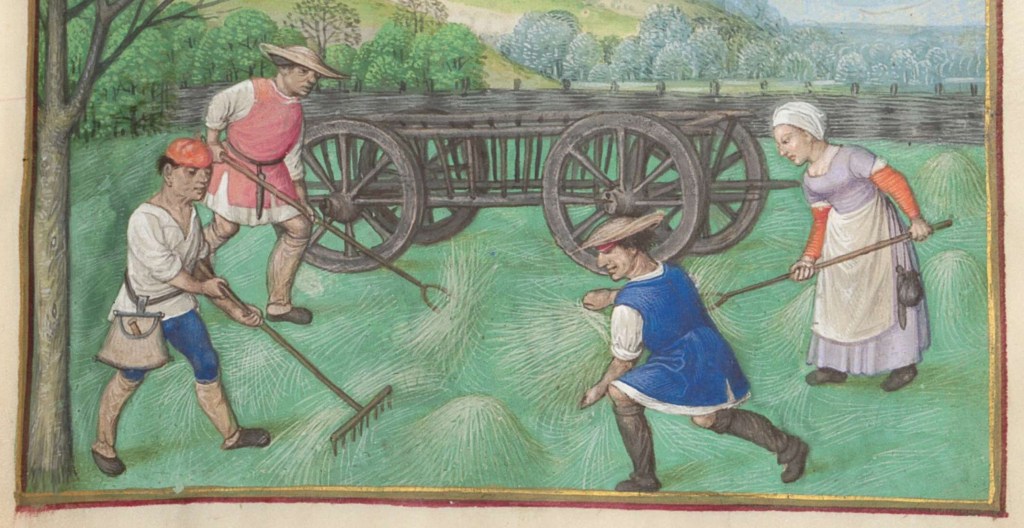
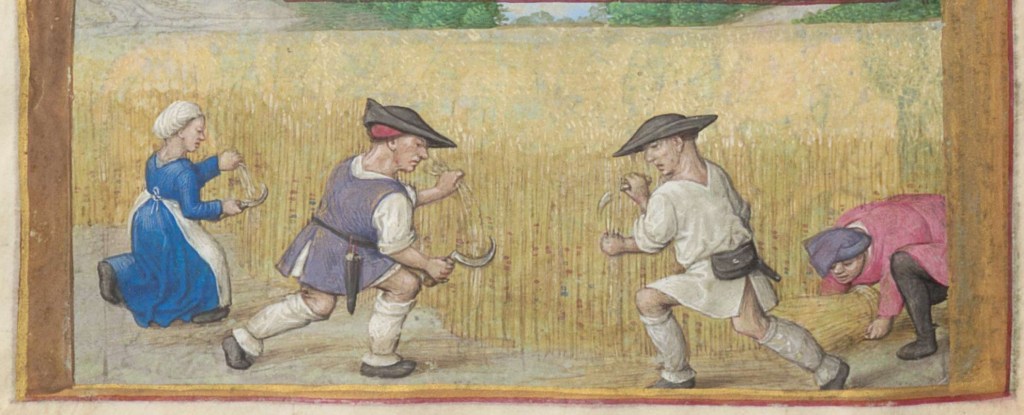
More harvesting, women again working and more colourful clothes.
I’ve got a scythe, it’s a terrifying thing, I once nearly cut my thumb off just by looking at it:
And the sowing, under strict supervision from a very good boy:

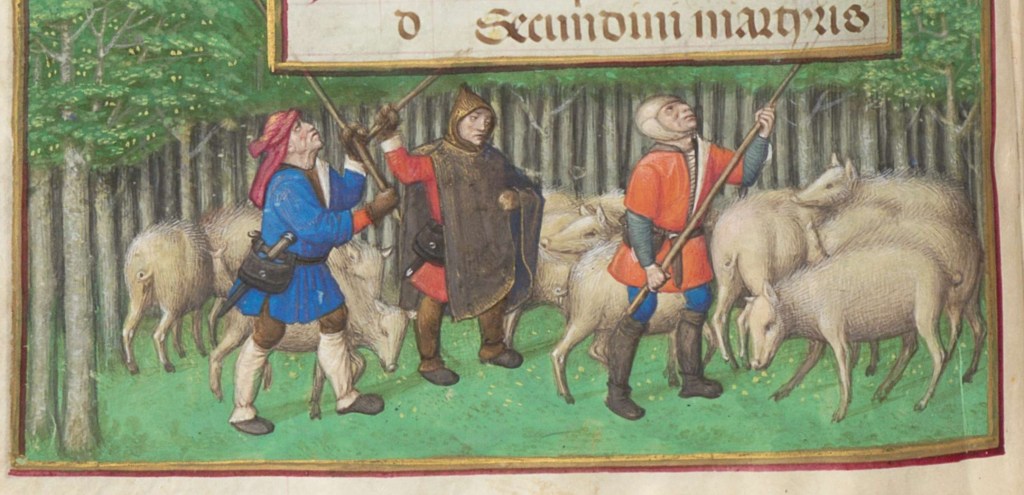
Herding pigs into the woods, here they can feed themselves on chestnuts, which the pig herders are bashing out of the trees.
Many people owned pigs in medieval times, they were cheap to keep and provided them with lots of meat.
They were also used to pay taxes or trade.
They were however notoriously annoying when they escaped and could even be deadly for children.
Which is why in most cities there were very strict laws about what pigs were allowed to do and the image of them just wandering around streets as they pleased, as we often see in films/tv shows, is generally not quite right, more about that here:
Book review: ‘The medieval pig’ by Dolly Jørgensen
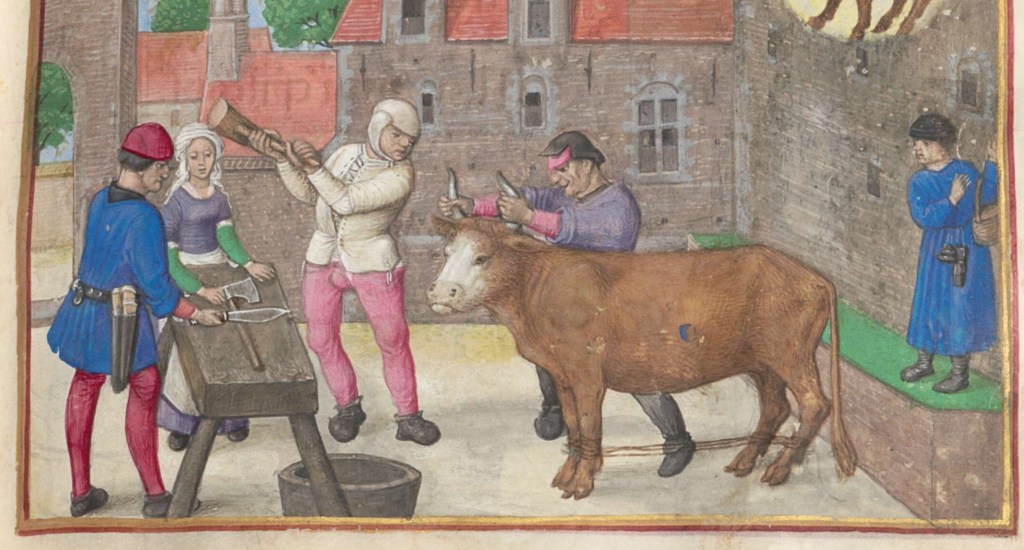
Time to butcher some cattle.
If you kept an animal through the winter, you’d have to feed it, so this was the time to turn some of them into meat.
The meat was salted/smoked and it would feed the people through the harsh cold season when little would grow.
It’s a bit brutal of course, but in many ways this fate, the quick swift bashing in of the skull somewhere outside, seems preferable than being stuffed in a truck, transported for hours and then waiting at an abattoir that smelled like death and with the sounds of other animals in distress and dying surrounding the animal.
Again we can’t help but notice the colourful clothing and that women are involved with this sort of work:
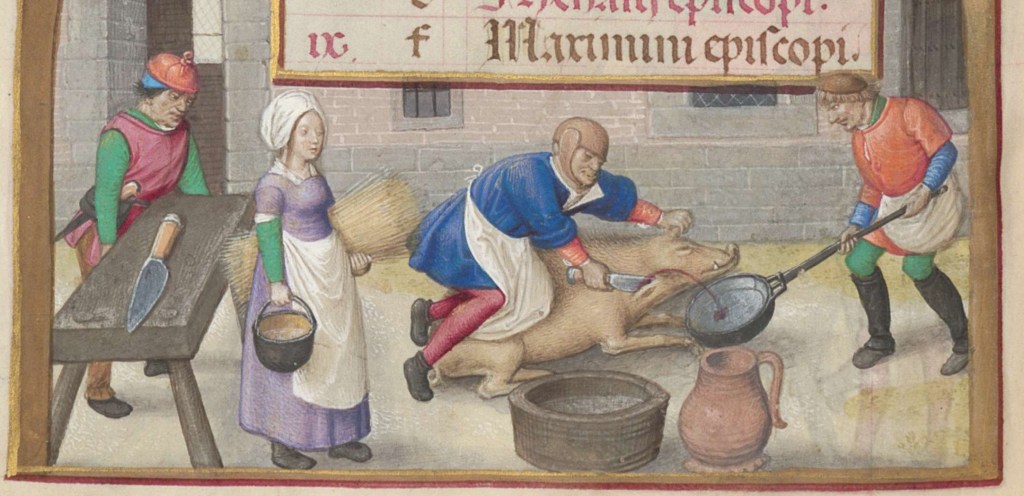
The pig follows, its blood collected, straw brought to burn off the bristles, water & jugs ready.
It’s quite the job.
This also explains why winter weddings were so popular.
In winter there was less work to be done, especially when it comes to working on the land.
But the storehouses, barns & attics were full of food.
Freshly slaughtered meat, grain from the field, wine, etc.
Perfect for parties & celebrations.
Especially as some of the food wouldn’t last that long anyway:
The rest of the book is mostly about religious stories, the illustrations don’t tell us much about daily life in the middle ages, so I’ll skip those.
But make sure to go check out the complete book, it’s stunning.
 Fake History Hunter
The harvesting scenes are interesting. The top two are using scythes to cut hay. In the bottom one they are using sickles to cut the ears of wheat off the straw. You wouldn’t use a scythe for that as the wheat would end-up on the ground and not in your basket.
LikeLike
<i>a fascinating detail here is that they’re cutting thin branches of young trees that seem to be planted just for this function.</i>
Are they young? Or are they just coppiced?
LikeLike