
I love history books that are all about a specific subject, it shows that a historian has become obsessed about one thing and that they’ve likely spend more time than is healthy researching it.
Which is of course a good thing because it can result in the ultimate publication on the topic and I think that’s the case here.
Dr. Jørgensen is Professor of History at University of Stavanger in Norway and she wrote a book all about medieval pigs.
I’m not interested enough in pigs to read a book about them, sorry pigs, but they’re very connected to a subject I’ve read a ton of books about: medieval hygiene.
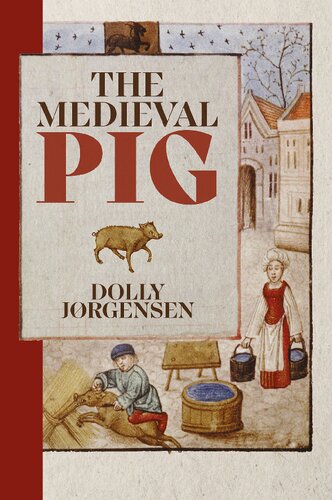
In six chapters Dr. Jørgensen writes about many different aspects of pigs and their place in the medieval world, the book is easy to read and very well researched.
While it in some ways supports the old image of medieval cities being filthy because animals were freely walking around the place, leaving filth everywhere, it also shows how medieval people were not fine with this sort of thing, that they actively took action to avoid the dangers & pollution that comes with having pigs.
The book shows that the ‘Hollywood’ image of filthy medieval cities with fat smelly pigs just doing their business in streets and sleeping in the gutter is not quite accurate, although it’s something we often see in film & tv scenes.
From the book we learn that although this sometimes happened, there were strict laws against it, people hated this happening and the solutions were often quite dramatic.
I’ll now share a few bits from the book that I found interesting.
To start with, this great illustration that shows us what the medieval pig looked like, yes film & tv makers, game developers, artists & authors, pigs back then looked very different than they do now, you can’t just use a big fat pink pig!
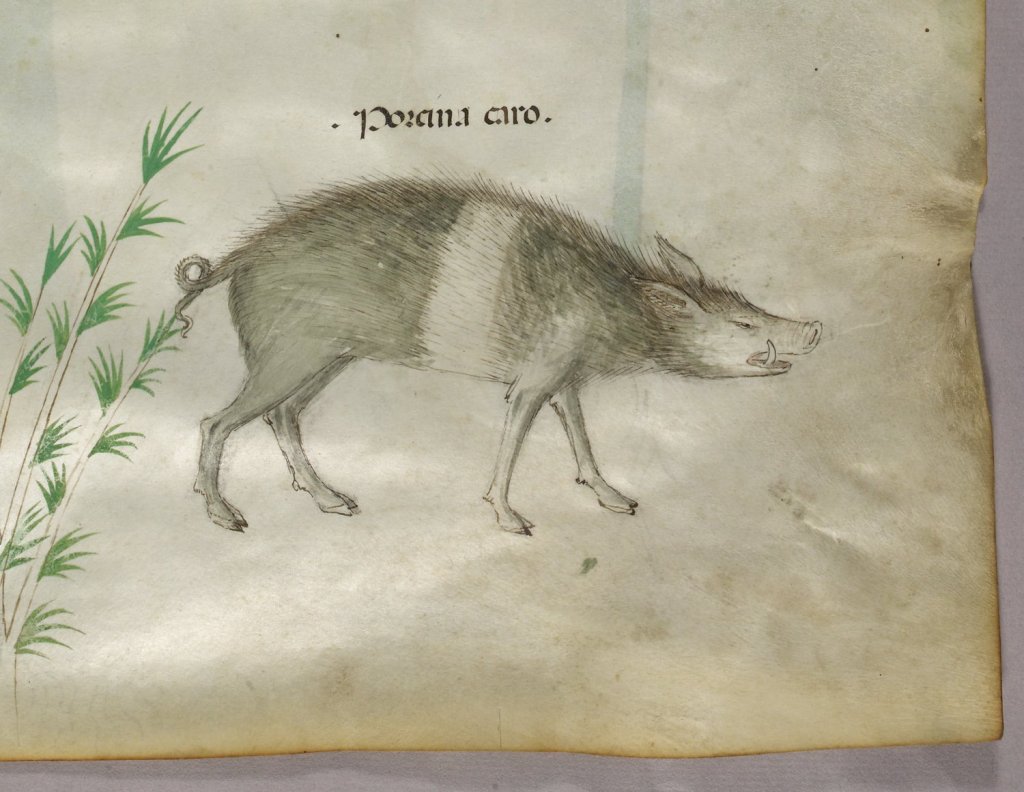
Medieval pigs had long snouts, tusks, bristles and a curly tail.
I did not know this but domestic pigs have a curly tail while wild pigs have straight tails!
You can also learn the emotional state from a pig by looking at its tail.
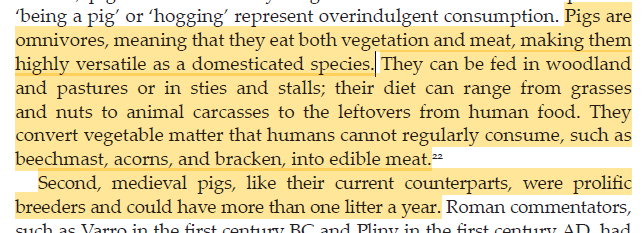
Here Jørgensen explains why pigs were so popular in Medieval Europe: they were like living waste bin, they’d eat your leftovers and turned it into meat, fat, bone and manure.
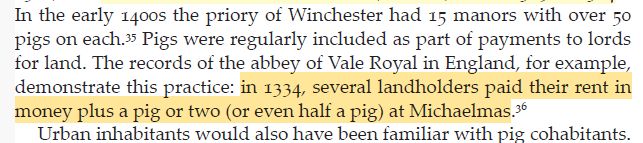
So they were relatively cheap to keep and easy to breed.
On top of that they could also be used as a payment:
In the countryside there were strict rules about where pigs were allowed to go, they couldn’t be left to wonder, they had to be accompanied by a swineherd when the pigs were taken out to feed in the woods.
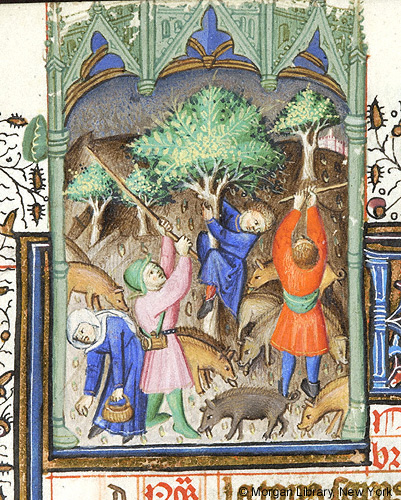
MS M.64 fol. 11r
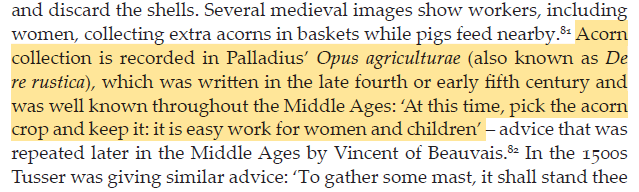
They especially liked acorns and there are many pictures that show us swineherds hiting trees with their sticks to get acorns to fall to the ground for the pigs to eat but they were also collected for feeding them with later
The swineherds made sure the pigs didn’t run off and cause chaos but they also had to protect the pigs from wild animals and thieves, like naughty Walter here:

Say what you want about crime not paying, but every time I read a medieval criminal record I think to myself that if these people had not done something bad, there might not even have been a record of their existence, so in a way they got something out of it.
I shared this image on Twitter recently as part of a large thread of similar pictures because they were fascinating, just lots and lots of depictions of daily life, you can see that here; https://x.com/fakehistoryhunt/status/1819490782908125501
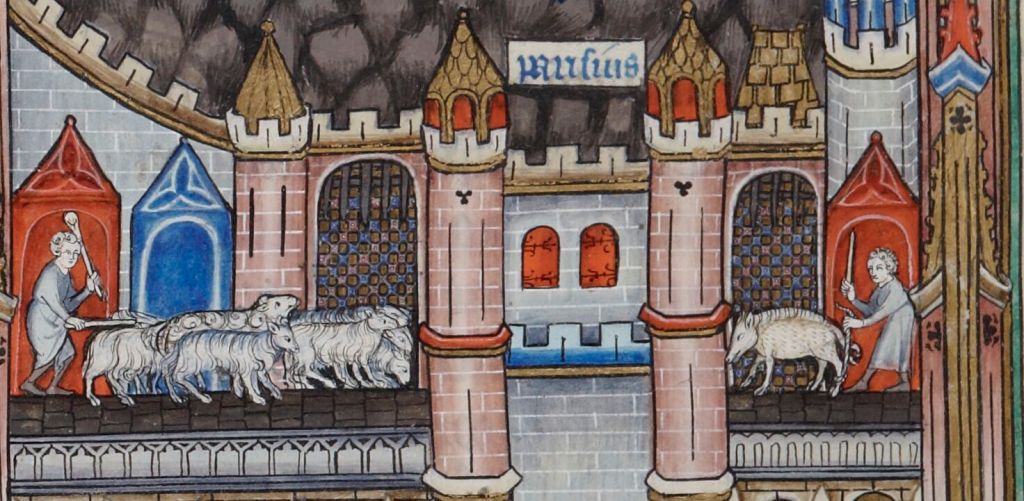
Jørgensen uses the image to show how the pig is brought from the countryside into the city, note how the animal has a rope tied to its leg and the herder is using a stick.
He is making sure the animal goes exactly where he wants it to go.
This pig is being taken to the market but there were also pigs living in the city, this was quite common.

The pigs were usually stalled, not walking around freely, which of course makes sense.
Even if a pig escaped just once it would cause chaos, a mess and drama so towns and cities had lots of strict rules and laws about keeping these animals.
Quite right so, I remember staying on a farm when a pig escaped when I was a little kid and it took several adults half a day to get it back!
1970s Portugal was a wild place 😉
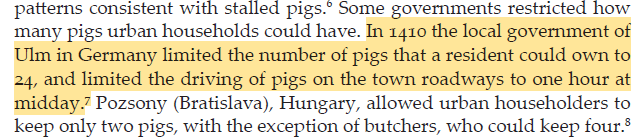
Pigs of course couldn’t be kept in their little pen all the time, they sometimes had to be taken to the market, butcher, the woods with a swineherd or just out of the pen so it could be cleaned.
That’s why several places allowed pigs to be in the streets once a week or so.
But still, they were mostly locked up, we know this from the art, documents but also from archaeological evidence that can tell experts through dental wear that the animals were used to hard floors and didn’t do any rooting!
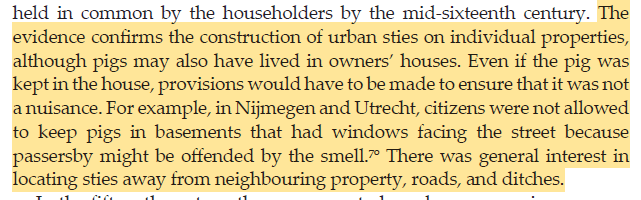
From all the documents it becomes clear, again, that medieval people had noses, yes really, they didn’t like bad smells or mess!
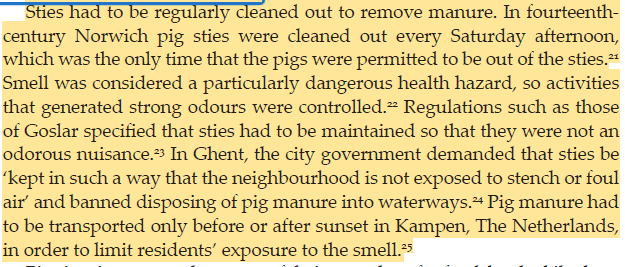
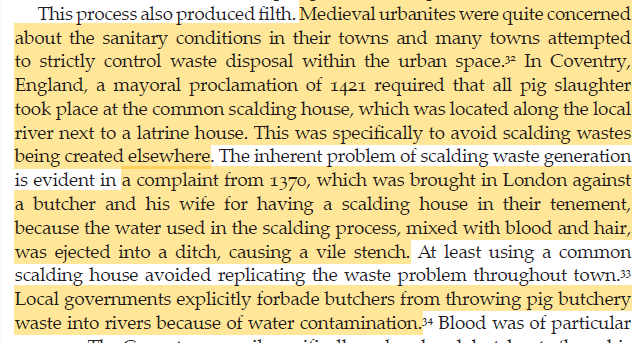
Sties had to be cleaned, pigs weren’t supposed to be a nuisance and you could not dispose waste wherever you wanted:
But the strict pig laws didn’t just relate to pollution & smells, it was also a matter of safety.
Pigs could be a nuisance, a deadly nuisance.
They destroyed lots of things, ate everything, rooted up corpses and killed children.
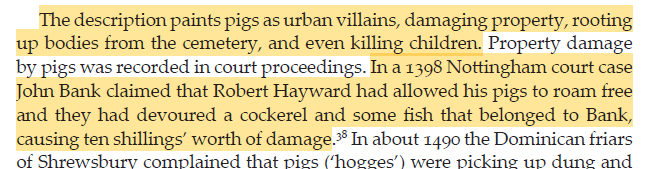
Although these cases were not that common they did happen, yet the image of the medieval city that’s been popular for a long time is supposed to make us believe that medieval people were fine with pigs just doing whatever they want and nobody caring.
The next quote is quite disturbing:
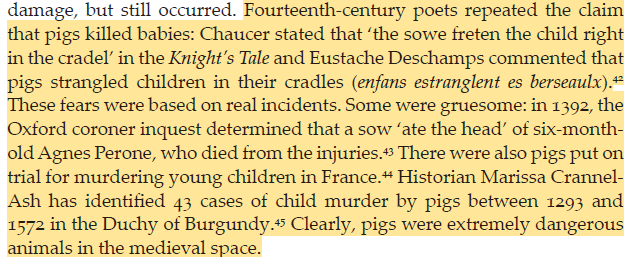
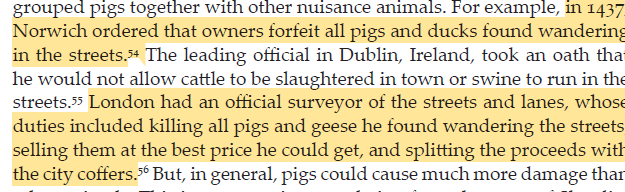
So of course medieval people took this problem very seriously and there were lots of laws & rules regarding pigs that would make people think twice about letting them roam.
They often involved a reward for people killing or selling escaped pigs, making it rather profitable for folks to go actively after pigs on the loose.
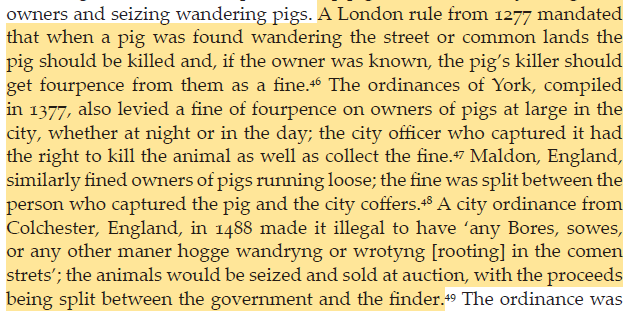
And it wasn’t just pigs they went after, all animals that caused a nuisance could get in trouble, like pesky geese:
Of course this doesn’t mean it never happened, town records show that plenty of fines were handed out.
Some places simply banned keeping any pigs in the city except from autumn to winter for Christmas fattening.
In 1517 Coventry ordered aldermen to make sure there were no pigs within the walls of the city.
Records everywhere show that everybody wanted pigs but nobody wanted their filth or smells.
People were obsessed with bad smells.
Yet people still let their pigs wander freely, or maybe they just felt they could escort their pig with a stick and didn’t want to bother putting a leash on them, or perhaps pigs just regularly made a run for it.
Pigs are smart & stubborn so when we read about fines about pigs running around it may not have always been because of the owners laziness or negligence.
Yet in some places it remained a problem:
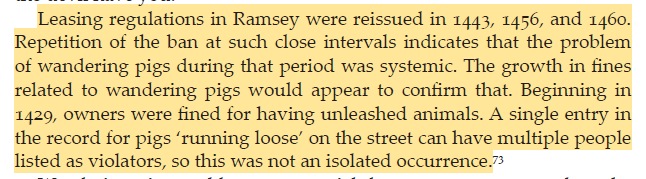
As we’ve seen with other cases when studying antisocial behaviour in medieval cities, sometimes it was one family or one group ruining it for everyone else.
So when we read about 10 cases of pigs running around a village, we may think it’s actually 10 pigs but it could also just be Dave who keeps forgetting to lock the door of the pigsty because you know Dave.
Note in this example that William was fined for throwing waste in a drainage ditch, once more supporting the idea that people throwing their filth in any old gutter or ditches was not acceptable:

Just some antisocial filthy boys getting repeatedly in trouble with the law is one of he reasons why the middle ages still have a bad reputation, everyone say thank you William.
Again note that he was fined for having a stinky toilet, does that fit with the stereotypical image of the middle ages?

Butchers were known to be the cause of a lot of pollution, the image of butcher’s lanes with blood & guts streaming down the gutters is a popular one but again not one that really fits with the reality.
That’s not to say it never happened, if it didn’t there wouldn’t be any laws, but it was not considered acceptable.
Medieval people wanted clean streets, clean water and no bad smells!
I can’t help but think back to the image of the middle ages as it was depicted in a very popular history book for kids that I grew up with… spot the pigs.
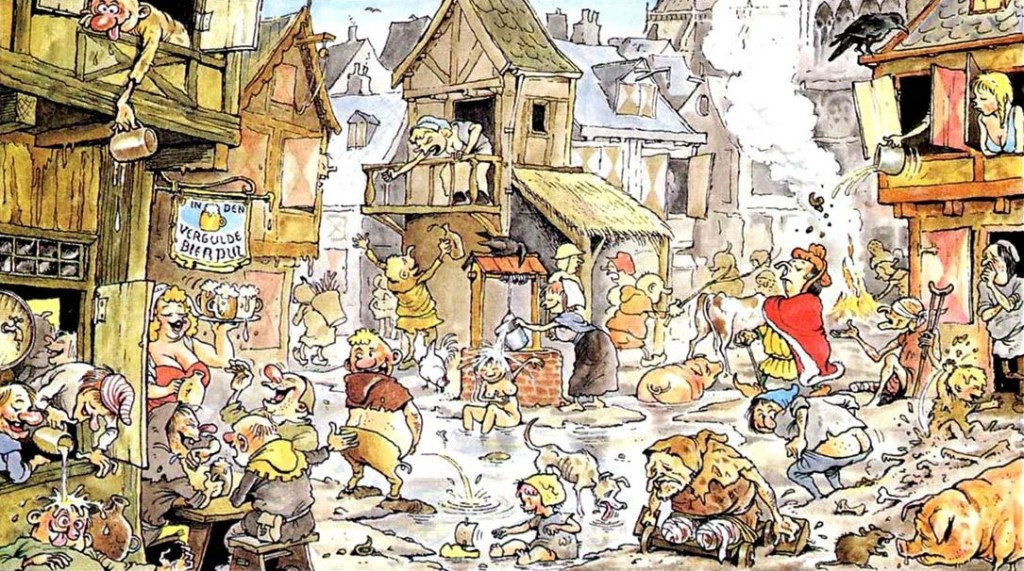
In my review I’ve focused on just a few topics that I’m personally very interested in but there’s a lot more in the book, it’s truly fascinating and I learned a lot about this amazing animal and the role it played in our history.
I really enjoyed reading it and of course love that it’s a great resource for the debunking of some of the old myths & misconceptions about the middle ages.
Links:
 Fake History Hunter
Your deep dives into history are incredibly well-researched and eye-opening. It’s clear you put your heart into every post!
LikeLike
a delightful and informative review! now i REALLY want this book! and it’s SO WEIRD, i was JUST talking about this book like two days ago, mentioning i wanted to read it cause it was so weird and niche. wow!
LikeLike